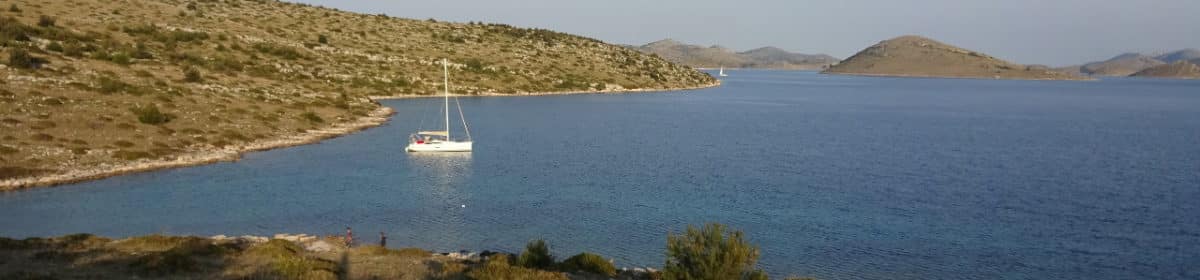
Who hasn’t dreamed of an uninhabited coral atoll in the middle of the Pacific? A ring of living coral and waving palm trees encircling a transparent blue lagoon. And floating gently at anchor a tiny sailing boat, alone under the blue blue sky.
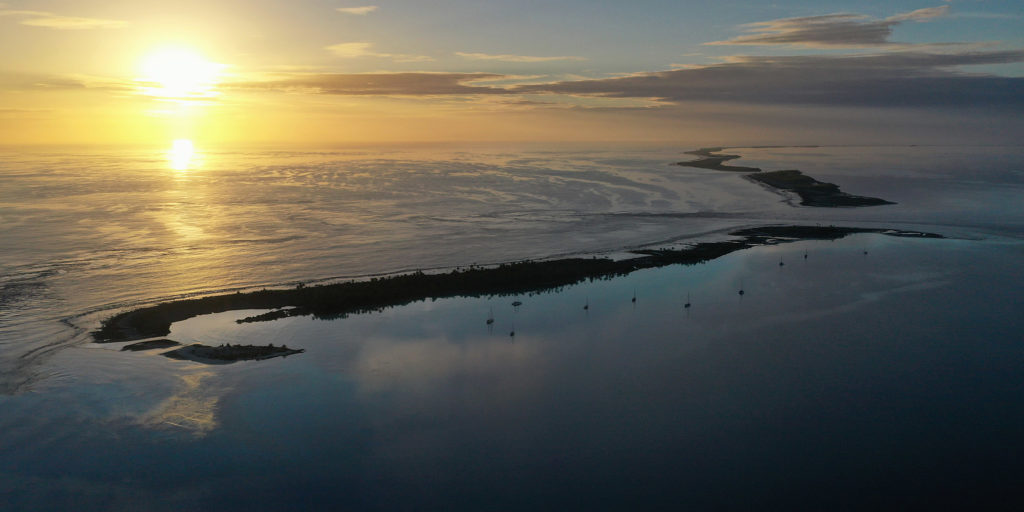
Here we are. At Tahenea living the dream. Artemis is anchored in her own bay far from the rest of the world. The reef keeps the breakers at bay and the minimal wind leaves the surface mirror flat so that we can glance at the “aquarium” we are floating on. We look down and see fish floating past the coral boms below us.
The passes through the reef. (photo by seenomaden.at)
In the night the full moon is so bright that we can still see the sea floor fifteen meters below us.
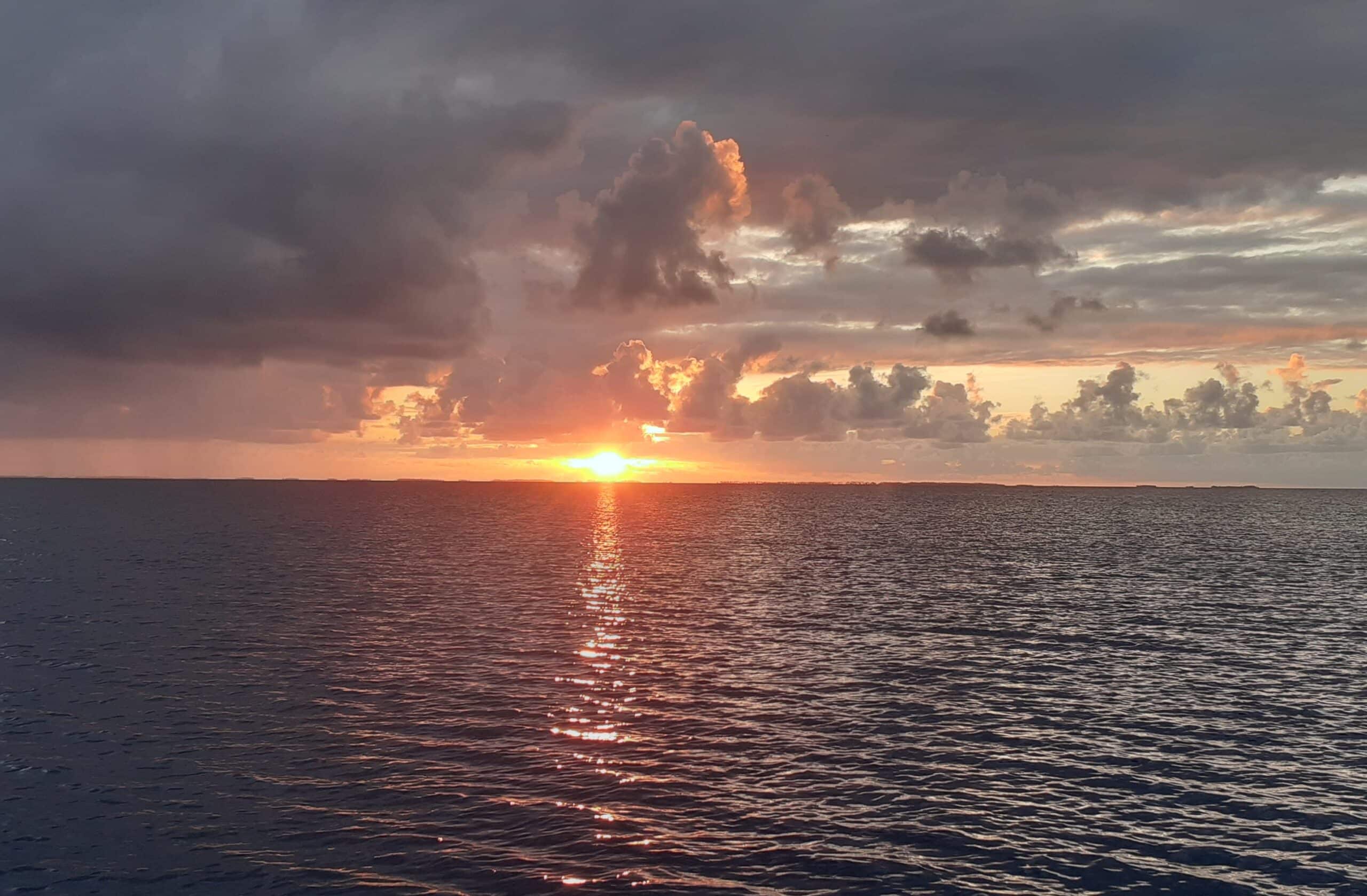
At sunrise there was no wind so we breakfasted in the cockpit on fresh, home made bread while enjoying the absolute stillness here in the middle of the Pacific Ocean.
Today friends sailed up to join us briefly and take us drift snorkelling in the nearby pass through the reef. We took our dinghys out in to the ocean just as the tide turned and then jumped over the side and let the current carry us back in to the lagoon passing gently over forests of coral, multitudes of fish and the occasional shark and ray. It was so amazing that we fought our way back out again against the current and “zoomed” back in along the other side of the channel, barely skimming the coral below us. We would have done a third run but our dinghy motor could not beat the considerable current as the lagoon filled with water.
We both agree – we made the correct decision when we decided to sail away and see the world.
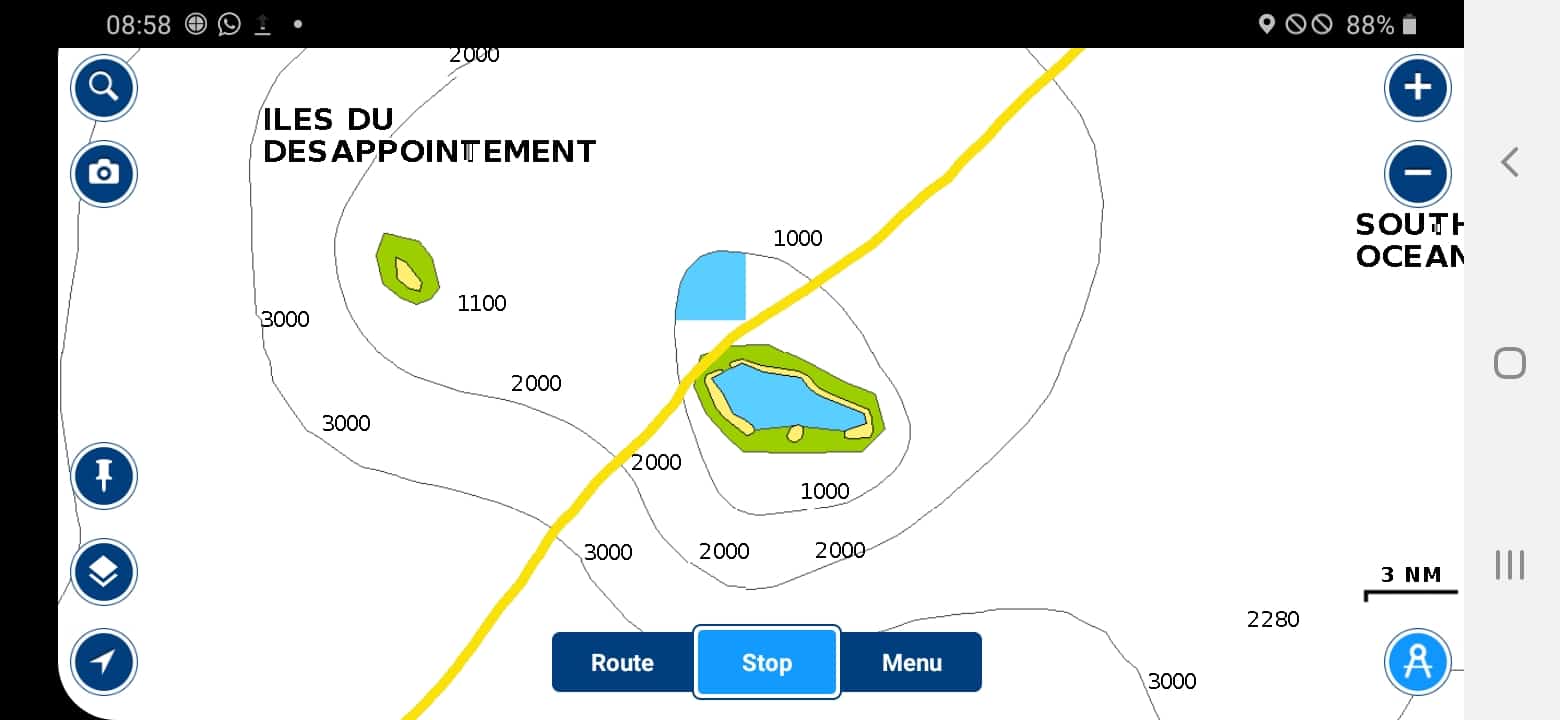
From the volcanic island of Fatu Hiva in the Marquesas to the coral atoll of Raroia in the Tuamotus is only about four hundred miles heading a bit west of south through the South Pacific. Between the two is nothing but deep blue ocean, flying fish and – directly in the way – the low lieing, dangerous, coral atolls of the Isles of Disappointment.
Ideally you need good trade winds from the East to sail south but light weather to enter the atoll. You definitely need to be sure you are securely anchored in a lagoon before the next period of strong south winds. Amazingly the weather looked perfect one day, with five days until the next storm would seal our way, so we drank a coffee with the neighbours from Bengt, lifted anchor and sailed south.
At sea in the Pacific
The first day there was a little too much wind so we made great progress but bounced around on the three meter swell. With the main reefed right down and the small jib, we managed 130 miles. The second day was a little less boisterous but we still achieved over 120 miles.
Our plan was to keep well away from the coral atolls especially as we had read that the charts are wrong and the islands are not where they should be. But! The sun was shining, the sea was calmer and we had a few more hours of daylight so we changed course to sail past the larger atoll of Napuka. The islands are very low and difficult to see over the waves but nearly eight miles out Heidi sighted the palm trees and the radar confirmed that the size and shape were correct. Using satellite photos and lots of eyeball, we sailed past the reef, the church and the airstrip. We saw a few people on shore but we were too far off to wave. And the charts were definitely wrong!
The chart is definitely wrong!
The next challenge was to calculate when to arrive at the tiny passage through the reef that would allow us access in to the lagoon at Raroia. The pilot books suggest that with a wind from the East you should enter just after high tide or just before low tide but that an entry against the ebb is difficult after lots of rain, days of high swell or strong winds. There are no tide tables for Raroia so you have to extrapolate between those for the atolls of Hao and Rangiroa based on their longitudes. We had two sets of tide data on board and they disagreed massively. We sent a message to our weather router and he sent us a third time! Did I mention that there are two different time zones in the islands so you have to adjust for them as well? After a few tries I was pretty certain high tide was going to be at 2000 UTC so 1000 Tuamotos time or maybe low tide was going to be at 1130 Marquesas time – depending on which tables were correct. And all assuming it didn’t rain 🙂
Fifty miles before our destination, and against all weather predictions the wind died. We managed to drift 24 miles in the right direction and “surfed” eight miles along the front of a massive squall. Using the radar to stay just outside the rain we used the squall induced wind for two hours of midnight adventure. Finally our calculations showed that we were going to miss the tide at the passage so we started the engine.
We reached the entrance through the reef just before low tide and could see an out flowing current but, as the guides warn that sometimes the current remains out flowing for days, we headed in. On full throttle we can make 5.2 knots but we averaged 0.4 through the pass. Fifty minutes of trying to stay in the narrow corridor between the steep coral walls while inching forwards against the current was “interesting”.
Finally we entered the lagoon and “only” had to navigate the seven miles to the East side. The lagoon is strewn with coral towers that you definitely do not want to hit. We had identified these using charts and satellite images and then plotted a “hopefully safe” route. Heidi still spent the two hours on the bow identifying coral ahead and one coral tower was only avoided at the last minute as Heidi commanded “Hard to port – now!” To add to the fun there is a pearl farm and they have spread ropes and buoys around like a huge spiders web. Heidi added underwater rope identification to her list of tasks.
Finally, behind the shelter of the palm covered reef, we dropped anchor. An inspection of the surroundings with snorkel mask found coral next to the anchor and a shark swimming under the boat. The shark was OK but the coral meant re-anchoring and another swim.
We set the anchor, attached floats to the chain to keep it off the coral and drank a coffee. The forecast strong winds arrived earlier than expected but found us safely hidden in the middle of nowhere.
Long ago Makemo was headquarters for the french atomic weapon tests in the Pacific and the concrete buildings from then are still standing. Nowadays Makemo Atoll is a quiet backwater, a tiny coral dot in the middle of the Pacific.
We entered the atoll through the passage in the reef and anchored off the village. First stop was, of course, the bakery to buy our baguettes. Everything else we planned on buying was “sold out” until a few days later when a supply ship arrived.
Anchored just off the reef
We arrived just in time for Bastille Day so there was a week of sport and dancing competitions between the different parts of the village. One day we had five local kids on board from the “blue team” so after that we were official “blue team” fans.
Strangely the anchorage turned out to be a “german nest”. We meet the occasional german boat but seldom more than two in one place. After watching the dancing we were sat in a bar – seventeen sailors and only two who didn’t speak german.
With strong winds forecast, we all moved to the south east corner of the Atoll and anchored in paradise. Clear turquoise water, coral formations under water, coconuts to eat on land and a friendly hermit on the beach. The wind blows continuously which keeps us cool and we make more than enough electricity and fresh water with solar and the wind generator. We have been giving water away to boats with no water maker. Once Heidi managed to connect to the nearest mobile phone mast by hauling a router up the mast, we had everything we needed.
Under Artemis is like an aquarium.
I no longer remember when we arrived, I don’t know how long we have been here and I have no idea when we will leave. At the moment we are enjoying life beyond the end of nowhere.
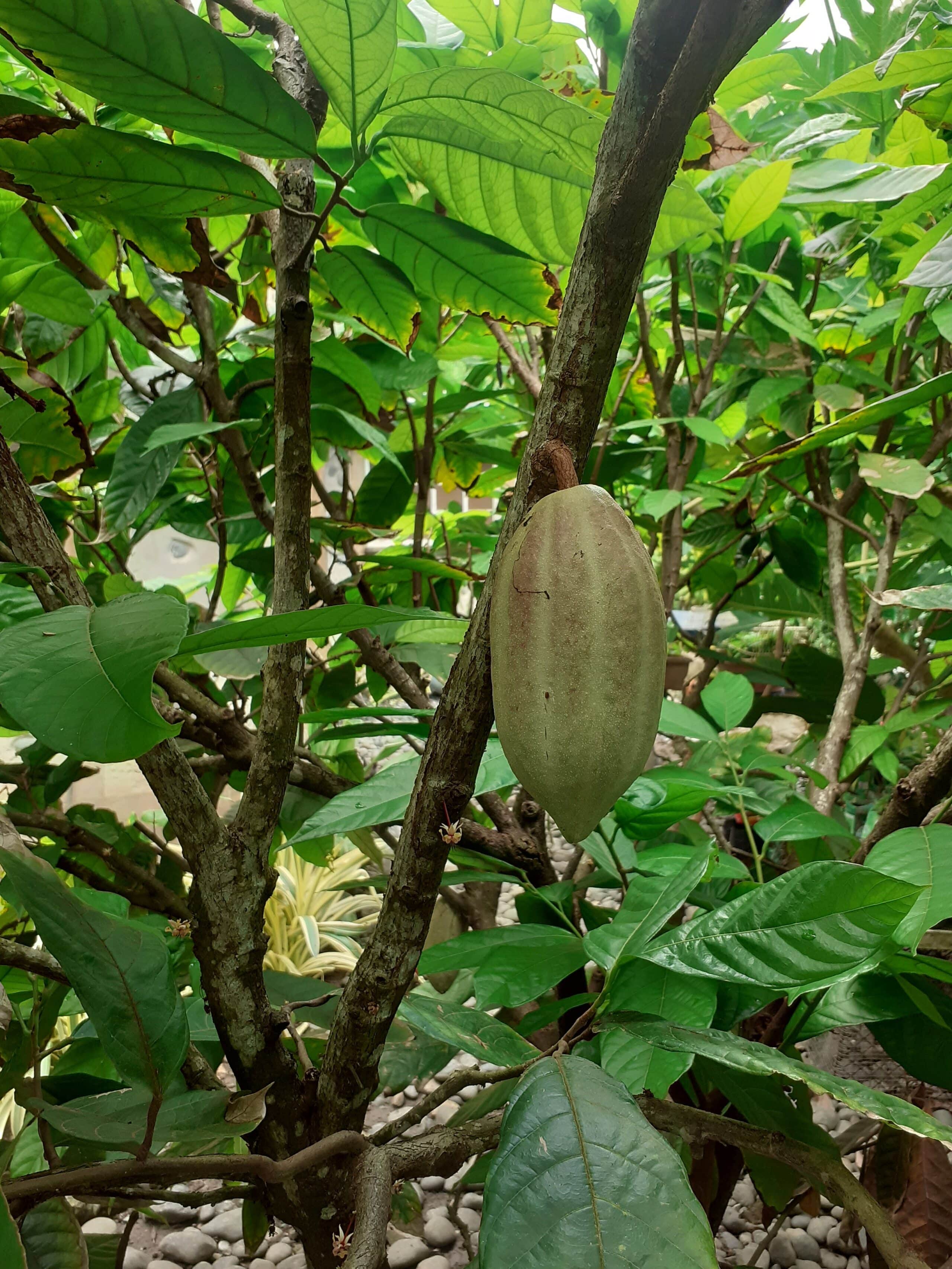
Manfred Drechsler fled East Germany in his mother’s arms when he was six months old. As an adult he left Germany for French Polynesia and a new life as a helicopter pilot. Then he moved to the mountains of Ua-Pou and began producing chocolate from home grown cocoa.
The “chocolate man of Ua-Pou” doesn’t advertise. He doesn’t need to as news of his amazing chocolate spreads amongst cruisers like a virus. We heard about him while anchored in Nuku Hiva and set off to search for the chocolate that even swiss cruisers admit “is something special”. Some one pointed out the correct anchorage on our charts and, once on land, a local pointed us up the track and told us to continue until we heard the dogs. The track wound ever upwards through the jungle but finally we reached a garden, rang the gong and were answered by barking dogs.
Manfred works like a drug dealer. He started by giving us free samples during a conversation about his exciting life and only then did he sell us the “stuff”. The chocolate is unbelievably good and has nothing to do with anything you ever buy in a shop. It is an absolute taste sensation. Everything is grown on his farm, water is piped from the mountains and the electricity is made with solar and a water generator. We were impressed.
We left not only with chocolate; Manfred also gave us a whole bag of fresh fruit from his garden and a tip to try pickling some of the green star fruit. It was a heavy load that we carried back to the boat but our fruit shelf now looks amazing. And the chocolate is buried in the fridge for special moments.
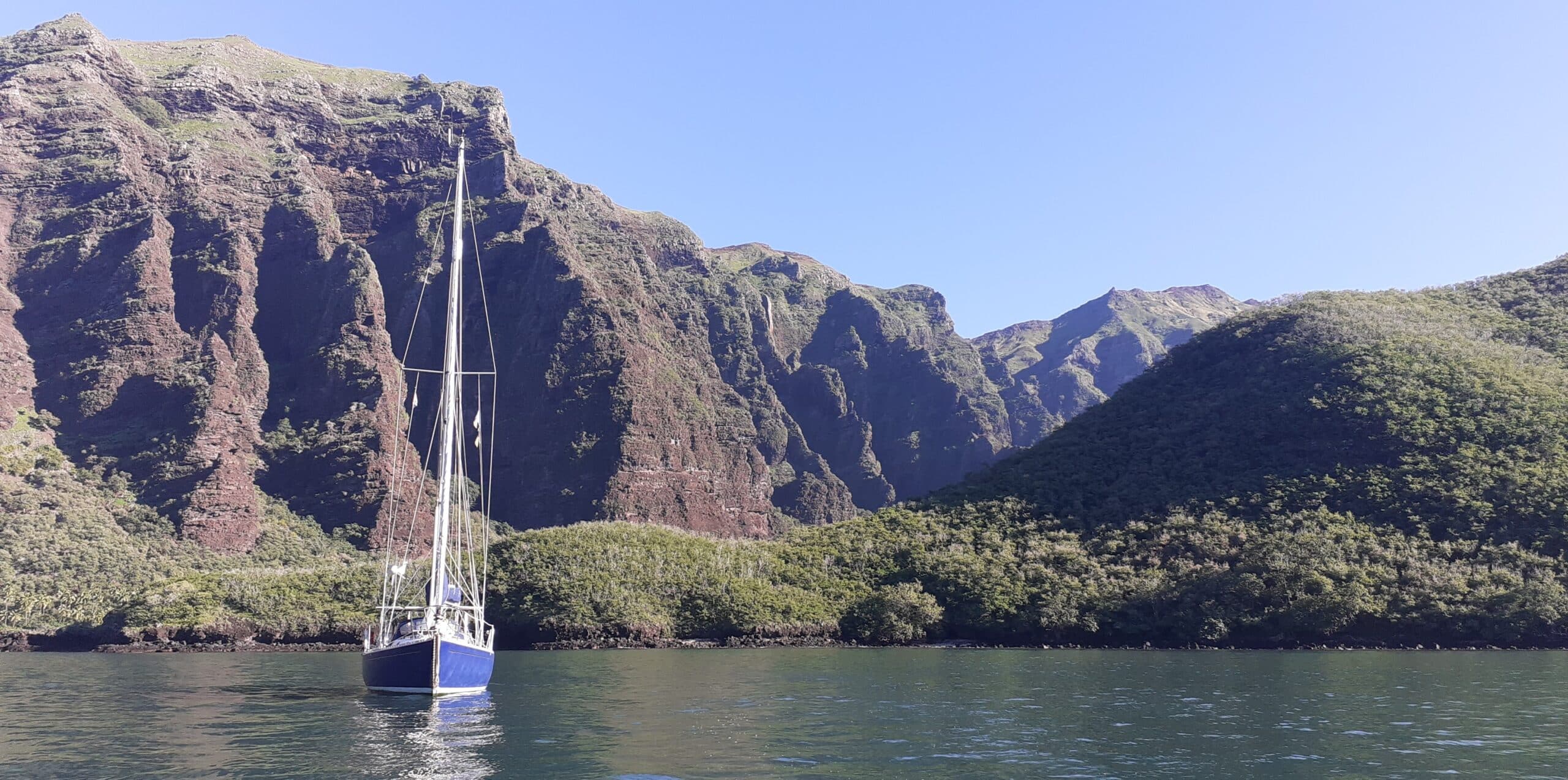
In the Vaipo valley on the island of Nuku Hiva there is a huge waterfall. The valley is only accessible by boat and cut off from the surrounding areas by huge vertical cliffs. Heidi commented that it looks like the land that time forgot.
Having anchored in the bay, we paddled the dinghy to the beach, towed it up the river at low tide and moored it to an overhanging palm tree. We took the main path through the immaculate village of Hakaui and exchanged greetings with all those we met. A fully tattooed local asked how we liked his valley and, when we gave a positive answer, presented us with a grapefruit from his garden.
Once out of the village, we followed the remains of a substantial track some three meters wide. This was raised above the surroundings and lined with large stones. At one point we had to ford the river but, despite stories from other sailors, nothing bit us. As we continued through the jungle we were continually passing ruins and the foundations of houses. At one point we passed an area that looked like the ceremonial areas we knew from elsewhere. The impenetrable jungle was obviously hiding a lost city. Heidi was in Indiana Jones mode, dreaming of lost diamonds and head hunters.
At one point we saw the waterfall across the valley cascading many hundreds of meters down the vertical cliff. Down by the river we lost the path and spent half an hour clambering over moss covered ruins and under huge trees before returning to the river. On our second attempt we realised that the fallen tree was actually the bridge and crossed it to find the path continued on the far side. Up close, the waterfall was less impressive as you could see less of it but the gorge was stunning in its size and steepness.
Back in the village we learned that before the missionaries arrived, “with their god and their diseases”, there had been 20 000 people living in the valley which explained all the ruins. The city had extended from the river up to the temples which was the reason for the “main highway” that we had followed. A local lady proudly explained how her ancestors had lived here before the Europeans decimated the islands.
Another exciting day and further proof that a boat gets you to unbelievable places that you would otherwise never see.
Today is the 21st of June so midwinters day here south of the Equator. The sun is as far north as it is going to be and the days as short as they will get this year. Sounds awful doesn’t it? But there is no need to worry about us. Even today we have a temperature of 28°C, a gentle breeze and a warm ocean to swim in.
We are anchored in the lonely and peaceful Hakatea Bay on the island of Nuku Hiva in the middle of the Pacific Ocean. It is hard to be at anchor and still be so far from civilization- if we define civilization as motorways, shopping malls and McDonalds. The bay is completely surrounded by hills and protected from every direction and we are floating on a calm blue pond swinging gently in the breeze.
On the beach there is a tiny village where a few people live and farm. The small river can be entered in a small boat at high tide but otherwise we can land on the beach. Yesterday we stocked up on bananas and herbs from a ladies garden and today the cockpit smells of drying basil. We were very impressed with the ladies solar system. With 12 solar panels she powers a fridge, a freezer and all her other devices. Like Heidi, she knew exactly how much power each device uses.
We have been here a few days and seen no sharks so yesterday we were enjoying the water and cleaning our hull. Today’s big project is hair washing so we will need to swim again – I know, it is a tough life – and then we plan on returning to the “big city” of Taiohae. Hopefully we can adjust to the hectic pace of a town with a road and police station.
We feel as if we are back in Scotland. Beautiful islands with lonely bays to anchor in and the occasional hamlet or village. The mountains are just as rocky, the sea is just as blue and the goats on the cliffs are just as brave. The main difference is the temperature and amount of clothes you need or rather don’t need.
Rain and sun. Just like Scotland.
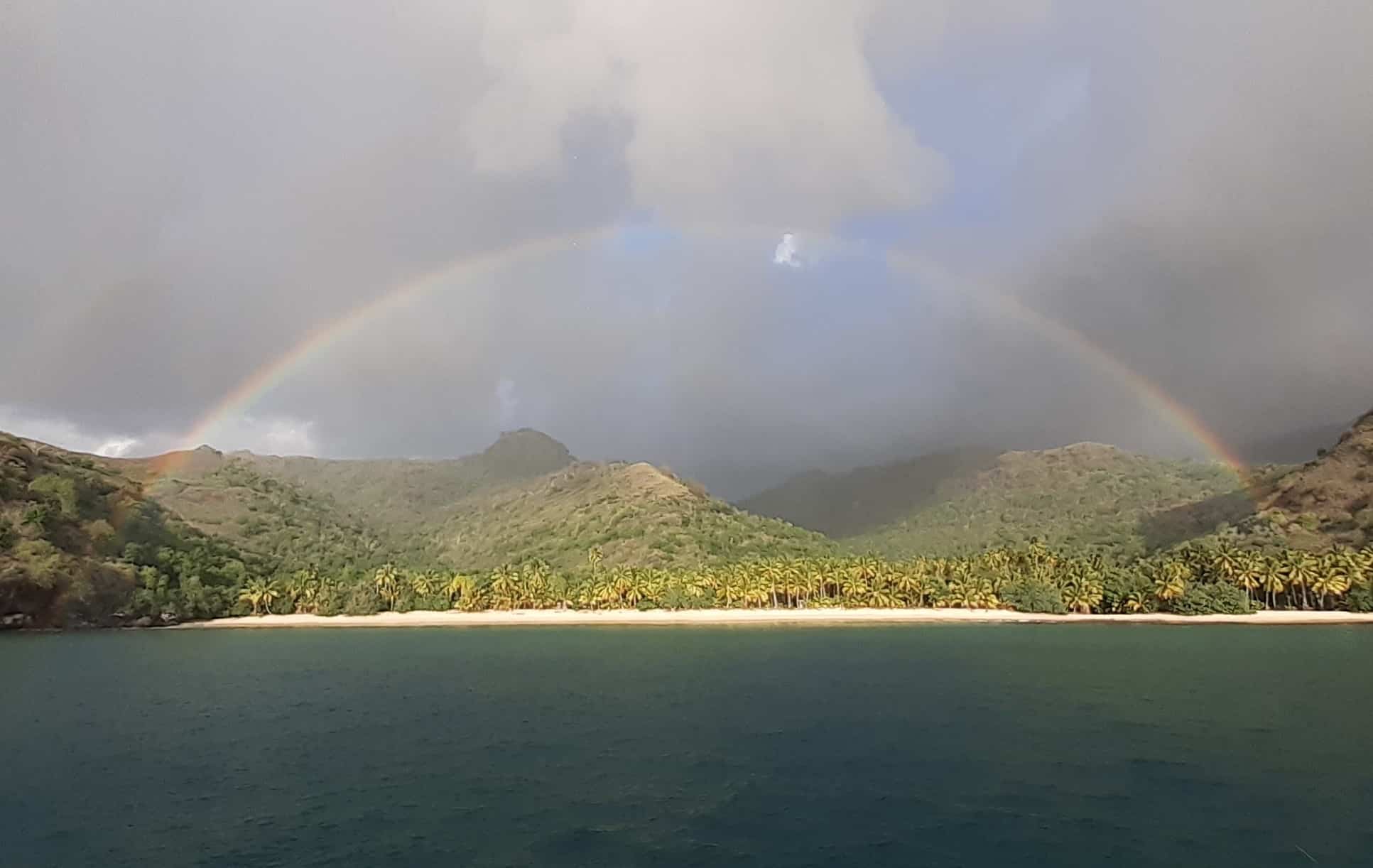
Yesterday we were anchored off the palm fringed beach at Hanamoenoa on the island of Tahuata. In the afternoon we lifted anchor with the electric winch and drifted out to sea. As Heidi set the Monitor windvane up to steer, she noticed a safety clip missing and a bolt almost lost. While Heidi held the windvane tightly to stop it shaking, we turned and headed back to the bay to drop anchor again. With Neill in the water and Heidi with hammer in hand a repair was quickly made. Luckily the three meter sharks that live in the bay were elsewhere or Heidi may have had to get violent with her hammer.
So, with a feeling of Deja Vu, we raised the anchor and set off again. We only had our small jib out but, when a squall caught us in the acceleration zone between two islands, that had us moving through the downpour at seven knots. An hour later we were in the wind shadow of Hiva Oa and drifting at under a knot while eating dinner. As we finished the last of our meal the wind came back and we sailed the rest of the night at a steady four knots in the light of the half moon and stars.
At dawn Neill was asleep but Heidi found the island of Ua Huka directly in front of us and adjusted the course to take us past a few impressive rocky islands to the remote Haavai Bay where, on the second attempt, we found sand to hold the anchor.
And now a day of sun and laziness is planned far from the rest of the world.
Recently we mentioned that the first nicht anchored off Fatu Hiva we sat outside on anchor watch. Gertrud sent us a message saying “What is anchor watch? If the anchor is holding? And what do you do if it isn’t?”
Traditionally while at sea you have your “watch” when you are on duty. On land you would talk about your shift. While at anchor the watch system continued. The person on watch ensured that the anchor held on the seabed and the vessel stayed where it should be. He also ensured that neighbouring vessels kept their distance.
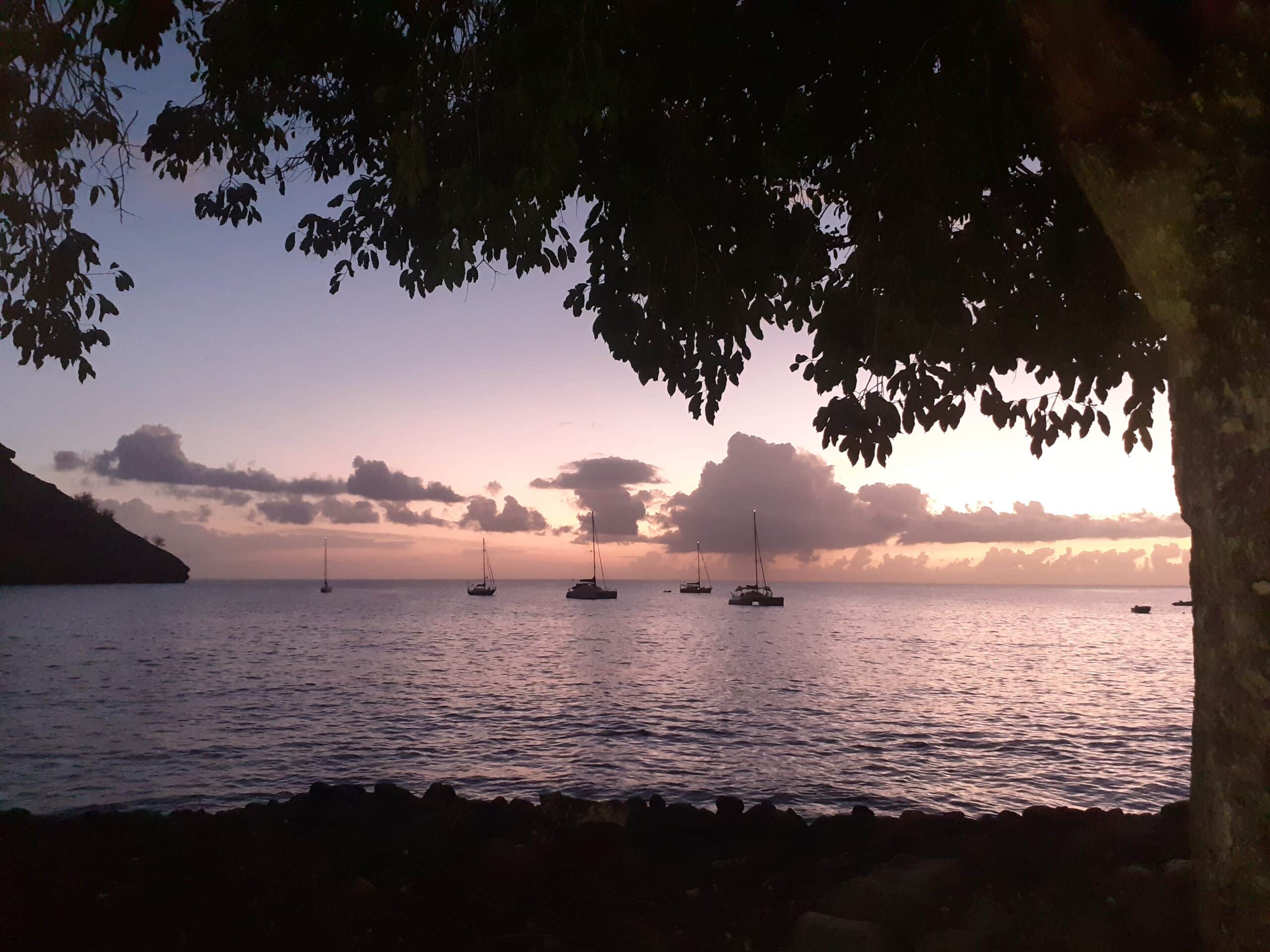
Safely at anchor
Normally when we anchor we check that the anchor is holding by pulling back on it with full motor revs. In these warm waters we also swim over and look at it. After that we let an app on our phone “keep watch”.
Sometimes the anchor doesn’t hold when we dig it in because of rock, coral or seaweed (but with our Rocna anchor, that doesn’t happen often.) Then we have to lift it and try again. Once, in the Caribbean the anchor lost its grip after a day. That was strange and not something we want to happen while off cycling. Normally we ask the neighbours to keep an eye on Artemis and ensure she stays put.
As I write this squalls are blowing the boat from side to side but with the Rocna anchor dug in to sand and thirty meters of chain out, we are going to sleep well.
From the island of Hiva Oa we sailed upwind past Mopotani to the magical island of Fatu Hiva. We arrived in the dark and the tiny bay already had seven yachts at anchor, shelved incredibly steeply and was rocked every few minutes by winds from the mountains. Despite instructions per radio from Mollymawk and light from the other boats, it was extremely hard to anchor but we managed. For the first time in our adventure we sat outside all night at anchor watch.
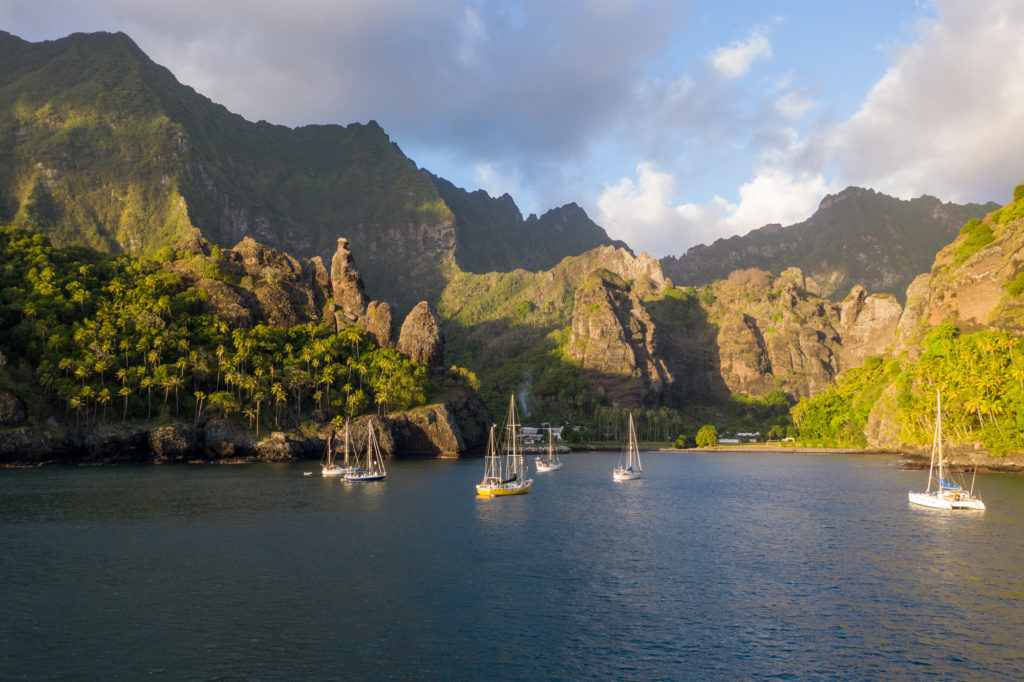
Artemis and friends at anchor in the Bay of Virgins. photo by Caesar from the SY Mollymawk
The following morning we awoke to impossibly beautiful scenery. We were anchored in the legendary Bay of Virgins, surrounded by volcanic crags with palm trees and the church spire at their feet. This island needs a huge sign “you have reached paradise”. We baked chocolate brownies and spent the rest of the day drinking coffee with all our helpers from the previous night. Cafe Artemis was the social middle point of the bay. We also managed to break our flag pole when a gust swung us towards a neighbouring boat.
The next day was Sunday so we took the broken flag pole and went to church. The singing was so beautiful and the rhythm made it impossible not to sway in the pews. An amazing concert. The sermon was in polynesian so we have no idea what it was about but there was lots of smiling and laughing.
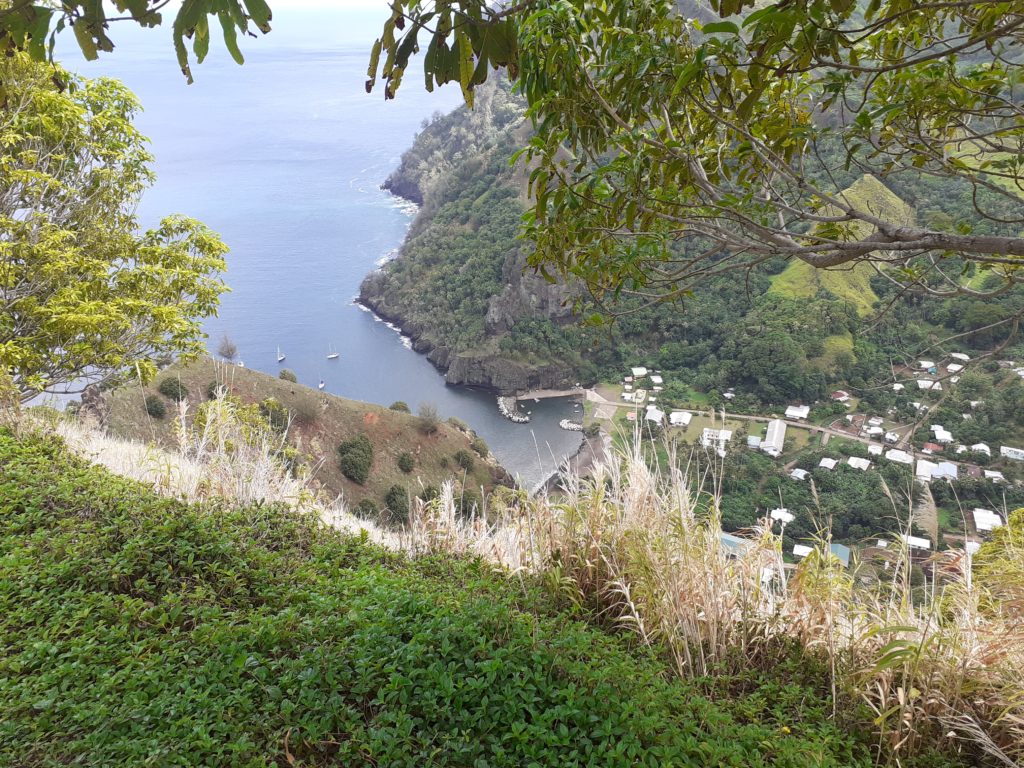
Looking down to Artemis anchored far below.
After church we took the flag pole to the master carver, Teno to be repaired and, after we saw his beautiful work, ordered a new one as well. We also loaded up with fruit from his garden and carried it back to the dinghy in his wheelbarrow.
In the afternoon we walked up the valley to a hundred meter high waterfall hidden in the jungle. There are no signs and the directions were minimal so we followed our noses along a stream until we found the huge waterfall cascading into a deep cool pool. Naked we jumped in and enjoyed the limitless refreshing water in our private shower.
On Monday we put our bikes together and set off to cycle to the neighbouring village of Omoa. It is only 35 kilometers there and back but this is a volcanic island so you climb more than 600 meters over the pass each way. And the road is extremely steep.
As we left the village we met the preacher from Sunday and told him how we enjoyed the laughs and smiles. He thanked us and filled our rucksacks with bananas. At a bend in the road we looked straight down on to Artemis anchored hundreds of meters below us and then continued up in to the jungle and the pass summit at 613 meters. Here we met Lucian who gave us a grapefruit. We then enjoyed the long roll down to Omoa.
In Omoa we looked at the church and admired the huge waves before finding a snack bar for a ham sandwich. Strengthened by this we set off home. On the way up hill we found Mango trees so filled the rucksacks with fruit. It was getting late and the afternoon sun produced scenes full of colours at every turn. No pictures can ever do the reality justice.
Back at the boat we converted mangos, chilis, grapefruit and limes into chutney and prepared a fruit and rum cocktail. And all with ingredients from the jungle and Teno’s garden. Unbelievable.
On Tuesday we cleaned the bikes and packed them away again. We swam round the boat a few times with dolphins swimming near by and then our new flag pole was delivered by Teno and his wife Karin. The neighbours also came over from Joy, the boat next door and together we enjoyed pizza, chutney on bread and banana bread all washed down with rum punch, wine and beer. Teno and Karin brought us drawings on local cloth made from trees and Karin gave Heidi the flowers from her hair. While we were eating Pierre, another neighbour stopped to give us a few kilograms of goat meat so after the guests left we started preparing goat stew. The bananas Pierre gave us earlier need to be turned in to jam with the fresh lemons we picked.
Two days later, before the sun rose over the mountains we lifted anchor and used the trade winds to sail north, on to our next adventure and away from magical Fatu Hiva.
When we left Ecuador there was a virus in China called Corona and a few cases elsewhere. Not something to worry about.
As we crossed the Pacific we learned that Easter Island and Pitcairn were closed due to Corona. Suddenly the virus was affecting us and we had to change our plan and sail the 3000 miles to French Polynesia. But at least we were well isolated with hundreds of miles of nothing in every direction.
A few weeks later we heard that French Polynesia was also closed but had no choice but to continue. It is not as if the East Pacific is full of other alternatives.
Eventually we reached Hiva Oa in the Marquesas and were given permission to stay as long as we first spent 40 days in quarantine. Luckily the 54 days at sea were counted so within a few days we were free.
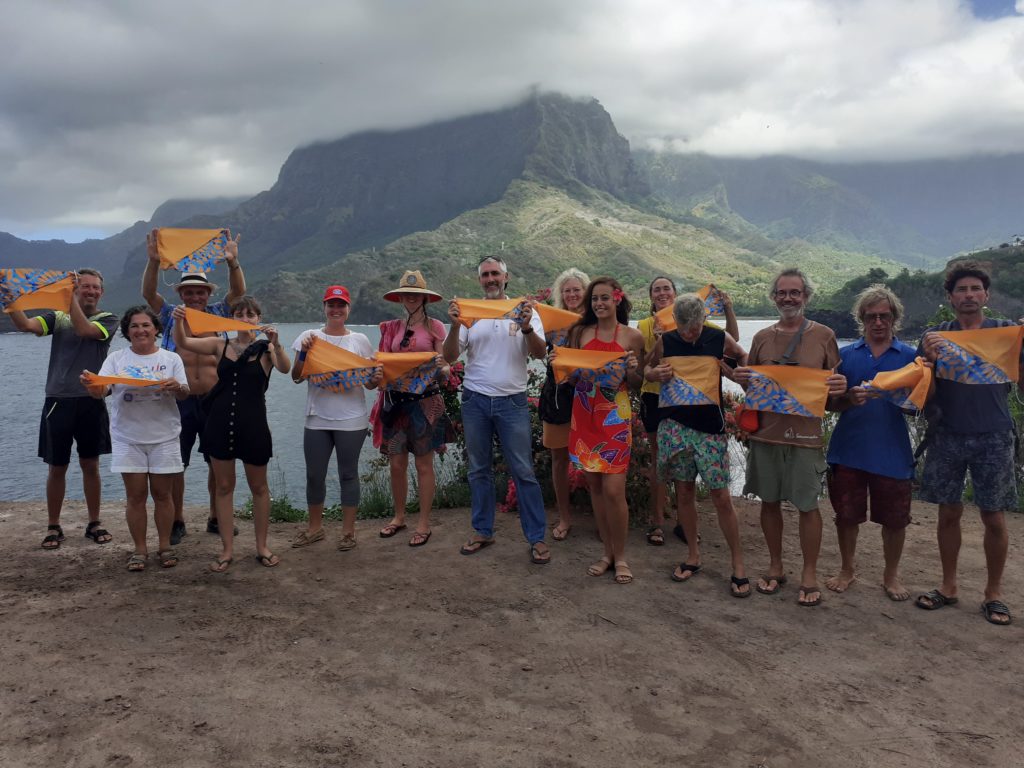
While the world was in lockdown, we received flags to show we were virus free and could cruise the islands.
The island had just experienced a long period of lockdown and had no Corona. Restaurants were still closed but we could move freely, shop, meet people, shake hands with strangers and sit shoulder to shoulder with people at a table. As we learned more about the situation in Europe, we realised how lucky we were to be “stuck” in this south sea paradise.
But we are sailors and after nearly a month on the island, we want to see other parts of these beautiful archipelagos. And what happens? This week the government declared the whole of French Polynesia Corona free, published a list of boats that are legally in the islands – including Artemis – and wrote “go sailing”.
I suppose when we are old and people reminisce about lockdown, face masks and home office we will just have to keep quiet.