

Zwei neue Alben sind online. we have two new photo albums online.
Author: Neill
Safety lines can kill you.
We are now over 3000 kilometers away from the nearest continent – North America – and over 2000 kilometers from the nearest habitation – Easter Island. When the International Space Station passes overhead, the astronauts on board are our closest neighbours. We are “somewhat remote” and really don’t want anything bad to happen.
If we were to fall overboard, the one person remaining on board would need to stow the sails, start the engine and come back to look for our tiny head in between the swell. And calling for help is not an option out here. That is why we only leave the cockpit clipped in to a safety line.
Our lifejackets are clipped to strops and they are attached to jackstays that run from the cockpit to the bow. You can reach everything while firmly attached to the boat. Of course the lines jam and of course they are in the way but that is better than a last swim.
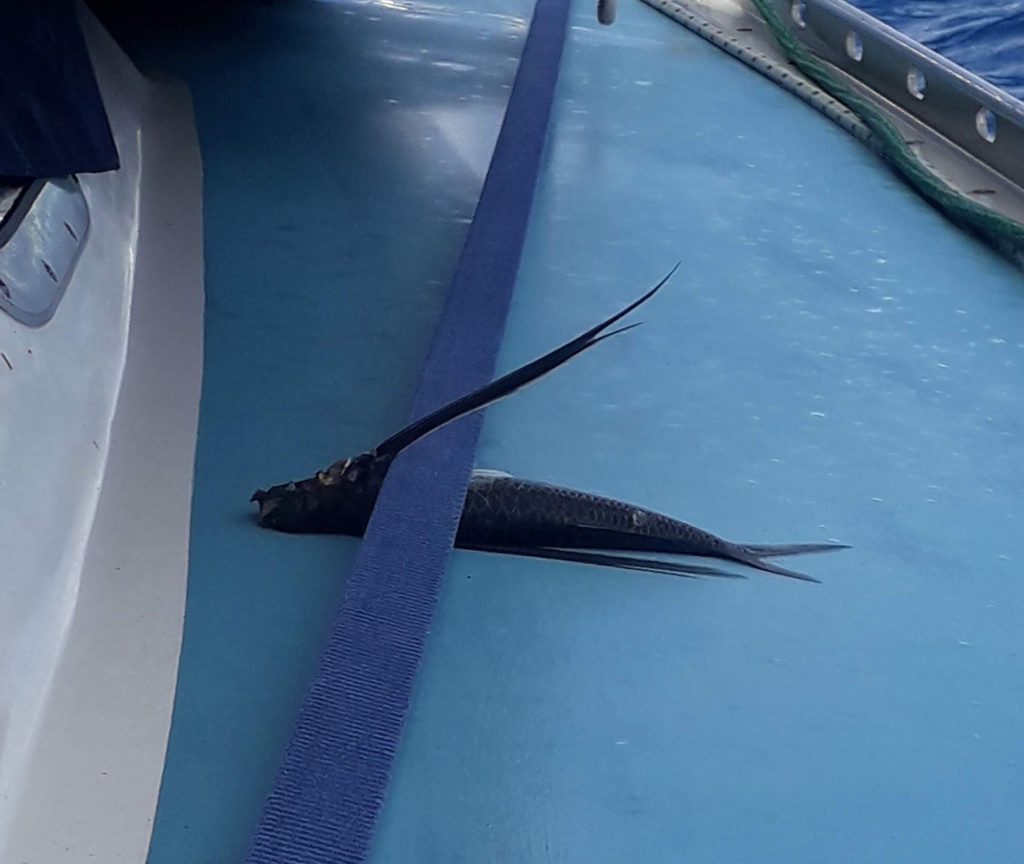
Each day we find dead flying fish on deck who have landed on the boat and got stuck. Yesterday we found a really unlucky example. It had got its wing jammed under the jackstay and was therefore “safely” attached to the boat. A great place for us; a bad place for “Biggles”.
Sunsights
Originally written somewhere in the Pacific
Sunsights are when you take your sextant and measure the height of the sun above the horizon. With this measurement, a bit of maths and some drawing lines on a chart; you can calculate your position. I have a great picture of two sailors stood on the deck of a ship taking their sights – and feel jealous every time I see it.
On a good day, I can sit comfortably on the coach roof with a clear view of both the sun and the horizon. I don’t remember such a day this trip. At the very least the boat is rolling so I need to jam myself in some where and the mainsail rocks gently in front of the horizon occasionally.
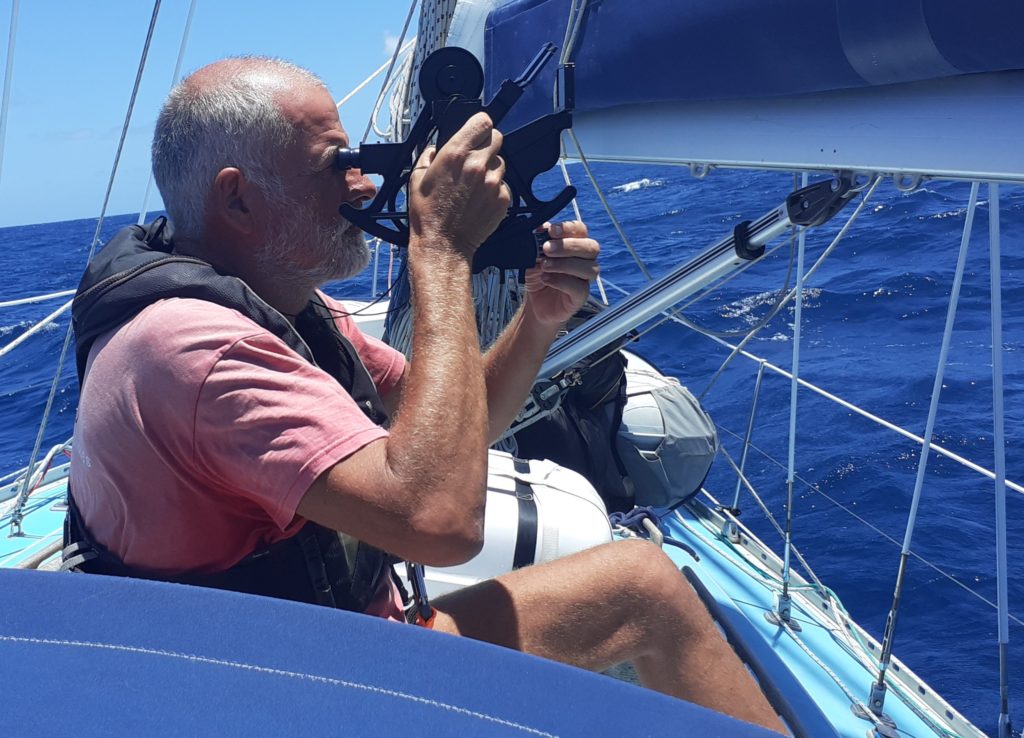
Yesterday I was jammed in to a corner of the cockpit trying to sight the sun under the radar and the solar panels while the horizon disappeared behind the outboard motor and windvane. Occasionally there would be a clear view past everything and, if we were really lucky, no wave blocking the horizon and no cloud in front of the sun.
With two hands needed to operate the sextant I was falling over each time the boat rolled in the swell. Heidi, who also needed her hands free to write down times and measurements, jammed herself against me and held me tight. Together, we managed to take the sights and document them but it was a challenge.
Sunsights. Just another example of the difference between theory and practice.
The Pacific is huge
We have now been at sea for three weeks and have managed over a thousand miles. We have finally found the trade winds and are making over one hundred miles each day.
We sit out in the cockpit and look around us. At night the sky is filled with stars and the water is jet black. During the day the sea is a stunning shade of blue. And it is vast! As far as you can see there is no sign of humans. At night we see the occasional satellite but that is the only visual sign of mankind. Unfortunately during the day we occasionally pass a plastic bottle floating along proclaiming that people exist and don’t care about their planet.

When we look next to the boat, there are various fish escorting us. The shape and color changes but we always have an entourage. Even here, so far from land, there are birds and one spent a few days using our pulpit as a base for fishing trips. Eventually it disappeared, maybe to hitch a lift back to South America with another boat.
You take a look around at the huge view of emptiness, sleep half the night and when you wake there is still just a tiny boat surrounded by nothing; and that day after day. We are only a third of the way to the Marqusas so can expect this to continue for another three weeks at least.
The Pacific is truly huge.
Give me the wisdom …
Originally written at sea on 10. March 2020
Sometimes you see motivational posters saying something like
God, grant me the serenity to accept the things I cannot change,
courage to change the things I can,
and wisdom to know the difference.
That could have been written by a blue ocean sailor. We left Bahia in Ecuador three days ago heading for Easter Island. As soon as we cleared the sandbar we had the sails up and were heading west according to plan. We were continually reducing sail to keep the boat in control. That first day we covered over one hundred miles and Easter Island seemed just round the corner.
Then the wind dropped. First we set all the sails again then the Parasailor to milk the last miles out of the breeze. But eventually we were left drifting where the current took us – luckily onwards rather than back to Ecuador. Over the next two days we occasionally felt a breath of wind and tried various sails but nothing worked. The sails just flogged and added almost nothing to our speed.

But that is when “the peace to accept what you can’t change” comes in. We were stranded but it was warm and dry so life was good. Heidi sewed a bag she had been planning for cycle parts, Neill worked on his astral navigation and together we made pizza and cleaned stuff. We also enjoyed a swim in the beautiful clear, blue Pacific with the fish swimming under us.
Almost to the minute at the start of Day 4 the wind came in from the south so we set our full sails and set off again to whatever life brings next.
Only five degrees south
This post was written in the Pacific after 13 days at sea – 20 March 2020
Five degrees south is nothing. Three hundred nautical miles. Less than six hundred kilometers. Five hours along the motorway.
Or 12 days at sea! It is now thirteen days since we left Bahia de Caraquez and twelve since we turned south looking for the trade winds. We only had to sail five degrees south but with no wind, wind from the wrong direction and counter currents, it all became a bit of an adventure. Today, after two weeks at sea we are at 4.5° south and we still have no real wind.

And then there is the virus panic. Our plan was 2300 miles to Easter Island, pop in to Pitcairn and then on to Gambier Island. But we received information that Pitcairn is totally closed. No landing allowed. And then a few days later we heard that Easter Island may mean waiting off shore for two weeks quarantine or may be impossible.
So after six hundred miles towards Easter Island we are now turning west for the 3100 miles to the Marquesas in French Polynesia. Good that we are flexible – and well provisioned.
The Pacific is huge. After six hundred miles we have hardly started across it. After the same distance we had done a third of the Atlantic. The Pacific is also much more “lively”. An armada of fish are crossing the Pacific under our boat. They attracted a huge black ray one evening for dinner. Birds also circle us hungrily and one is sat on the bow – no idea where they come from. We drifted through a pod of massive whales and dolphins regularly show off with aerial displays. Even a turtle swam slowly up to us for a better look which just shows what great speed we are making. There are worse places to be while Corona rampages across the world.
Fotos von Ecuador online
Bevor wir weiter segeln wollten wir euch noch einladen, die Bilder von Ecuador mit uns zu teilen. Viel Spaß dabei.

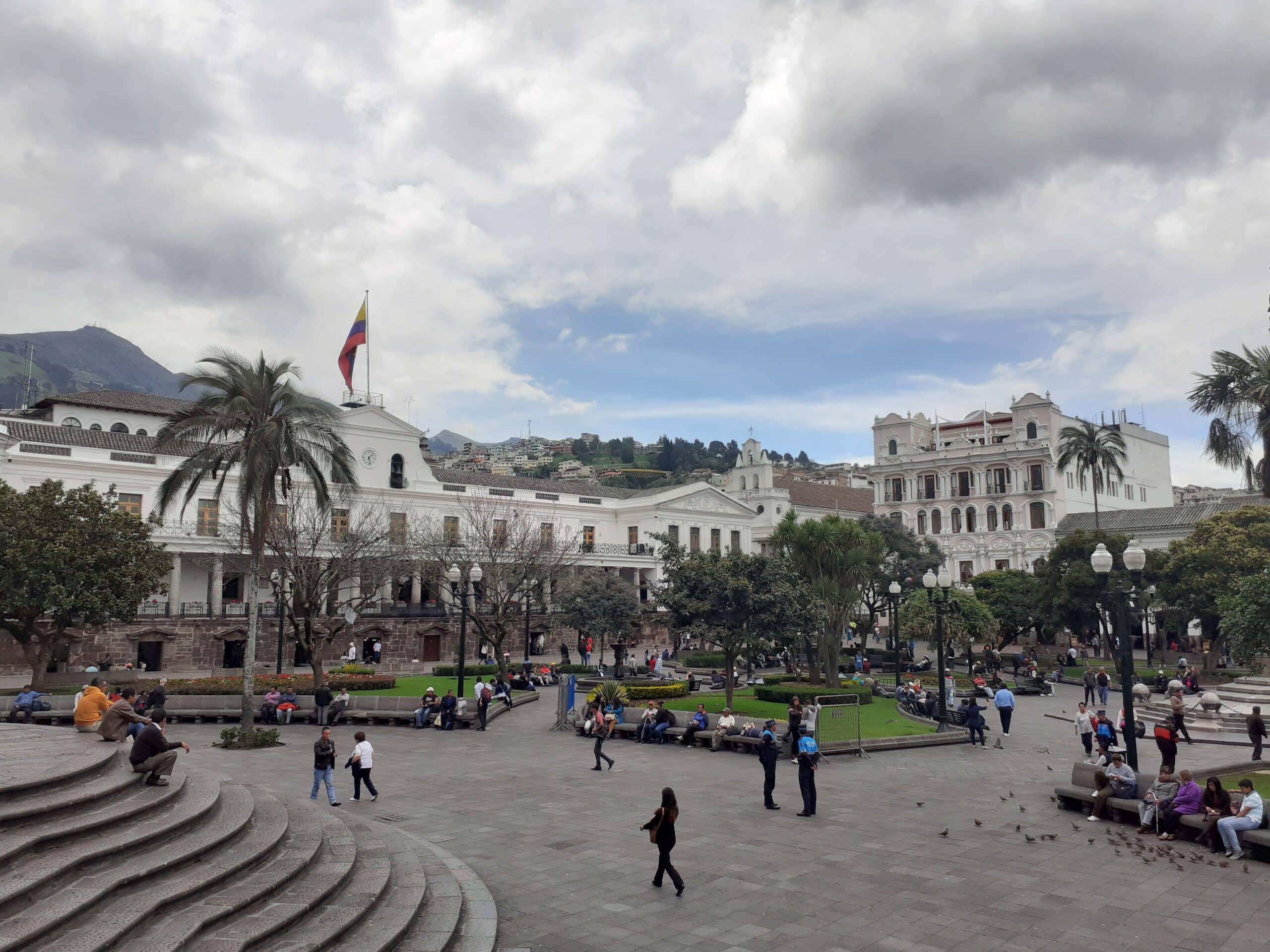
Quito. Another days training.
I am not a great fan of cities and particularly city sightseeing but today we “did” Quito (highest capital in the world) and it was brilliant fun.
We took a taxi to the cathedral and looked around inside and out. It was “cathedrally” and huge and maybe worth the two dollars entrance fee. Then we went round the corner, paid another two dollars each and climbed the towers. Wow! Over one hundred meters of steps took us to the top and breathtaking views across the city and to the surrounding mountains.
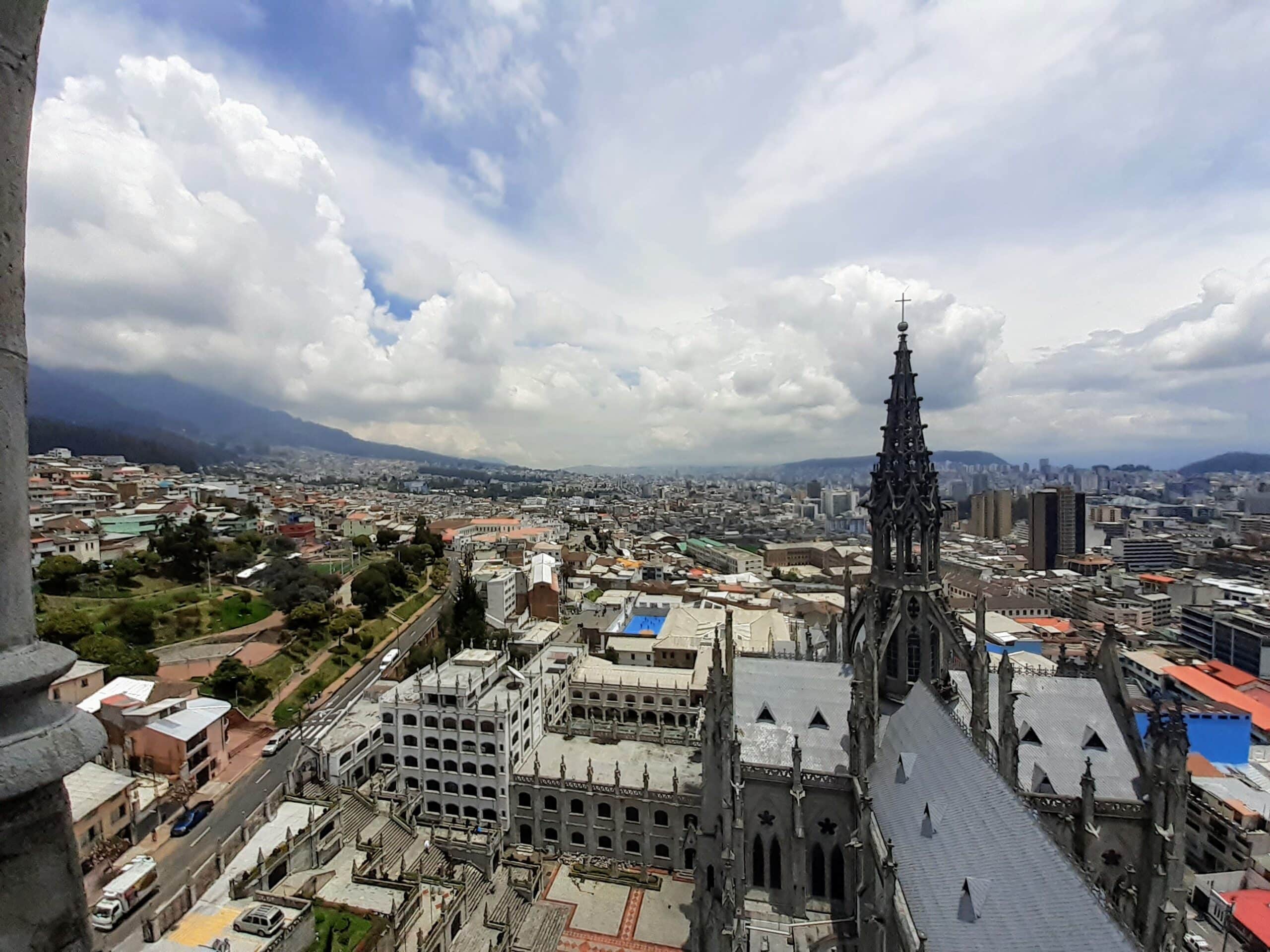
Notre Dame has Quasimodo in the belfry. Quito has Lenin. Lenin Pat Borhorquez runs the restaurant near the top of the tower. He is an accomplished linguist who effortlessly switched between Spanish, English and German. We spent an hour in conversation with him, all the time with the city far far below.
We wandered through town until we spotted a long flight of steps heading up the mountain to a huge winged statue. As soon as I saw the steps I knew this was a “Heidi sort of thing”. 945 steps and over 200 meters of climbing later we reached the top.
Some time during the first century Saint John went off on some mind altering trip. He must have been very very “infected with the spirit” and afterwards he wrote the last chapter of the bible – Revelations. By Chapter 12 he has the Virgin Mary wearing the wings of an eagle and fighting a dragon. In the 1970s the Ecuadorians built a 41 meter high statue of winged Mary atop the chained dragon on this 3000 meter high hill. Amazing!
Next we met a real person who was just as amazing. Jan is the founder and owner of Biking Dutchman, the company who we cycled Cotopaxi with yesterday. We enjoyed his life story over a coffee. People think we are crazy but Jan leaves us standing. Failing to get deported from Australia, sailing in front of a military fleet and couriering gold for the Chinese mafia – we want to buy a signed copy of his autobiography.
Nono. Paradise above the rain forest
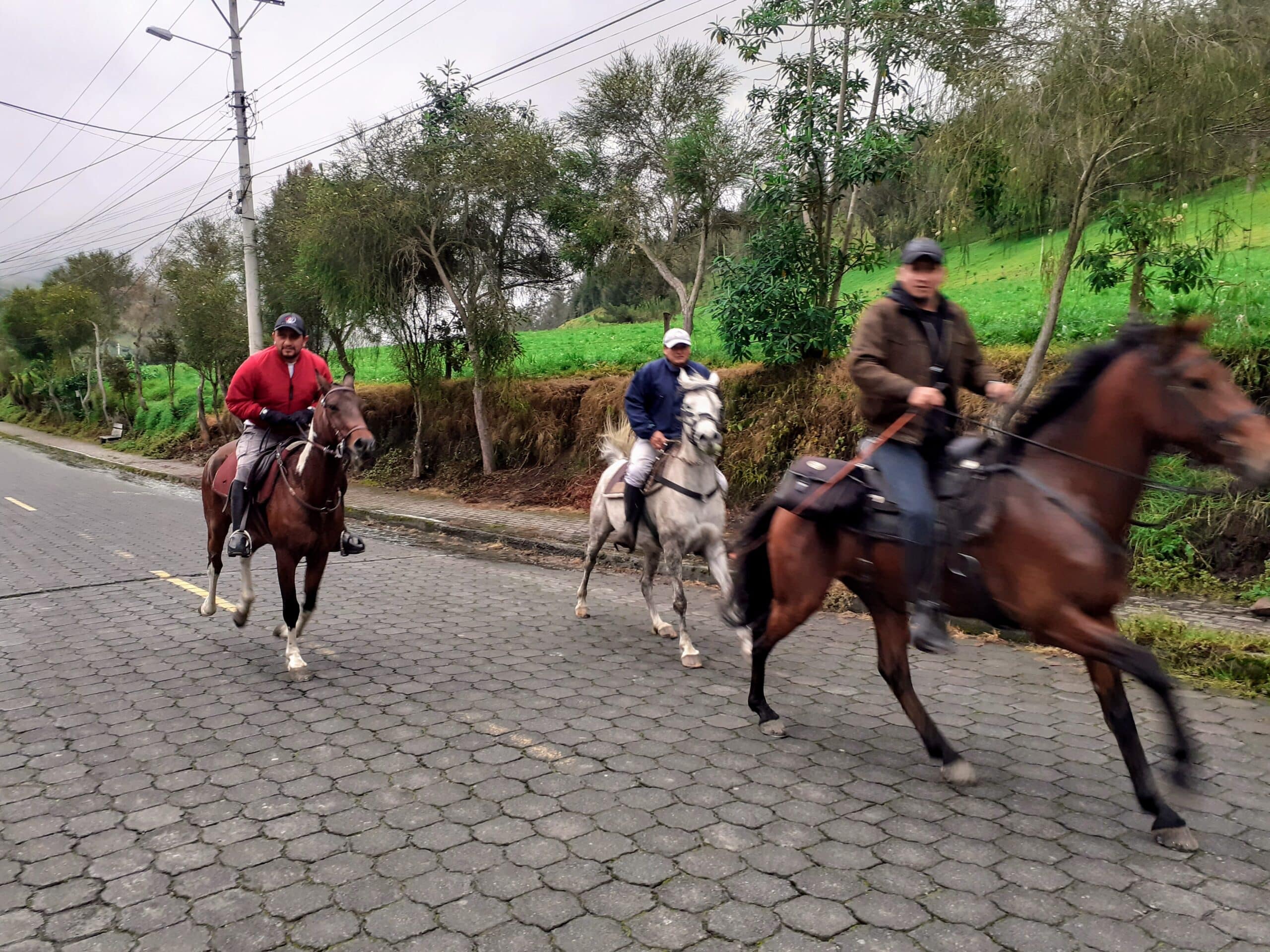
Quito is a huge sprawling city high in the Andes; a massive urban sprawl that smothers the valley floor. But just over the mountains and less than twenty kilometers away is the tiny, peaceful village of Nono.
We reached Nono cycling up a long steep valley through the rain forest. This is Ecuador and it is the rainy season so everything looked succulent and green. We, after six days cycling, were wet, dirty, cold and tired. It was less than an hour until sunset when we rode in to town and everything was closed. We were not as happy as we had been.
We used our best Spanish to ask a young lady where there was a hotel. She knocked on the door of the restaurant “Tierras del Fuego” and Marcelo appeared. He smiled, told us to give him five minutes and got on his mobile. He then collected his dogs and walked us to his father’s house where he made us coffee and showed us to the most amazing holiday flat.
Villa Doris is a stunning apartment with beautiful details, a gorgeous garden and a log burning stove. The only sound is the neighbouring stream. Definitely the best overnight we spent in Ecuador. The owner, Lorena, drove us back to the restaurant and, despite being closed, Marcelo created a dream meal which left no doubt about his international expertise as a chef. It was accompanied by a lovely wine from Patagonia.
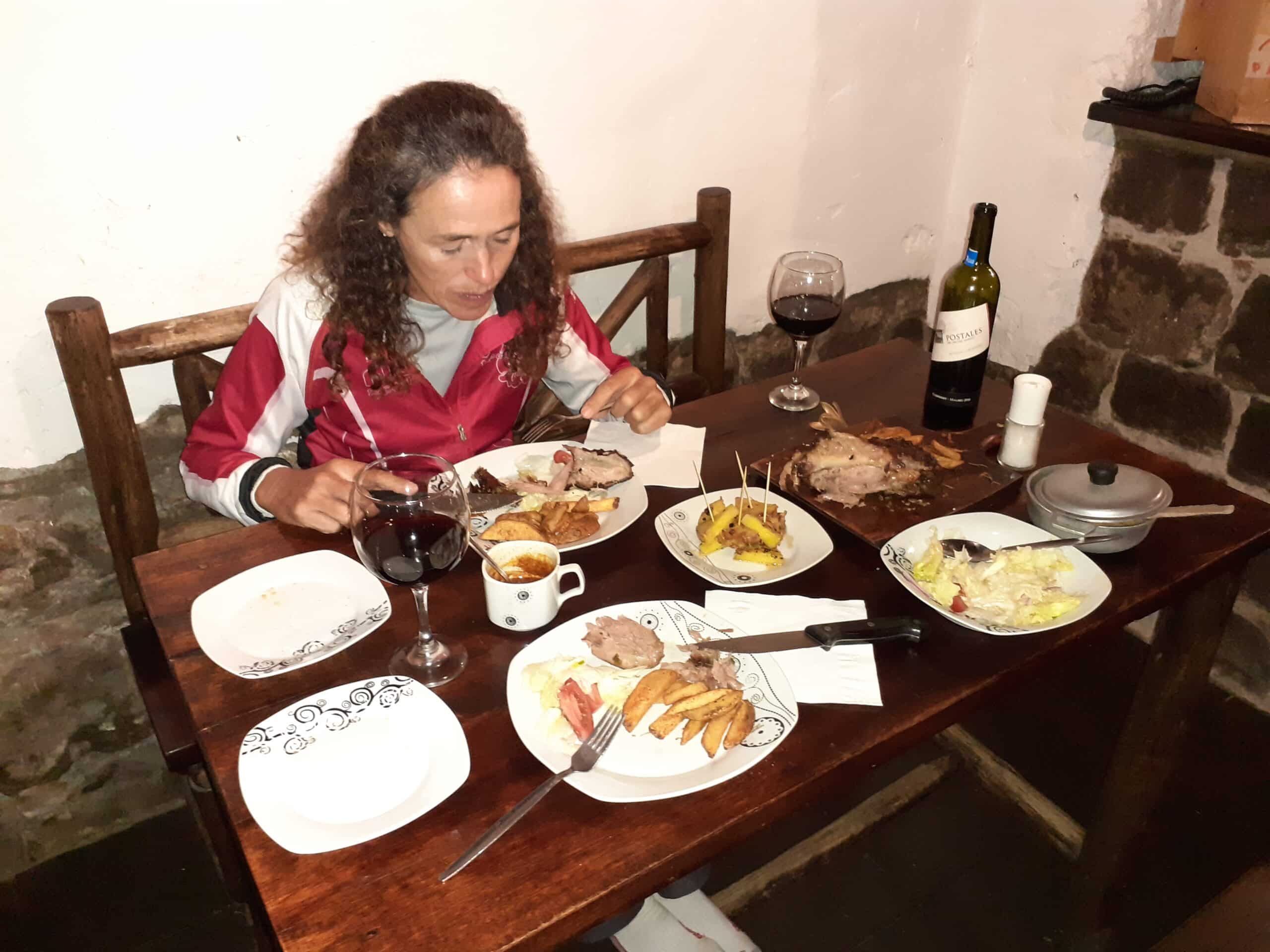
Lorena drove us back “home” where the log fire was burning and she had collected and dried all our wet clothes. We were in paradise.
The breakfast looked too good to eat but we ate it anyway. Fresh local fruit, fresh local baked breads and coffee. All with a view of the humming birds in the garden. Lorena knows how to fuel and motivate cyclists for the rest of the climb to Quito.
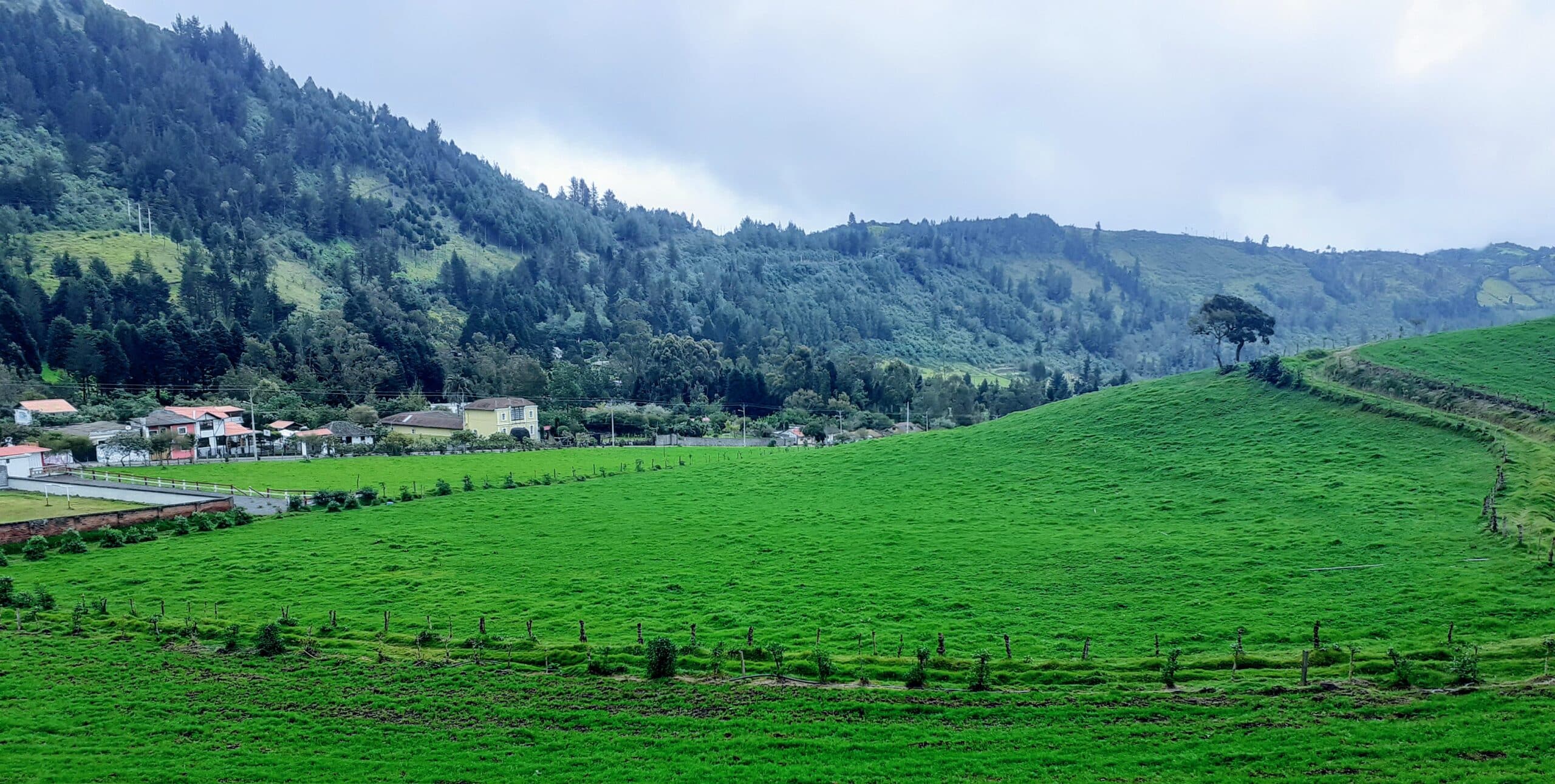
Our last view of Nono was from a curve on the pass. Small houses huddled amongst green fields surrounded by the imposing Andes. Beautiful!
The Cotopaxi Project
In Panama Heidi was ill and tired from just the journey from bed to toilet and back. I was reading about Ecuador and specifically about the volcano Cotopaxi. The internet mentioned that you could cycle down from 4600 meters above sea level. I was excited. Heidi was totally disinterested.
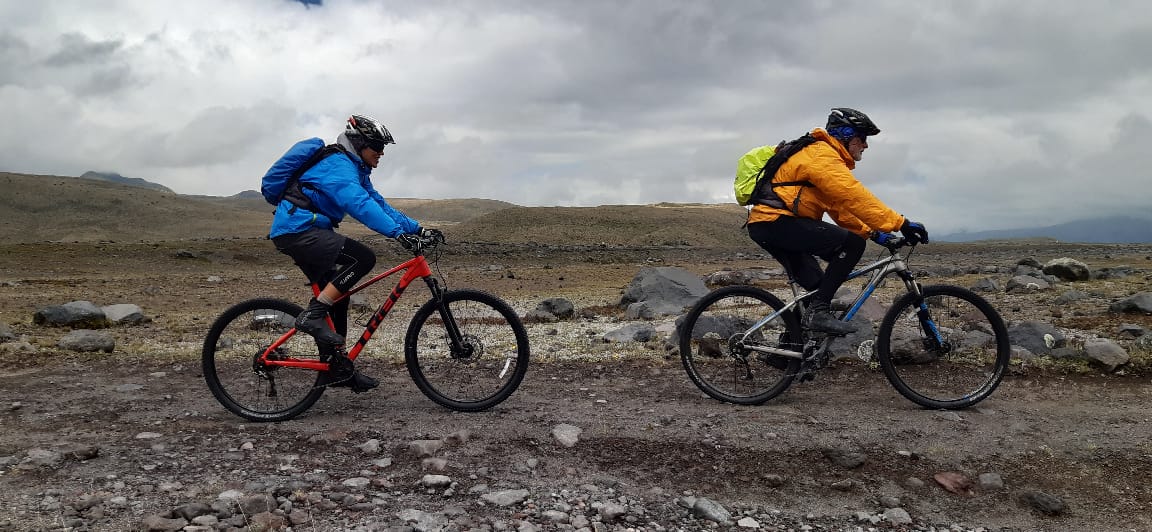
But then she recovered and mentioned that it sounded like fun. So we left Panama and sailed south for eight days to Bahia de Caraquez. There we put the bikes together, did some rudimentary training and cycled nearly 400 kilometers from the Pacific to the Andes. The trip took seven days and we climbed 7000 meters before reaching Quito.

On the eighth day we joined five other mountain bikers on a tour organized by the Biking Dutchman. We drove up the side of the volcano to the car park at 4600 meters. Here it was freezing and we put on every item of clothing we had with us before beginning the descent. Luckily all seven members of the group were mountain bikers – a pair from New Zealand cycled across the Himalayas and another girl cycles amateur races in the USA. As a result the descents were very fast and huge fun. The whole route was flowy and technically easy and left huge grins on all our faces.
We cycled past wild horses, wild cattle and Llamas. We saw a condor in the distance soaring above the bare, Tolkien like landscape. We visited a spring where a stream exits the side of the volcano and a pre-Inca hill fort. The route was mostly downhill but the few uphill sections immediately reminded us that we were still well above 3500 meters.
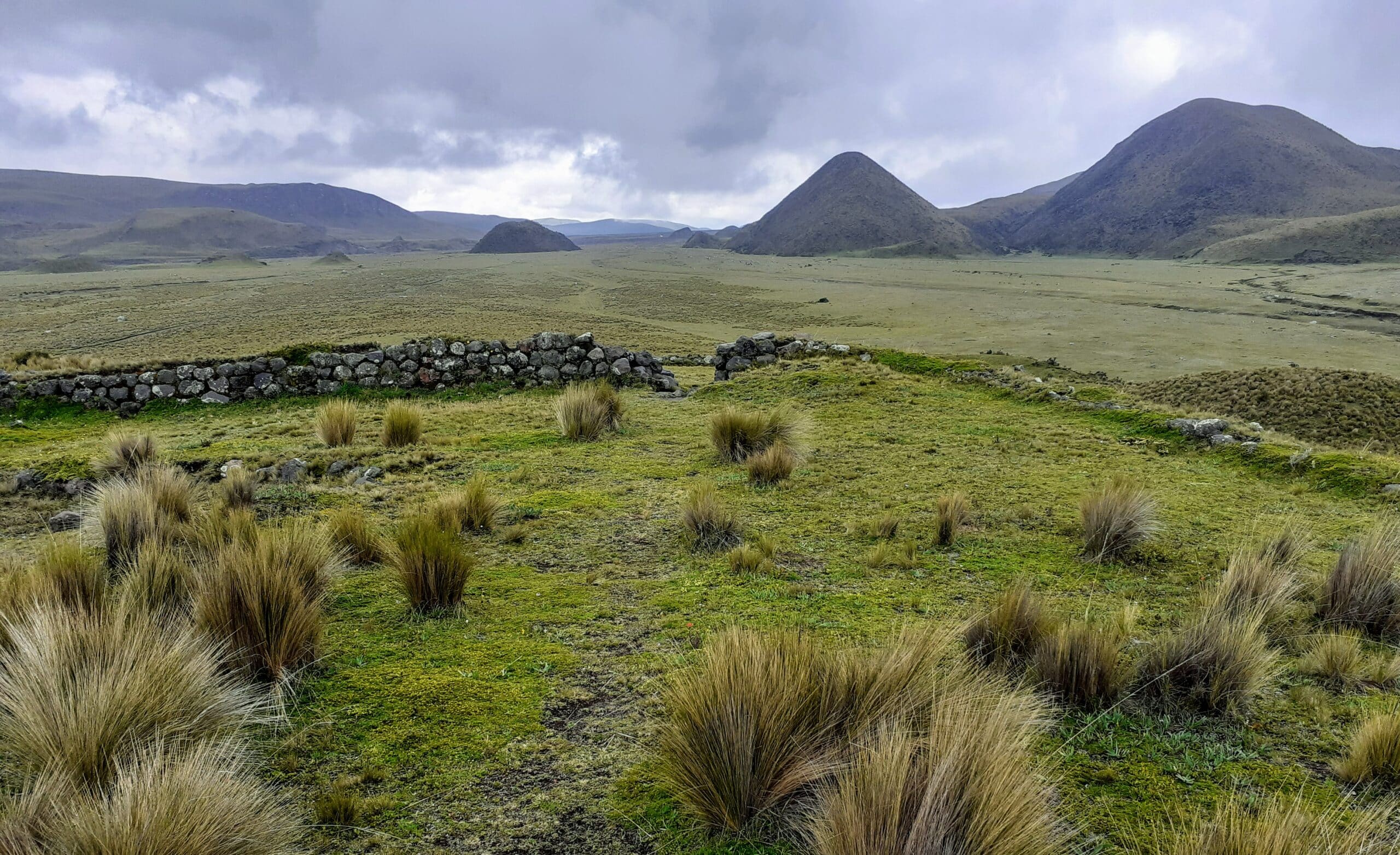
Cotopaxi itself only briefly peeped out of the clouds but that could not detract from a fantastically enjoyable ride in a stunning landscape with a group of fun people.
The GPS was hidden in the rucsac and lost signal a few times but the track is at alltrails.com