SOS. Palmerston Reef

It was a Sunday morning and we had been at sea for nearly a week. A week of seeing nothing except stars, flying fish and a few birds. We expected to pass the lonely atoll of Palmerston Reef before evening.

Heidi took a look over the stern of Artemis and said “oh s**t!”

Our windvane, the device we call Ciara, who steers our boat day and night, should be attached to the boat with four legs. One leg was no longer attached. Heidi managed to lash the broken leg to the boat but we could not use the system and so began to steer by hand.

It is still over 2500 miles to Australia so Ciara had to be repaired. This was not going to be possible while bucking and rolling in the Pacific swell. We needed shelter. Palmerston was “only” seven hours away but totally closed down because of covid.
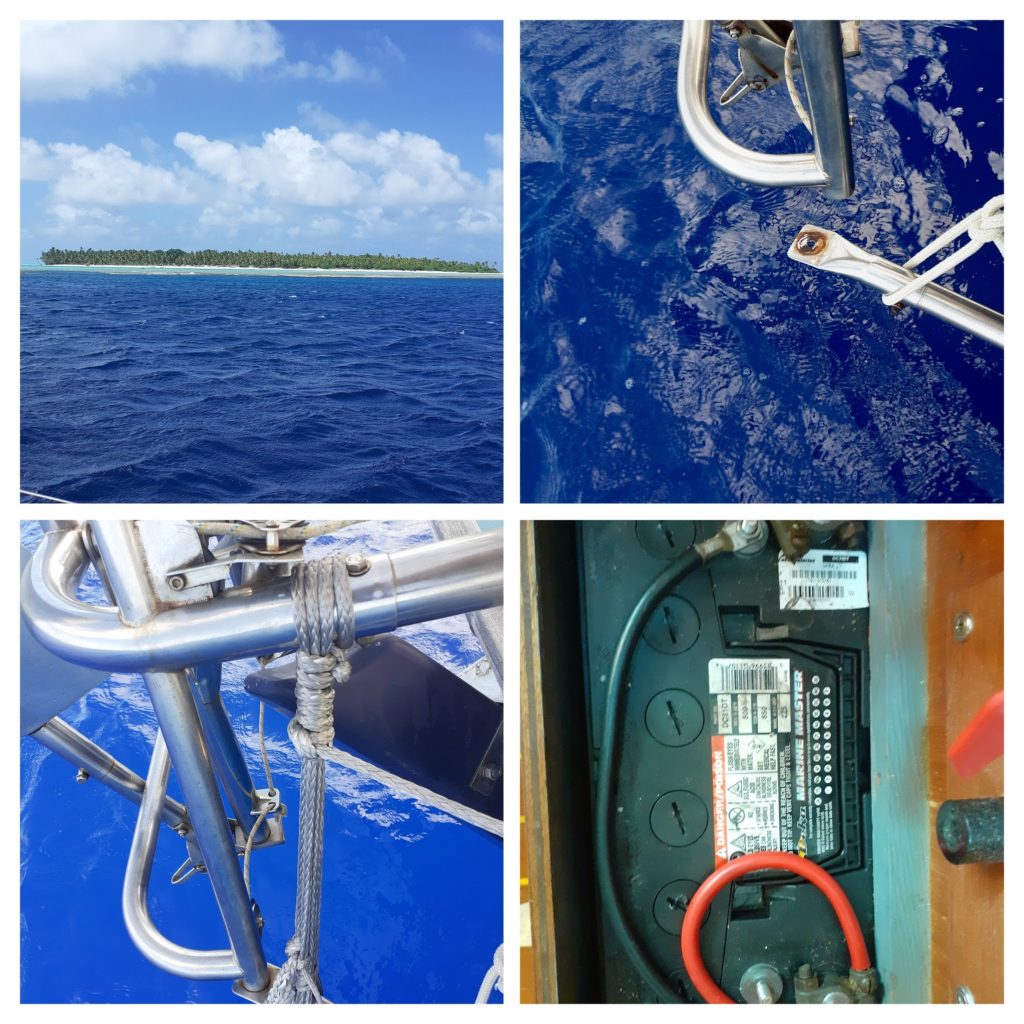
legPalmerston Reef, the broken leg, the leg strapped up with Dyneema rope, the new earth strap from battery to motor

We pressed the SOS button on our Garmin inreach; not something we had ever hoped to do. We immediately received an answer and within ten minutes we were connected to the New Zealand coastguard. Two and a half hours later we had received an emergency entry permission to anchor off Palmerston Reef on condition we did not go on land or have any contact with the locals.

After a few hours of sailing we saw palm trees on the horizon and made contact with the islands policeman per marine radio. He gave us permission to use a mooring buoy but warned that we needed to be very careful as they were no longer maintained and the wind could easily shift to blow towards the reef.

We started to strike the sails to take the buoy, pressed the motor starter and…

Nothing happened!

You can guess that we were not happy. The only safe buoy for hundreds of miles in any direction, a gusting 20 knot wind and we were going to have to sail on to the buoy. All those of you who have sailed will know that this was going to be “challenging”.

But after a few more tries the motor started. Thankfully we took the buoy and enjoyed the calm seas and no longer steering.
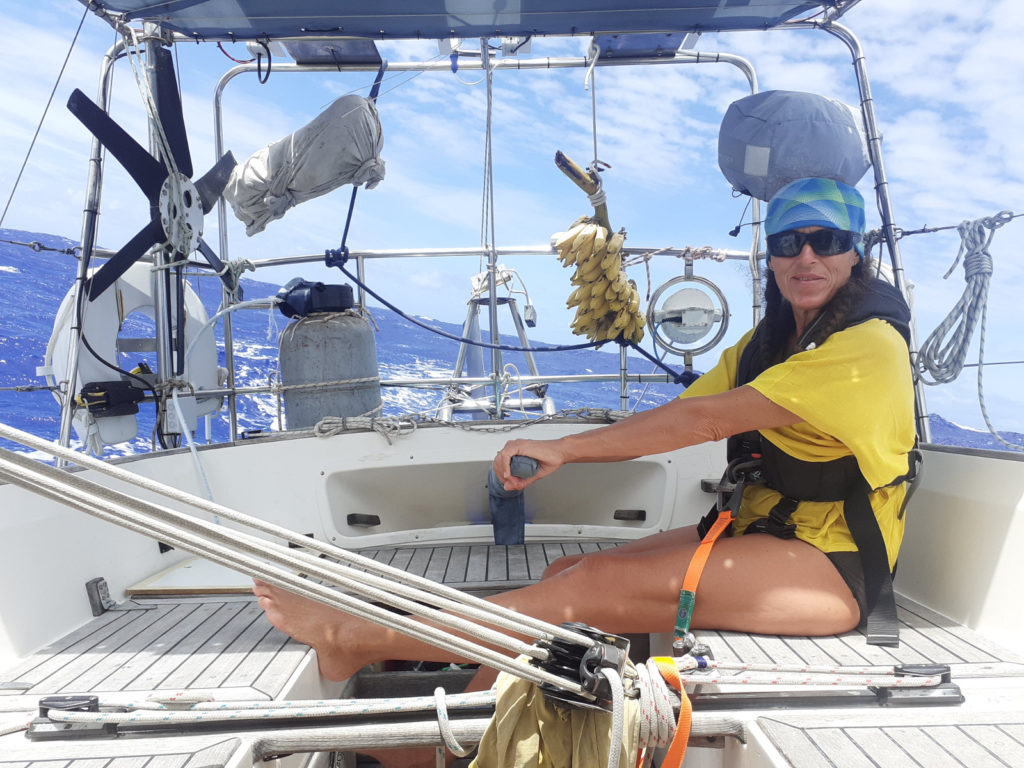
Hand steering Artemis to Palmerston Reef

After a very windy night, we began field repairs to the windvane. The bolt that holds the leg to the device had sheared off at the head. Luckily there was a bit of bolt still projecting so we could use that to position the leg and then we lashed everything together using a high tech “piece of string” called Dyneema. Maybe not perfect engineering but the best possible solution off a lonely reef thousands of miles from the next machine shop.

We think we found the motor starter problem – a loose earth connection between the battery and motor. We tightened it up and added an extra earth strap to be sure. After that the motor started first time but we will see.

With “the work” done we thanked our friendly policeman, showered, washed Heidi’s hair, set the sails for downwind, dropped the mooring line and, once again, set off westward.

Postscript: a few days further down wind, we discovered that the bracket that connects the windvane to the tiller had also broken and was only held by one screw. We also fixed this with Dyneema- Heidi steering while Neill made the repair.
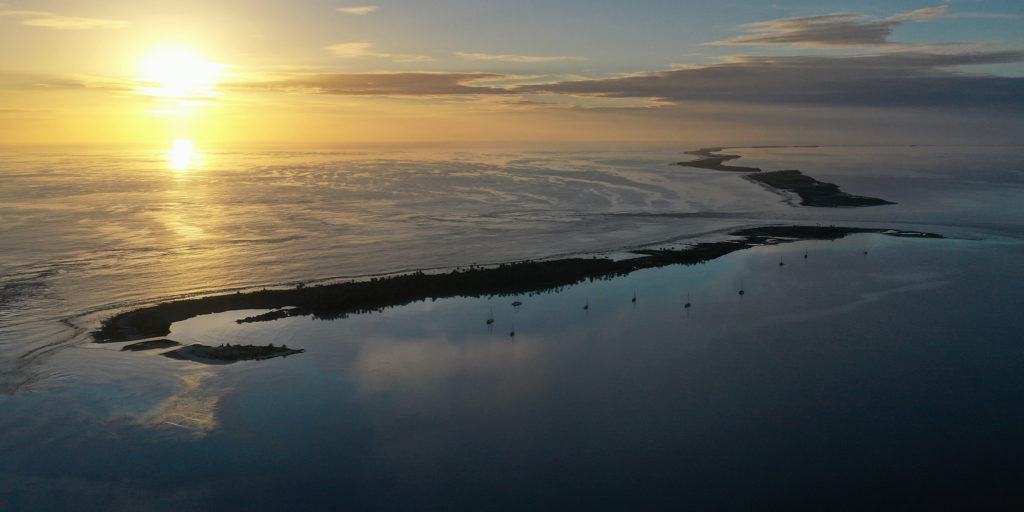
Our time in French Polynesia

French Polynesia has 115 main islands and uncountable islets spread over an area the size of Europe. It has a population of a few hundred thousand people and five of them were difficult. All the rest were amazingly friendly and helpful to us.

When we needed a safe harbour at the start of covid, the mayor of Hiva-Oa and his crisis team around Marc, welcomed us to their island and gave us refuge.

On Hiva-Oa and the following twenty five Islands that we visited every one gave us fruit and vegetables. Mostly when we asked about the price they just laughed and said “You are sailors. It is free.” Even those who live from selling their produce always gave us as much or more than they sold us.

On Hiva-Oa a local man spent an entire day driving us around the island, showing us hidden treasures and explaining his culture to us. At the end of an amazing day, he would take nothing but our thanks.

On Makemo Atoll the ladies from the bakery lent us their tricycles to explore. During the annual dance festival, the mayor took the time in her speech to say how happy they were that we sailors were also present. At the furthest end of the atoll a hermit let us use his island to barbecue. He even joined us briefly until retreating to his lonesome home.

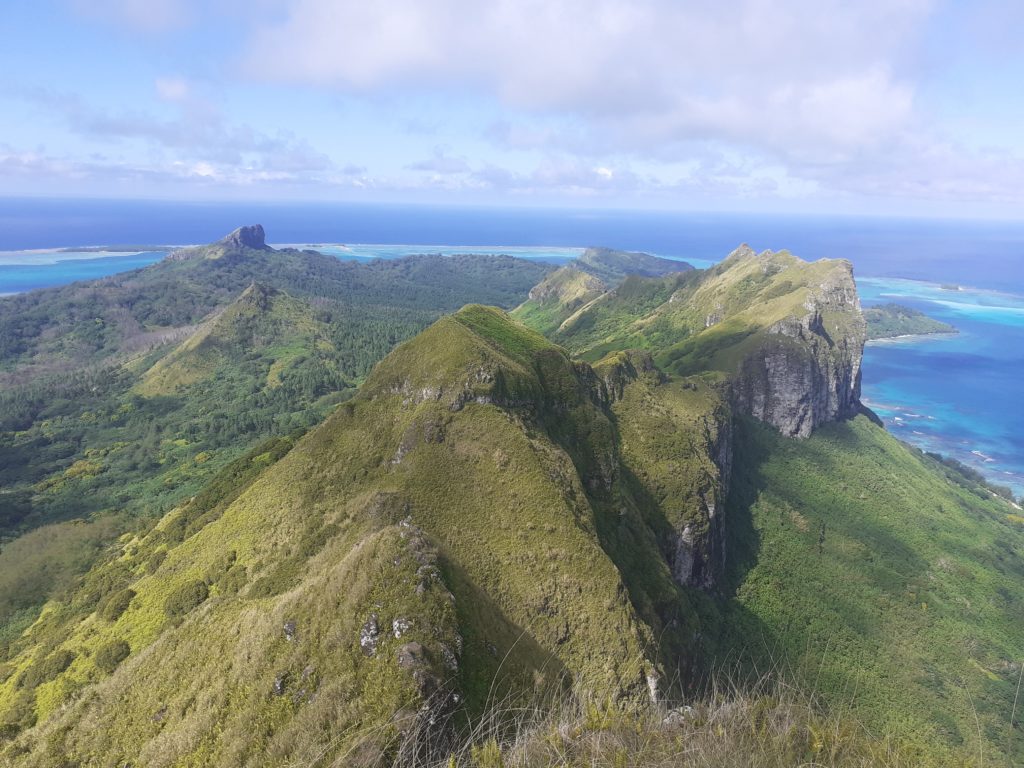
Coral atolls just for us

In Tahiti, when we were cold and wet, a hotel owner fed us, gave us warm drinks and organized help to escape the flooded valley. We would have paid but she insisted it was all free as the hotel was closed that day.

On Raivavae a local offered to bring us some bananas to the dock. When we met him he had two trees of bananas, a few other fruits and drove us to his fields to collect manuk (a root vegetable). Everything for free and when we gave him a banana cake as a thank you he said “Pour moi? Pourquoi?”

A welder stopped mending a garden gate to repair a broken bracket off our engine. When he was finished he laughed at the idea of us paying. “You are sailors. It is free.”

Volcanoes growing out of the Ocean

In Tubuai the captain of the Gendarmes spent three days introducing us to his island and the islanders by mountain bike. The restaurant owners treated us like family and the dentists wife showed us her mountain, nature and culture. She also organized an invitation to the official banquet with the president of Polynesia.

Back in Tahiti, we were both vaccinated against Covid before any one we knew in Germany even had an appointment.

In Rurutu we were given so much local produce that the farmer had to tie an extra sack on my back. And when it started raining we were invited in to a local party and given coconuts to drink while we waited for it to stop.

Everywhere the people did their best to understand our stumbling French and talked slowly with lots of hand signs to be sure we understood them.

We can never repay the kindness of the people of French Polynesia. We gave away a few t-shirts, invited people on board to visit or sail with us and rescued a broken down fishing boat but these were just one offs between the flood of help and joy that Polynesia presented us.

We will never forget our seventeen months with the people of French Polynesia.

Five Days

The wind has stopped. Sometimes there is a gentle breeze but not enough to fill the sails or move the boat. We are drifting slowly north at the mercy of the ocean currents. It is five days since the last real wind and we have no idea when we will be able to sail again.

We still have well over two thousand miles to go to Australia and enough diesel to motor about two hundred. All we can do is wait for the wind.

Passing New Caledonia at sunset

Five days! In my previous lives that was a working week. Time to fly to Texas and back to repair a machine. Or set up a new project with time plan, budget and milestones. Or cycle to Poland. Or provide a village with Internet. Back then, five days were full of action, decisions and successes.

And now? Now we sleep, watch the waves, read, cook, consider how deep and blue the ocean is, sleep, make water, play and enjoy the moon waxing each night. We have time. We aren’t going anywhere so we can just enjoy being here.

About turn! Off to Australia.

Just over a week ago we were anchored inside the Pacific atoll of Tikehau. We were working our way very slowly East to the Gambier, some one thousand miles up wind. We were “trapped” in paradise with time on our hands, “busy going nowhere”.

And then Heidi checked the emails and there were two Australian visas there. Australian visas are currently a bit more common than rocking horse manure so we were “a little surprised”. We were even more surprised to see that they were multiple entry for a total of two years.

No problem. Change the plan. Stop sailing East. Start sailing West while getting things organised.

  • Sail the 200 miles to the nearest Gendarme post to clear out.
  • Inform the Polynesian marine department (DPAM) we were leaving.
  • Write to the insurance to change sailing area and covered value.
  • Get our spare parts on the way from the UK to Tahiti to us.
  • Change the Garmin tracker to an unlimited package.
  • Seal the leaky windows, jammer and water tank.
  • Tell the Australian Border Force we are coming.
  • Send the form the DPAM asked for.
  • fix the first reef which broke on the way to Huahine.
  • Buy gas & food to last until November.
  • Fill out and send the Queensland arrival form.
  • Telephone with DPAM and send the form again with the arrival place deleted.
  • Book a marina berth in Brisbane.
  • Strip and service the winches.
  • Email with DPAM and send the form again with a different date.
  • Pick up our spare parts at the airport.
  • Report to the Gendarmes and clear out of the country and find them using the first DPAM form. Also discover that DPAM had forbidden us to leave on Sunday.
  • Download and upgrade all the charts and then plan a route.
  • Celebrate my 58th birthday!

(and if, after reading all that, you think the idiots officials at DPAM annoyed me a little – you are correct)

Maybe I am paranoid. BUT the day after we were forbidden to leave over the weekend, a French warship turned up in the bay. We wait until Monday 🙂

But here we are a week later and plan on leaving for the 3500 miles to Brisbane on Monday. Don’t let anyone ever tell you that sailing is predictable.

French is easy – they tell us

We have now been learning French for a year and still think it is difficult. But all the French people tell us that this is not true.

How can it not be difficult? Instead of Ninety-nine, they say four times twenty plus ten plus nine (quatre-vingt-dix-neuf)!

And today we were learning colors. Really easy.

If the thing you are describing is female, then just add an “e” to the color.
gris -> grise (grey)
bleu -> bleue (blue)

Unless it already has an “e” at the end. Then don’t add another one.
rouge -> rouge (red)

And unless it is white, then you add “he”. blanc -> blanche (white)

And unless it is the color of a fruit. Then you leave it as it is
orange -> orange
marron -> marron (I didn’t even know a chestnut was a fruit!)

And unless the color is light something or dark something
bleu clair -> bleu clair (light blue)
vert foncé -> vert foncé (dark green)

And if you are talking about plurals, then just add an “s”
bleu -> bleus (blue)

But not if it already ends with an “s”
gris -> gris (grey)

Unless of course it is female and so ends with an “e”. Then add the “s”
grise -> grises (grey)

EASY (or so they tell us).

A brain teaser

This reminds me of the sort of task we were given to solve at officer school.

You are anchored off a coral reef with no village or habitation nearby. The reef has coral, coconuts and crabs. Your diesel tank has dirt in it that is blocking the flow and leading to the engine stalling. The tank is full to the top. You have three 10 liter cans of fuel but they are also full. There is a drain plug but if you open it, all the fuel will run out and you will never get the plug back in. There is an inspection hatch but half way down the tank so you need to empty at least 70 liters of diesel to open it. The lagoon is pristine clean so you may not lose any diesel overboard. You have a few items:

  • a few buckets (one with a hole in)
  • a dinghy
  • rags and mosquito nets
  • a garden hose
  • clothes pegs
  • rubbish bags

We took Saturday off to think this through (and lounge around and read and have fun). By Sunday we had a solution that seemed possible.

  1. Empty one canister of diesel in to the broken bucket using a rubbish bag to stop the diesel escaping through the hole
  2. Disconnect the outlet to the engine (after closing the stopcock)
  3. Attach the garden hose to the outlet with a jubilee clip “borrowed” from the fresh water plumbing.
  4. Use the dinghy pump to blow air back in to the tank clearing the blockage.
  5. Run diesel in to the other bucket
  6. Filter the diesel in to the canister using a mosquito net and a rag held in place with clothes pegs
  7. Filter the diesel back in to the tank with net and rag
  8. Repeat 5 to 7 until only clean diesel flows
  9. Reconnect the engine to the tank and test.

And? It worked. There is no more dirt coming out of the tank and when we tested the engine it ran. A great Sunday!

Plan. Do. Tidy up!

A wise colleague once told me “you need a day to plan, a day to do, and a day to document and tidy up.”

The planning for our trip took three days if you count re-provisioning, re-fueling, weather maps, tide tables, pilot books and charts.

The actual trip took three days.

And now it seems the tidying up will also last as long. Yesterday we washed the salt water out of clothes, rags, ropes and towels. We also put things back away where they should be and generally tidied up.

Today we emptied, dried and cleaned the front cabin and toilet, washed sheets and clothes, aired everything and polished woodwork.

And tomorrow the saloon awaits our care. Then maybe Artemis will once again look as Artemis should look.

Did I mention that all this “working” is happening in a blue lagoon fringed by coral reefs and palm islands? Life could be worse.

Escape from Tahiti (and lockdown)

In my last post I wrote of our leaving Huahine, heading for the Tuamotus archipelago and how we stopped in Tahiti to await better weather.

Twice we thought we had a weather window but the strong wind and high waves deterred us. After a week the forecast was three meters of swell from the south and an east wind of 20 knots decreasing as we headed north. We wrote to Davo that we thought things looked good and we were leaving. He just answered “If things are looking good from your point of view, that’s good!
… Good luck! 🤞🏼”

Although we did not know it, only three hours before we left the government announced a strict anti-covid confinement/containment would start in three days across all the Society Islands. If we had not have left by then, we wouldn’t have been able to move for at least 15 days.

The three meter swell was real but it was from the side and the 20 knot wind was actually 20-30 knots. For the first day we were hard on the wind and taking the waves over the deck. Some waves we cut straight through and were doing submarine impressions. Some we rode over like a rodeo rider. The only hot meal was a soup and we felt like we were living in a washing machine.

The wind and the waves pushed us downwind and on the second day, when the waves eased a little we were further west than hoped and began working our way upwind. At least it was once again safe to use the cooker so Heidi produced pizza for lunch and fresh bread.

Fresh homemade pizza

After being beaten up by the wind only a day earlier, we now had light winds or were becalmed. After spending the second night drifting away from our target, we decided to use the engine. I never like being a motor boat and driving straight in to a heavy swell under motor is awful. I had, however, arranged a phone call for Monday morning and this seemed the only way forward.

After less than an hour the engine began to stutter and then stopped completely. The good news was that we were in the middle of the Pacific with nothing to hit for miles in every direction. The less good news was that we were in the middle of the Pacific far from help. We started to drift slowly west, drank a coffee and made a plan.

It seemed likely that the previous days rodeo ride had shaken all the dirt in the diesel tank up and blocked the fuel filter. With the boat bobbing around, we emptied the locker to reach the fuel line, changed the filter and bled the air out of the system. It started immediately.

Bleeding the system

A light wind was back and we were only 23 miles from Tikehau Atoll so we began a day of slow tacking upwind. Occasionally the wind, despite assurances we should have a constant 15 knots, died completely and we once again drifted backwards but on average we were “getting there”. We sailed all day and all night and reached the pass in through the coral atoll just before daybreak. The tide had turned an hour earlier and, as soon as it was light enough to see, we entered the narrow coral rimmed pass directly against the wind and the outlowing current.

With Heidi navigating, we were half way through and making only one knot when the engine stuttered again. The engine revs continuously sank and then recovered and once Heidi had to restart the stalled engine. We had a sail up but sailing back out through the pass, riding the outflow would be a nightmare.

As soon as possible we turned a little sideways to the wind to sail again and switched the motor off. We sailed through the coral strewn laggoon following the marked channel and then had to use the engine again for the last two miles to the anchorage. This time it ran perfectly.

We anchored just before a monster squall hit us. The pouring rain washed the salt off the boat and the high wind set the anchor well in to the sand.

After 67 hours, and 12 days after leaving Huahine, we were finally at anchor in the Tuamotus. Davo texted “Was always going to be a challenge given the wind direction.” The master of understatement!

Mouillage de Cook (Tahiti)

After spending ten weeks wandering between the anchorages of Huahine and Raiatea, we decided it was time to “do some serious sailing” so we set our sights on the Gambier archipeligo. This is the last archipeligo in French Polynesia that we have not visited and reports from other sailors describe it as being beautiful. It is “only” a thousand miles (1850 km) away and all of that upwind against the prevailing wind. Sounds like an adventure!

We left Huahine with the aim of reaching the raised coral atoll of Makeatea, 170 miles away. The weather forecast suggested it was going to be hard on the wind all the way but should be possible before the wind died three days later. The forecast was of course lies (as always) and we actually began by tacking the wrong way for thirty miles to get around Huahine. By day two it was obvious that we were not going to reach Makeatea so we decided to head for the east end of Tahiti and wait a night there.

The bay and village from the hills

We arrived in Mouillage de Cook (Cook’s anchorage) with the last breath of wind and anchored off the sandy beach just behind the coral reef. That was a week ago and since then we have had no wind or too much wind to continue our journey. The anchorage is idyllic and we are totally alone in the middle of the bay. Our only visitors are the outrigger canoeists, who pass in the evening and exchange a friendly “Ia Orana” (yo-rah-nah), and a school of dolphins who were in the bay yesterday. When the sun shines, there are tourists over on the beach who all take a photograph of Artemis with the backdrop of the reef and Tahiti. It is a shame we can not charge per photo.

Each night we saw two white lights above each other in the hills and wondered what they were. Today the weather was less rainy than the last few days so we rowed across to the river mouth and then walked up the neighboring hill in search of the lights. We found a cross with ten solar powered lights on it that would shine across the bay at night but, this being Tahiti, only those at the top and bottom work and none on the crosspiece. The mystery was solved and the view was stunning.

Artemis at anchor in the bay

And the “new” plan is to head north for the coral atoll of Tikehau tomorrow. But we will see what really happens.

The track of our walk is at allTrails.

An exciting afternoon!

Traditionally petrol is in red canisters and diesel in yellow. But often you have to use what you can get so, on Artemis petrol is in red 5 liter cans and diesel in black 10 liter cans EXCEPT the one red 10 liter can that also has diesel in. We know that 10 liter is diesel and 5 liter is petrol. No problem!

Except …

It was a sunny afternoon and light trade winds were blowing off the coral island, cooling the cockpit. Surf was up out on the reef and a strong current was flowing out of the lagoon in to the Ocean. We had the neighbors over for coffee with apple cake and the five of us were discussing what a great life we live.

We noticed that a lady had been caught by the current and was being swept out to sea. Her daughter was attempting to help but the woman could not get in to the dinghy and the daughter was (rightly) not happy to turn the propeller with legs hanging in the water. Heidi and I took our dinghy to the rescue.

Just as we left, Daniel noticed a group of children being carried out to sea, having swum out from the beach, on the other side of the boat. He took his dinghy but needed to refill with petrol. We shouted to Elizabeth and Wim that the petrol was in the red can in the locker and headed out on our rescue mission.

On our arrival at the drifting dinghy, the daughter was obviously totally relieved. The mother changed to clinging to our dinghy, which allowed the girl to set off back in to the lagoon. We heaved the (obviously drunken) woman in to the dinghy and took her back to her boat. She was bleeding from one foot where she had been cut by the propeller. I didn’t even think about the fact she had just been hanging with a bleeding foot in the shark patrolled pass. I was more worried that Heidi was going to diagnose ripped ligaments and we would be in to the whole “emergency procedure” like last year. But she was lucky and they were only minor cuts.

Daniel, in the meantime, had saved three children and was returning with them to the beach where he found a fifth child at the end of his strength. One of the boys from the original four jumped in to the sea and pushed Number Five in to the dinghy and all were returned safely to the beach. With an empty dinghy, Daniel filled his motor’s petrol tank and turned back to the yachts. He did not get far before his engine died and would not restart. So now he was drifting and working against the current with oars. We returned to our dinghy and took him in tow.

Of course Elizabeth and Wim had found the 10 liter red canister under the seat so Daniel had been running on a petrol diesel mix which is never a good idea. But adding diesel to petrol should not cause lasting damage so we all sank back in to the cockpit and decided it was time for a well earned beer.

Next time will be better.

Nest day: Heidi has now written a description of the contents on all the red canisters. Daniel’s engine works perfectly again so “no one seriously hurt and no permanent damage!” Another good day.