Raiatea Lagoon

It was Friday midday and the rigger was finished with tensioning the shrouds. He agreed to come on Monday to try and get the screw out of the Inner forestay so we had a “free weekend”. Our friends on Bengt were in a bay half way down the island and told us there was a mooring buoy available.

The bay was only 13 miles away so we set our sails and headed south east. Unfortunately the wind was coming from exactly that direction so we could only proceed by tacking between the island and the reef. To add excitement there was also an inter-island ferry heading up the middle of the channel and a “no entry zone” around the airport. Heidi was calling the tacks and by letting the ship pass behind us, we were just in time to turn before the airport. This allowed us to sneak between the reefs and then head towards town.

The trip south became a real work-out with tack after tack. Heidi had the additional exercise of popping down to look at the chart to calculate where we should do the next turn. I think she climbed 150 meters of steps! Sometimes we had longer than two minutes between turns and could quickly enjoy the stunning scenery and wonder that we were sailing between the light blue sea over a coral reef and the deep green of the jungle covered mountains. We were definitely living every sailors dream.

A little further south things should have become easier but the lagoon was speckled with pearl farms and coral boms which further reduced our maneuverability. Eventually, after 29 tacks, we realized we were not going to reach the bay by nightfall so switched on the engine for the last few miles.
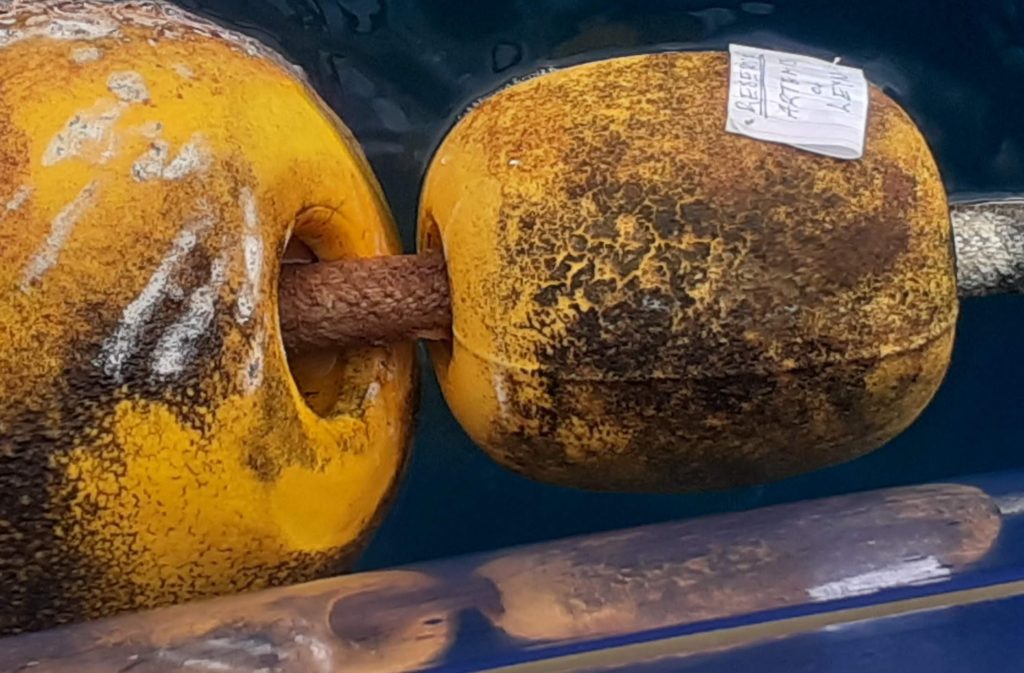
Mooring buoy, reserved for us

In the bay we found the mooring buoy and attached to it was a small sign saying “reserved for Artemis of Lleyn”. We thanked the neighbors with drinks in the cockpit
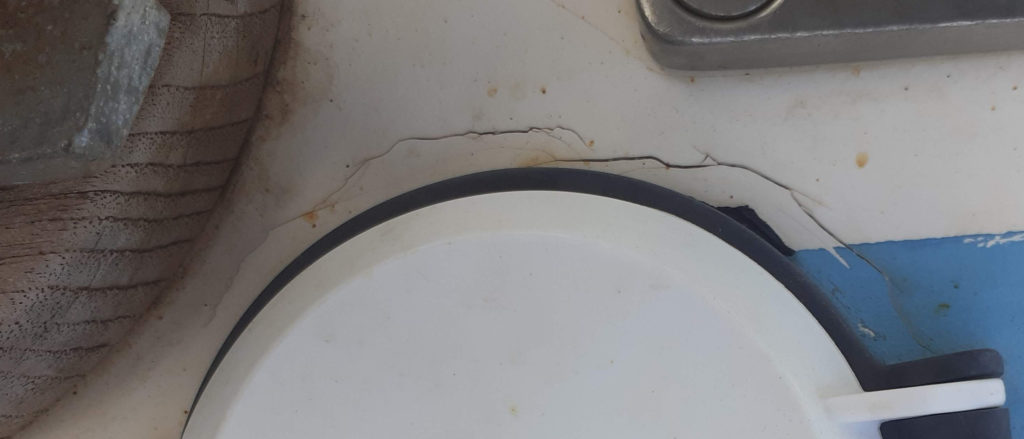
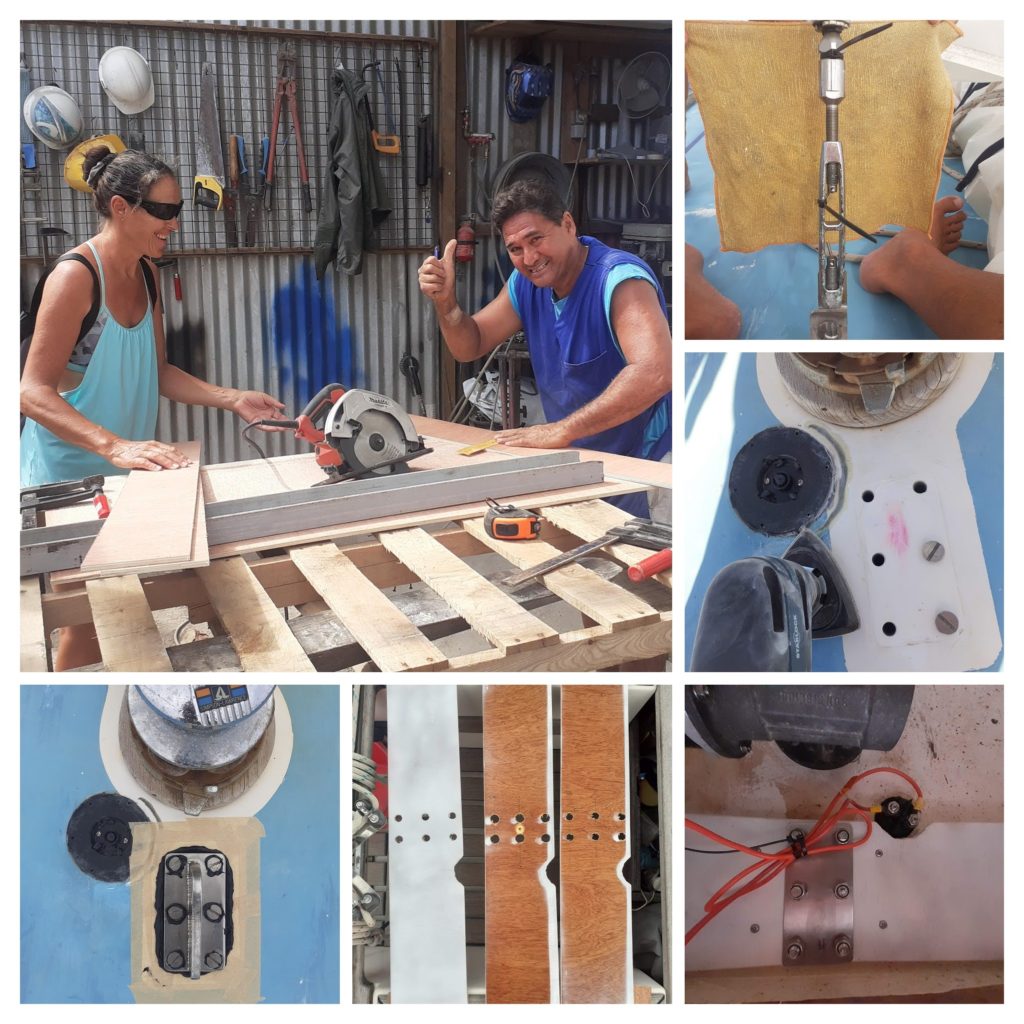
A crack in the deck!

“There is a crack in the middle of the deck!” Heidi told me as she returned from doing something at the front of the boat. Not a good thing to hear at any time.

We took a long hard look at the crack and decided it could only be something to do with the foot-switch next to it or that the inner foresail was trying to rip its mounting out of the deck which is definitely not something that should happen. We contacted Colin, our favourite surveyor (http://cbmarineservices.co.uk/), and he confirmed that it looked like the deck was giving under the load being applied by the inner foresail. He suggested that the plate under the deck be tied down to the hull or, if that was not possible then, a laminated beam should be added below the deck to spread the weight. Option one was impossible due to lack of space so option two it was.

We are anchored off Huahine, a beautiful tropical island with no boat maintenance firms, no marine shops and little in the way of tradesmen. If they need a house they have a kit shipped from Tahiti and it is assembled here. There is one hardware store, the owner of whom was asking how the project was going by the time we finished.

So we made a plan:

  1. design and build a beam that follows the curve of the deck
  2. epoxy the beam so that it is waterproof and paint it white so it looks good
  3. get the foresail down and packed away
  4. dismantle the inner forestay including the furling system and secure it against high winds
  5. Remove the existing steel plates from above and below deck
  6. repair the crack with resin
  7. install the new beam
  8. reinstall and seal the plates, assemble the forestay and the furling system.

Luckily we knew how to do number 2 & 3 so they should have been easy. It would have been easy if the bolt at the base of the sail wasn’t seized and the allen key hadn’t of broken off trying to remove the offending bolt.

Everything else was learning by doing. We visited the hardware store and found 9mm wood from which we made three “layers” that we then installed above each other to allow them to bend to the correct shape before being screwed together. Heidi is an epoxy and paint expert so the beam was soon waterproof and looking good.

Getting the foresail down and everything dismantled was impossible in high winds and with gusts of 30 knots. But we have time so we worked on other projects and waited a week for the wind to drop. It turned out easier than expected.

Heidi watched a video about crack repair, bought some resin and mended the crack. Unfortunately there was only see through resin on the island but the repair is perfect and will keep the moisture out. When we reach civilization we can worry about color.

We then installed our new beam and, after then waited for the wind to drop again. This morning I opened my eyes and heard “Hey! There is no wind. Come on, let’s do it.” Two hours later everything was reassembled and ready to be tested.

Adams’ Grammar School – the wasted years.

I spent five years at Adams’ Grammar School in Newport. At the time I was totally convinced that I was largely wasting my time. The school’s only obvious target was to prepare me to pass as many exams as possible. The exams were largely regurgitating data that you had “swotted up” on just prior to sitting them. The school and the teachers made almost no attempt to prepare me in any way for the “real life” that was to follow.

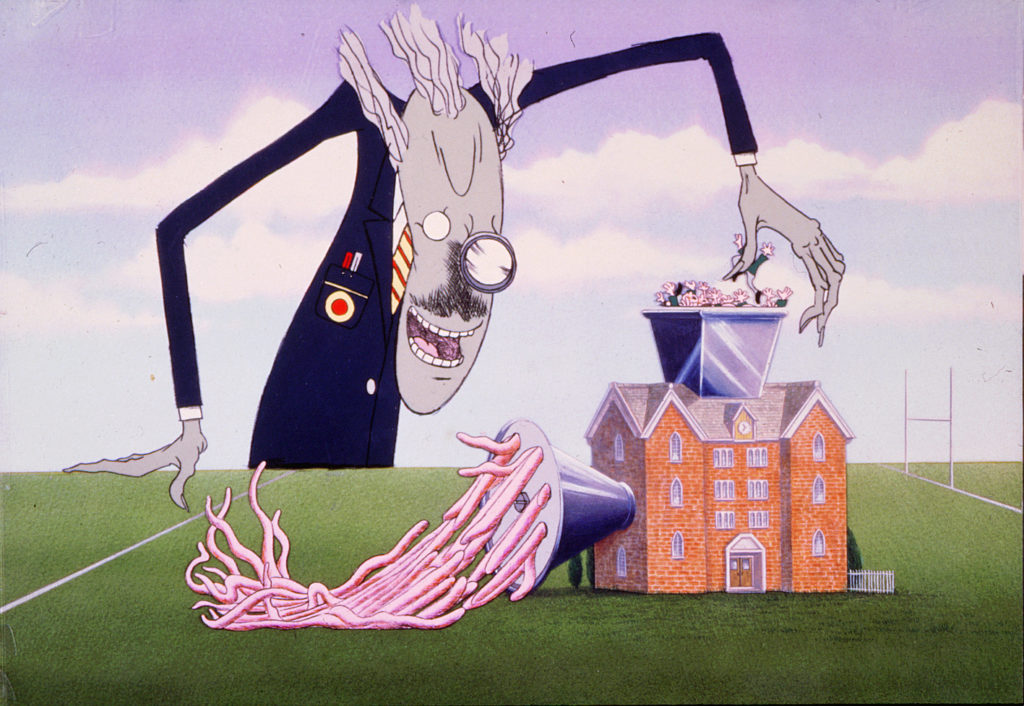
Pink Floyd described school perfectly

Now, with over thirty years hindsight, I realize that I was absolutely correct.

The lessons were in:

  • mathematics
  • English language
  • physics
  • English literature
  • religion (only Church of England style Christianity)
  • history (only the parts that affected the United Kingdom)
  • geography
  • biology
  • chemistry
  • music (but only music written by dead people)
  • art
  • French
  • physical education
  • craft

Mathematics and English language are the two subjects that stand out as being a hundred percent useful. Throughout my life I have needed these on an almost daily basis. Much of what we learned in Physics has proved to be irrelevant but at least we learned how to arrive at results through experimentation.

If I had never had to read Chaucer, never compare St. Mark’s version of a myth to St. Luke’s and never learned about the Corn Laws, I would have been at no disadvantage in later life.

Learning the names of every African country, differing shapes of trees leaves, the chemical formula for sulfuric acid and Mozart’s & Picasso’s dates of birth were all a useless means of filling a brain and I forgot as much as I could as fast as I could.

French could have been a huge advantage if any teacher would have tried to teach us to converse in French rather than merely the endless tables of verbs and tenses we needed to “pass the exam”.

Strangely some of the most important life skills I learned were in the two subjects that were not taken seriously by the school as they didn’t lead to “real exams”.

In physical education I learned that if there is something awful to do – dive in to an icy swimming pool – then it is better to do it straight away. I also learned to do the hardest task first while you are still fit. Both of these have turned out to be amazing life skills. In craft I learned one of life’s most important rules. “Measure twice and cut once!” Truly the ultimate lesson for a successful life.

School could teach you so many life skills and prepare you for the reality that will be your life. In my case it was Scouting that did that for me. School was mostly just something that interfered with the real learning.

Alcohol

Of course you don’t need alcohol. Here in French Polynesia we meet many Mormons who survive without alcohol or coffee. You can be one hundred percent sure that we will not be converting to Mormonism. Coffee is the fuel that keeps us going and alcohol is the reward for a job well done.

When we started in Scotland we introduced the rite of the Anchor Coffee at the end of a successful trip. Back then it was known as a Tinkers Coffee as Heidi began diluting the coffee with Baileys in the anchorage of Tinkers Hole.

As we moved South the Baileys became more expensive and was replaced with Supermarket Own Brand Irish Cream. Much more economical and the coffee tasted no worse for the lack of a brand name.

By the time we reached the Caribbean, economic necessity had converted us to wine drinkers. Martinique, Guadalupe und St. Martin are all French so the wine was as cheap as the daily baguette, cheese and garlic. This wonderful state of affairs lasted until we arrived in French Polynesia.

In Polynesia alcohol is incredibly expensive. We had been paying three Euros a liter for wine and suddenly it was twenty. Once again we followed local custom and converted to Rum. It is also not cheap but, buy buying in bulk – 10 liter plastic canisters – at least affordable. The neighbouring sailors now talk of Heidi Coffee which is with a splash of rum.

Thank you Annie & Dirk!

A few weeks ago an Australian boat messaged us that they were heading home so needed to lighten their load before Australian customs searched their vessel. They offered to sell us their complete stock of wine at Panama prices. We immediately answered “YES!” and set sail the next day for the island of Raiatea where we helped to cross load to Artemis.

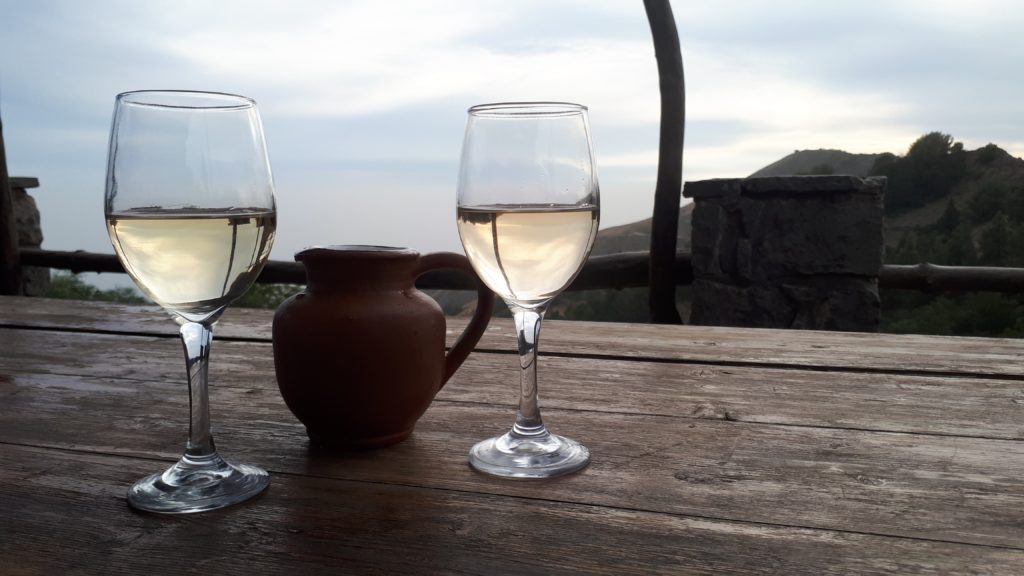
So at the moment we are in the enjoyable position of having rum and wine on board. The envy of all our neighbours.

Huahine Island

We had visited nearly all the islands in the Societies archipelago and cycled on most of them. (The exception was Maupiti which was just too small to justify assembling the bikes.)

Altar on the sea shore

The only island we were missing was Huahine so after a false start – due to the toilet being blocked – we sailed overnight from Moorea and reached the pass through the reef just after dawn. Australian friends were at anchor so we sailed towards them. Their warning that it was “very shallow” came a few seconds late so we unfortunately scraped a little anti fouling on to the coral. The anchorage was strewn with coral heads so we moved across the bay and anchored next to another friend on his boat “Elin”.

Our first trip in to “the big city” (the whole island has a population of six thousand people) made a very positive impression. A nice floating dock for the dinghy, a yacht club with half price happy hour, a huge supermarket and cheap SIM cards. We may be in the middle of nowhere but it is a very civilized middle of nowhere.

With the bikes we set off anti-clockwise to explore the islands. There are two, Big Huahine and Little Huahine joined by a bridge. The road is almost empty and the vegetation rampant. The reef is ever present out to sea and the mountains in the middle of the island can be glimpsed up the valleys. Whoever dreamed up the Garden of Eden could have just cycled around Huahine.

We visited the largest temple ruins we have yet seen in Polynesia, admired centuries old stone fish traps in the lagoon and feasted at a road side food stall. Mostly it was a gentle rolling ride but there was one hill that looked suspiciously steep. The sign at the bottom claimed it was 15% so Heidi decided she could “easily do that”. After she had cycled to the top with Neill pushing next to her, we came to a more honest sign which proclaimed 30%. She is crazy!

A few days later we sailed to the far end of the island. There was little wind but we were inside the reef so also no waves and we could gently ghost along enjoying the peace and scenery. That trip really summarized Huahine. Extremely beautiful and exceptionally laid back. A wonderful place to while away a few weeks.

Moorea Reloaded

Imagine a volcanic Pacific island with beautiful clear anchorages protected by a fringing coral reef to keep the swell at bay. Imagine returning from every walk or bike ride with a rucksack full of freshly picked fruit. Imagine friendly locals who wave as they paddle their outrigger canoes past your boat. And then imagine fast, cheap Internet directly to your boat via the mobile network. If you can imagine all that then you are dreaming of Moorea.

We had a backlog of “online projects” and no desire to stay longer in the metropolis of Tahiti so we sailed across to, the equally well connected, Moorea and ended up spending five weeks in the various stunning anchorages. This is the way “home office” should be. Online project, swimming, some more computing, snorkeling, sail a bay further, a bit more work and then sundown drinks on the beach with new friends from Australia, Poland or Germany.

A friend of Heidis was getting married and the best man and bridesmaid asked for a video from people because Covid made a “real wedding” impossible. We had the location, we had the leading lady and we had time so we spent a few days “shooting” and then taught ourselves video editing to create a video. We had such fun that we then made the following video.

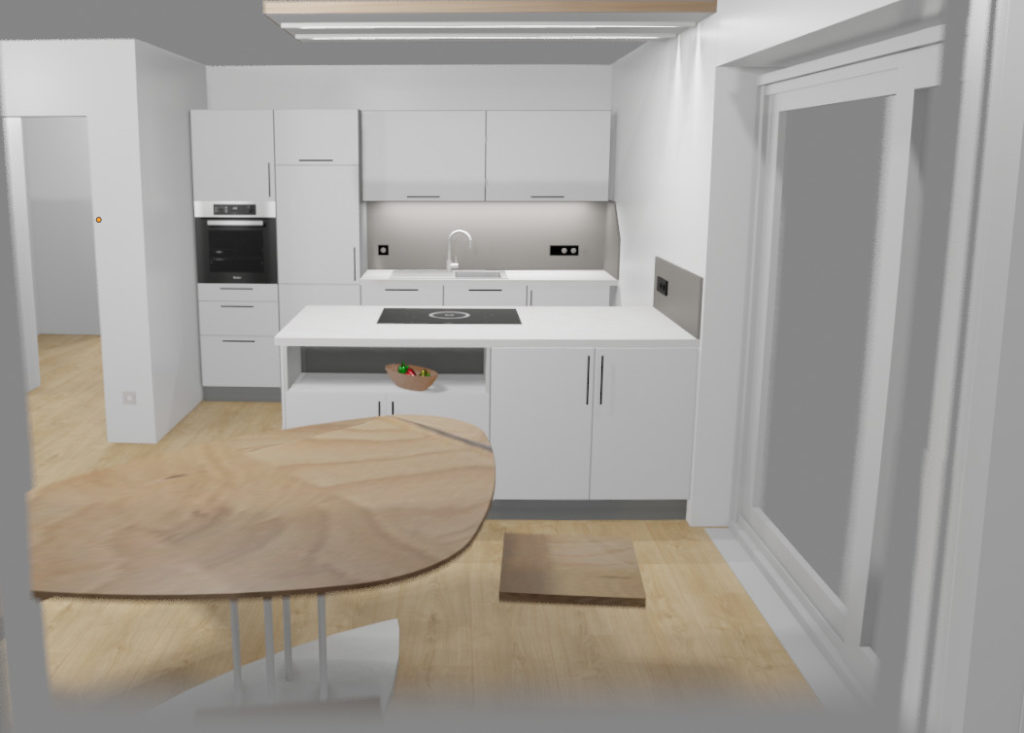
We need to plan our new apartment but it is far away and still a building site so it was time for Neill to learn about 3D modelling and rendering. It took three days just to get the concrete base the correct size and just as long to create a glass shower. The sink was a major project and the table only exists because Neill’s brother sent over a 3D model. But it is great to be learning something new and fun to see the results.

Looking from the eating area in to the kitchen.

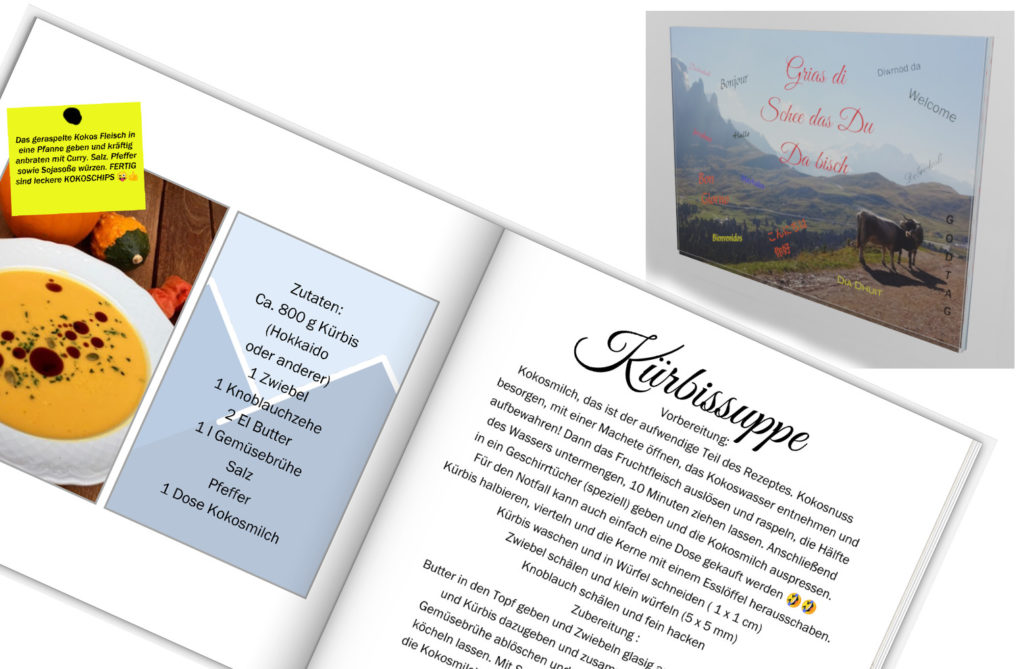
The apartment needs a nice picture on the wall as you enter so Heidi decided to learn to use a graphics program and then create the picture. We would also like a cook book where we tell our guests about our favorite recipes so she needed to learn even more and design a book. It was funny to hear us both frustrated when some aspect of the software didn’t work as we expected, but we are getting there.

Still learning new tricks every day.

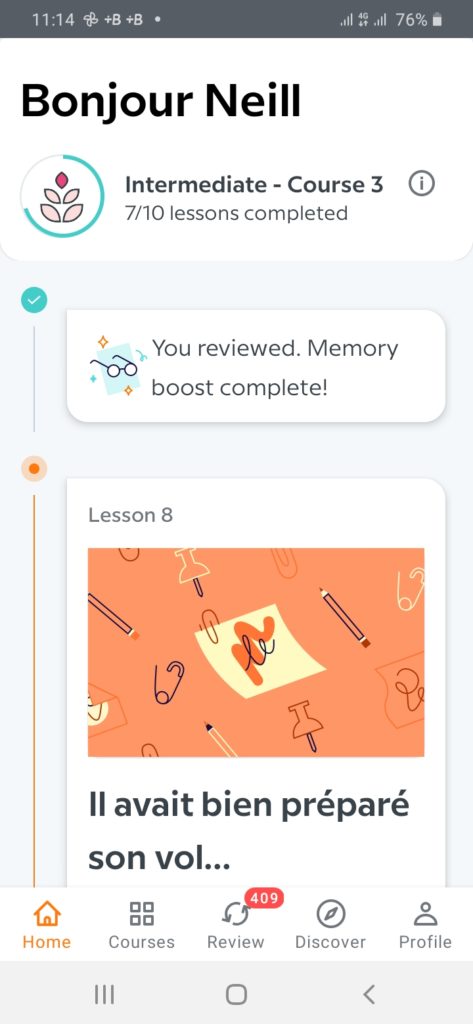
Most mornings we are still kick starting our brains with a French lesson using the Babbel App. It is getting more and more difficult as the software now claims we are “advanced” but at least the locals now understand us and we – sort of – understand them.

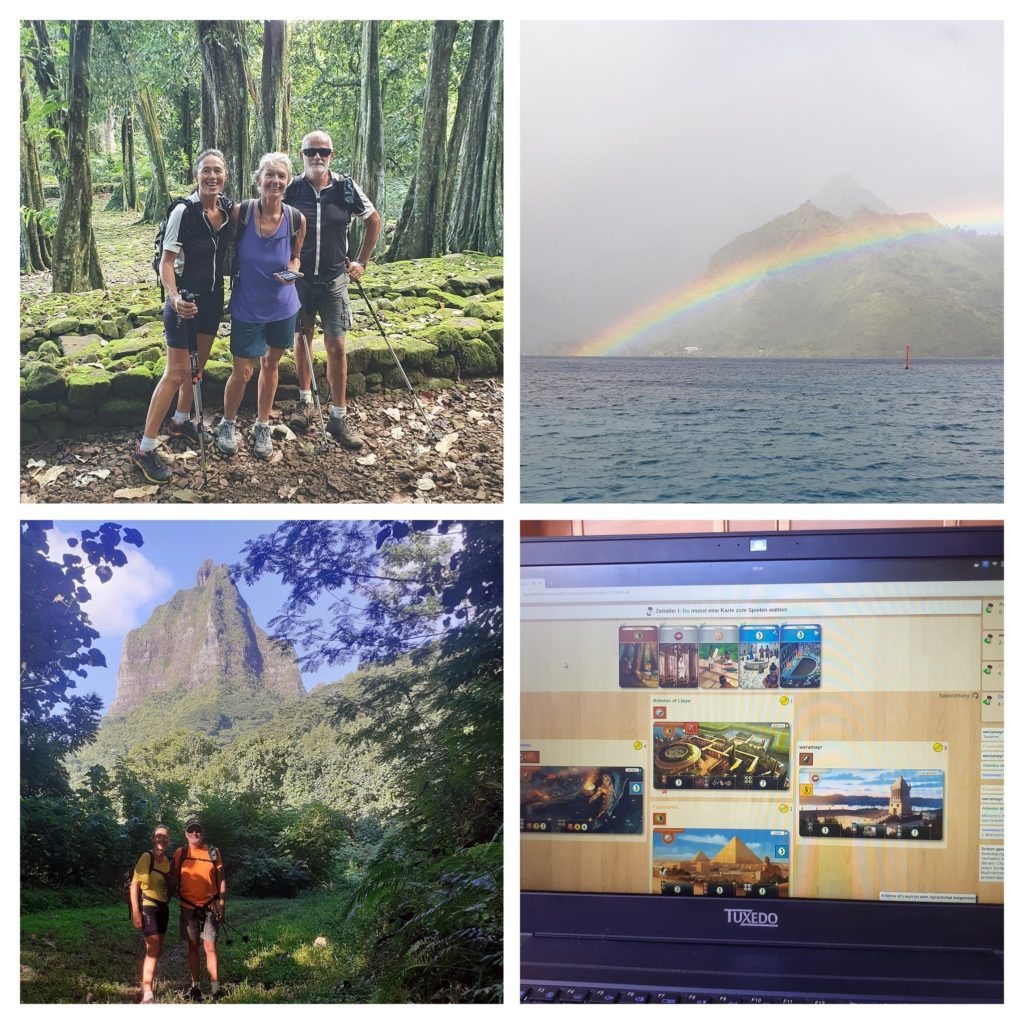
But it wasn’t all “work”. We also managed sailing, walking, cycling and online board games with friends in Allgäu.

ruined temples, sailing, jungle exploration and online board games

Sailing is a sport

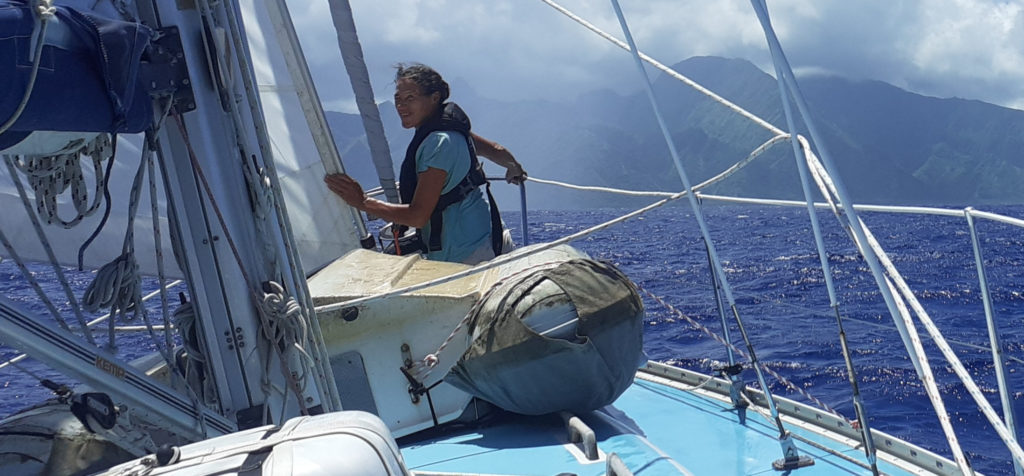
Some days we sail over a hundred miles and enjoy a relaxing day as Artemis carries us to our destination. Some days we sail seven miles and feel like we have done an intensive workout. Today was the second type of day.

We were anchored in a bay off the island of Moorea. We had brushed all the “gunge” off the hull of the boat the last few days so were already making “old people noises” about shoulders, elbows and wrists. Friends were anchored in the next bay, five miles up wind and we had agreed to sail round to visit them but when we woke up – to rain and flat calm – it appeared we were going to be motoring. Neill asked his weather witch to organize some wind and by the time we were ready to leave we had a healthy fifteen knots of wind straight against us.

Lifting the anchor in fifteen knots of wind is a real team sport. One stands at the front and signals the direction of the anchor chain while the second person steers the boat. The third person is below stacking the chain nicely. Unless of course there are only two of you then some one (Heidi) ends up running between tiller and anchor locker to get warmed up.

We headed away from the reef and in to the bay to set the sails. We briefly thought about a first reef (less sail) but decided on the second (much less sail). We didn’t even consider the large front sail but chose the jib. A bit more team work with lots of heaving on lines and the sails were set so we turned out through the pass and in to the Pacific.

Around mountainous islands there is a phenomena known as an acceleration zone. This leads to a band of much faster wind just offshore and today the wind was blowing at 25-30 knots. The wind was against us, the swell was against us and Artemis was in her element jumping the waves and making five knots. We were SO happy that we had tidied everything up and tied everything down as the boat heeled 20 degrees. After two miles Heidi calculated it was time to do a tack so we headed back towards the island leaning the other way, just to check what was loose on the other side of the boat.

The swell was beating us down wind so navigator Heidi ordered two quick tacks in succession to reach the pass back through the reef and check the arm muscles were still working. It was at this point that the wind decided to “pick up a little” so we let the sails out a touch and screamed through the pass at eight knots. In the bay we managed to roll the jib away – more muscle work – and get the main stowed just before the anchorage and drop anchor on a sandy part of the reef.

A boat who followed us through the pass was caught with too much sail out and entered with his genoa (large front sail) ripped from top to bottom and flapping crazily in the storm.

Shirt off, goggles on and then in to the water to swim upwind against the current to check the anchor and surrounding coral. Back on board I was met by a jug of warm water to wash the salt off and then we enjoyed a coffee and agreed that we had done enough sport for one day.

“… are our most important asset!”

A friend has a new job and it is a pleasure to watch how much she is enjoying the new position and the online training course that teaches her the skills she will need. This week she posted a screenshot from the course saying “our employees are our most important asset!” and commented it with a huge smiley.

It is nice that the company writes such a slogan, great that our friend is so motivated to read it but unfortunately, in my opinion, totally untrue.

Continue reading ““… are our most important asset!””

How is sailing?

This morning my daughter sent a WhatsApp from her camping van in Greece. “How is sailing?”

We are not sailing much. I think only three times in the last three weeks. And then “just around the corner”.

We are anchored on a reef off Moorea floating about four meters above white sand in transparent water. Fish, turtles and the occasional shark swim past. We have a huge swimming pool when “the going gets hot”. On shore there is a beach with showers so we can shower and wash our hair as often as we want – a sailors paradise.

From basil leaves to pesto and then a sundown drink

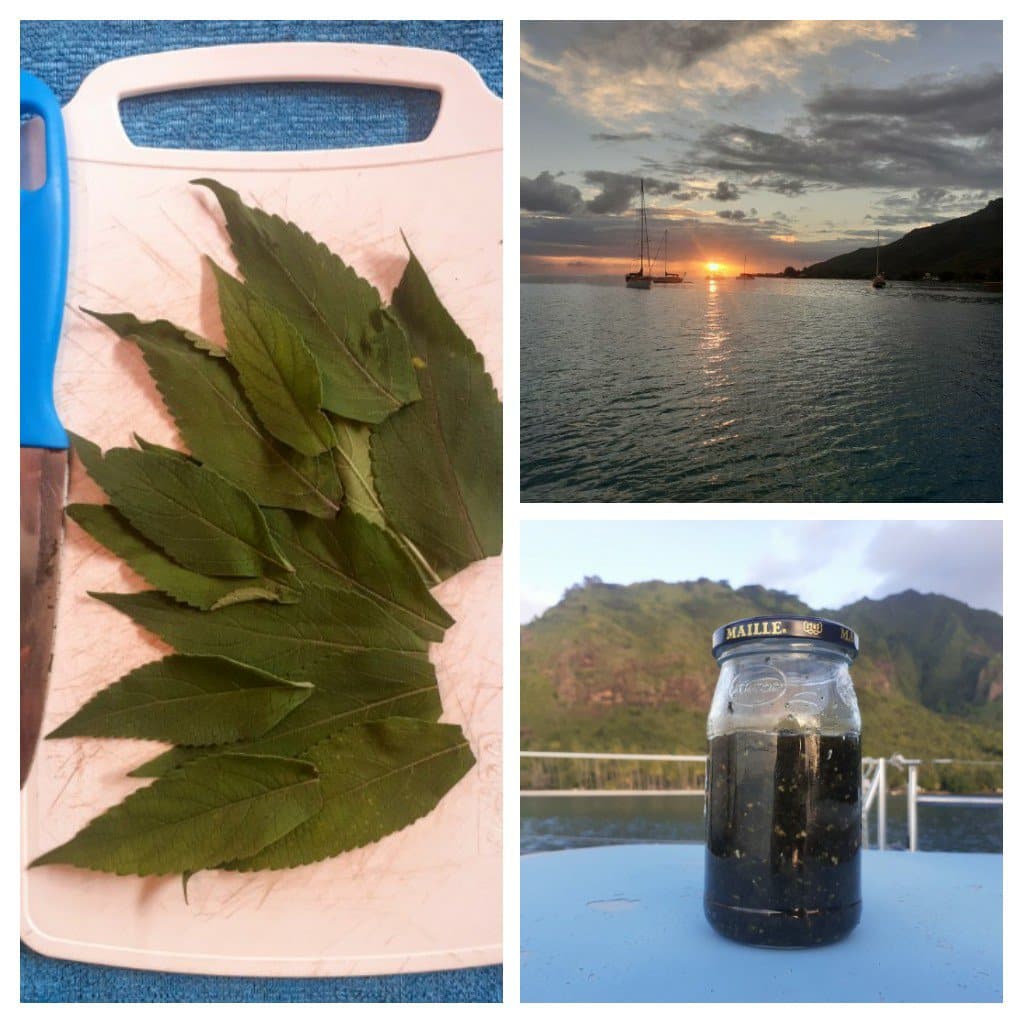
Today we started with our daily French lesson and then walked the 12 kilometers to the nearest supermarket and back to buy an internet refill for our 4G SIM card. Opposite the shop we found a basil bush so picked a hand full of leaves with which we made basil & garlic pesto. Home made fast food for when we lack the motivation to cook. On the way home Heidi found a ten dollar note on the road which paid for the shopping.

Back at the boat, the batteries were fully charged from the sun and wind so we made fresh water with the desalinator. A local called by in his dinghy and gave us a present of a large hand of bananas so we quickly made a banana cake from those too ripe to survive the night.

Everything was finished, washed up and tidied away just in time to enjoy a rum punch in the cockpit just as the sun sank in to the sea. And now the stars are appearing above us as a breeze cools the cockpit.

So little sailing but yes, life is good!

A day in the life of …

We were talking to friends in Germany and mentioned that we had “finished work for today”. The lady laughed and said “Your life is a holiday. What work do you have?”

Well the last two days we have been anchored in a bay off Tahiti so we wake up late, have fun and eventually manage to drag ourselves in to the cockpit where a negligee clad Heidi serves brunch which takes us through to midday. A few hours of sunbathing, swimming and WhatsApps and it is time for afternoon coffee with the neighboring boat before we all dress in casual smart clothes to visit the yacht club for a sun downer followed by an evening meal on their terrace.

In our dreams!

The day begins with a coffee and French lesson to get the brain working. Yesterday was lequel, laquelle, lesquelles and today s, ss, c & ç so a great way to wake up. The following breakfast is normally combined with a planning conference when we agree “the plan”. Yesterday was meant to be easy with a quick change of the motor and gear oil and food resupply.

Run the engine to get the oil warm and fluid and then extract the oil with the suction pump, twist off the oil filter, new filter on and refill back to the correct level. Easy! It would have been if the suction pump had not developed an air leak, the filter wasn’t on so tight and the spare filter wasn’t the wrong size. But no problem. You can seal an air hole temporarily with an oily tissue, the shop at the end of town can order a new filter from Papeete and they also had a better filter removal tool than our current one. Today the engine oil is changed and now we just need to find some one that sells 20W gear oil.

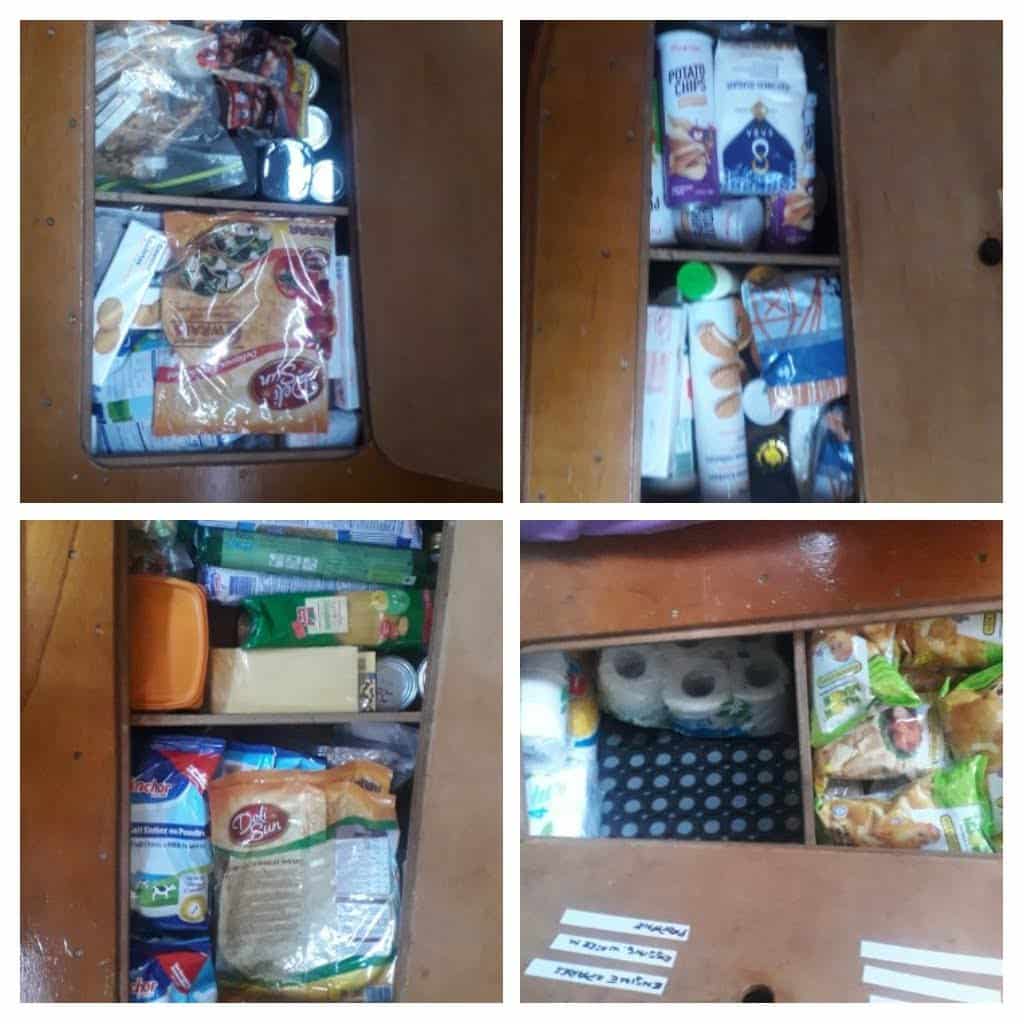
Shopping began with a stock taking, checking that those items we believe we have agreed with the actual contents of our lockers. The food is all below the seats in the saloon so dismantle everything, empty the cupboards and count. Once we were sure of what we have it was easy to create the “big shopping list” for the next three months.

With all the bags we owned, we took the dinghy across to the marina and walked in to town and to the supermarket to fill two trolleys. Shopping is also good for the brain. If one tin of beef costs 483 francs but you can buy a pack of three for 1456 francs, which is cheaper and is 0.7 kg of milk powder for 634 or 0.8 for 712 better value? Good that we had both paid attention in mathematics forty-five years ago.

changing the brushes

Luckily a local friend had agreed to drive us from the supermarket to the marina so we “only” had to carry the shopping to the dinghy, ferry it back to the boat, lift it onboard, sort, store and document it all. And on the second day it was just a case of buying diesel, gas and oil.

The sun down drinks really happened. They were mixed by Heidi on board and followed by home made hot dogs with a fried aubergine relish and special yogurt sauce. Who needs a yacht club when we can prepare food like this onboard?

And did I mention that at some point during the two days we also dismounted the anchor winch motor to replace the brushes? Or that we found that the leak in the front cabin is from the holding tank?