Another overnight sail had us just off the Wide Bay Bar, south of Fraser Island, at dawn. We had read all the pilot books, received advice and routes from the coast guard and checked the charts. The bar has a bad reputation.
Warning – Wide Bay Bar is dangerous and should not be crossed except with local knowledge. Conditions on the bar can vary rapidly with changes in tide height and direction, ocean swell and prevailing winds. Extreme caution should be exercised when crossing the bar in the afternoon, especially from seaward when the sun may make the leading lights difficult to see. Ebb tide combined with a south east swell or sea may cause significant waves to form on the bar and break on the adjacent banks.
http://beacontobeacon.com.au/
The wind was “only” 15 knots from the south-east and the swell was under two meters so we turned in towards the bay. The situation quickly got “exciting” with waves picking us up and throwing us around. At least once the propeller was out of the water and once a lump of ocean was dumped in the cockpit. Heidi was navigating and Neill trying to hold the course through the rodeo ride. It took us nearly an hour to cross the mile of shallow water before things finally calmed down.
Someone else crossing the bar. We did not have time for any photos. (Photo: Royal Qld Yacht Squadron Clubrooms)
Heidi described the crossing as interesting when talking to the coastguard. (She is working on her British understatement.) The coastguard laughed and told her “well you will know what to expect next time.”
And then you read about people who cross in 5-6 meters of swell and have to be rescued. No wonder!
We finally left Moreton Bay and ventured back out into the Pacific Ocean for the first time since we entered quarantine in the middle of November. The wind was either against us or non-existent but we managed to reach Mooloolaba in time to cross the river bar at high tide. We then sailed up the Mooloola River, amazed at the huge fishing fleet to the right and homes of the rich on the left. Despite the river being strewn with anchored boats, we found a spot and dropped anchor.
Next we launched the dinghy to visit Estelle, a lovely lady to whom we had been recommended by her son. She was between appointments but found time for a quick drink and a talk. We agreed to meet the next morning when she had a few hours between two engagements.
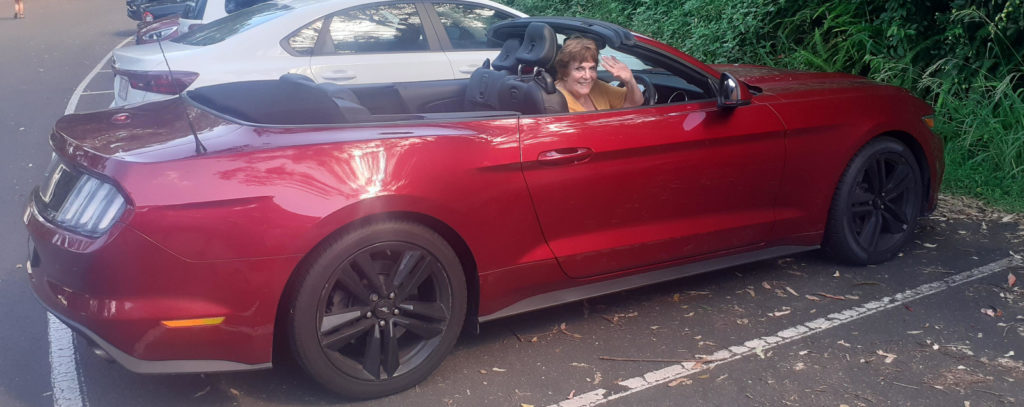
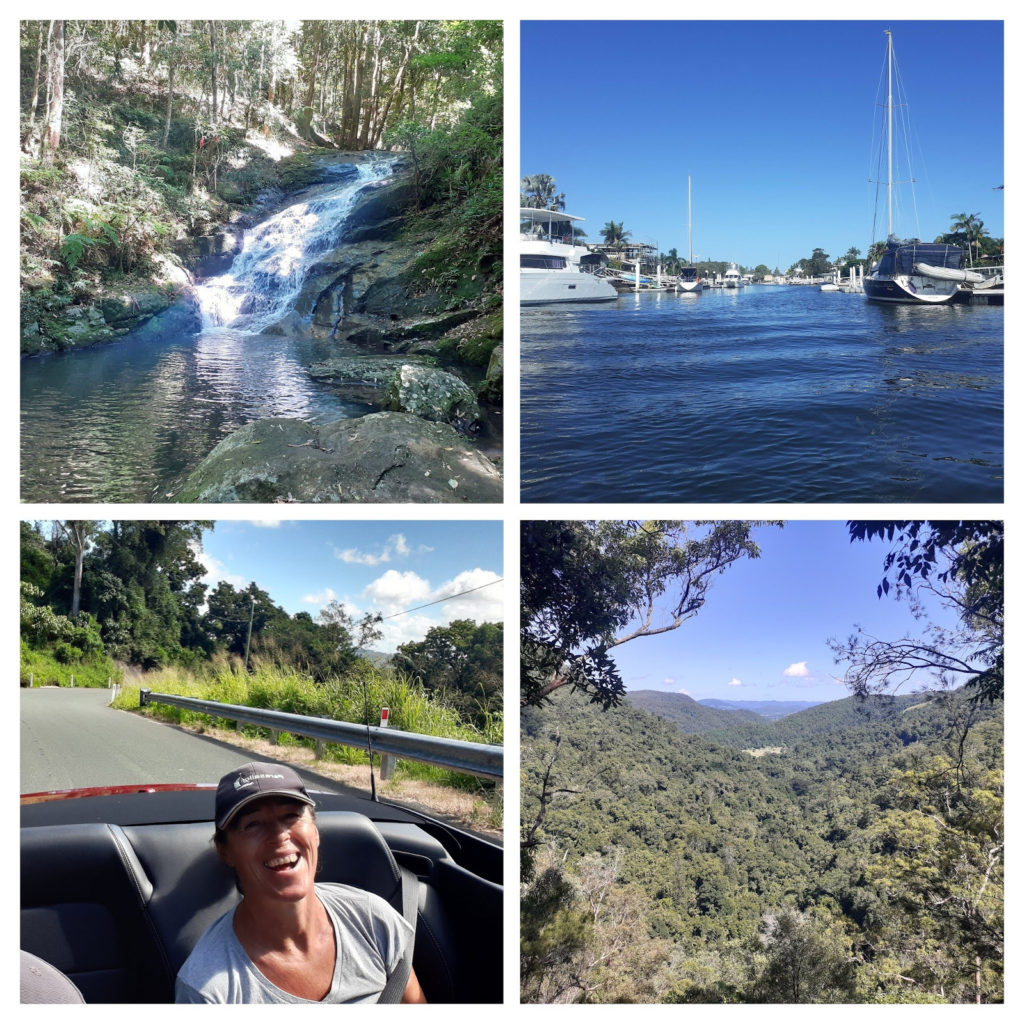
One doesn’t discuss a lady’s age so it is enough to mention that Estelle’s son is as old as Heidi. BUT that doesn’t stop her driving a shiny red Ford Mustang convertible and neither does it stop her beating EVERY other car at EVERY traffic light while smiling sweetly. The car is responsive and the driver experienced so the highway and the curvy mountain roads were quickly behind us and we reached the Kondalilla National Park. Estelle pointed us in the correct direction and we walked through the virgin forest to the Kondalilla Falls.
The forest was shady, the view was expansive and the waterfall was impressive. Just another slice of amazing Australia.
Back at the car we headed for a cafe and then Estelle showed us another way home with stunning views across the countryside and the ocean. She dropped us off back at the dinghy before speeding off to her next “date”.
In my last blog, I mentioned that we cycled the soft sand of North Stradbroke Islands. If you are interested you can see our route at Alltrails.
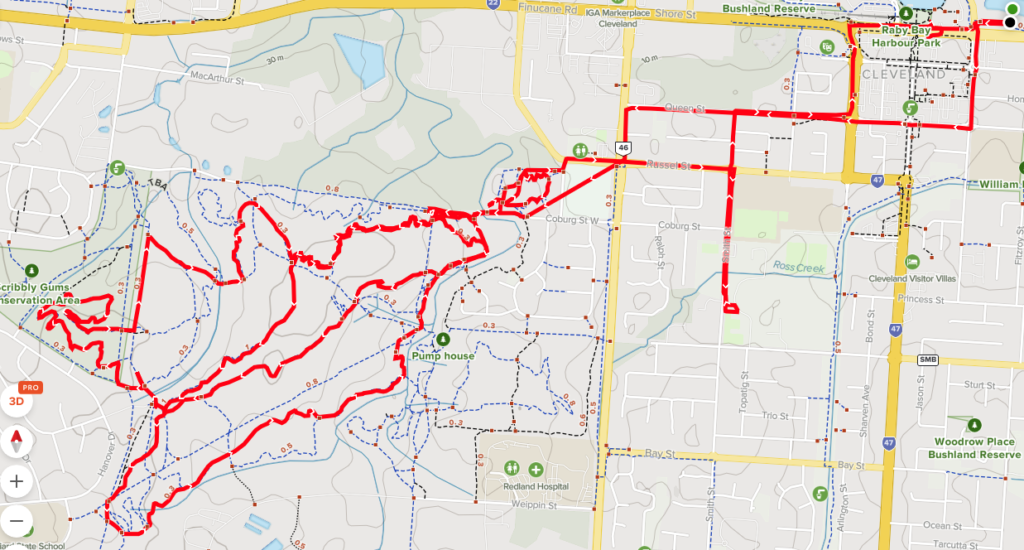
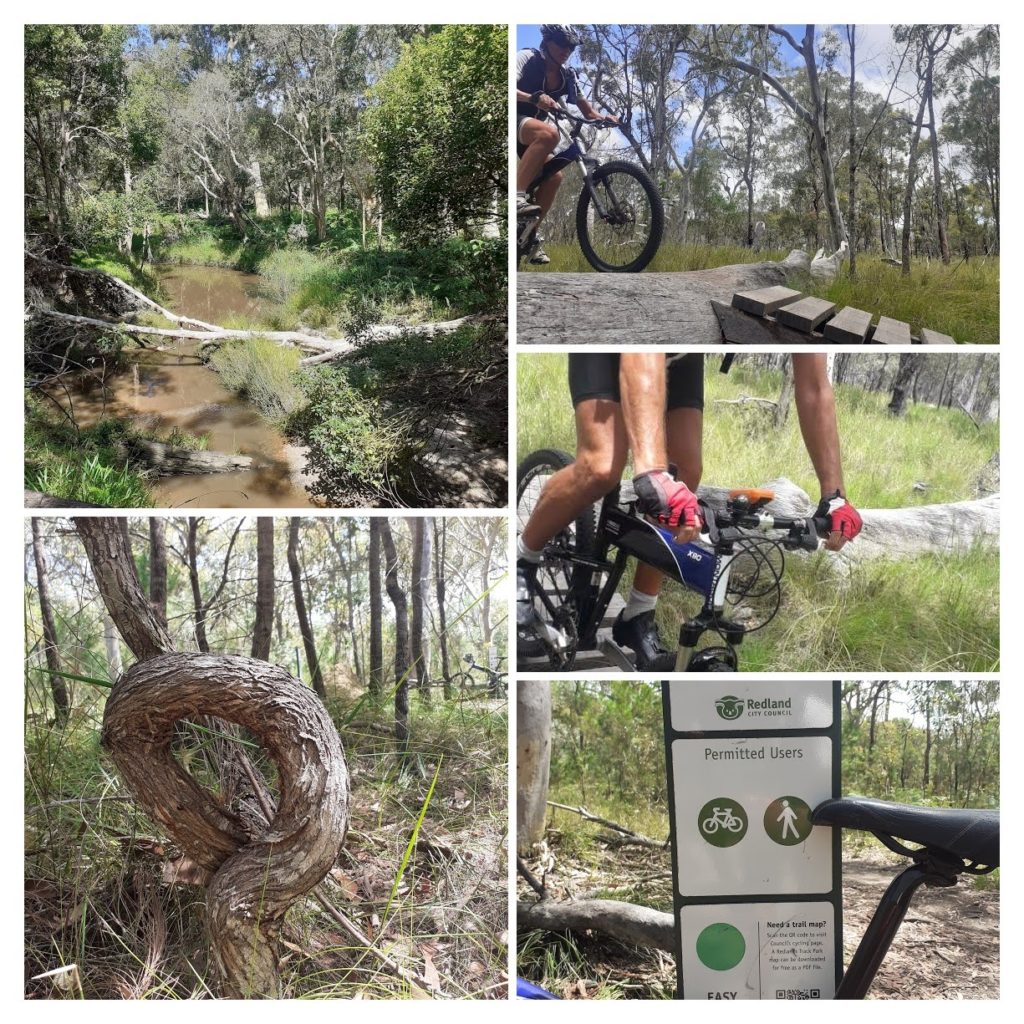
Back on the mainland we set out to explore the mountain bike parks that the Redlands Council have built near town. The first day we “got back in to practice” in the relatively flat Redlands Track Park. The park only has an area of about four square kilometres but contains 25 kilometers of trails.
As you can see in the above map we managed a lot of trailing. Our route in detail is at Alltrails. The vegetation is everything from Eucalyptus forest to a deep, bracken filled creek. It is a real challenge trying to make the turns, avoid trees, jump fallen trunks and enjoy the view.
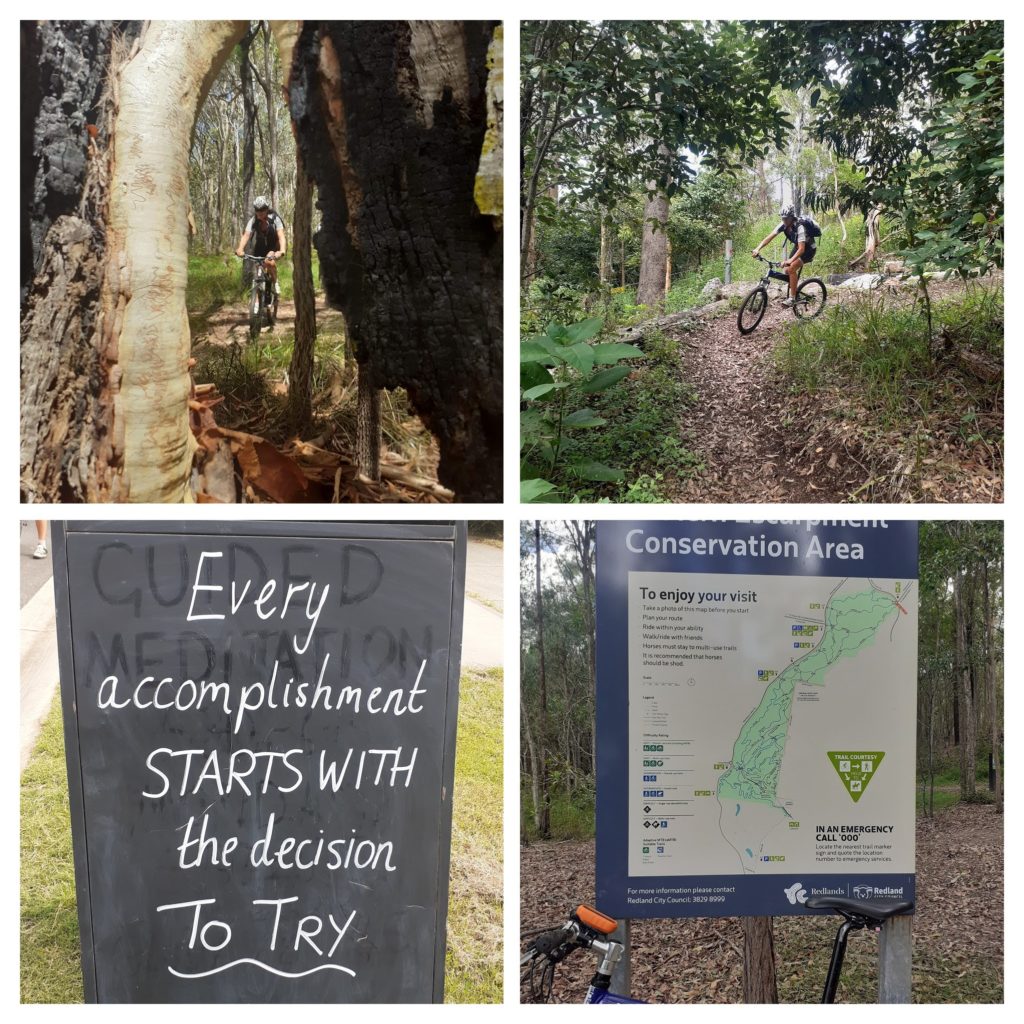
The next day we were back on the bikes and heading inland to the “more serious” Eastern Escarpment Conservation Area. Here there are 29 kilometres of tracks and they are nearly all marked as intermediate rather than easy. They are definitely steeper, on the side of Mount Cotton. We cycled all the way through the park to the viewing platform near the summit and then all the way back down again. Eleven kilometers to get to the park, thirteen kilometers of trails and then eleven back to the boat! Route is at Alltrails. We did this trail on a Saturday and therefore we were not alone. We definitely raised the average age in the park which, without us, would have been about twenty.
Australia has a land area of 7,617,930 square kilometres. Moreton Bay has an area of 1,523 square kilometres. I know people who have “seen” the whole of Australia in a month – Sydney Opera House, the Gold Coast, Ayers Rock, alligators and then fly home. We have spent over a month just enjoying Moreton Bay. At this rate we will be finished with Australia in about 400 years which is a problem, as we only have a two year visa.
We spent Christmas anchored off Tangalooma enjoying the snorkelling and the antics of the weekend boaters. From there we sailed to St. Helena Island and saw the ruined prison where Queensland kept their worst prisoners. Just off East Australia the cyclone Seth was raging and we hid behind the island over New Year as the wind raged across the Bay.
On our second attempt we managed to reach the anchorage at Raby Bay and restock our larder. We also met Sue & Chris who kindly invited us to use their private pontoon. They also took us to the hardware store, allowed us to have our motor serviced on the pontoon, fed us and let us use their swimming pool and shower. Amazing!
With a full boat we crossed the Bay and visited North Stradbroke Island. This island used to have Queensland’s asylum on it and there is a fantastic museum that explains the story of the inmates and aborigine laborers. Another island where the “outcasts” were sent from the mainland. Stradbroke is one of the biggest sand islands in the world and a great mountain biking “challenge”. We cycled 35 kilometre and 18 of them were on un-tracked sand. The scenery was impressive and we met our first kangaroos but we definitely earned the burger that we bought at the end of the tour.
South Stradbroke Island is a bit “run down” with the only exception being the immaculate annex of the Southport Yacht Club. It is strictly Members Only so normally closed to riff-raff like us. Luckily Susie & Nick are members of the Ocean Cruising Club and Southport Yacht Club and were kind enough to serve evening drinks on their boat “Watermusic II”, take us for a walk along the beach and then prepare a breakfast BBQ in the club grounds. Thank you!
We continued south to the Coomera River to collect our water maker from the workshop. On the way we managed to ground twice. Luckily the tide was rising and the ground was sand so we did no damage and just lost a little time. Later we passed a huge house that would have had a fantastic view if the owner had not parked his even bigger boat on his pontoon.
We visited Russell Island which was definitely less than impressive. Friendly people living in an estate cut off from the mainland except by ferry. Coochiemudlo Island was more of the same but with a golf course.
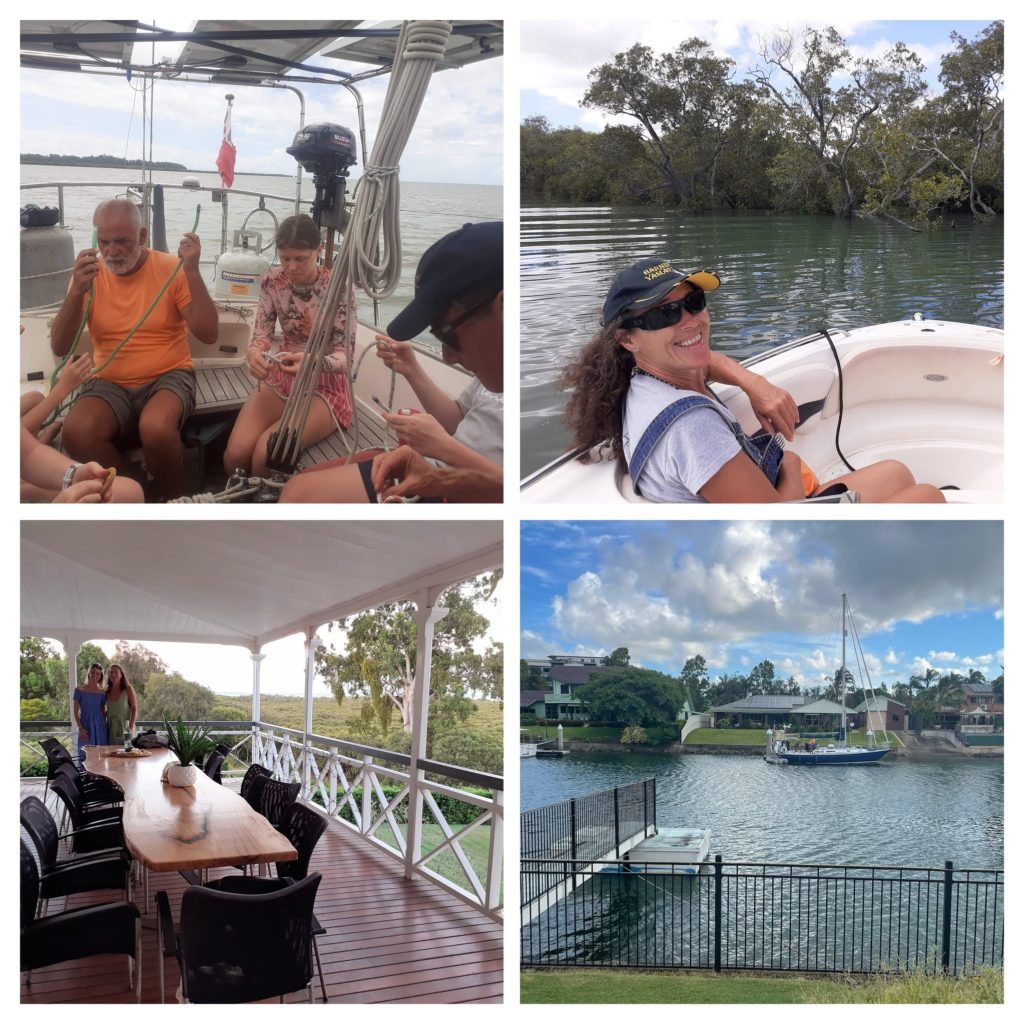
Back in Raby Bay we once again docked at Sue & Chris’s pontoon for a night. More amazing hospitality even though they were setting off for the 13 hour drive to Canberra the next day. The next day we were blown off course in the narrow canal and took refuge on Scott & Katie’s pontoon. That evening Scott brought us apple pie and in the morning, coffee and breakfast. They were off for the weekend so told us to make ourselves at home and stay a few days.
The Laming family took over the hospitality for the weekend. Andrew showed us the Redlands, explained the history and treated us to a great Italian meal. The next day we were invited to their house for dinner and then we all went out for a sail. Lunch at a restaurant, dinner at their house, a bed for the night and breakfast before a motor boat ride from their house back to the boat. I am tired just thinking about the weekend.
Australia got off to a good start. We applied for our visas completely online. We supplied all the supporting documentation as PDF files and finally received an email saying we were good to visit. No paper; no post; no signatures and no stamp in our passports.
When we arrived the border force came onboard and asked for various documents which we sent them by email. In return they set up a a cruising permit in their system and sent us a copy as an email attachment. Once again no trees died. The police scanned our passports and their screen showed a green tick. We were all cleared in without lifting a pen.
We sent scans of our french vaccination certificates to a medical center and they converted them to Australian digital certificates. Online we created an Australian health record and then our certificates were linked to our records. A few days later we received our booster jab and that appeared online the next day. We downloaded the Queensland covid App, linked it to our health number and immediately it showed a big green tick which allows us to go anywhere as “certified vaccinated”. And we still don’t have any paper. A few times we have rung the border force who answer the phone straight away, ask for our passport number or boat name and straight away know everything. They let us make our position reports by phone or email.
The supermarkets, who have upped the contactless payment limit to $200, also offer online shopping and free delivery for big orders. The two biggest chains offer self service checkouts which we sort of understand after three tries. We are getting there.
off an uninhabited island
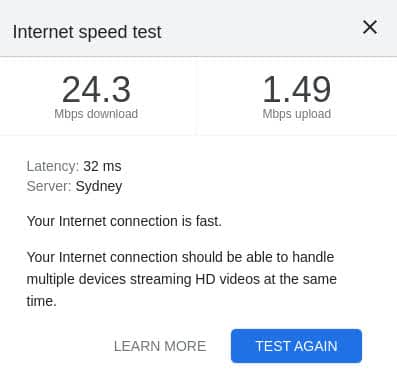
Our €16/month phone contracts include more data than we can use and unlimited calls to 15 countries including Germany. And, until now we have had a 4G connection everywhere except the remotest island. We still had Internet but “only” 3G – at the far end of nowhere.
We visited a cafe where we scanned a bar-code on the table, the menu appeared on the screen and we ordered direct from the phone. Online shopping “just works”. We downloaded the Uber App, linked it to a credit card and enjoyed a trip back from Aldi in an immaculately clean car driven by a friendly driver. The App told us exactly what it would cost before we ordered and exactly how many minutes it would be until the car arrived.
It is going to take a lot of getting used to when we visit the “data-protection” paradise in Germany. The thought of dealing with health insurance companies and tax offices who think a fax machine is suspiciously modern is enough to cause nightmares.
The world sailors Heidi and Neill on their 36 foot sailing yacht “Artemis of Lleyn” totally failed to reach Aldi today.
It should have been easy. Lift anchor at St. Helena Island, sail the eight miles south to Raby Bay, anchor again and then the next day take the dinghy to land.
BUT …
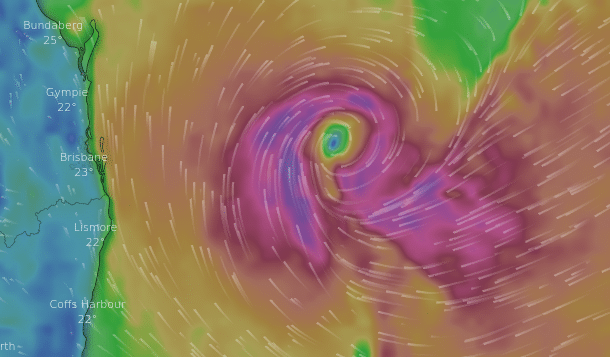
… they forgot about Cyclone Seth. “Seth” is sitting off the Australian east coast and causing high winds and huge waves.
“We’re also likely to see abnormally high tides for much of the south-east. … we’re still likely to see tides exceed the highest astronomical tide level around the western Moreton Bay area,”
meteorologist Shane Kennedy
The intrepid duo took a look at the weather and decided that, even against the wind and swell in Moreton Bay, eight miles was “doable”.
Cyclone Seth to the east of Australia
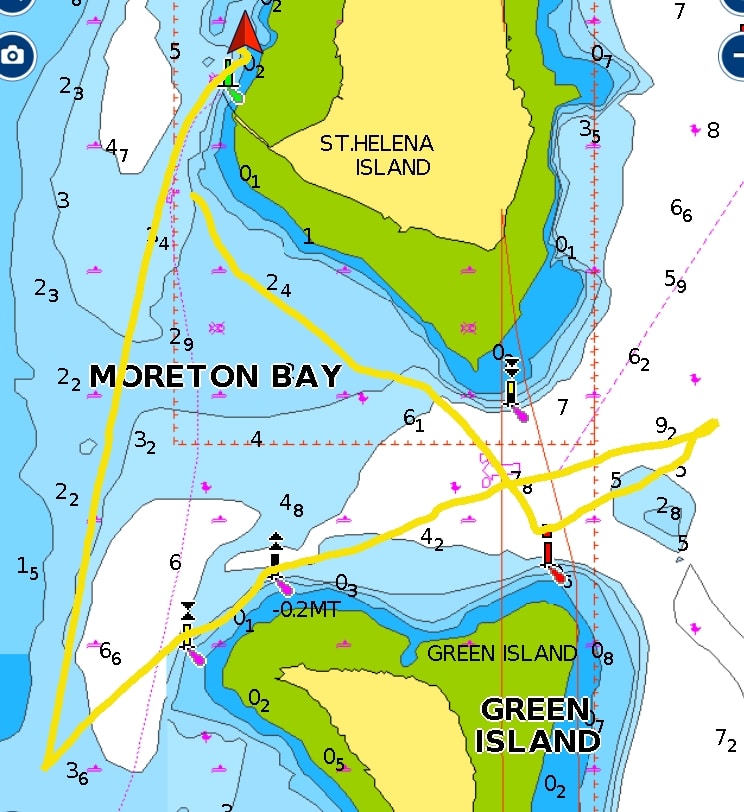
No sooner was the anchor up than the wind increased. Even with the motor on, it was impossible to exceed one or two knots between St. Helena and Green Islands. Once the marker buoy was rounded the sails were set – just as the wind increased again. Trying to roll the foresail away again, a line went overboard. Motor in to neutral (before the line wrapped round the propeller), Heidi clipped in to the harness and heading to the bow. Of course it started bucketing down with rain and the wind increased some more. A few waves washed the deck and cockpit just to add to the fun.
Start (and finish) at the red triangle
With everything once again in control, it was back between the islands with much less sail to try the other side. As soon as the protection of the island was left the full effect of the swell was felt again. It was still six miles to the bay and motoring six hours at one knot was not an option. Tack again and sail (with a handkerchief of sail and at six knots) back to where the day started.
Two and a half hours after leaving St. Helena, Artemis was back anchored in the lee of the island. The wind was no less but there was no swell.
Sailing to Australia was not a problem but Aldi will have to wait for another day.
Another Christmas, another continent. After Europe (2017), Africa (2018), South America (2019) and Oceania (2020) it was time for our Christmas in Australia.
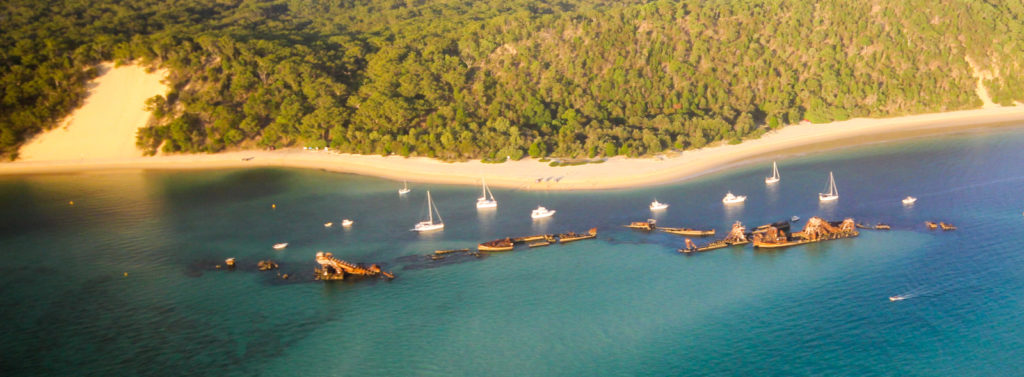
We needed a beach, clean sea water, a gentle breeze and Christmas carols so we sailed to Tangalooma. Here there is a sheltered anchorage between the beach and a row of wrecked boats. The beach was full of four wheel drive vehicles all with their awnings and barbecues. The bay was full of boats – jet-skis, tiny fishing boats, sailing boats, catamarans, tourist carriers and a few yachts. The current was strong but we have a good anchor.
Tangalooma Wrecks
The wrecked boats were stranded here thirty to forty years ago to offer protection from westerly winds. Over the years they have rusted away and become partly covered with coral. They are now home to more fish than you can ever imagine. Twice we went snorkeling and we weren’t swimming through water, we were swimming through multicolored fish.
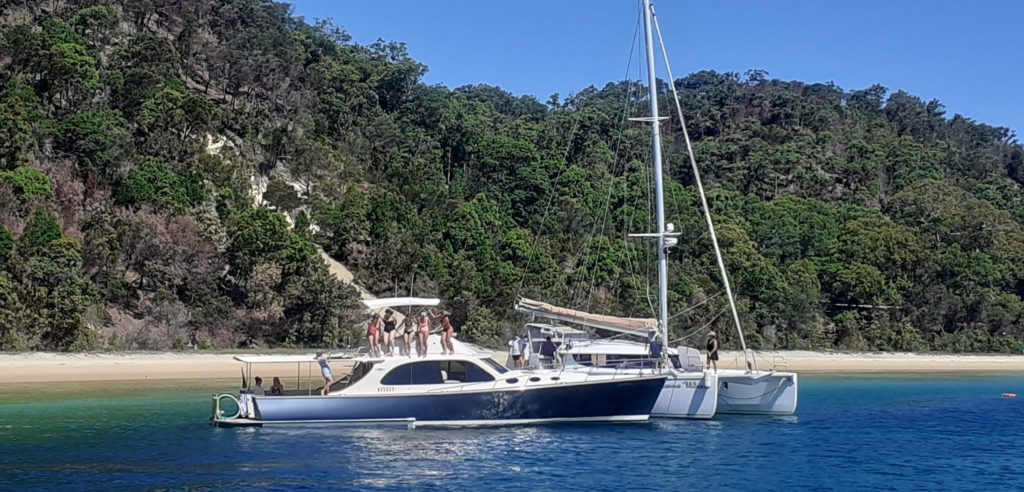
On the day we arrived it appeared that the whole of Brisbane had the same idea. We anchored near a catamaran and shortly after another catamaran appeared and anchored between us. All three of us were swinging in the current and the wind and it got a little dangerous. The idiots who had arrived last – “crazy cat” – weren’t bothered so the first cat went elsewhere and we re-anchored further from them. They were still swinging around and later threw out a stern anchor which caused them to hit another boat. At least they were now far from us and we could relax.
“crazy cat” sideswipes their neighbour
On Christmas Eve, Shane from the neighboring boat brought us a beautiful photo of Artemis at anchor in front of a storm front. Later we enjoyed the Christmas carols on the local radio station, home made lasagna and local wine. A perfect Christmas!
Artemis at anchor (thank you Shane)
On Christmas Day we walked barefoot along the beach and then in to the forest to enjoy the scent of eucalyptus and the deafening Cicadas concert. In the afternoon “the neighbors” from the vessel “Moonwind” came over for coffee and Heidi’s chocolate cake.
Heidi, Neill, Graham, Denise, Jenny, Dan & Shane
And finally – here is a great Christmas carol that was played on the radio. Fantastic when you can turn the music up without annoying the neighbors.
Noonsite has published an article about the current situation in French Polynesia. It just shows how different two people can experience the same situation. We were in Polynesia for 17 months and, with five exceptions, only met friendly people who made us feel welcome. I summarized our fantastic experiences in a recent blog.
In the Noonsite article it says
I can’t speak to the situation in the Australes, other than to mention second hand reports of overcrowding at the most often-visited island. Last season there were up to 15 boats in the lagoon, compared to a previous average of 5 or so and some in the community were reported to be unhappy about this number of boats.
Noonsite.com
We were one of the 15 boats mentioned in this article. We were in the lagoon of Raivavae over Christmas 2020 and New Year 20/21. If anyone believes that the lagoon was overcrowded they should try anchoring in the British Solent at the weekend or off an Australian beach around Christmas.
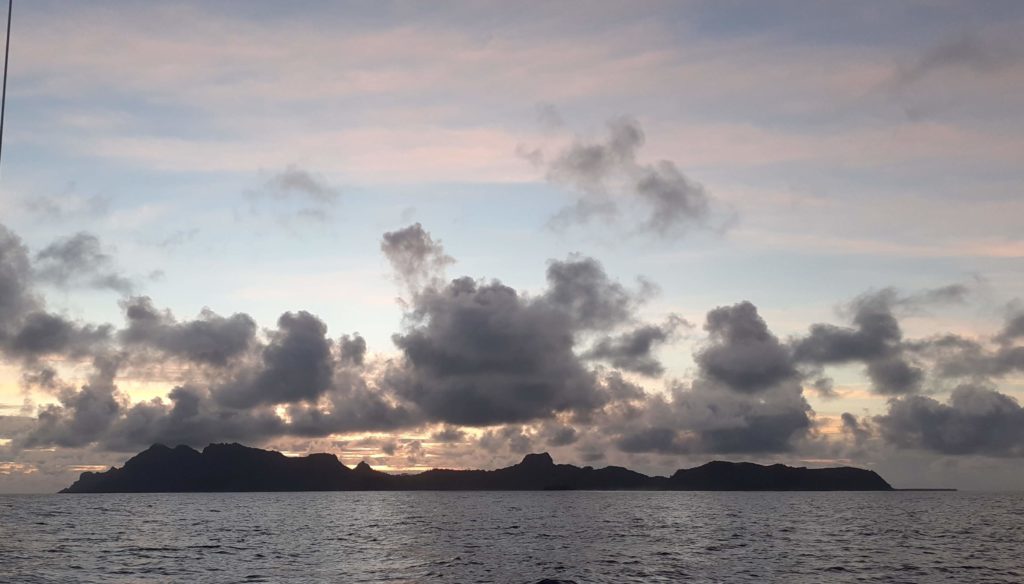
Sunrise over Raivave Island
The first person we met in Raivavae was the deputy mayor who welcomed us with a present of fruit and opened the craft center specially for us. The duty Gendarme cleared us in to his island and provided advice on sailing routes, anchoring spots and biking routes.
The owners of the reef where we were anchored welcomed us, let us use their “swimming pool”, allowed us to party on their beach, gave us fruit and let us use their va’a (outrigger canoe). Before we left they also prepared a beautiful traditional meal for us.
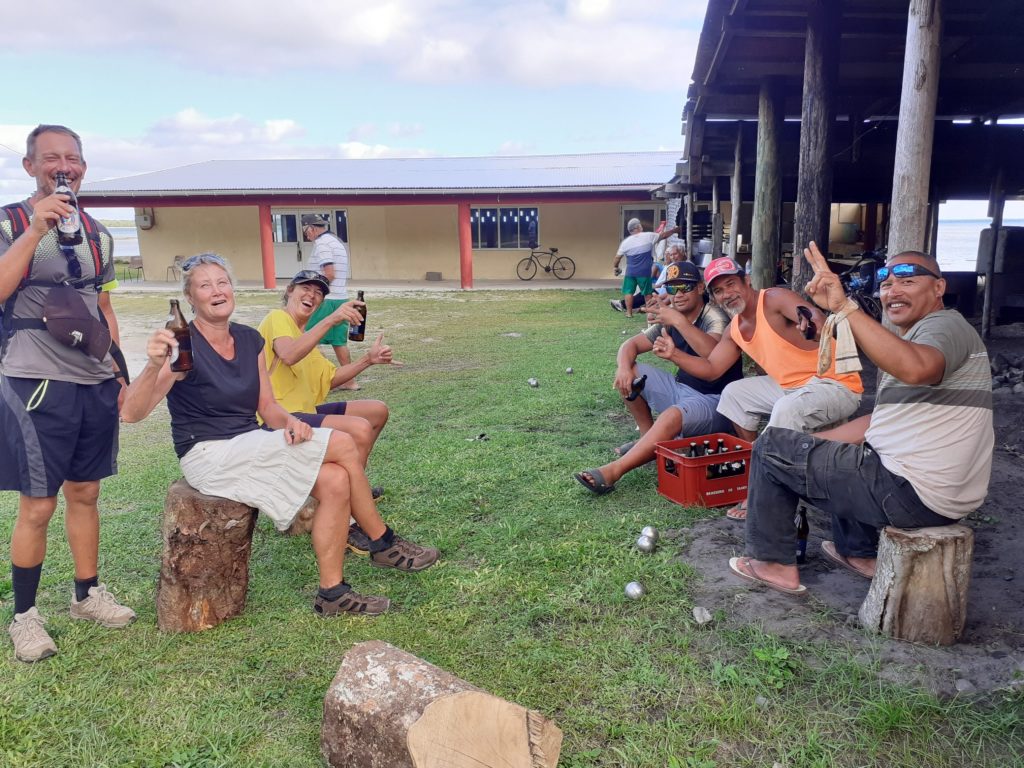
On the island we were invited to play boules on a Sunday afternoon and given beer (to improve our playing) faster than we could drink it. One gentleman gave us bananas, papaya and a root vegetable called manuk. When we asked at a farm if we could buy vegetables they apologized that they had none but gave us so many lychees that we could supply the neighboring boats as well. We received so much produce while on the island that we had to make chutney again.
Boules and beer
On the summit of the islands highest mountain we were given bananas by locals who had “carried too many” to the top.
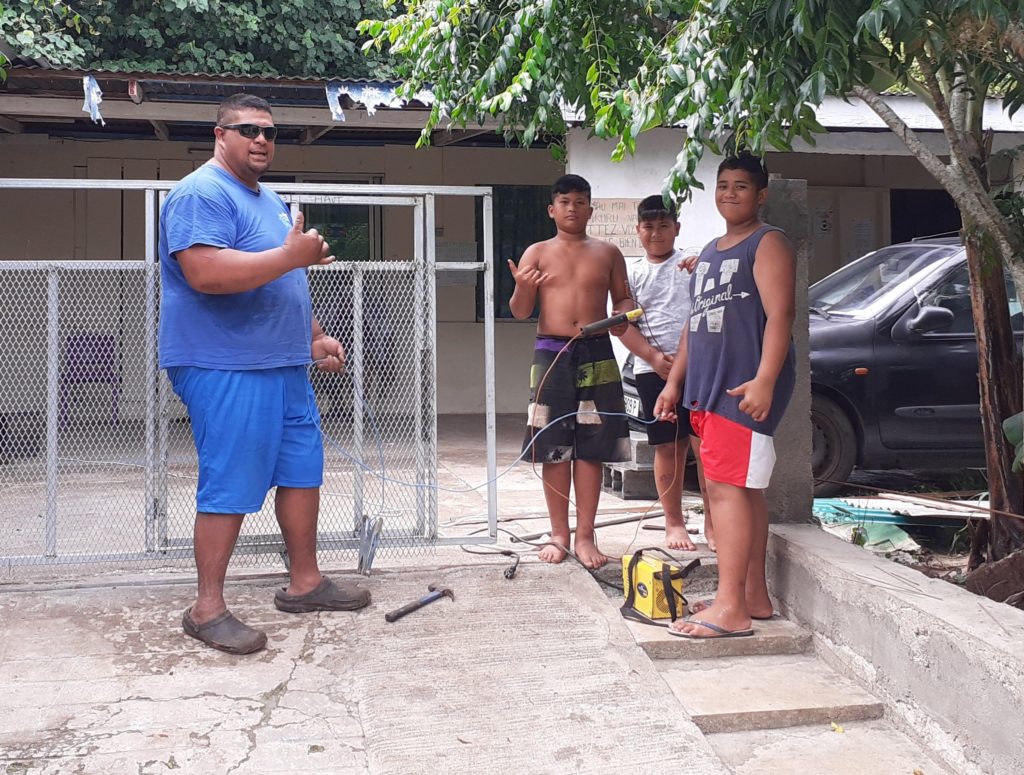
When a bracket on the engine broke we found a welder working on a gate. He stopped what he was doing to weld and paint our bracket and then refused payment because “you are sailors!”.
Raivave Welding team
And yes, one day three local men went from boat to boat saying we should leave but unable to explain why or what we had done wrong. The French boats explained that we would be gone once the wind turned from the south and they left less unhappy. Later we were told that this small group had heard horror stories of abandoned boats in Tahiti via Facebook.
Factually it is true “some in the community were reported to be unhappy” but when three people are unhappy and over 800 are so friendly, it would be better to write about the 99%.