Whitsunday Inseln

Zu den Whitsundays gehören doch mal schlappe 74 Inseln und es ist auch das Reich der “Chaterboote ” und somit sind leider auch ganz viele Boote unterwegs, wo der Kapitän keine Ahnung von den Regeln zu Wasser hat. Wir wollten es auch nicht glauben, dass man hier keine Qualifikation zum führen eines Bootes nachweisen muss, um sich ein Boot zu leihen. Aber das erklärt auch wiederum, warum soviele Idioten unterwegs sind 🙂

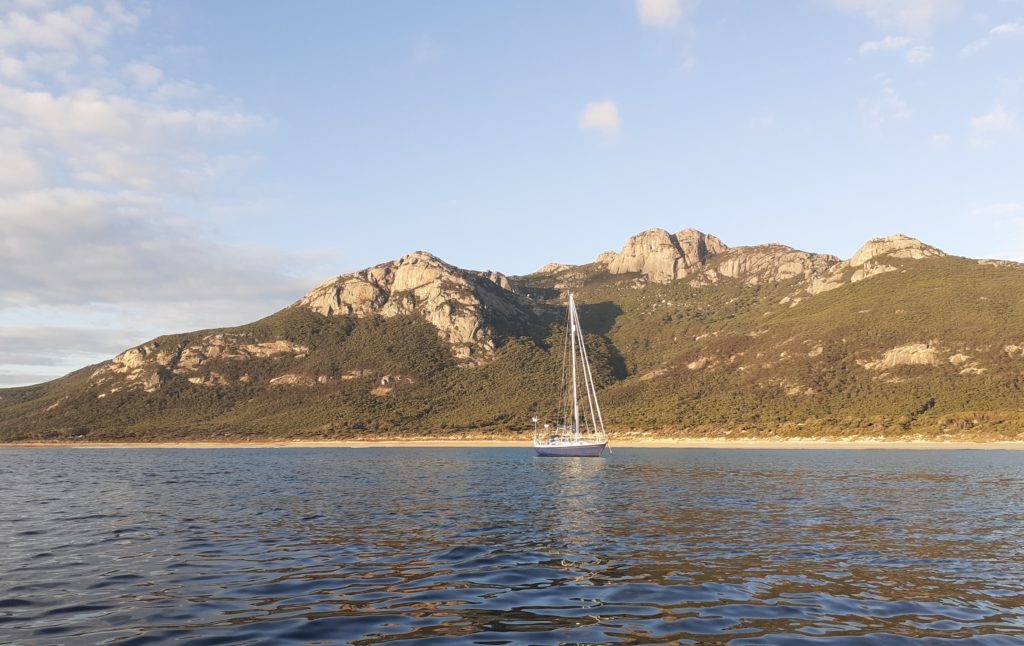
Wir haben in der Sawmill Bay geankert, wie gerne wären wir hier ins Wasser gehüpft, doch in der ganzen Bucht sind Warntafeln aufgestellt, denn hier haben schon gehäuft Haiangriffe stattgefunden. Zur Abwechslung kletterten wir mal auf einen richtigen Berg ( mit 400 Höhenmetern kann man das doch Berg nennen, oder?). Der Wanderweg war wirklich super schön angelegt mit Stufen und Tafeln, da haben wir doch gleich gemerkt, dass wir hier im Touristenbereich sind und auf der anderen Seite in der Dugong Bay haben wir leider keine Dugongs gefunden. Wenn ihr euch jetzt fragt, was zum Teufel denn Dugons sind, ein Dugong wird oft Gabelschwanzseekuh oder Seeschwein genannt und schaut ganz witzig aus.
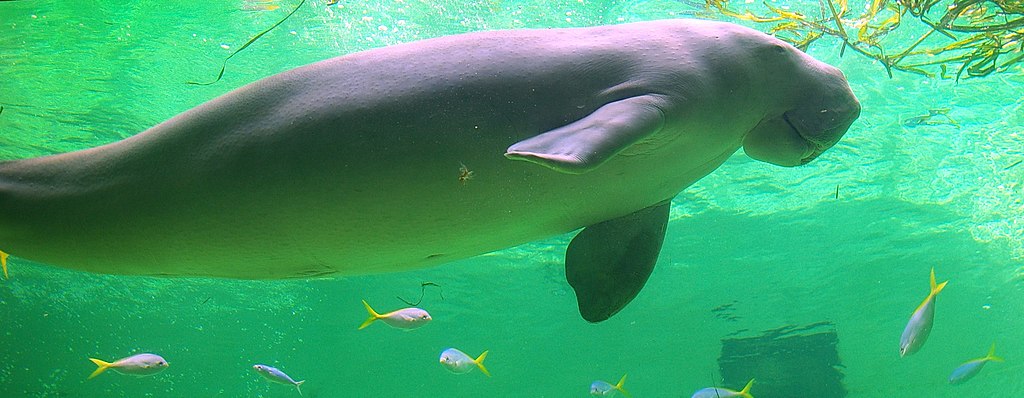
Das Dugong Bild ist von pelican from Tokyo, Japan, CC BY-SA 2.0 https://creativecommons.org/licenses/by-sa/2.0, via Wikimedia Commons

Am Abend haben wir dann den Ankerplatz gewechselt, da Neill ein bisschen arbeiten wollte und dafür eine stabile Internetverbindung braucht, doch in Australien in Mitten vom Nirgendwo sind wir fündig geworden.
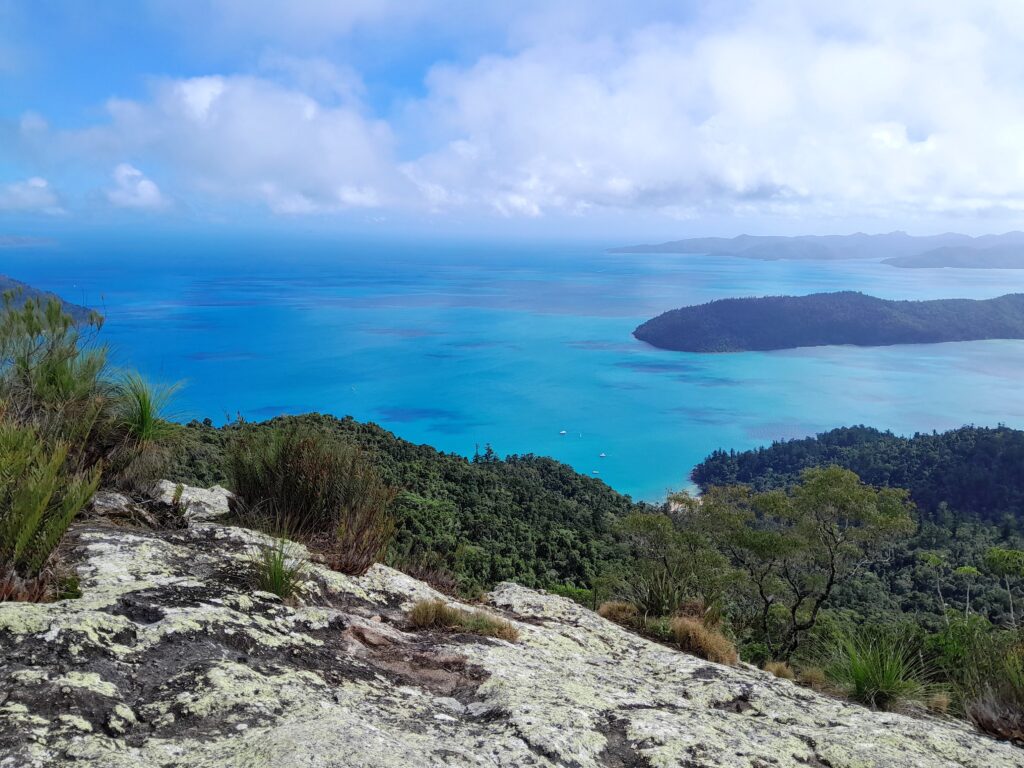
Blick vom Whitsunday Piek

Nächste Halt war dann Hook Insel und das Nara Inlet, diese super geschützte Ankerbucht sieht wie ein Fjord aus und ist nur mit dem Boot zu erreichen. Das Wasser ist sehr ruhig und somit kommt es zu unbeschreiblichen Reflektionen; am Ende liegt eine Aboriginal Kulturstätte der Ngaro Sippe, die mit viel Erklärungen sehr informativ angelegt ist. Wie wir in unserem Gidebuch gelesen haben, ist diese Ankerbucht oft total überfüllt, doch wir waren einfach neugierig und als wir ankerten waren wir doch tatsächlich fünf Boote, doch nach und nach verließen uns alle und wir hatten die Bucht ganz für uns alleine, was für ein Gefühl, sein Haus hierher zu schleppen und dann die ganze Bucht für sich alleine zu haben.
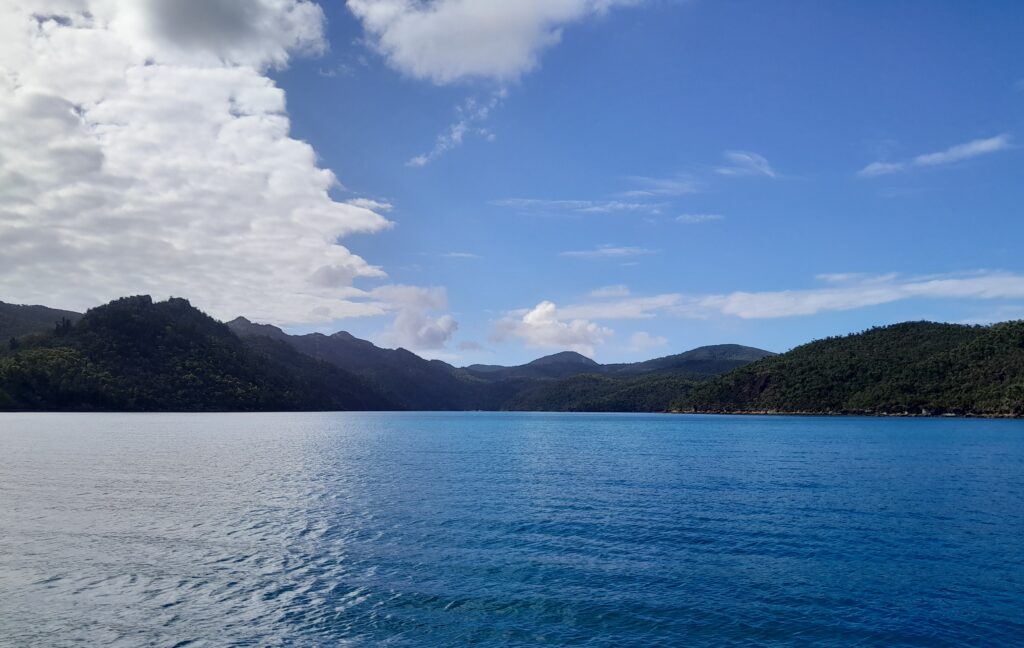
Nara Inlet, Hook Insel

Da ein Sturm vorausgesagt war, haben wir uns nach Airlie Beach versetzt und uns erfolgreich vor ihm versteckt. Außerdem haben wir es endlich geschafft, Dep und Michael auf ihrer Segelyacht Stella einzuholen, die beiden sind Freunde von James, dem Farmer und wir segeln gefühlt seit Monaten um einander herum.
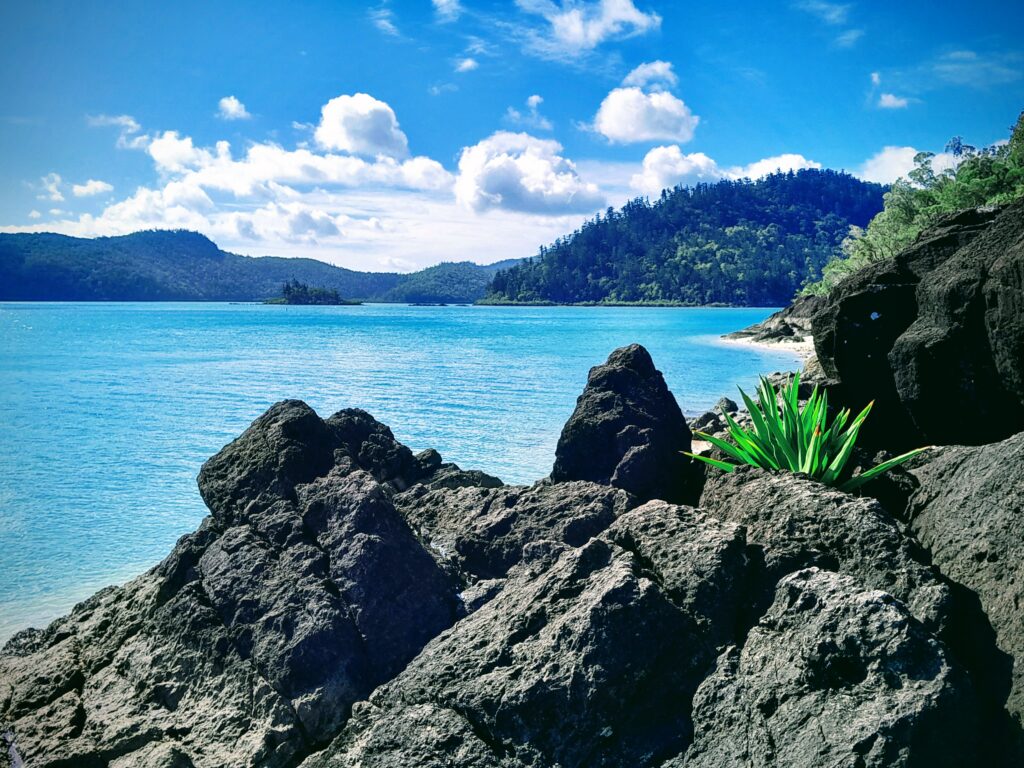
Dugong Bay

Another day. Another meeting.

Only a few days ago I was writing about the challenge of avoiding charter yachts and how we are heading north to get away from them.

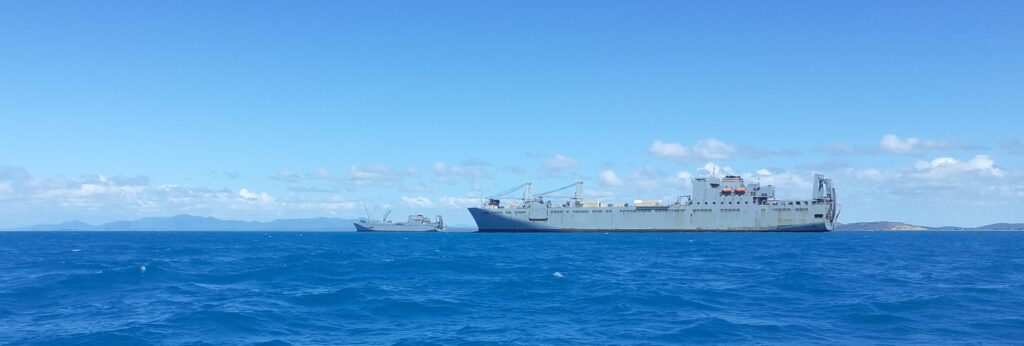
The Australian and US military are holding training exercises in Queensland at the moment. A military exclusion zone has been established in one area and is full of US naval vessels. We re-planned our route to sail outside the exclusion zone and were following the northern border on a sunny day with perfect visibility. We had all our sails out so were a relatively obvious white speck on a blue ocean. We were constantly sending our position, speed and course via our AIS transmitter.

The US navy out for the day

A US naval vessel was approaching us (obviously using his engine) and making no attempt to avoid a collision within the next 15 minutes so we called him on the VHF radio

Fort Charles this is Artemis. Over.
Artemis this is the US naval vessel Fort Charles. Over.
This is Artemis. We are the sailing vessel off your port bow. The current vectors suggest that we are going to meet shortly. Do you intend to take appropriate avoiding action or are you expecting us to take some action? Over.

Short pause …

Artemis this is Fort Charles. We will go hard to port and cross behind your stern. Over.
This is Artemis. Thank you and have a nice day. Out.

The question this raises is whether you can charter US naval vessels.

All at sea – with no idea

When in charge of a vessel at sea – everything from a canoe to a supertanker is a vessel – then you have to know and abide by the international “rules of the road”. These can be as easy as right before left when two motor boats meet but for sail boats they get a little more complicated.

If two vessels are under sail and approaching one another then the boat with the wind coming from the starboard side must keep a constant course and speed. The vessel with the wind coming from the port side must make obvious and timely adjustments to avoid collision. If both vessels have the wind on the same side then the upwind boat must do the avoiding. If one boat has its engine on then that boat must do the avoiding.

Do any of the these skippers understand how to interact with other boats?

I admit that the above sounds complicated and it can be even more so in real life but I always thought that the fact some one was out sailing around meant that they at least theoretically understood the rules. But we are now among the Whitsunday Islands and surrounded by charter boats. Yesterday a sailor told me that the people in charge of these boats have no idea at all. I assumed she was wrongly informed so I just checked the Internet.

No formal boating qualifications or licences are required to charter with Whitsunday Escape. Some boating knowledge and experience is all it takes. 

Whitsunday Escape

To enjoy your bareboat charter you don’t need any sort of boat license, just some basic boating experience.

Charter Yachts Australia

Boating licences and qualifications are not a requirement for charter hire …

Cumberland Charter Hire

That is so frightening. Basically we have to assume that every charter boat we meet has no idea of how to safely interact with us. I would suggest we call them on the VHF radio and try to explain what should happen but we tried that once and they appeared to have the radio off (which is also not allowed).

The only sensible solution seems to be to head north away from this stupidity.

Addendum.

Within minutes of posting this blog entry I received the following messages.

  • Anyone that claims to know “how to sail”, qualifies to charter a yacht. Indeed, stay clear of charter boats. Sail and socialise with the “live aboards” ….they understand the rules. Annie
  • Oh so true – the charter yacht stupidity is beyond comprehension. Best way to avoid them is to head north! Neville
  • “The only sensible solution seems to be to head north away from this stupidity.” You’ll have to go all the way to the Arctic and that might not even do the trick. It seems to me that knowing the rules is actually dangerous as well as a huge disadvantage (to your boat, your safety, and especially to your mental health). If you don’t know the rules, you won’t be expecting anyone to do the right thing. Rich
  • I experienced this recently in the Ijsselmeer. A motor boat maintained its course to miss us (sailing) by maybe 20 metres across our bow. The guy just looked at us as he went past. Davo

Alles Neuland

Seit wir Bundaberg verlassen haben, ist alles Neuland für uns. Kaum zu glauben, dass wir nach mehr als einem Jahr noch nicht alles gesehen haben, doch Australien ist einfach riesig.

Wir segeln Richtung Norden, endlich ins Warme und befolgen sämtliche Ratschläge von unseren Freunden, wo wir überall halten sollen und wo es schön ist. Doch wenn wir nur die Hälfte befolgen, brauchen wir wahrscheinlich noch vier Jahre. Wir ankern in Pancake Creek einer wunderschönen Lagune mit Leuchtturm, zu dem wir natürlich wandern und eine Führung mitmachen. Wir erfahren wieder viel über das Leben der Leuchtturmwärter und deren Familien und über die Geschichte von Pancake Creek. Am Rückweg besuchen wir noch den Friedhof und am Strand treffen wir die anderen Segler beim BBQ, ganz wie sich das für Australier gehört. Wir ratschen noch ein bisschen und stellen fest, dass wir unser Dinghy gefühlt Kilometer weit über den Sand ziehen müssen, doch vier starke Männer meinen, wir helfen euch und trugen unser Dinghy ins Wasser, Mensch war ich froh. Wir verabschiedeten uns von unseren neuen Bekannten und am nächsten Tag gings weiter zu den Great Keppel Island nur mal schnell 220 Seemeilen.

Pancake Creek

Bei den Great Keppel Island angekommen, bekamen wir eine WhatsApp von Stuart, den wir in Tasmanien kennengelernt hatten und den wir seitdem versuchen zu treffen. Stuart und seine Frau Hether, sind mit Freunden auf einem Katamaran unterwegs und sie sind genau in dieser Bucht, die wir ansteuern. Wir haben noch nicht mal den Anker im Wasser, da sind wir schon zum Abendessen eingeladen und da sich unser Dinghy noch auf dem Boot befindet, werden wir sogar abgeholt, was für ein Service. Endlich lernen wir Hether und auch ihre Freunde kennen, am nächsten Tag gibt es ein Frühstück mit Kaffee und Kuchen (natürlich selbst gebacken) auf Artemis; die vier müssen leider ihr Boot zurückbringen und so machen Neill und ich am Nachmittag die Insel unsicher. Wir besteigen den Berg (was eher ein Hügel ist) und genießen die Aussicht und wandern auf die andere Seite der Insel, wo eine kleine Ferienanlage ist. Wir genießen die 12 km Wanderung, um uns unsere Beine zu vertreten und wen es interessiert, hier ist der Link dazu.

Great Keppel Island

Am nächsten Tag geht es weiter, da wir noch nicht wissen, ob wir im September Australien verlassen müssen, oder ob wir nochmal eine Verlängerung bekommen, geben wir jetzt erst mal Gas und segeln wieder 220 Seemeilen zu den Whitsunday Inseln, lassen wir uns überraschen, was es dort zu entdecken gibt.

A Day Sail in the Whitsundays

We have reached the Whitsunday Islands. These tropical islands off the coast of Queensland are where Australian sailors dream of spending winter; the number of charter yachts anchored around us is witness to that. After a long sail we reached Shaw Island in the south of the archipelago and hid from the strong trade winds in its shade. Heidi studied the pilot books and declared Sawmill Bay as our next target. The Bay was only twenty nautical miles away and, if we lazed around in the morning and used the falling tide to help us along, would be an easy day sail.

The lazing around went well and getting Artemis shipshape is now a well trained “standard operating procedure”. As we lifted anchor, the wind was behind us and, as soon as we left the bay, the effect of the following tidal stream could be felt. The sun was shining so we sat outside and hand steered towards the distant outline of Dent Island.

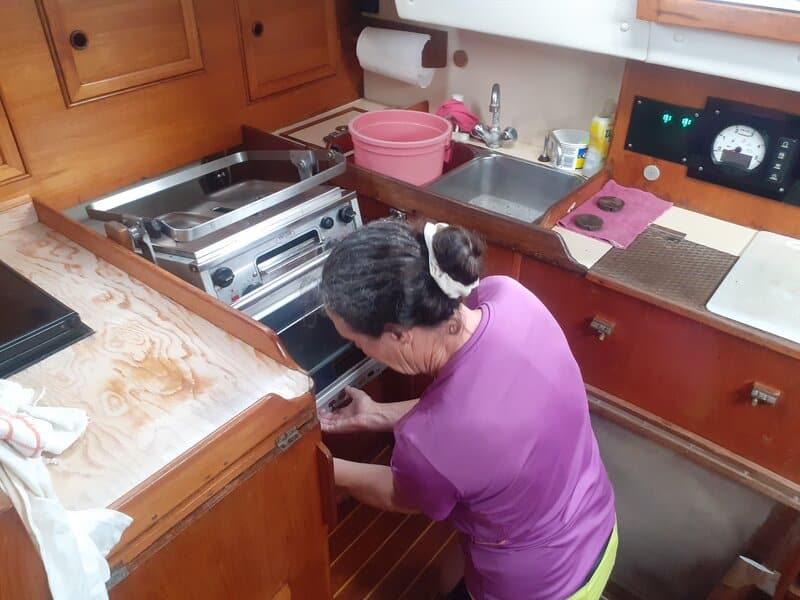
Neill handed over the tiller to Heidi and went below. Just as he returned and stuck his head out of the companionway a large wave approached. Heidi could read in his face that “something” less good was about to happen. The wave smothered Heidi and continued on to soak Neill. Luckily he blocked most of the water from heading below so we only had a minor flood in the kitchen. Neill stripped his wet clothes off, used them to begin mopping up the worst of the salt water and then got dressed in dry clothes before relieving a dripping wet Heidi. Heidi added her sodden clothes to the collection in the sink and then began some serious wiping up.

By now we had reached the passage between the islands and the current was running at three to four knots. With a bit of sail we were making eight knots whether we wanted to or not. Heidi had a hard turn to starboard (right) planned through a small passage between two islands. We jibed the sails, pointed right and – kept going straight on. With more sail and a few more course adjustments we were managing to juggle tide and wind to head through the passage. And then – of course – a huge motorboat appeared coming towards us. For a moment the situation could be described as tense. Heidi called the motorboat on the radio and said “We are under sail and are trying to maintain our course but it is difficult”. His answer was a curt “Understood!” and he turned to pass far away from us.

With the motorboat gone, the tidal stream dropped to less than two knots and the wind to a breeze and we could relax and enjoy the sail around the corner to the exotic Sawmill Bay.

Later the kitchen, oven, walls and floors had been cleaned with fresh water, our clothes were washed and hanging in the cockpit and we could enjoy a sundown drink and reflect on our quick day sail.

Searching for Heather

We first met Stuart in a yacht club in Tasmania. He had almost lost his propeller and was bolting it firmly back on. Stuart’s boat is a solar powered sailing boat so pretty much what we dream about every time our diesel engine is started.

A few days later Stuart was in Launceston and came on board for a coffee. He was picking his wife, Heather, up in Hobart and they would both be back in a few days.

Unfortunately, by the time they were together in Launceston, we were climbing Mount Amos so we missed each other again.

A few days later they drove out to Coles Bay where we were at anchor and called us on the phone. A squall had just begun so we all agreed I would pick them up in the dinghy as soon as it finished. An hour later the squall was now a storm and they drove away unseen.

Shortly afterwards they set sail back north so that Stuart could stand for the Green Party in the state election. We agreed that we would stop on our way north to see them.

A few months later we arrived in their home town of Port Macquarie and took a buoy next to their boat. The locals were all friendly but – Heather and Stuart were further north in Mooloolaba. We continued north.

After our time in Raby Bay, we were once again searching but now received the information that they were on a catamaran behind the Great Barrier Reef. We sailed north of Fraser Island and – wonder of wonders – finally met Heather on Great Keppel Island.

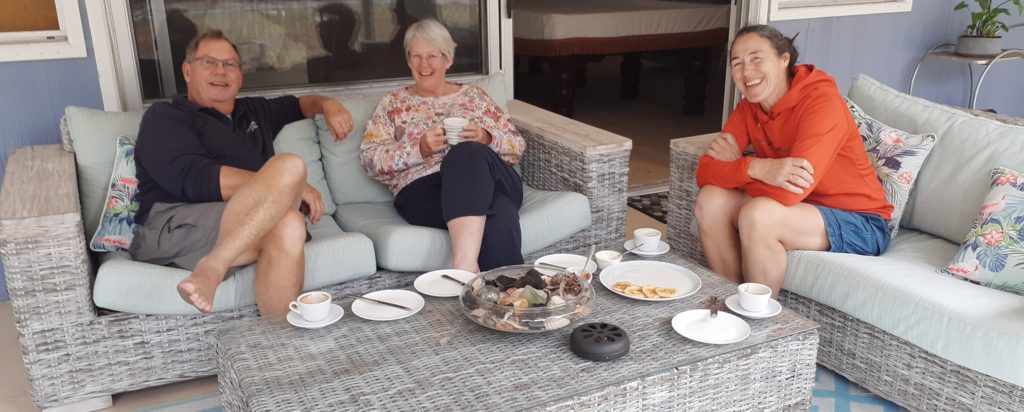
Heather and Stuart finally together on Artemis

Heather, Meredith, Stuart and Brian invited us for a delicious dinner and enjoyable evening on the catamaran and the following morning we all enjoyed coffee and cake on Artemis.

It only took seven months but we finally met Heather.

Zurück in Bundaberg

Als wir am Montag, den 3.07.2023 morgen hier angekommen sind, konnte ich es wirklich kaum glauben, was in der Zwischenzeit – als wir Bundaberg im Oktober 2022 verlassen haben – alles passiert ist.

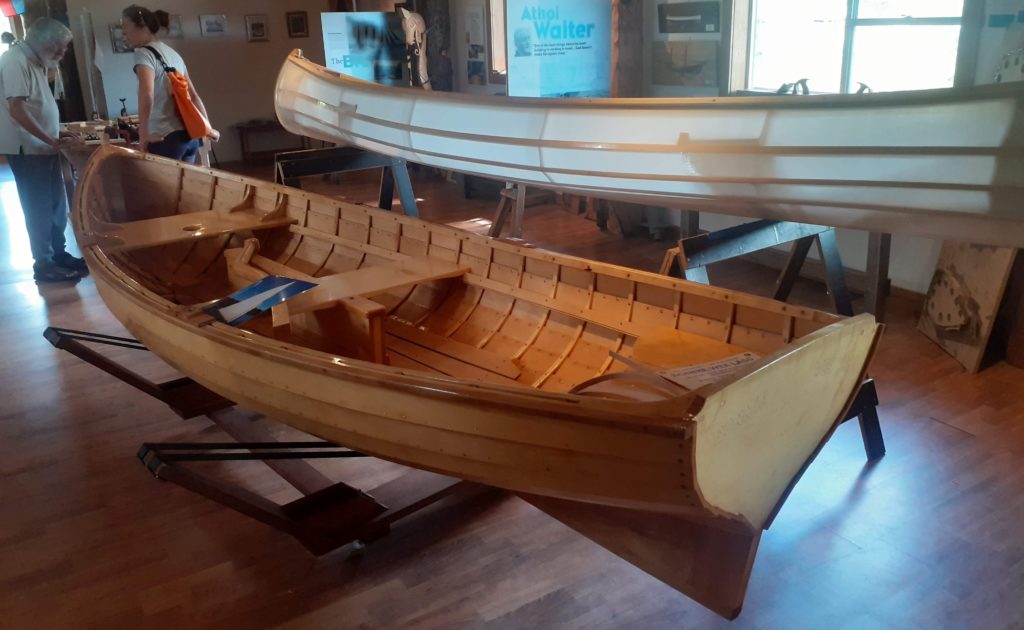
Wir sind schlappe 4000 Seemeilen nach Tasmanien gesegelt, um dort das “Wooden Boat Festival” mit zu erleben, haben Tasmanien unsicher gemacht, dort wahnsinnig viele unglaublich liebenswerte Menschen kennen und ich möchte fast sagen lieben gelernt und nur weil es uns echt zu kalt geworden ist, haben wir uns auf den Rückweg zum Festland gemacht.

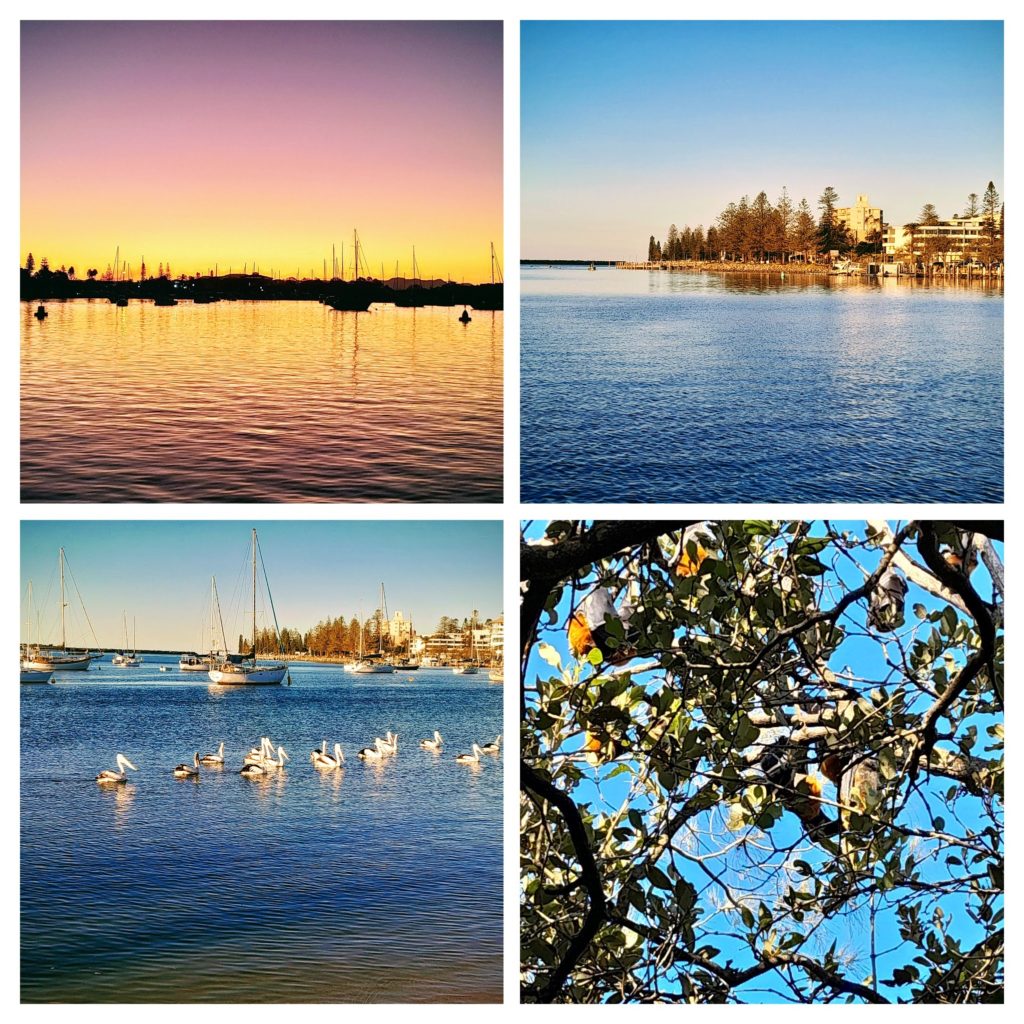
Wir durften eine Woche auf einer Farm in Viktoria verbringen, was uns fast immer noch wie ein Wunder vorkommt. In Lakes Entrance haben wir von Jeremy Fische geschenkt bekommen und Andrew, den haben wir dort ebenfalls kennengelernt, und er hat uns dann in Bermagui interviewt. Wir machten einen kurzen Halt in Port Macquaire gemacht und haben dort die Flying Fox Kolonie angeschaut.

Wir segelten entlang der Ostküste und wurden von Walen begleitet, die ebenfalls in wärmere Gefilde schwimmen, um dort ihre Jungen zu bekommen. Es war wieder ein imposantes Gefühl, diesen friedfertigen Giganten so nahe zu sein.

Als wir in Rayby Bay bei unseren Freunden Sue und Chris angekommen sind, fühlte es sich ein bisschen an wie “Nach Hause kommen”. Wir durften wieder bei ihrem Katamaran anraften und eine Woche den Luxus ihrer Gastfreundschaft in Anspruch nehmen. Nicht nur, dass uns ein riesiges Doppelbett, eine Dusche, Waschmaschine und Pool zur Verfügung gestellt wurde, nein wir wurden auch noch mit super leckeren Mahlzeiten rundum verwöhnt. Ihre Adresse diente uns auch als Lieferanschrift für die ganzen Bestellungen, die Neill gemacht hatte. Ein aktives AIS ( Automatisches Identifikationssystem, bezeichnet ein Funksystem, das durch den Austausch von Navigations- und anderen Schiffsdaten die Sicherheit und die Lenkung des Schiffsverkehrs verbessert) ist Vorschrift in Indonesien und deshalb haben wir es bereits jetzt bestellt und installiert. Viele Kleinigkeiten wurden repariert und unsere Artemis wurde wieder auf Hochglanz gebracht.

Wie schon beim letzten Mal, haben wir Näharbeiten mit Sue gemacht, diesmal haben wir Flaggen genäht, eine Schottische für unser Boot und eine Indonesische Gastland Flagge.

Unglaublich wie schnell eine Woche vergeht, doch der Wind drehte auf Süd für zwei Tage und so mussten wir Abschied nehmen, doch wir werden uns wieder sehen, nächstes Mal besuchen die Beiden uns in Deutschland.

Dann noch ein Kurzbesuch bei Ann und Ivan auf Coochiemuddlo Island und los ging es, um 20 Uhr am Samstag den 1.7. verließen wir Morton Bay durch den Brisban Schiffskanal, weiter an der Küste entlang, diesmal Fraser Island vom Ozean aus und bevor der Wind nach Norden drehte, erreichten wir den Burnett River und ankerten in Bundaberg. So schließt sich der Kreis.

Felt like coming home

After the long journey from Tasmania heading north, we finally used a breeze to drift to the entrance from the Pacific Ocean in to the quiet sheltered waters behind Stradbroke Island.

About a mile inside the waterways we dropped anchor and then slept for twelve hours with no one on watch, no rolling bed and no need to worry about lurking ships or fishing boats. Over the next few days we used the rising and falling tides to work our way to Raby Bay and Chris & Sue’s private pontoon. As we entered the canals it felt a bit like coming home especially once Artemis was securely fixed and we were all sat in their kitchen with a cup of coffee.

In Indonesia it is law that visiting yachts have an AIS transmitter – a device that sends your position and course to other vessels around you. We had already ordered the relevant hardware and so, after the coffee, Sue presented us with a pile of parcels to unwrap. Luckily everything worked as we had hoped and after a few days we were sending our position to the world. You can see us on Marinetraffic. At the end of the project we had the old receiver left over so installed that on Chris & Sue’s catamaran. Now they can see the vessels around them on their display.

We needed some new flags and Heidi mentioned buying material to Sue. The next day, the material was bought, the sewing machine was out and, after lots of work by Sue and Heidi, we were the proud owners of extremely well made Scottish and Indonesian flags.

I have lost track of the places that Sue and Chris drove us to so that we could buy “the bit” we needed to fix something. I think we seriously impacted their working efficiency. I know that we ate every day in an amazing restaurant and both put on weight because there was nothing you could say no to.

One afternoon we were picked up by our friends the Laming family. Dad was up north working but the ladies kept us fed and entertained the entire evening. Neill was definitely outnumbered and lost every discussion he got involved in. We received a copy of Andrew’s latest book but, as he was not there, it was signed by his wife and daughters – we hope the kids grow up to be very famous. The empty wine bottles were a good hint that we needed an Uber to get home.

After a week of living the high life we sailed back out in to the bay and round to Coochiemudlo Island where Anne and Ivan live. We had met them in Tasmania and, as we were passing, called in for a coffee. The coffee turned out to be coffee and pancakes with jam and cream followed by a cheese board, then pork and all the trimmings and ice cream with chocolate mousse.

We took the dinghy back to Artemis in the dark, lifted anchor and sailed north reflecting what amazing friends we have made in Australia.

Australia – the bottom bit

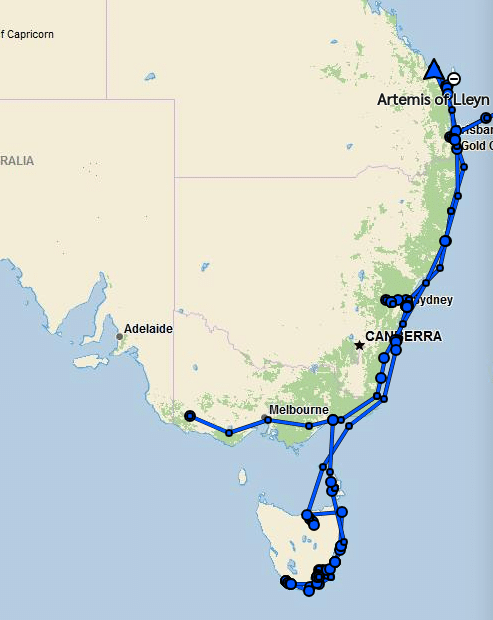
I am writing this while anchored in the Burnett River downstream from Bundaberg. It is eight months since we were last here and in that time we have sailed 4000 nautical miles. That is 7400 kilometers which is the same distance as from Gibraltar to Saint Petersburg – and back again. Or from Switzerland to Namibia. It is a long way, especially in an eleven meter boat that averages 4 knots or 7.5 kilometers per hour.

Eight months ago we had not seen the fireworks on New Years Eve, we didn’t know there was an Australian territory called “Jervis Bay” and we had never seen Tasmania. We had only read about the legendary Bass Strait, didn’t know how wood boats were built and had never worked on a stud farm. Port Davey, Lakes Entrance and Bruny Island were names we had never heard of. We had never cycled through the Blue Mountains or taken our bikes to the top of Mount Wellington. We have seen a lot and learned a lot, “down south”.

When we left here there were so many people that we didn’t know and now call friends. Other sailors, ex sailors and those we met in the ports and bays we called at. People invited us to their houses or boats, drove us where we needed to go, gave us presents of fish, fruit and vegetables or organised the support we needed to enjoy our travels.

We are lucky that we can afford the time to decide that “Tasmania sounds nice” and then take eight months to sail there and back. But we are also glad that we have the drive to do it. Others were here when we left and are still here now, dreaming of the adventure they will do “one day!”

And now it is time to head north towards Indonesia. It is “only” 2100 miles as the crow flies.

There are idiots out there

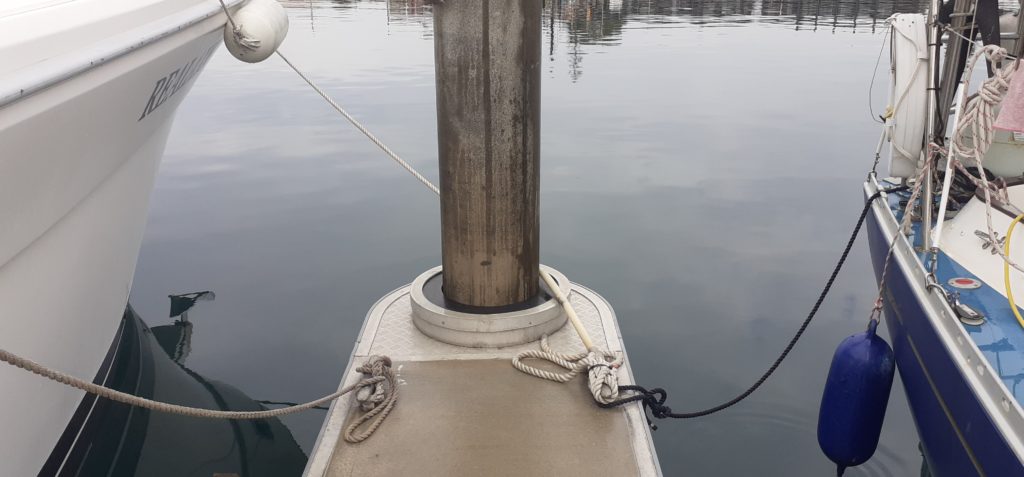
Tying your boat to a dock in a marina should not be rocket science. It is a fairly easy process and if you are not sure you can even look it up in the Internet. There are “cleats” on each side of the dock and you tie your lines to the cleats nearest you.

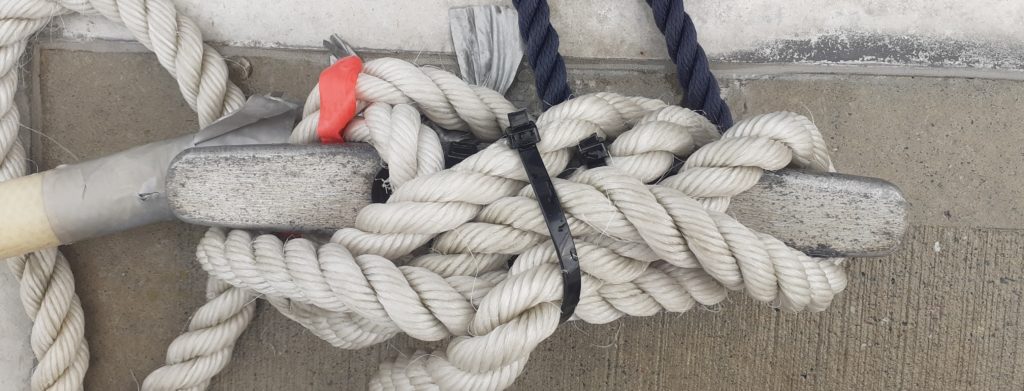
But, as this picture shows, this is too complicated for some people. They bought a nice big motor boat and have now tried to shoehorn it into a small dock. They ran out of cleats on their side so thought they would use one of the neighbours.

They could have tied a single loop leaving space for the neighbour but instead decided to see how much rope you could get on a cleat to ensure their was nothing left for the boat next door.

Obviously, at some point some one took exception to this stupidity and untied the line. Maybe, at this point, you or I would have considered if what we were doing was sensible or polite. But not Mr Big Boat. He then used cable ties to ensure no one untied his lines from the cleats he had “stolen”.

It makes you wonder. But then you take a look in the boat’s cockpit and wonder a little less.