Water, water, everywhere …

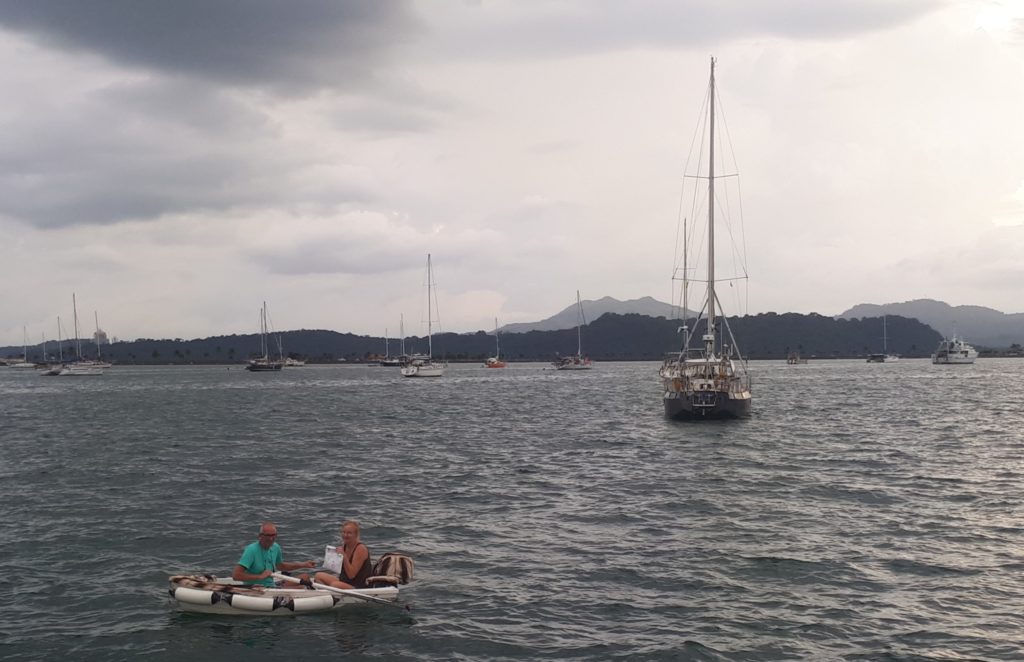
The pilot books write that fresh water streams enter the sea here off Isla del Rey. An old, hand drawn map even shows one of them but we couldn’t reach it through the magroves. Neighbours on a german boat had been here many years ago and knew the location of an easy to reach stream up a long inlet. Yesterday morning, just before high tide, a convoy of three dinghys headed off across the bay loaded with washing and empty water canisters.

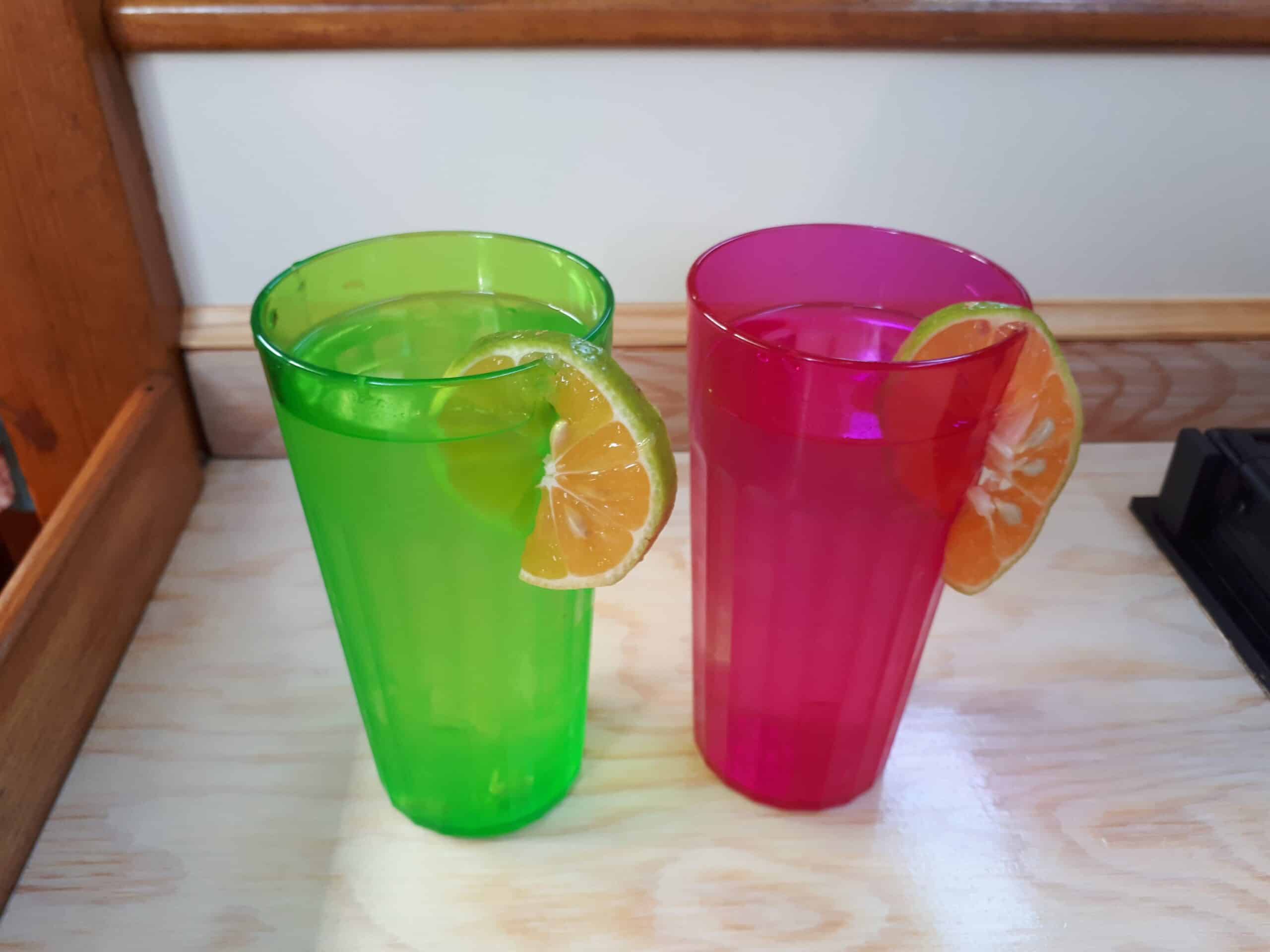
Information_SignWe have different “qualities” of water that we use. Sea water is great for the first clean; be it cleaning of boat, kitchen utensils, lines or people. And it is limitless. Stream water we also use for cleaning. Marina water is drinkable but mostly tastes of chlorine. Still good for coffees, cooking and everyday use. Rainwater is pure away from the cities and after the first run off goes in to the main tank. The Katadyn water maker produces pure water that we drink and the excess we also add to the tank.

The stream is really well hidden but, with our “guide” leading the way, we found it easily. A few right angle bends through the mangroves and we tied up at the streams outlet. A little boulder hopping took us to some pools surrounded by flat rocks under the shade of the jungle canopy. There was no sign of crocodiles and the six of us were loud enough to warn the biggest snakes that we were there so we could wash our clothes and seat covers in peace.

In the Las Perlas fresh water is a luxury.

We filled five containers with water destined to be used to clean Artemis and then did some serious showering revelling in the absolute luxury of limitless fresh water and the coolness below the dense foliage.

Today we planned an early start and boat cleaning with our five canisters of water. And then it rained. Within minutes we were being lashed by wind driven rain. Heidi shot out of bed and started to collect rainwater for our fresh water tank. When the wind rose such that the water was coming horizontally, she grabbed a scrubbing brush and motivated Neill to help clean the entire deck and cockpit with the never ending rain. The dinghy was swimming in water so all the lines (ropes) and strops we own were uncoiled and thrown in to the “floating washing machine”. We changed between cleaning and collecting water depending on the angle of the rain but by midday the tank was filled to seventy percent, Artemis was shining and …

… the canisters of stream water are still full and looking for a new use.
Ultra Stereo 98.9FM – Panama

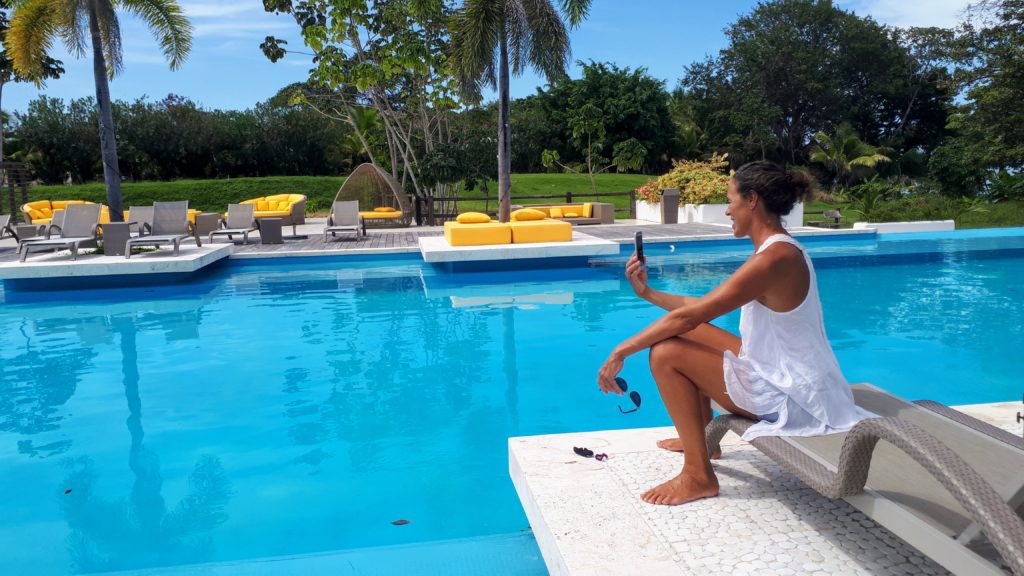
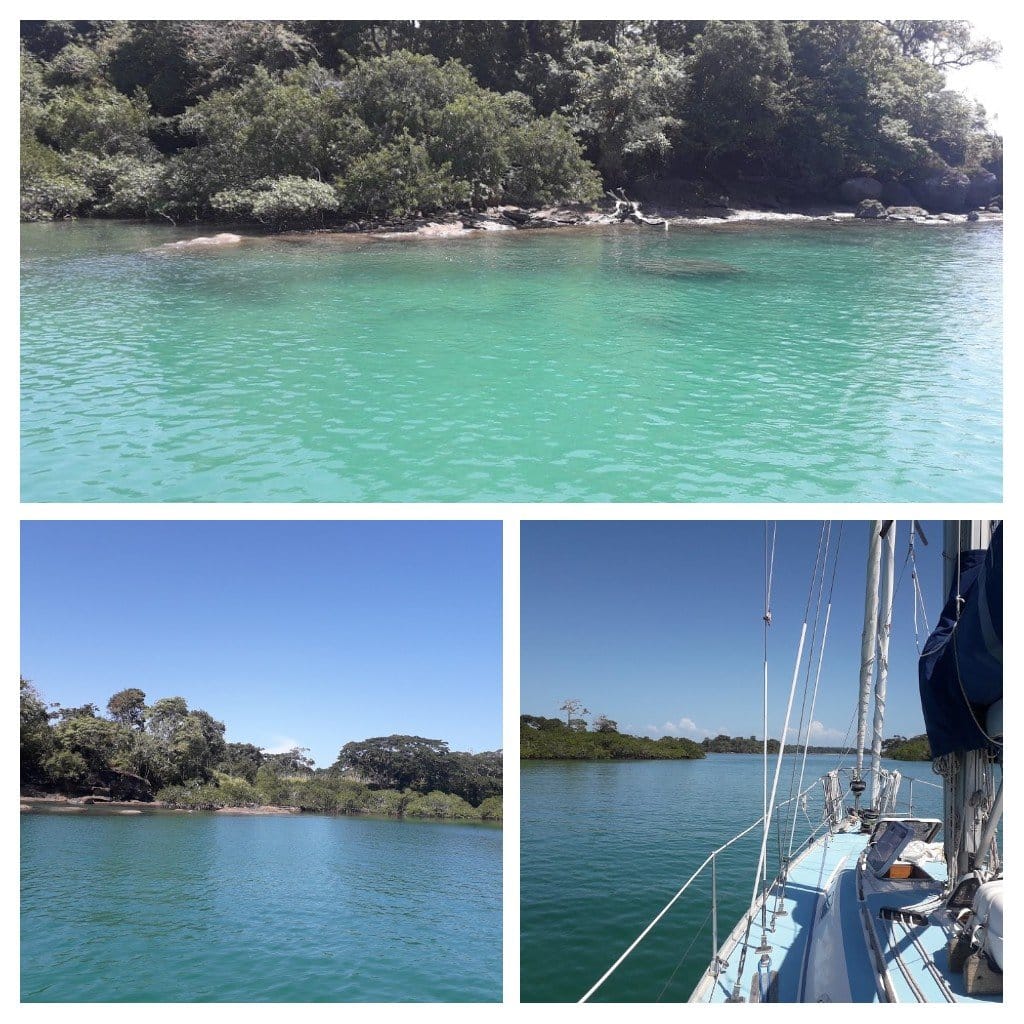
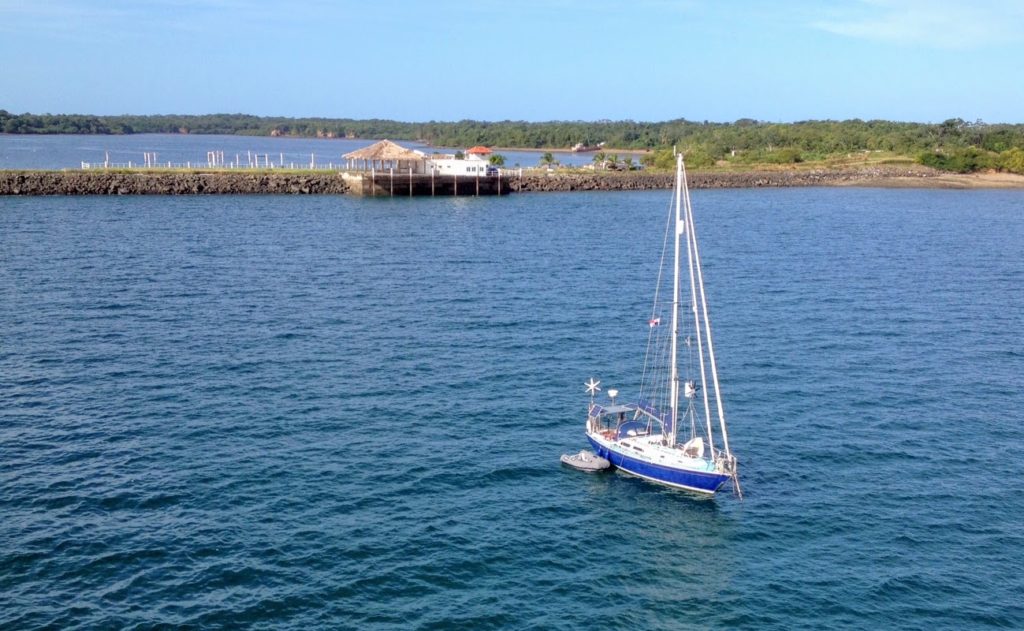
We are anchored off Viveros Island in the Las Perlas archipeligo. We have been “lost” among these pacific islands for nearly two weeks now. Uninhabited islands, reefs and deep water passages between all the rock. Jumping fish, Rays swimming in formation under the boat and pelicans flying above us. Sunshine, breezes and a huge full moon at night. We have reached paradise.

Artemis at anchor amongst the islands

Two days ago the Swedish sailing yacht Bengt sailed in to the bay and yesterday we celebrated Heidi’s birthday at the beach club on the island followed by dinner on Artemis. Life is good.

Today we tuned the radio in to the Panamanian radio station Ultra Stereo 98.9FM to enjoy non-stop music from the 80s. Just after sunset they played ” a whole lotta Rosie” by AC/DC.

So there I was with the radio turned up full and singing
“Wanna tell you story 
About woman I know 
When it comes to lovin’ 
She steals the show…”

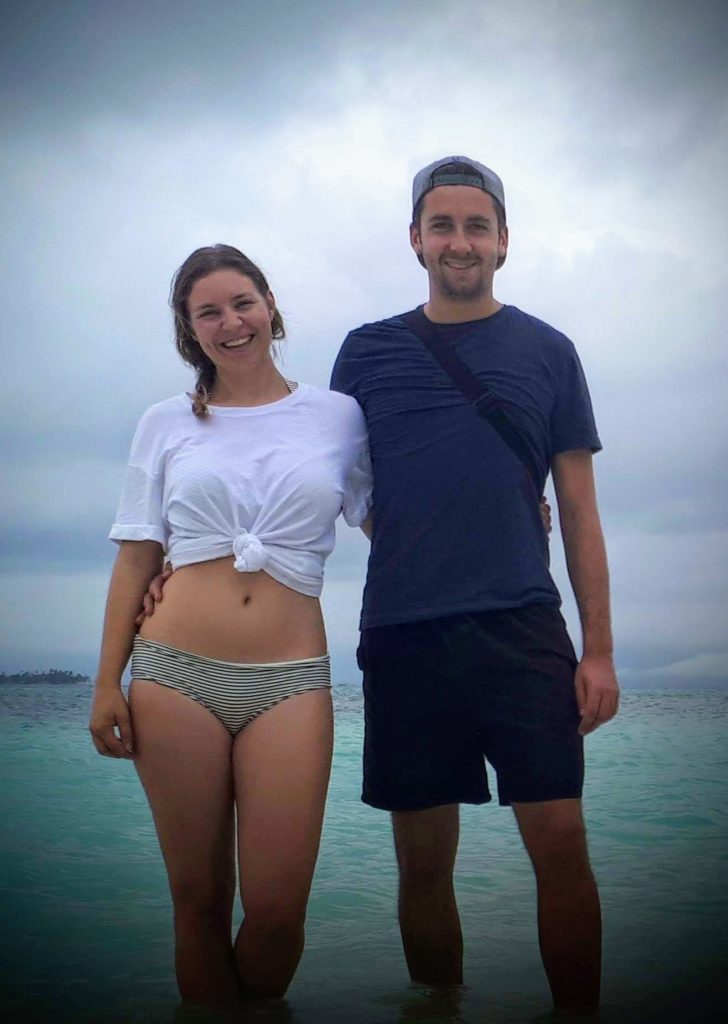
at the top of my voice to my bikini clad beauty.

birthday girl in video chat

I think, if 19 year old me could have seen 56 year old me he would have approved.

Las Perlas

Las Perlas ein Archipel im Pazifik – so so, hättest du mich vor zwei Jahren gefragt wo das ist, hätte ich gesagt keine Ahnung . Aber jetzt weiß ich, dass es eine Inselgruppe ganz in der Nähe von Panama ist.👍

Auf der Passage zwischen den Inseln

Pazifische Inseln sind ähnlich wie die atlantischen, Sandstrand, Palmen nur das Wasser ist grün und nicht blau – witzig😀😀 und hier bei Panama gibt es Gezeiten von ca. zwei bis drei Metern. Wir haben uns heute am Sonntag den 7.12. zur  Isla Bayonetta auf den Weg gemacht; zur Routenplanung brauchten wir den Bauhaus Gide, die ziemlich beste Karte für Panama und Umgebung , damit wir die Riffs und Steine finden konnten. Bei der Einfahrt stand ich am Bug um nach eben diesen Dingern Ausschau zu halten. Im Ankerfeld ist keiner außer uns und unglaublich vielen Vögeln, 😆Pelikane, Frigattenvögel und von den anderen kenn ich die Namen nicht. Wir machten uns mit dem Dinghy und Paddeln auf den Weg um die Insel zu erkunden, fanden aber leider keine Möglichkeit durch den dichten Dschungel etwas tiefer in die Insel einzudringen🌴🌴. Als wir eine Palme mit reifen Kokosnüssen fanden, versuchte Neill eine Nuss mit einer anderen abzuschießen – es blieb beim Versuch 🤭🤭🙈🙈. Außer Sandfliegen und leider auch viel Müll, den das Meer angespült hat, haben wir leider nichts gefunden.  Mit dem aufgefangen Regenwasser🌧️🌧️ von heute morgen, dass wir in unserem “schwarzen Sack” warm bzw. heiß gemacht haben, duschten wir ausgiebig und jetzt genießen wir das Rauschen der Brandung, die angenehme Wärme und stellen wieder einmal fest, dass wir es richtig gemacht haben loszufahren.😀😀 Morgen werden wir mit dem Dinghy bei Niedrigwasser einen Weg auf die andere Seite der Insel suchen, damit wir dann bei Hochwasser mit unserer Artemis dorthin fahren können. Freu mich schon auf die spannende Herausforderung .😁 Um 8.15 Uhr gings los doch weit kamen wir mit dem Motor nicht, da wir nur etwa 40 cm unterm Kiel hatten, doch wir klappten den Motor hoch und ruderten weiter. Neill zeichte unsere Route über Navionix auf, damit wir später genau wussten, wo wir zu fahren haben. Auf der anderen Seite staunten wir nicht schlecht, denn Sylivi und Mark unsere französischen Katamaran Begleiter durch den Panamakanal, ankerten dort. Um 12 Uhr durchquerten wir die Passage und trotzdem wir genau wussten, dass es tief genug war, wars ein komisches Gefühl. 🙄🤗

Auf Entdeckungsreise

Dinghys

The perfect cruiser’s dinghy packs up really small and can be stowed away for passages. At the same time it should be stable in use and capable of carrying people and cargo safely and relatively dryly.

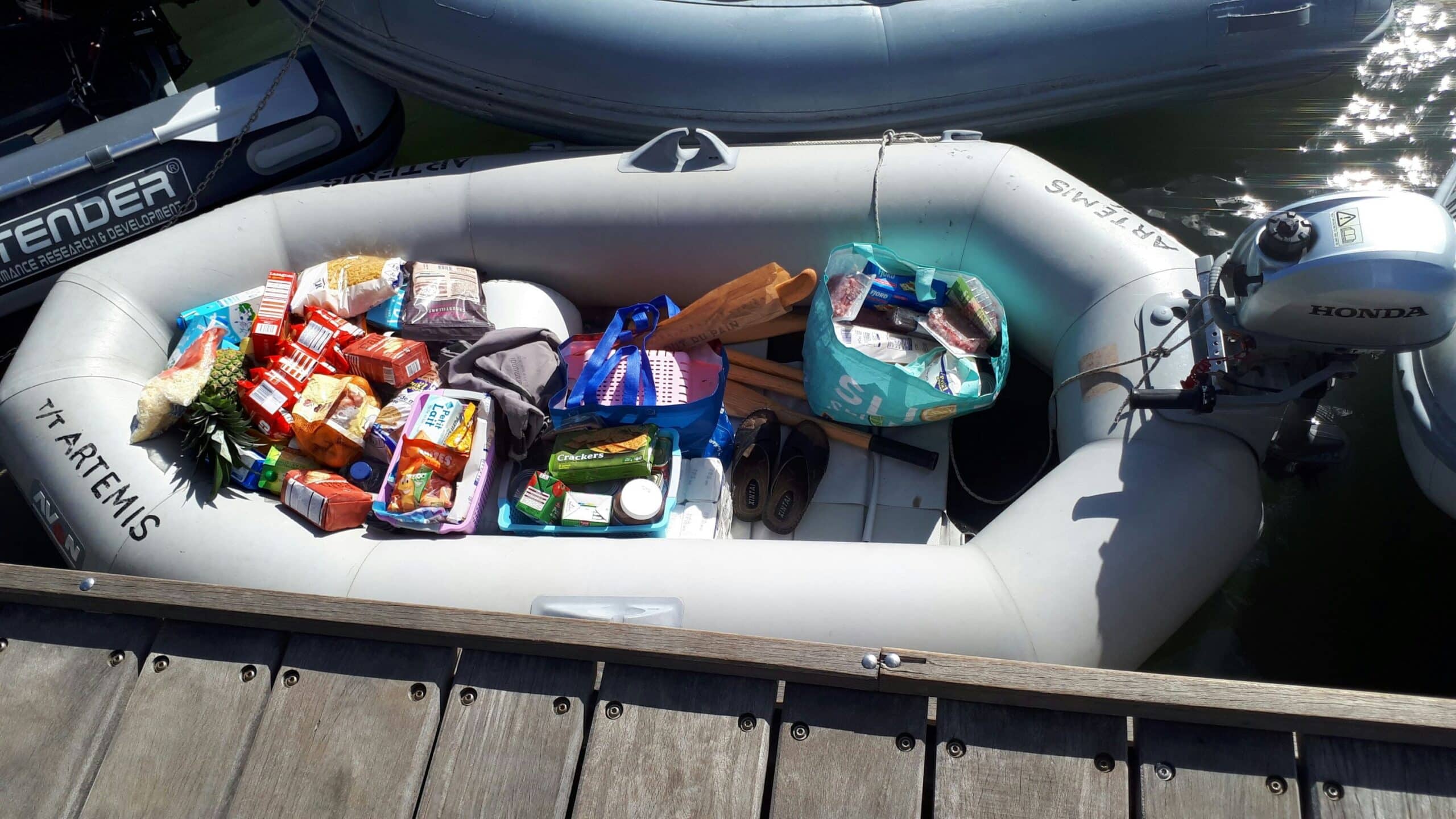
Our inflatable Avon fulfils the first specification perfectly. It takes a little time to install the wooden slat floor and rowing seat then blow it up and just as long to reverse the process but it stows in the aft locker. Unfortunately it fails on the safe and dry requirement. If we use it to go up wind against waves of any size, the only suitable apparel is bathing clothes and everything we take needs to be extremely well packed. More than once it turned over in the wind and once set the outboard under water. When we visit another boat, we need to remove the motor and hang it on their boat if we want to relax.

Our Avon dinghy fully stocked

In the Caribbean the Avon was ripped directly next to a seam. Four attempts by us to repair it all failed and when we found an expert in Panama, he could only solve the problem by lifting part of the seam and glueing under it. His repair worked but we needed a more reliable tender.

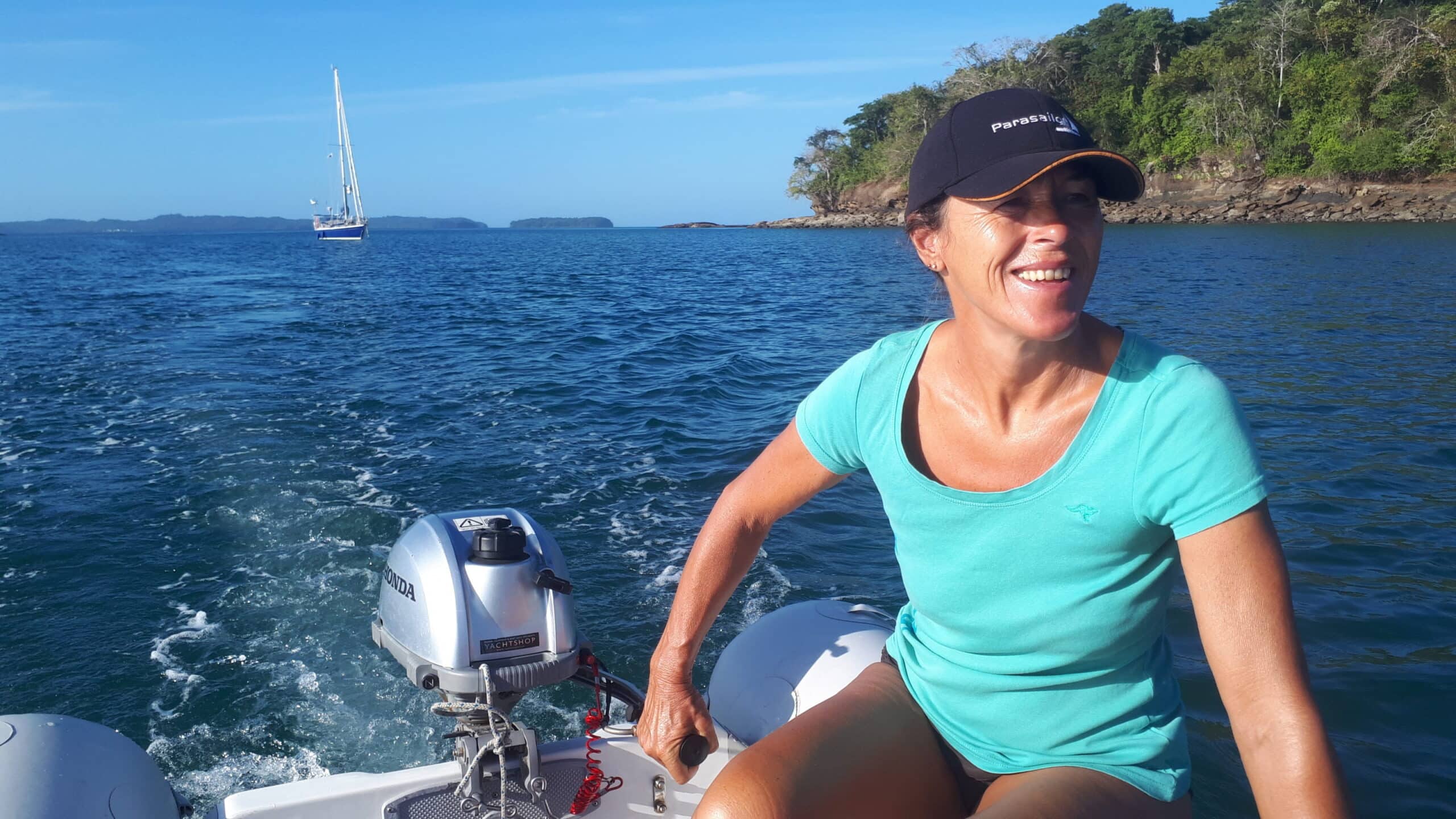
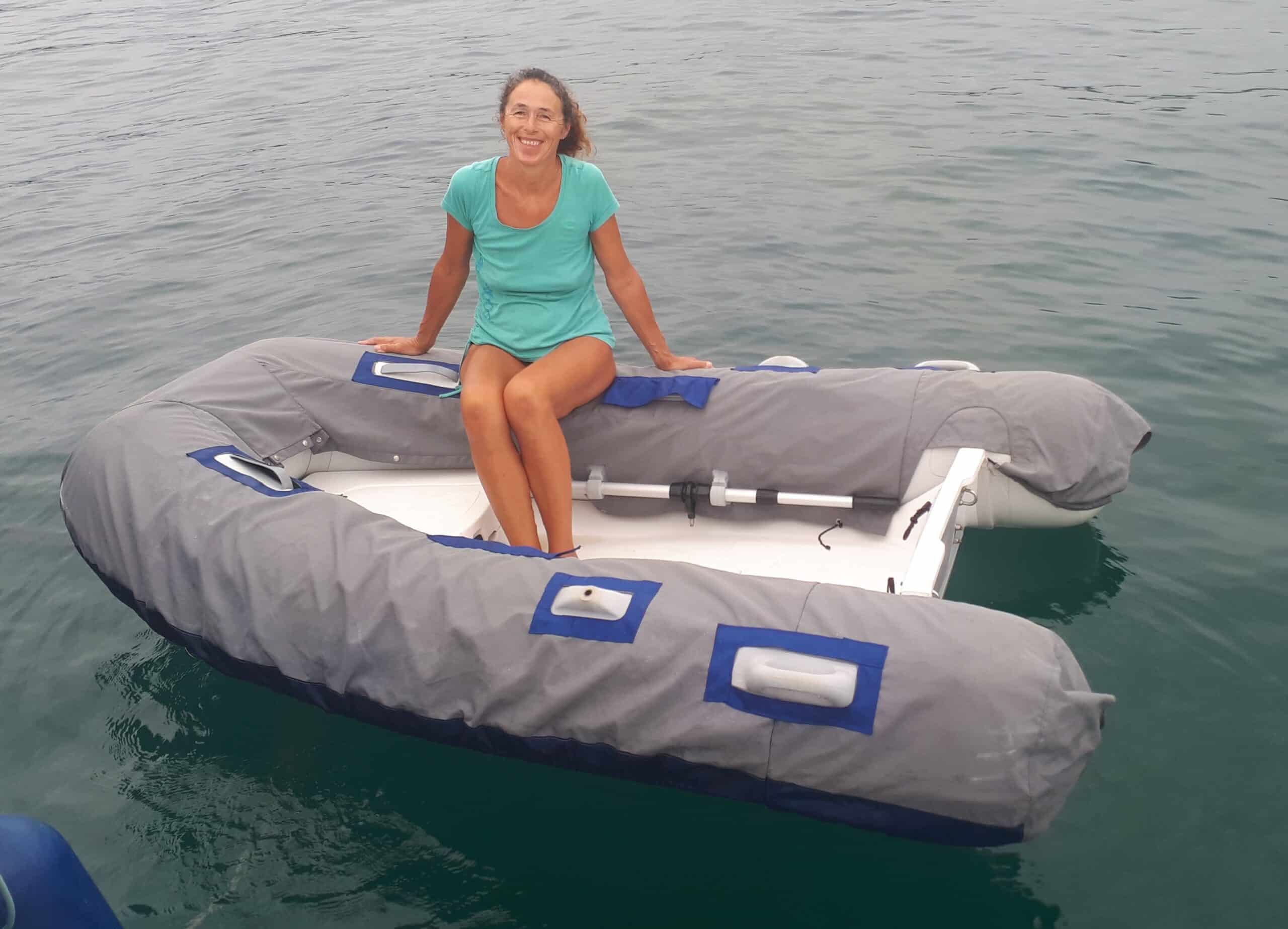
The selection of small dinghys in Panama is not huge but with the help of Sheila (an American lady rebuliding her boat at Port Linton) we bought an AB dinghy with a fiberglass bottom. This is safe and stable but impossible to stow any where but between the mast and inner forestay. Sailing is, of course, a series of compromises so we have now developed a way of doing that. Once we have the AB dinghy in the water she is great fun. We bought her just before Annalena and Daniel arrived and “test drove” extensively in the San Blas Islands. In the Las Perlas archipeligo we completely filled her with water when a breaker swamped us just off the beach but, even full of water and sand, she can be rowed home.

With the dinghy, we received a free dinghy chap (a material cover to protect the dinghy from sun and rubbing). It was for a different size and type of dinghy and had no holes for the carrying handles or anything but did come with a bag of “blue bits” to sew as protection around any holes. Luckily we have a Heidi on board and she and her sewing machine can do anything. After hours and days of hard work, perspiration and many many broken needles, we had a cover that fitted and a matching bag to stow items while in transit.

Another sailor told us he had been quoted one thousand US dollars for such a dinghy chap and Heidi now says she fully understands why they cost so much. She doesn’t plan a production series.

Water maker. Katadyn 40E

A boat is freedom. Freedom to go where you want, when you want. With Artemis full of food and a fair wind, we can travel far away from civilisation and visit otherwise unreachable places. But you need water. Until now we have filled our tank where ever we have found a supply and, in the worst case, bought bottles. But the logistics detract from the enjoyment and, as we head out in to the Pacific, good drinking water will become a scarce commodity.

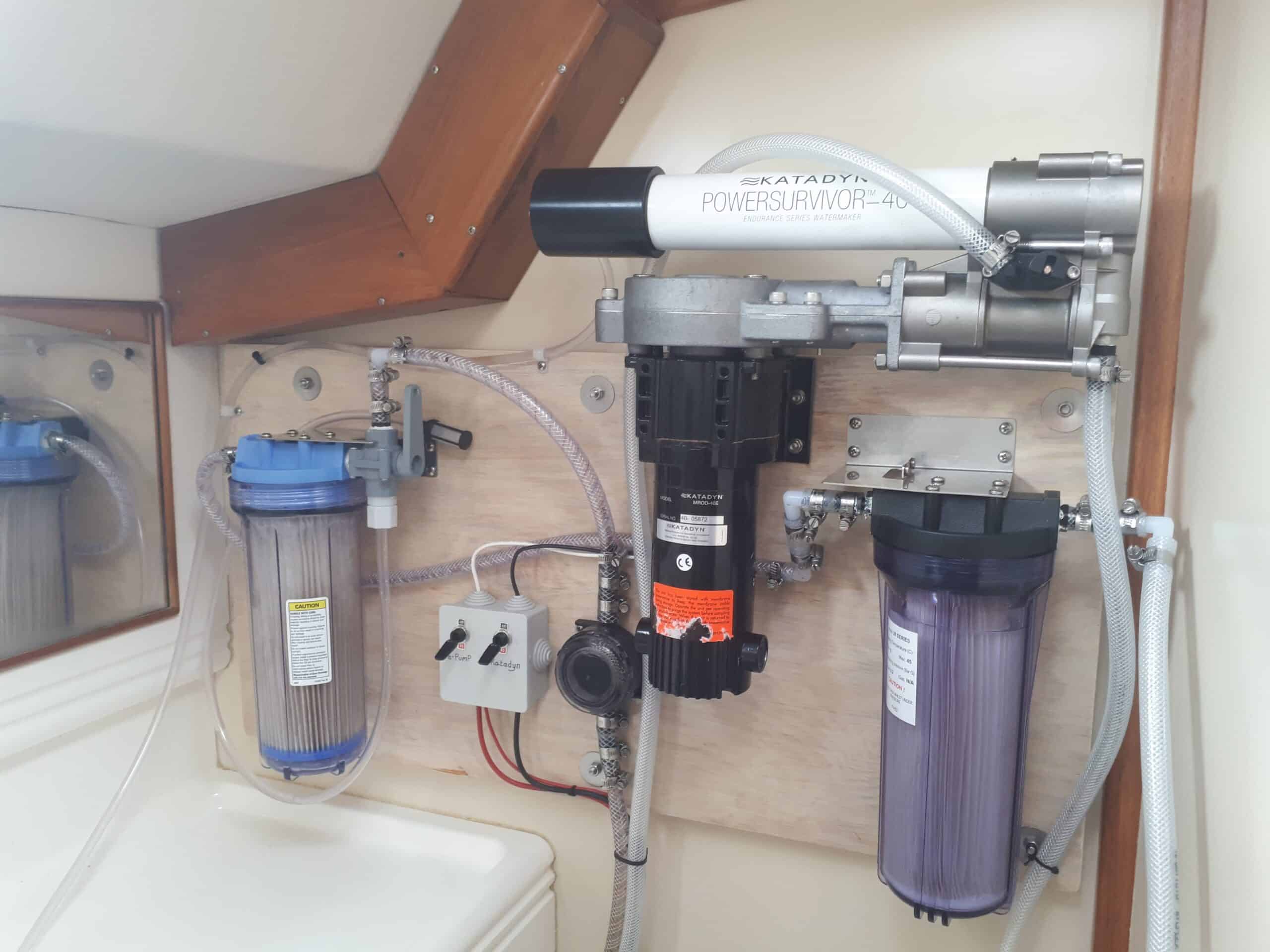
So we have invested in a small Katadyn 40E water maker. This magic device takes fifty liters from the surrounding sea and five ampere hours of electricity with which, through the miracle of reverse osmosis, it produces five liters of drinkable fresh water. We use about ten liters a day so in two hours we can produce all we need for that day.

This is one of the smallest devices used on boats but it has the advantage that we can power it from wind and solar power. It also fits nicely in our “bathroom” which is now the “water works”. We bought this model as every one wrote that it “just works”. Andi Blenk installed one this year and his positive feedback convinced us to invest.

Unfortunately our system didn’t “just work” as it had been incorrectly assembled in the factory. We needed many emails, lots of tests, much frustration and hundreds of extra dollars before we tasted our first fresh water but now it works and it was worth it.

We use a pre-pump to take sea water from the ocean and pass it through a sieve and two pre-filters. The standard system uses one filter but this way we can run it in silty anchorages. The filtered water enters the Katadyn and is then compressed and forced through a membrane which removes most of the salt leaving less than 200 parts per million which is far less than we can taste.

Produced and cooled with solar and wind power.

Another piece of freedom!

Two T-shirts travel the world

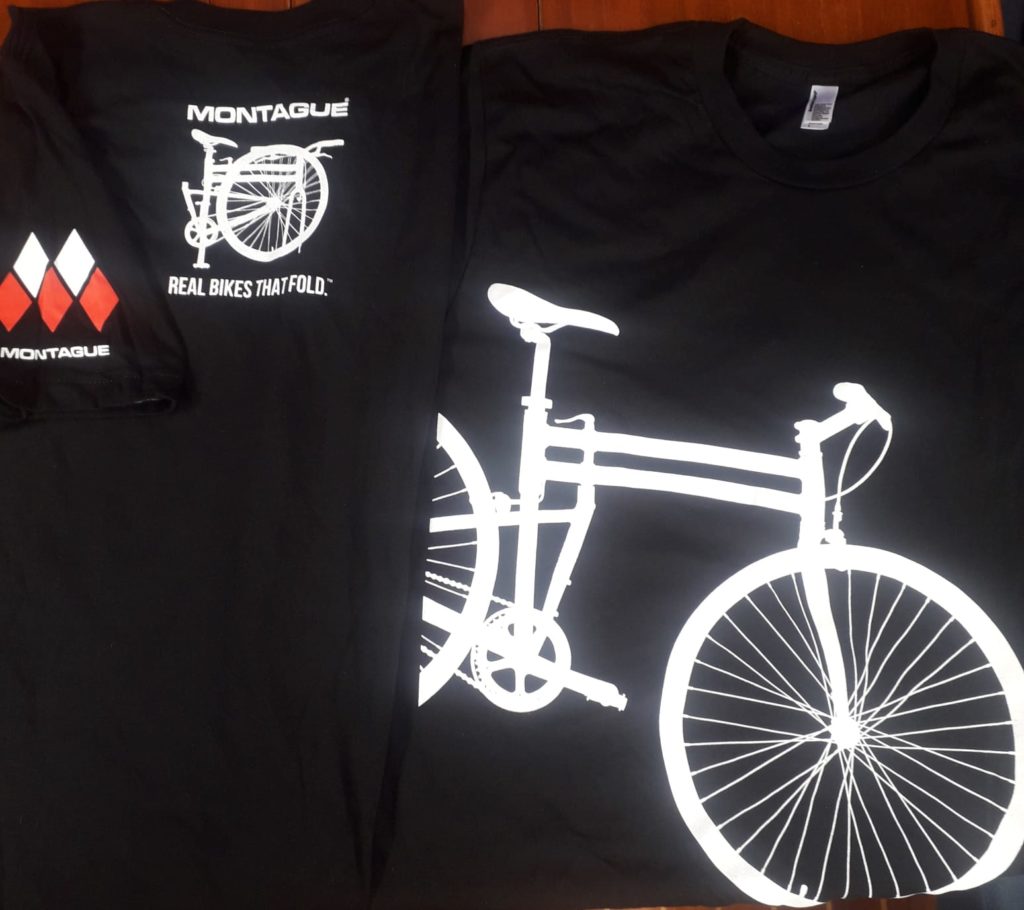
The people who built our foldable mountain bike frames – Montague – asked if they could write about our travels and we agreed. But we mentioned that a couple of T-shirts would be nice in return.

In the middle of August Liza sent two T-shirts to us via the US post addressed to the marina in Aruba. Three weeks later the shirts had not appeared and the tracking system showed that they were in Tokyo! California to Aruba via Tokyo makes no sense.

Montague T-shirts

In September Liza agreed to send us two more shirts to Germany but before she could send them out, we received a message from Aruba (which we had long ago left) that the T-shirts were there. We asked the Marina to give them to an American boat who passed them on to a Swedish boat heading our way.

Wim and Elizabeth hand deliver the shirts off Panama City

Bengt – the Swedish boat overshot us when we were offline in the San Blas Islands so our boats finally met up at the end of November anchored off Panama City in the Pacific. And finally we have two Montague T-shirts.

Two weeks in paradise (Daniel)

Daniel and his girlfriend Annalena visited us in Panama and spent two weeks with us cruising the San Blas Islands. Here is the blog post he wrote about it.

In August 2019 Dad and Heidi met up with us during their visit in Germany. Oh by the way, when I’m talking of “us”, I mean my beautiful girlfriend Annalena and me. We agreed that we would spend our holidays at the end of October 2019 on Artemis of Ileyn. We didn’t know where exactly it would be, but they could roughly tell us to book a flight to Panama. So time rushed by and we had booked our flight from Munich to Panama City via Paris. Yes! We were really heading to the Caribbean Sea just off the coast of Panama, to the San Blas Islands!

Continue reading “Two weeks in paradise (Daniel)”

Panama Canal transit

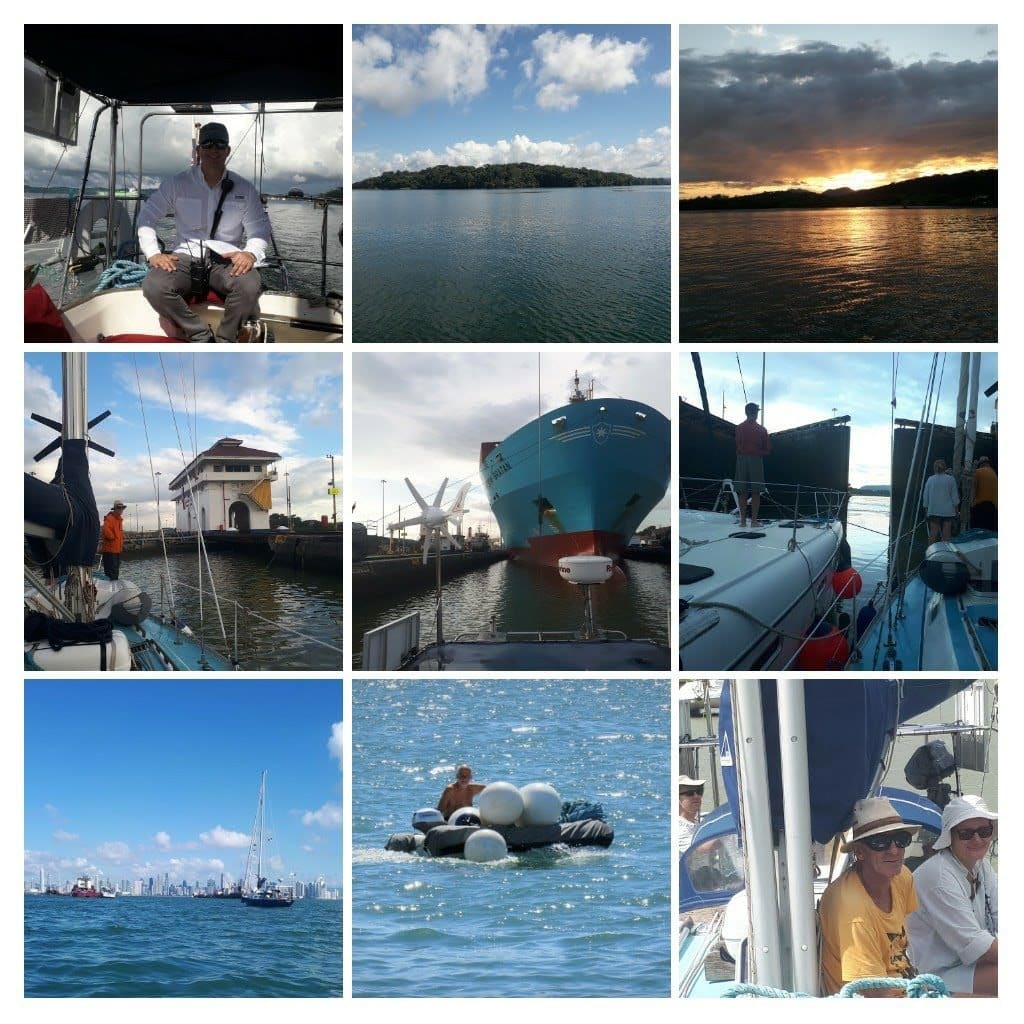
At 17:09 on Saturday the 23. November, the gate of the last lock on the Panama Canal opened and Artemis of Lleyn entered the Pacific Ocean.

The previous Sunday we sailed to Colon, the port at the Atlantic end of the canal and on Monday morning we were visited by a canal official who checked the length of the boat, ensured our cleats were strong enough and asked if the toilet worked. The inspection didn’t take long, probably as there was lots of sun, no wind and baking temperatures in the boat.

On Tuesday we took a shuttle bus in to the seriously unsafe city of Colon and paid $1875 US in to the canals bank account. Hopefully we soon get the $900 deposit back so the transit will “only” have cost a thousand dollars. We also took the opportunity to do a quick shop and filled six bags with groceries. In the evening we called the Canal and agreed a transit date for Friday.

Wednesday we took a day off and went cycling to look at the canal.

Thursday we bunkered fuel, water and a bit more – only four bags – shopping. In the evening we confirmed timings and that we should be waiting at 16:00.

About Friday lunch time our line handlers arrived. Each boat needs four crew to feed the long lines in or out during the lock transits so Heidi was joined by Wim and Elisabeth, our friends from SY Bengt and Tobias from SY Maya. Bengt transitted last week so were our experts and Tobias was doing a reconnaisance for his transit next month.

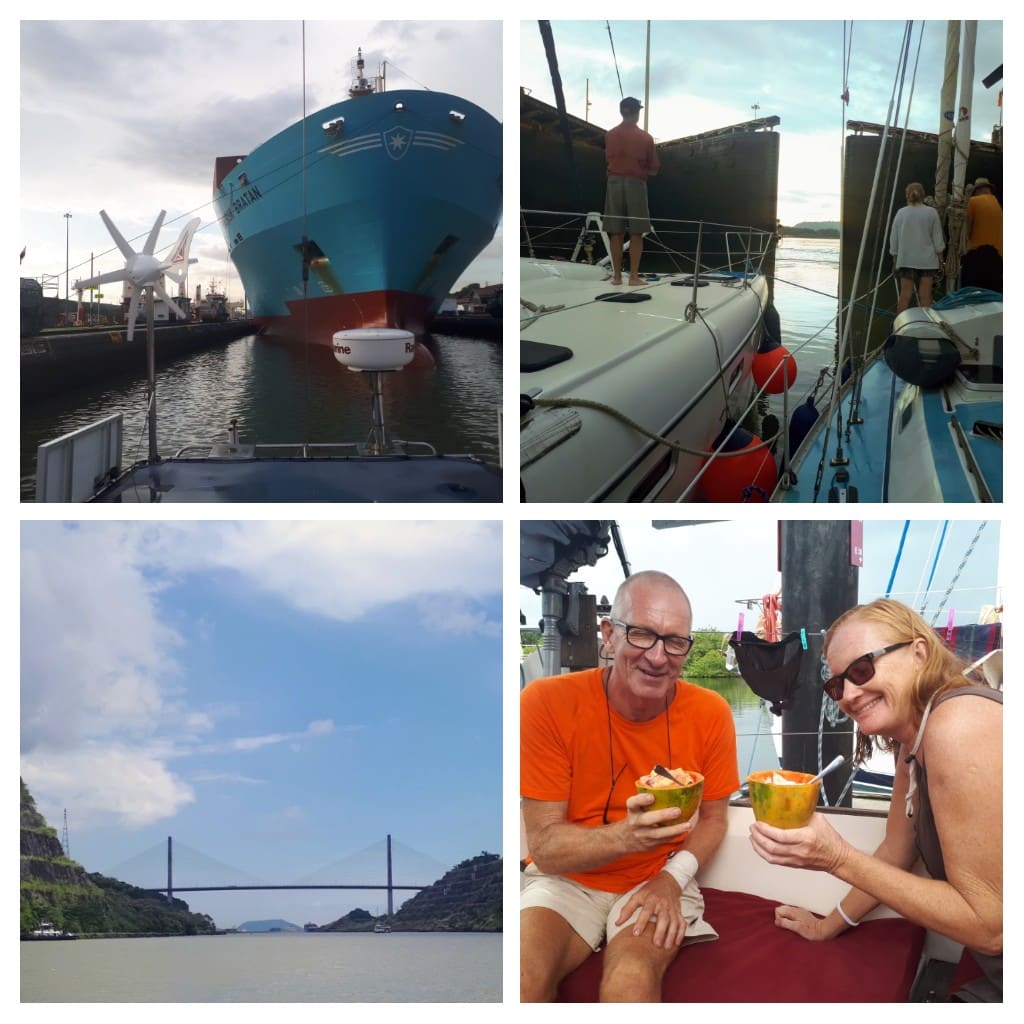
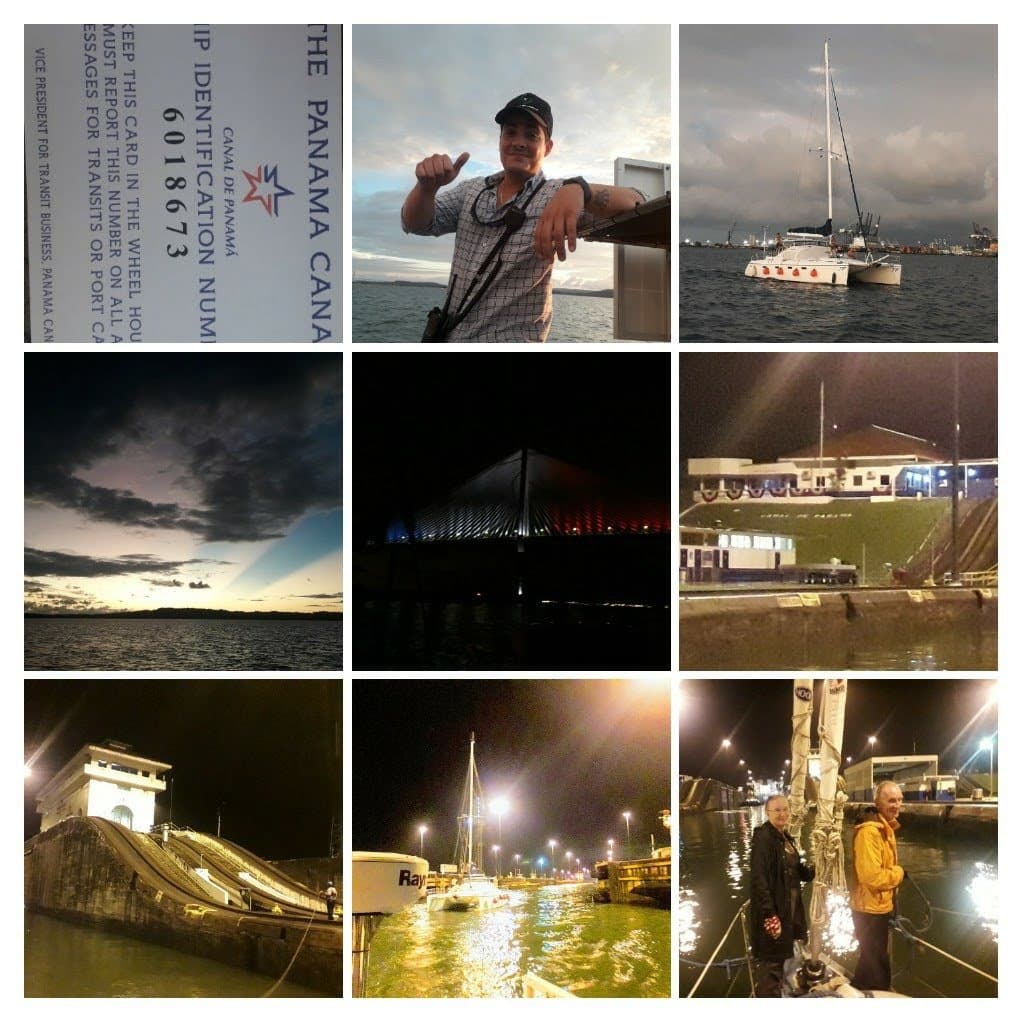
Just before four we moved out to “the Flats” (the agreed location) and made fast to the french catamaran “Iroise” for coffee and cake. French, swedish dutch, german and british were all sat around waiting for the canal pilot to arrive. A pilot boat arrived about five thirty with three young pilots and within minutes we were off heading under the Atlantic Bridge to the flight of three locks at Gatun. There was already a huge ship in the the lock and two tugs behind it. We made fast to Iroise and an american boat did the same on the other side and then the three of us motored in to the lock. As we entered ropes were thrown across from the walls which we attached to our long mooring lines so that the “pack” of three vessels could be securely attached.

With the lock gate shut behind us, the water began to rise and the line handlers earned their “Artemis pizza” as they pulled them in to keep everything tight. The lead pilot – on Iroise – was having a bad day and managed to get every one spooked but our pilot Miguel was totally cool and got us through all three chambers safely. It is a bit “worrying” trapped in a concrete box with a huge ship and lots of water flowing around but our line handlers worked perfectly, the workers do this every day and it all has a system

After the Gatun locks, we entered the lake and motored through the darkness until we reached a huge buoy where we made fast for the night and celebrated our success. Luckily there was no rain during the night which was good because, with the boat full of guests, we had to sleep outside in the cockpit.

Saturday morning, after breakfast, the pilot boat brought David, our canal pilot for this day. We motored about 25 miles across the Panama Isthmus meeting a constant stream of ships coming the other way. Occasionally we were instructed to stop when a gas carrier came as they have absolute right of way. Unsurprisingly, every one wants to get these mobile bombs out of the canal as soon as possible. Heidi once again proved that Artemis is a top restaurant with delicious Lasagna served in the cockpit. We crossed the Gatun Lake and a long cutting which led to the first lock of the day – Pedro Miguel. In daylight you can see far more and appreciate how truly monstrous the container ship is that followed us in. Locking down was stress free with three happy pilots directing proceedings.

A short motor took us to the last lock – Miraflores – which dropped us all the way down to the Pacific and back in to salt water. By now every one knew the drill and Heidi commented “This is fun. We could go up and down all day.” We dropped the pilot off once we were out of the channel and Wim took over the navigation and brought us safely through the dark anchorage and to anchor next to Bengt with the Panama City skyline as a backdrop.

About twenty four hours after starting, we were in the Pacific and set for our next adventure.

Panama Menu
Line handlers lunch:
Avocado Pesto with walnuts and ham.
Fruit salad with fresh farm fruit
Coffee with home made irish cream

Gatun Lock dinner
Pizza Artemis
Chocolate on the go

Lake Breakfast
Toast, cheese, ham, assorted Condiments with coffee or a selection of teas.

Canal Lunch
Lasagna with corned beef and cheeses.
Fruit
Irish cream coffee

Anchor supper
Pina Colada & wine
Snacks

Panama Kanal

Freitag 22.11. um 16 Uhr sollten wir uns nach Angaben der Panama Gesellschaft im Anker Feld “Den Flets” bereit halten; unsere französischen Freunde auf dem großen Catameran Iroise waren schon da – vollständig mit Crew – und dann konnten wir doch endlich den soo lang geplanten Kaffee trinken.😊 Sylvia und Mark luden uns auf ihr Boot ein, da für 10 Leute einfach der Platz a bissl eng wird auf unserer Artemis; sie machten Kaffee und wir brachten den Kuchen mit – Bananenbrot und Zitronenkuchen von Elisabeth.

Um 17.30 Uhr kamen unsere Kanalpiloten – ja ja wir haben wirklich Piloten (in Ausbildung) bekommen – junge, kompetente, gutaussehende, super nette und sehr freundliche Männer –  für jedes Boot einen👍👍. Los ging es Richtung 1. Schleuse. Kurz vor dem Schleusentor wurden wir zum “Päckchen” zusammen gebunden und hinter zwei Schlepperbooten und einem riesigen Containerschiff wurde das Schleusentor hinter uns geschlossen. Beim Einfahren bekommst du von Hafenarbeitern eine Leine zugeworfen, an denen du dann deine dicken Leinen fest bindest und diese ziehen sie dann wieder zurück um die dicken Leinen dann in der Schleusenkammer zu befestigen; dann wurde die Schleuse geflutet und wir so ca. 7 – 8 Meter nach oben bewegt. Unsere Leinenführer mussten die Leinen immer auf Zug halten, damit wir in etwa in der Kammermitte bleiben – spannend.😁😁🙃 Miguel unser 1. Pilot erklärte uns, dass sie momentan auf “Sparmodus” arbeiten, um Wasser zu sparen und deshalb dauert der Vorgang doppelt so lange. Mir war es schnell genug, denn es ist schon eine aufregende Angelegenheit – immerhin war es meine 1. Schleuse – aber jetzt nach dem Panama Kanal kenn ich mich auch aus. Nach der 2. Schleuse mussten wir warten bis die Schiffe vor uns wieder an Ort und Stelle sind und somit hatten wir Zeit für unser Abendessen – Pizza. Nach der 3. Schleusen fuhren wir drei Nautikel Miles zum Gatun See – Süßwasser See – und machten an einer Boje fest und verabschiedeten uns um 23.30 Uhr von unserem Pilot, tranken noch ein Bier und genossen die Halbzeit. Wir waren super froh, dass uns unser Wettergott nur zwei kurze Regengüsse beschert hat 🌧️🌧️🌧️und die meisten Sachen bis zur Nacht fast wieder trocken waren.👍

Samstag, 8.30 Uhr: Start zur zweiten Etappe David unser neuer Pilot – genau wie sein Vorgänger ein sehr smarter Kerl😲😲 – kam an Bord und wir fuhren die 25 Nm den Kanal entlang zur nächsten Schleuse. Landschaftlich wunderschön nur haben wir leider keine Krokodile gesehen, doch wir genossen die Ruhe und unsere Leinenführer Tobi und Elisabeth nutzten die Fahrt für ein Nickerchen. Bevor wir die Schleuse erreichten, stärken wir uns mit Lasagne; dann nahm uns unser “Mittelboot” wieder an seine Seite und fast pünktlich zum Schleusen zog eine Regenfront auf und es goß – kurz und knackig🌧️🌧️🌩️ – doch als alle komplett im Regenuniform waren, wars wieder vorbei. Diesmal waren wir die Ersten und ein “MEGA” großes Container Schiff hinter uns – a bissl mulmig war mir scho, aber alles kein Problem.😨 Im anderen Kanal war ein Touristen Boot, wo alle Passagiere draußen standen und am Festland war ein Gebäude mit vier Terrassen, wo tausende von Menschen zuschauten wie die Boote durch geschleust werden. Ich kam mir scho a bissl wie eine Attraktion vor, denn sogar die Dockarbeiter machten ein paar Bilder von uns 😏😏Vielleicht lag es aber nur daran, dass es wie aus Kübeln geregnet hat und wir unsere Hosen weit nach oben unter die Regenjacken geschoben haben😊🤭. Diesmal waren es auch wieder drei Schleusenvorgänge und wir alle – inclusive unseres Kapitäns konnten es schon fast genießen. Nach 24 Stunden war alles vorbei und unser Pilot wurde um 18 Uhr von einem Boot abgeholt und wir machten uns auf den Weg nach Panama City ins Ankerfeld, wo das Boot von Elisabeth und Wim liegt. Nachts in ein Ankerfeld einzufahren ist immer schwierig, denn du kannst Bojen schlecht erkennen und es gibt viele Boote, die kein Anker Licht haben 😲😲, doch diesmal hatten wir ja “ortskundige” Schweden dabei, die uns genau den Weg zu Bengt weisen konnten. Um 19.15 Uhr waren wir am Anker in Las Brises de Amador und feierten mit unseren Leinenführer Elisabeth, Wim und Tobias bei Pina Colada und Wein eine gelungene Überquerung vom Atlantik zum Pazifik.🤗🤗🤗

Agua Clara Visitor Center

We are at the Atlantic end of the Panama Canal waiting to transit on Friday and with time on our hands we thought we would cycle over and look at the Gatun locks that we will be passing through this week. They have the huge, really nice, informative Agua Clara Visitor Center there as well.

But WE WERE NOT ALLOWED IN because of the heinous and unforgivable crime of riding there on pushbikes and not burning fossil fuels or polluting the environment!

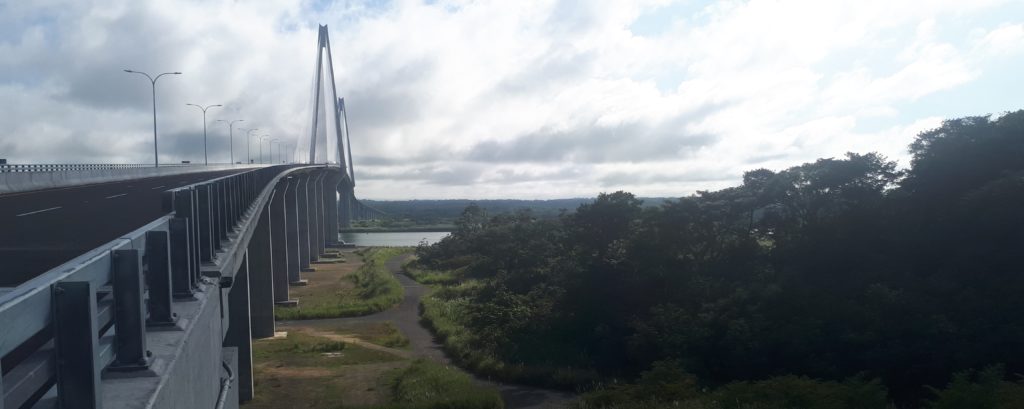
It all started off nicely with a 14 km ride through the jungle to the Gatun locks. They are really impressive but hidden behind high fences topped with razor wire. We asked a security guard how to get to the visitor center and he explained we should head about four kilometer down river, cross over the four lane, eighty meter high Atlantic suspension bridge and then cycle another five kilometers back up river.

Atlantic Bridge. 80 meters high

No problem. More jungle. More kilometers. More training.

We reached the beautifully laid out visitor center and asked where to park our bikes. Maybe we should have just asked where we could leave our machine guns or stash our cocaine? The reaction could not have been worse. The guy at the gate called the “security lady” who was wearing a side arm and was seriously annoyed that we were on bikes. Apparently it is absolutely, totally illegal to cycle to the visitor center. No way would we ever be allowed entry.

We could have come on a motorbike, a gas guzzling Hummer or on the back of the dirtiest oil burning pickup but NO WAY were we allowed to arrive by bike. Apparently there was a sign informing us of this at the bottom of the hill.

A tour guide tried to reason with the storm trooper but by now she had called up back-up and three sets of armed, evil eyes were glowering at us looking like extras from some film about a 20 century Junta. Is this how eco-terrorists feel when they protest against global warming.

Obviously this impressive little sign means the main road and not the farm track.

We were obviously not going to be allowed to discover all the great ways that the Panama Canal has helped the local wildlife and the environment in general so we cycled back to the boat. We did find the promised sign but it still looks like it refers to a farm track rather than the beautifully surfaced (but totally forbidden) road.

I am just glad she never found out we arrived on a sailing boat using the wind and not via a kerosene burning aeroplane. She would probably of locked us to the railings and beaten us. We were lucky to escape from the Agua Clara Visitor Center.

We cycled 52km and saved 30USD by being refused entry. 🙂