We are sailing west across the warm, calm Celam Sea. Everything is drying in the sun. Our clothes are hung wet on the safety lines and may be dry in a few hours. There is nothing to see in any direction except the sea and sky. No islands, no ships and most importantly no tropical storms anywhere.
Last night we were sailing slowly west under a moonless, starlit sky. Heidi was adjusting the wind steering and sails as necessary while also avoiding commercial shipping. We were finally making good progress from Papua to Sulawesi.
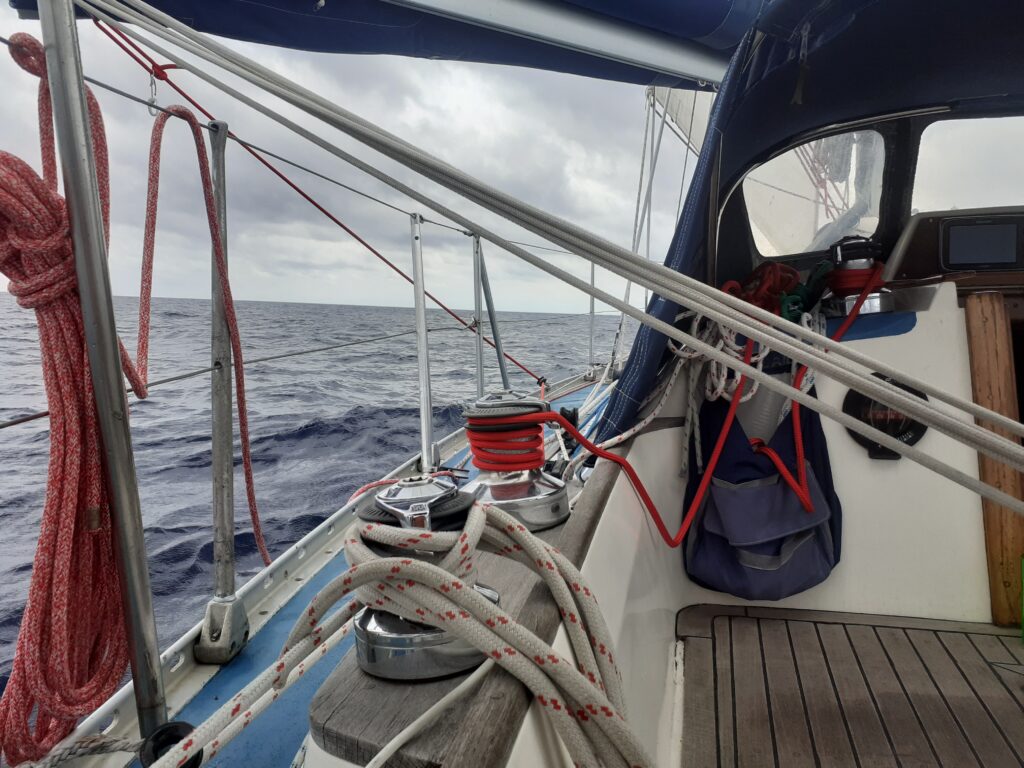
it is just a question of adjusting the correct line (rope)
At midnight the sea became agitated and we stopped making any forward progress. We had met a strong current coming the opposite way which not only stopped us, it forced us backwards. We tried tacking one way and then the other but nothing helped us on our way to Sulawesi. We changed the watch and I sat outside.
Slowly the stars began to disappear which is never a good sign. Next the wind changed direction and increased which is always a warning of bad things to follow. The pouring rain was mere confirmation that we had entered a tropical squall. Heidi put on a jacket and together, in the wet dark, we reduced the sail to a minimum while getting thoroughly soaked. We attempted to steer a safe course through the howling wind keeping the bow upwind and the wind on one side. Normally this is not so difficult but when it is pitch black, you are being lashed by rain and your only point of reference is the compass then it gets more exciting. There are occasionally times when you wonder if sailing is really such a fun sport.
Eventually the wind died down leaving us to drift the wrong way through the rain until that stopped as well. At some point I lay down and Heidi took over the watch again. And at nine o’clock I awoke to sunshine and Heidi sailing a rapidly drying boat gently west.
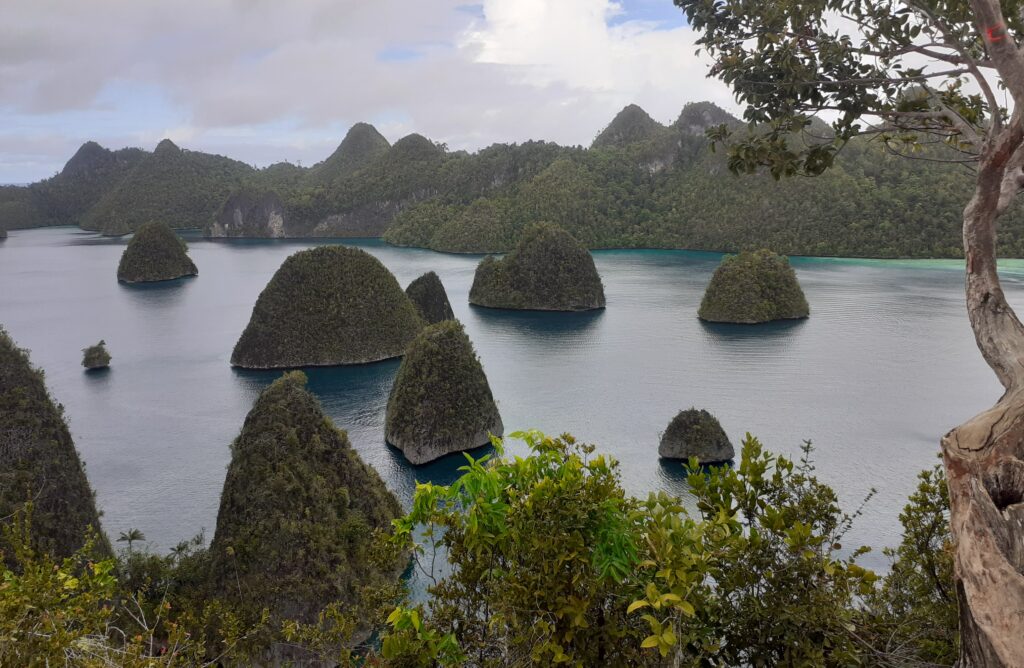
Nach unserer zweiten Nacht auf See erreichten wir im Morgengrauen Wayag, die unbewohnten und unglaublich malerischen Wayag-Inseln sind ein Wahrzeichen von Raja Ampat und für ihre wunderschönen Atolle und Panoramen bekannt. Die großen Boote, mit denen die Tauchtouristen ankommen, ankern am Eingang und im Archipel sind nur kleine Segel- bzw. Motorboote zu finden. Es gibt die Möglichkeit auf zwei Berge zu steigen und den Ausblick zu genießen, was wir natürlich auch gemacht haben. Nach dem steilen Anstieg öffnet sich der Blick über Wayag und es ist einfach nur Atemberaubend!!
On Top of Wayag
Weihnachten feierten wir gemeinsam mit fünf anderen Booten aus Neuseeland, Spanien und Australien; jeder brachte etwas zu essen mit und so hatten wir ein überaus abwechslungsreiches Büffet mit Köstlichkeiten aus den verschiedenen Ländern und ein gemütliches Beisammensein.
Wayag
Wir sind unglaublich viel und lange geschwommen und haben den großen Pool intensiv genossen, keine Quallen und nur kristallklares Wasser. Bei einem Ausflug zur Rangerstation sind wir dann noch mit Blacktip Reef Haien geschwommen, auch etwas ganz neues für meinen Sohn, denn wir waren es von Polynesien schon gewöhnt.
Nach fünf traumhaft schönen Tagen, machten wir uns auf den Rückweg nach Sorong. Wir ankerten ein paar mal und bei der Insel Pulau Gof Besar konnten wir nochmal einen Berg besteigen; na ja Berg ist eher übertrieben aber trotzdem schön.
Pulau Gof Besar
Unser Silvester war etwas vollkommen neues, wir ankerten vor der Stadt Waisai und um kurz vor 22 Uhr hoben wir den Anker und fuhren nach Sorong. Um Mitternacht genossen wir das Feuerwerk ohne Lärm und am Neujahr Morgen waren wir zurück in Sorong.
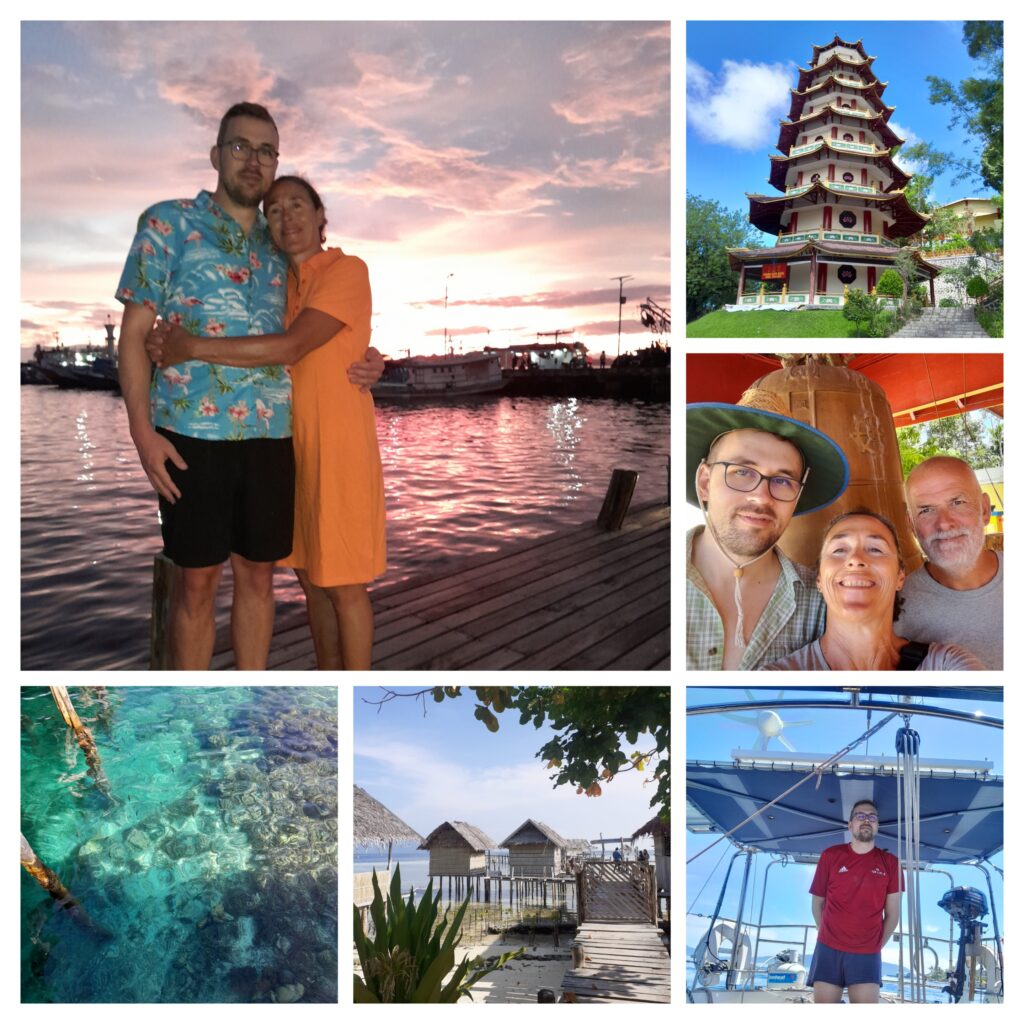
Nach drei einhalb Wochen musste ich meinen Michael leider wieder nach Deutschland fliegen lassen, doch wir hatten eine fantastisch schöne Zeit zusammen. Wir haben so viel zusammen erlebt, Dinghy Ausflüge gemacht, Sternenbilder angeschaut, Sternschnuppen gesehen und vieles vieles mehr.
You have probably never heard of Wayag. But you have definitely seen pictures of this amazing Indonesian archipelago.
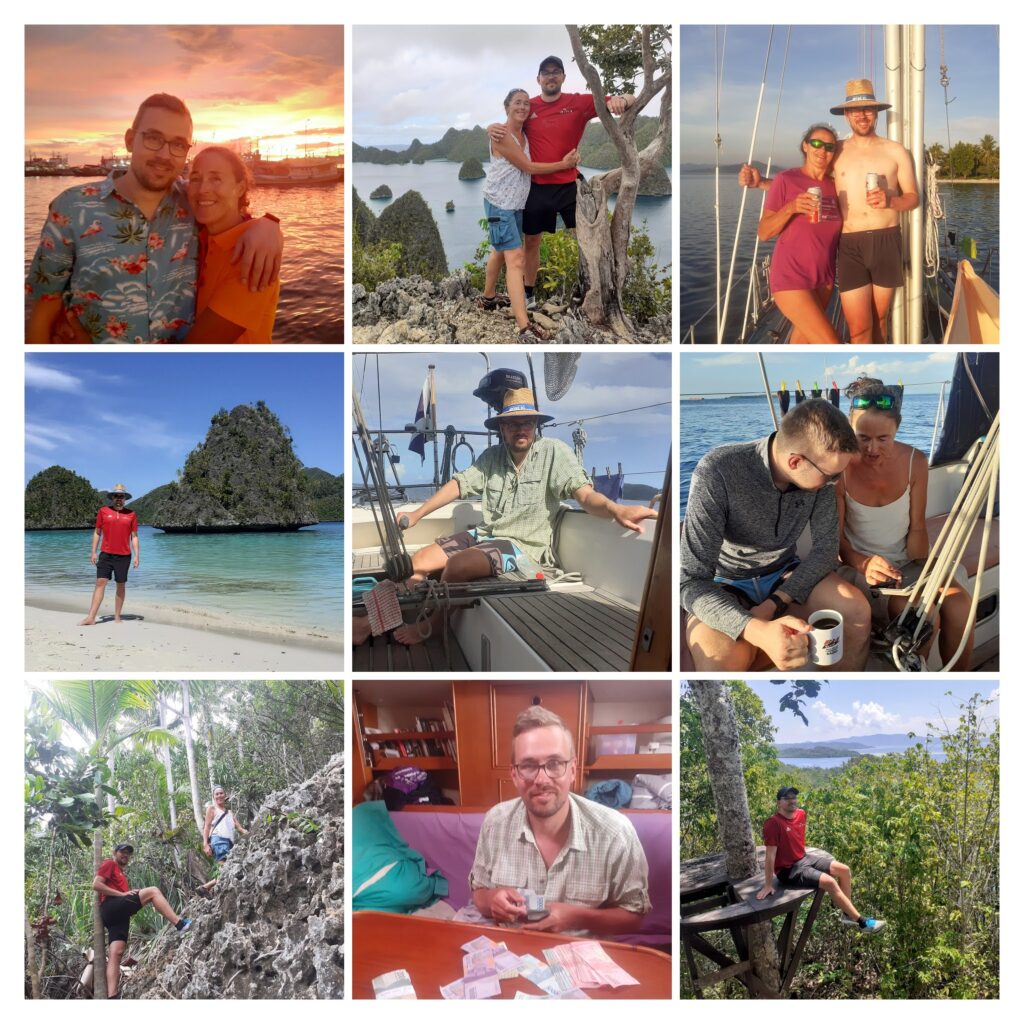
Heidi’s son, Michael, flew to Sorong to join us for Heidi’s birthday, Christmas and New Year. Despite his three flights becoming four and despite being given a hand written boarding card, he arrived exactly as planned. To help with the jet lag we took him to immigration (twice), the bank, the supermarket and a restaurant before returning to Artemis.
We spent a few days sailing near Sorong and then set off north to the magical realm of Raja Ampat. The plan was a gentle day sail but, this is sailing so we ended up tacking through the night hard against the wind avoiding islands, islets and reefs. Welcome to our world Michael! Luckily he took everything in his stride and even managed a good night’s sleep.
At first light we anchored off the Island of Arborak and took the dinghy to the reef to introduce Michael to coral and the millions of fish. The clever guy had bought an underwater camera with him so that we could record the amazing reef scenery. We also walked around the island which took ten minutes and met three Germans who had booked a three week stay and, after one night, were wondering what they were going to do for for the next twenty days.
Another two days and one night of sailing and the sun rose to show us Wayag. As we entered, folowing the deep clear channel between the coral reefs and undercut limestone hills, the effect was “Wow! Amazing!” We anchored off a white beach and immediately jumped in the water. It had the perfect temperature and “the swimming pool” became a twice a day event. Paradise is where you make it but this is a good place to start.
Just along from us were a few boats with young families on board. One night they turned the beach in to an outdoor cinema and on Christmas Eve there was a beach party. A tribe of happy, well brought up children having a good time and everyone made us very welcome.
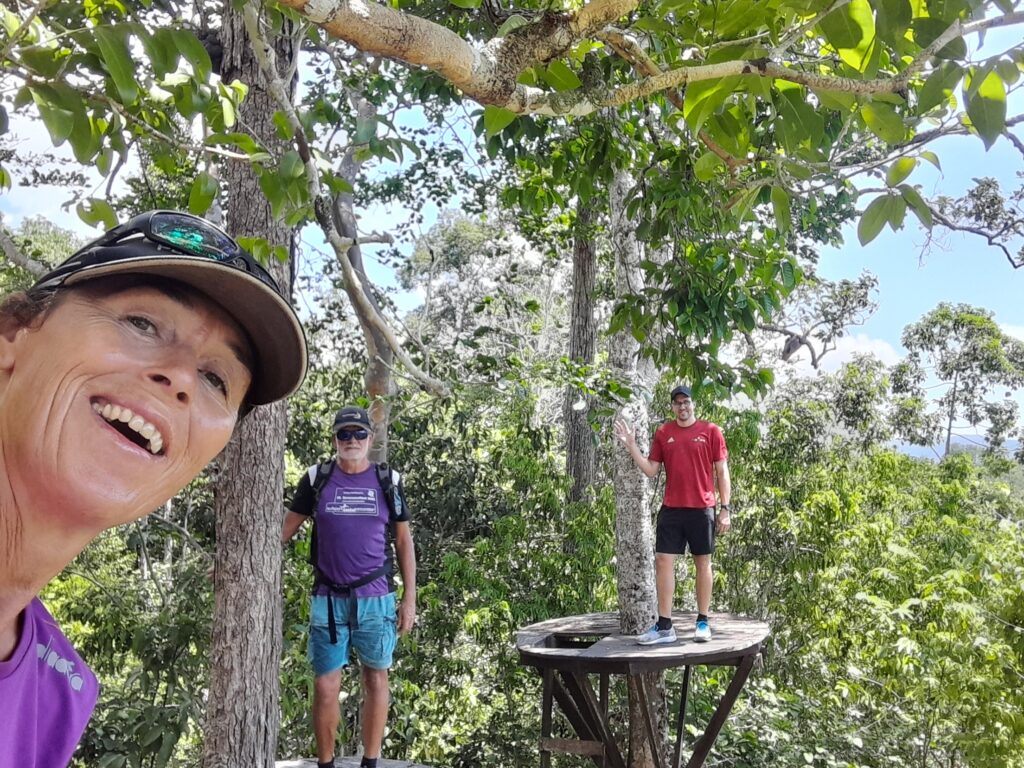
We climbed two steep limestone hills to enjoy the moment when you step out of the hot jungle and the vista of water and hills opens up in front of you. It is hard to believe that what you are looking down in to is reality and not something from a films special effects department. Everything is just too perfect with geometrically rounded hill tops, immaculately spaced trees on the hillside and water with every known shade of blue.
We also found a school of sharks to swim with. They were black tip reef sharks so not human eaters but still they had that evil feeling that sharks emanate as they swim past you with their tiny little eyes sizing you up.
We spent four days in Wayag. It is indescribably beautiful and I am pretty sure we will not find anywhere to knock it off the “most beautiful place ever” pedestal”.
Ich glaub es gerade selber kaum und wenn ich nicht nachgeschaut hätte, würde ich es nicht glauben, doch das erste Mal sind wir am 21.11.2023 in Sorong angekommen. Mein Sohn Michael hat mich vor zwei Wochen damit überrascht, dass er uns hier besuchen kommt. WAHNSINN!! Wir haben gleich geschaut, was es den hier so zu sehen gibt und das wirklich Beste soll Wayag ein Archipel in Raja Ampat sein. Natürlich wollten wir Michael ganz langsam an die Seglerei gewöhnen, denn er war vorher noch nicht segeln, aber ich sagte zu Neill, dass ich so gerne einmal über Nacht unterwegs sein möchte, um ihm den sagenhaften Sternenhimmel zu zeigen.
Wir holten ihn am Flughafen ab, wo er nach fast 40 Stunden Reisezeit etwas müde und erholungsbedürftig aussah, er musste sich auch noch an die 35 °C gewöhnen und die Luftfeuchtigkeit von ungefähr 70 % ist auch nicht zu verachten. Aber schlafen stand erst später auf dem Programm, damit er sein Jetlag besser in den Griff bekommt. Die erste kleine Segeltour führte nach Soop und dort schnorchelten wir ausgiebig, ich freute mich so sehr für Michael, dass wir wirklich wunderschöne Korallen und verschiedene Fische sahen. Bei einem Spaziergang über die Insel, lernten wir Martin und seine Familie kennen, die uns dann später auf unserem Boot besucht hatten. Unser Plan war, relativ zügig nach Wayag zu kommen, dort viel Zeit verbringen zu können und dann beim Heimweg keinen Stress zu haben, damit wir locker bis zum Abflug wieder da sind.
Michael ist da !!
Wir hatten richtig Glück mit dem Wind, denn wir segelten mit vollem Genoa und Hauptsegel und Michael war so cool, als ob er noch nie etwas anderes gemacht hätte. Keine Übelkeit bei stärkeren Wellen und keine Angst bei mehr Wind, vielleicht hat er das von mir :-). Gleich die erste Nacht segelten wir durch und Michael bekam gleich einen schlechten Eindruck, was Übernachtsegeln bedeutet. Der Wind drehte ständig, die Strömung war komisch und stark, doch gegen Morgen ankerten wir in Arborak.
Wir machten zwei Drift Schnorchelgänge, bei einem machte Michael leider auch eine schmerzhafte Erfahrung mit einer Qualle, doch zum Glück war es nach einem Tag schon fast wieder vergessen. Am Nachmittag besuchten wir die Insel, wo es nicht viel zu entdecken gab, außer einer deutsche Familie, die sich furchtbar über die Unterkunft beschwert hat und ihre drei Wochen Aufenthalt dort nicht verbringen wollten. Wir verabschiedeten uns und am nächsten Morgen schnorchelten wir noch am Bootssteg, wo das Wasser kristallklar war und wir fast durch Fische schwimmen mussten. Auf dem Rückweg zu Artemis haben wir dann noch Mantas gesehen, einen aus dem Wasser springen und zwei sind direkt an uns vorbei geschwommen. Wow, so majestätische, giantisch große Tiere so nahe erleben zu dürfen. Nach noch zwei Tage erreichten wir Wayag.
Neill erzählte mir, dass unser nächster Halt die Insel Pisang, die übersetzt Bananen Insel heißt, sein wird. Ich wollte die Route machen, konnte aber diese Insel nicht finden, denn in den Karten hat sie den Namen Pulau Sabuda und nur die Einheimischen nennen Sie Insel Pisang. Er hatte diesen Ankerplatz in Zulu Waterways gefunden und wir wollten ihn unbedingt ausprobieren, denn laut Beschreibung ist es eine Aussparung im Rief einer unbewohnten Insel.
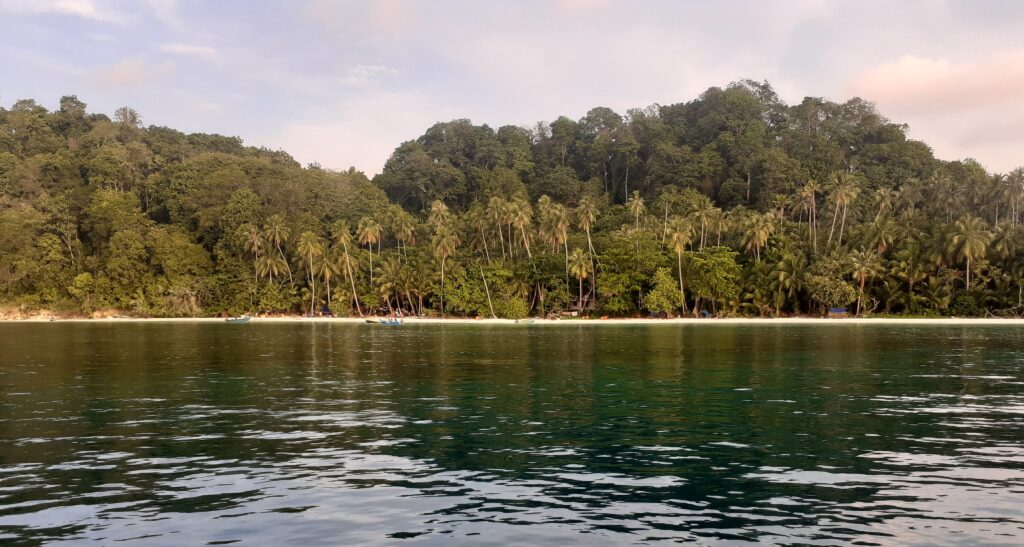
Pulau Sabuda
Unsere atemberaubende Reisegeschwindigkeit mit durchschnittlich einem Knoten war selbst für den Autopiloten nicht geeignet und wir steuerten fast die ganze Nacht über von Hand. Doch im Morgengrauen tauchte die Insel vor uns auf, das Wasser grün, der Strand weiß und Palmen, traumhaft schön. Ein paar Fischerboote waren ebenfalls unterwegs. Ganz langsam und vorsichtig tasteten wir uns vorwärts, ich am Bug, um Ausschau nach Korallen zu halten, Neill hatte den Tiefenmesser im Auge und als der Untergrund etwas heller wurde, ankerten wir in 16 Meter Tiefe.
Am Strand lagen 10 Fischerboote und wir waren weit entfernt, doch bei Niedrigwasser war ein riesiges Rief zu sehen und unsere Distanz war gar nicht mehr so groß. Die Einheimischen wirkten uns zu und riefen uns ein “Selamat Siang”, was Guten Tag bedeutet und wir antworteten ebenso und winkten zurück.
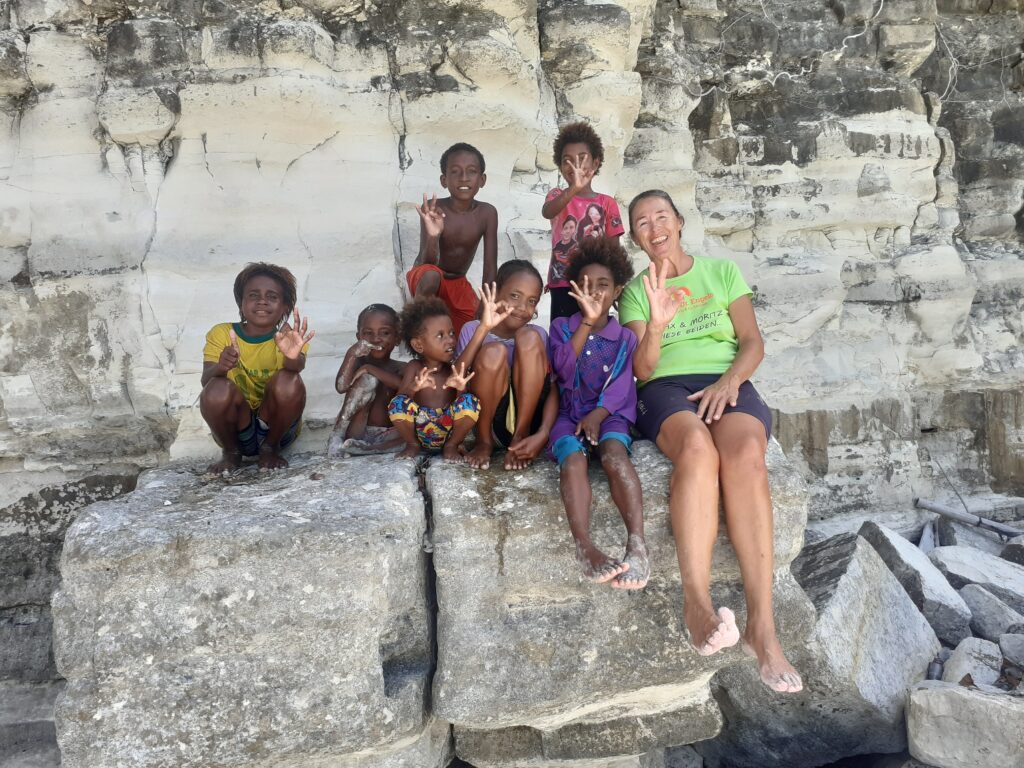
Am nächsten Morgen genossen wir unser Frühstück im Cockpit und anschließend paddeln wir an Land, mit einer Frisbee und einem Ball ausgestattet wollten wir uns mit den Einwohnern bekannt machen. Wir begannen mit der Frisbee zu spielen und schon waren wir von neugierigen Kindern und Erwachsenen umringt. Jeder wollte mit diesem komischen Ding mit uns spielen und es war super lustig. Fiorika, eine junge Frau, sprach etwas englisch und mit Hilfe von Google Translate erzählte sie uns, dass ca. 30 Personen angefangen vom Baby bis zur Oma, mehr oder weniger eine große Familie, für ca. einen Monat hier auf dieser Insel leben um zu Fischen und Kokosnuss Öl herzustellen.
Wir gingen am Strand spazieren, wobei uns Fiorika und die Kinder begleiteten, danach wurden wir zu einer Kokosnuss und Kaffee ins Dorf eingeladen.
Dandi
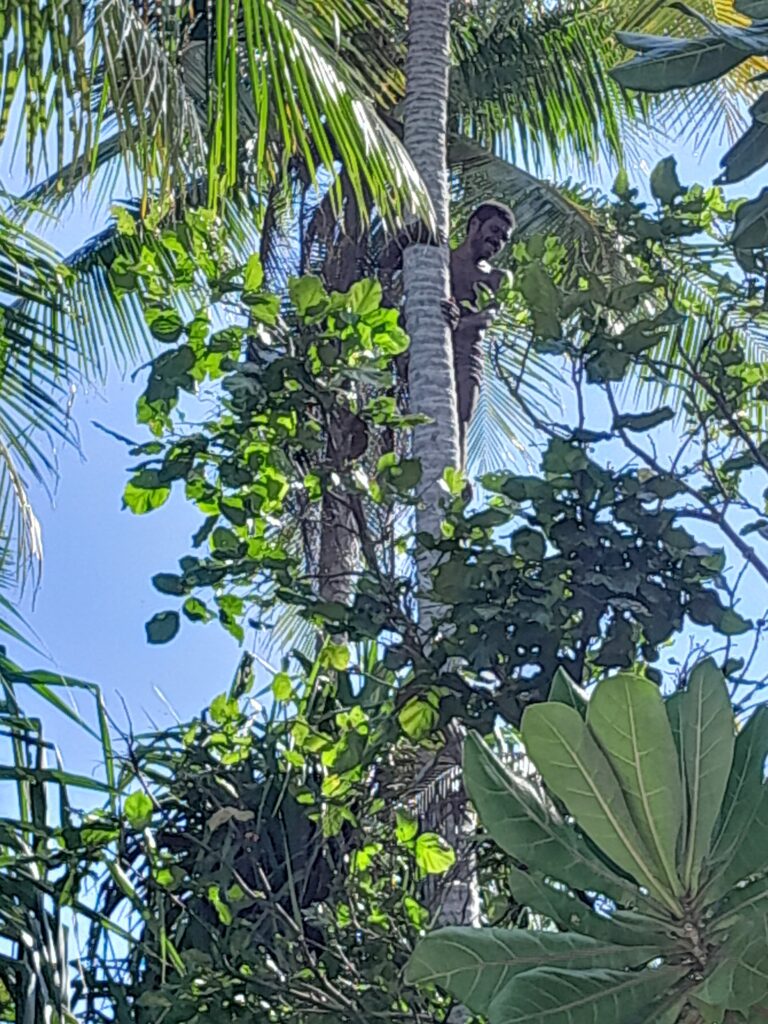
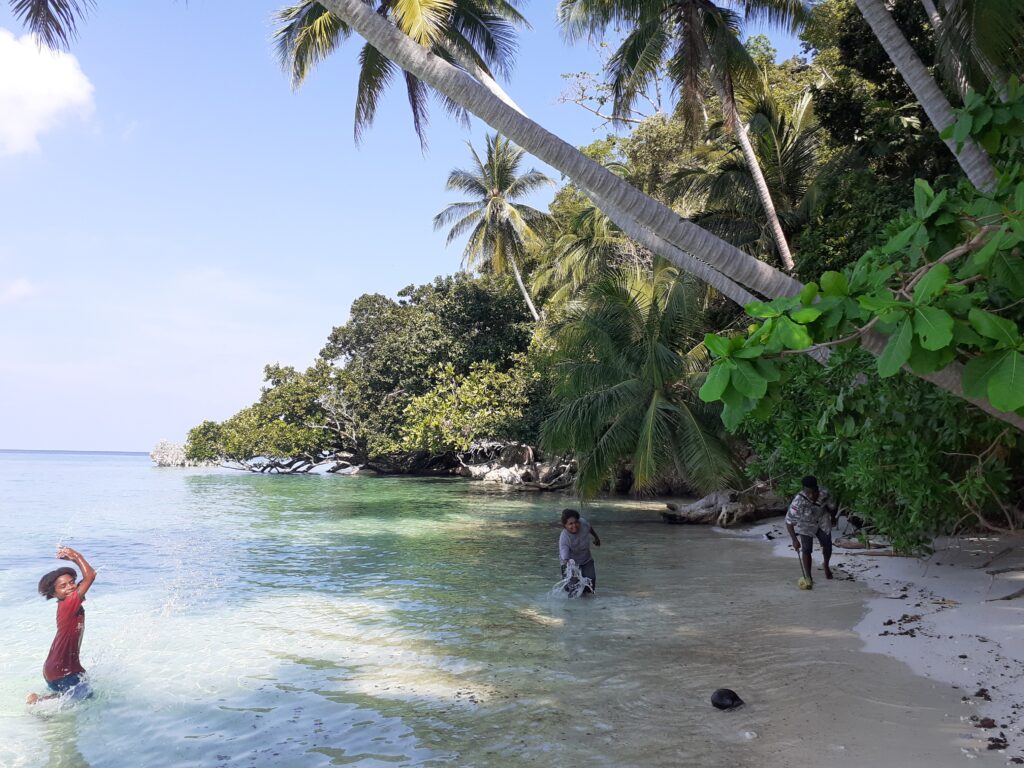
Mit ca. acht Dorfbewohnern machten wir eine Kanufahrt, sie zeigten uns die anderen Buchten, wir fuhren ganz nahe an den Felsen entlang und im seichten Wasser folgten wir einem Rochen. Dandi, Fiorikas Mann kletterte flink wie ein Affe die Palmen hoch, um die Kokosnüsse zu ernten und anschließend schwammen wir gemeinsam im glasklaren Wasser.
Wir fragten ob die Insulaner auch unser Boot anschauen wollten, denn wir haben mittlerweile festgestellt, dass wir für die Einheimischen genauso interessant sind wie umgekehrt. Nachdem unsere Artemis ja nicht so groß ist, vereinbarten wir, dass immer nur vier Leute auf einmal kommen. Irgendwie hat das nicht so geklappt, denn wir waren kaum mit den ersten Besuchern an Bord, war schon ein Kanu mit weiteren acht da, okay, dann eben alle auf einmal. Am meisten hat die Männer unsere Windsteuerung beeindruckt, denn Neill erzählte, dass sie ganz alleine und ohne Motor das Boot steuern kann. Die Satellitenbilder der umliegenden Inseln, die wir zur Navigation verwenden, waren auch sehr interessant. Wir zeigten ihnen auch unseren Fotobücher, unsere Familie und unsere Heimat mit Bergen und Schnee. Zu Keksen und selbstgemachtem, kühlen Wasser ließen wir es uns gut gehen.
Unsere Kanufahrt
Am Abend wurden wir zum Lagerfeuer am Strand eingeladen, das extra für uns aufgebaut wurde. Wir brachten Pizza mit und zu den Tönen von einem riesigen Ghettoblaster tanzten und sangen wir alle gemeinsam ums Feuer. Fiorika erzählte uns, dass hier viele Boote ankern würden, aber keine “Weißen” kommen an Land. Wir schrieben in unserem Google Translator, dass wir das sehr schade finden und dass sie so viel verpassen, denn wir genossen die Gesellschaft dieser Menschen.
Das hat sie sehr gefreut und als wir am nächsten Tag den Anker hoben, war das ganze Dorf versammelt und hat zum Abschied gewunken.
Was für ein tolles Erlebnis und auch die Kinder waren überglücklich, dass wir die Frisbee und den Ball da gelassen haben.
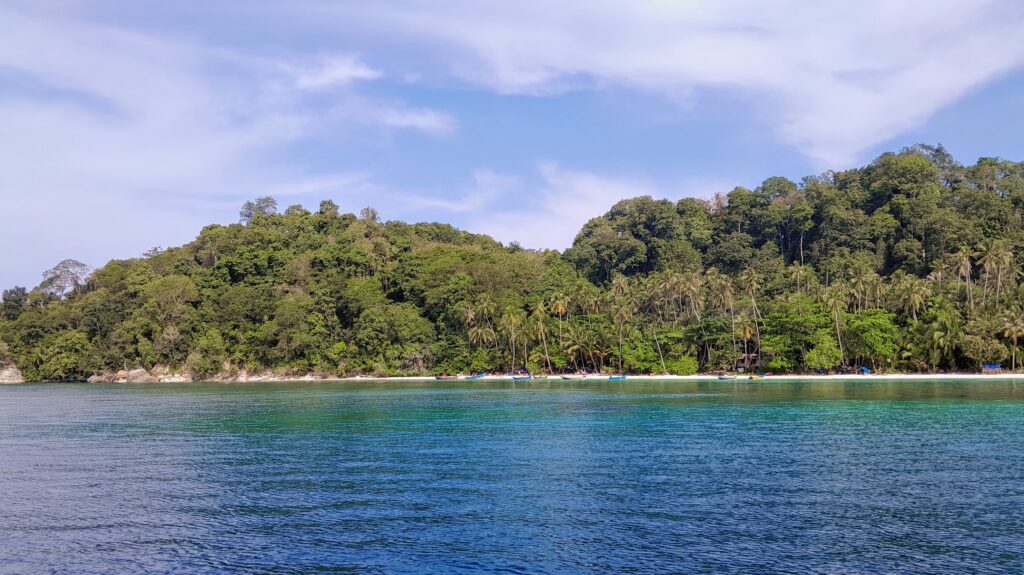
There is an island in Indonesia that the charts call Sabuda but which the locals all call Pulau Pisang – Banana Island. It is only a few degrees south of the equator and is like the story book tropical island. Palm trees grow behind the white beaches and the entire island is fringed with beautiful but dangerous coral reefs. Between the coral there is one small patch of sand on the north side that is shallow enough to anchor in if the weather is settled and the wind is in the correct direction. If you decide not to anchor it is another day or two of sailing before you reach the next anchorage.
After a night at sea we rounded the headland and found a fisherman’s camp set up behind the beach and their boats pulled up on the sand. We very gingerly nosed in between the reef’s arms with Heidi at the bow “coral spotting” and dropped anchor in exactly the right spot. We jumped into the water to see if the anchor was properly set but, despite the clear water, twenty meters was just too deep to see anything. At least we had a refreshing swim.
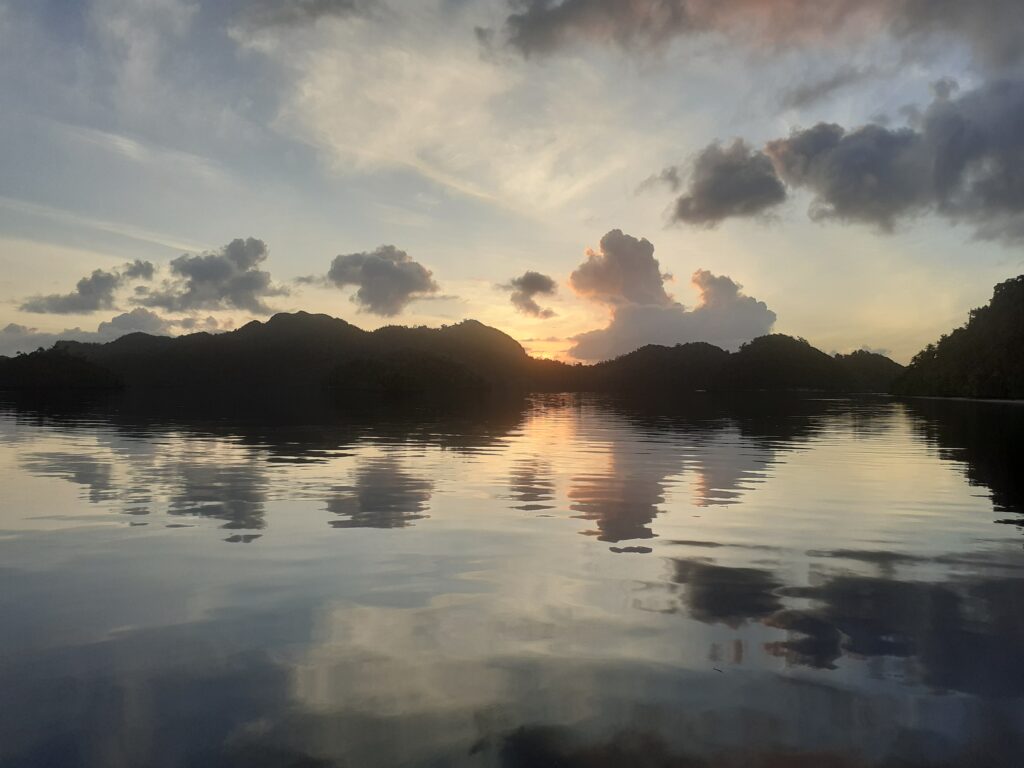
During the afternoon fishing boats passed us and we waved to each other and called greetings across the bay. We watched the sun set and the stars appear and baked homemade bread and cheese to go with it. Life on Island time is not very stressful.
The next morning we sat in the cockpit and watched the tide come in and slowly cover the reef. It took about two hours and two cups of coffee but someone has to check that the sun and moon are doing their jobs. Once we were sure that the tides were working as expected we did an hours work to pay the bills and then set off to the beach.
We had brought a frisbee with us and started playing with the children on the beach. We were soon joined by a lady named Fiorika and the young men who all wanted to try this new game. Once we had passed round a packet of crisps, we were firm friends with half the village and went off to explore along the beach with Fiorika and the children. On our return we were invited to the camp to meet the patriarch and the rest of the family and drink coffee. There was music playing so the coffee turned into karaoke with a little dancing as we learned that this was an extended family group that came across from Fakfak for a month at a time to harvest coconuts and fish.
Someone suggested a trip to a neighboring beach to collect coconuts and within minutes about five young men, Fiorika, her sister Nona and we were in a long boat carving along the coast, around coral outcrops and under overhanging trees. I guess you can take the direct route but that would not be anywhere near as impressive when you have two “tourists” along for the ride. At the beach we were astounded as Dandi (the third son of the family and Fiorika’s husband) shinned up a massive palm tree faster than any monkey and began to throw coconuts down. The coconuts were opened but had no juice in them so we continued to the next beach for a repeat performance and some swimming. Dandi is not only a monkey, he is also a fish and can sit on the bottom of the bay for minutes at a time. He is 23 years old so thoroughly enjoyed showing off his abilities to such an appreciative audience.
Back at the bay we agreed that we would all meet for a beach fire at nine in the evening. We asked if anyone would like to see Artemis and half the village took us up on the offer. We showed them our home, the water maker, our charts with the satellite images switched on and other toys but what really impressed these fishermen was the monitor windvane. They were fascinated at the idea of a device that steered the boat even if you were asleep. They left after about an hour and that gave us time for another swim and to prepare home made pizza to take with us.
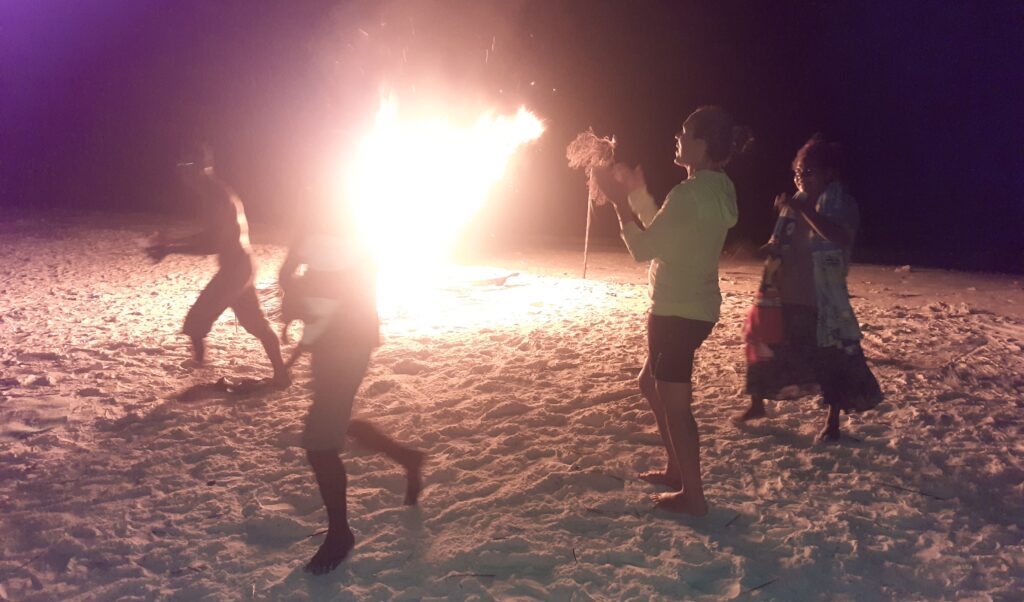
Back on the beach there were thousands of stars and only one anchor light in the bay. A small fire was burning and next to it was a huge bonfire carefully laid. As the guests of honor “Aunty and Uncle” were invited to light the fire which we did following clear instructions about exactly where to poke our fire stick.
Heidi and Fiorika opened the dancing and soon most people were dancing and enjoying this night when different cultures met. Sadly the people told us that boats often stop but the white people mostly stay on board and they never have the interaction that they had with us. Why sail the world and not talk to the people that you see around you?
Luckily Neill was the oldest person present – even older than “Grandfather” – so at eleven he could explain that he needed sleep. Everyone escorted us to our dinghy, carried it into the sea and wished us selamat Malam – good night. It was good that we left as Heidi reported that the fire was still burning bright at three o’clock.
The next morning we awoke to a breeze from the south so, after cleaning the hull as an excuse for another swim, lifted anchor and shouted a loud goodbye. As we turned downwind our friends were waving from the forest edge, one holding the yellow frisbee we had left behind.
Es ist echt kaum zu glauben, dass wir schon drei Wochen hier sind und bereits 500 Seemeilen gesegelt sind. In unserer tollen Ngiar Beach hat auch ein französisches Boot geankert und seit ewiger Zeit haben wir mal wieder “europäische Segler” getroffen. Wir wurden zum Sundowner eingeladen und haben eine Flasche Wein und Pizza mitgebracht, es wurde ein super lustiger Abend mit Virginie, Patrick und ihrem Sohn Hippolyte. Am nächsten Morgen legten beide Boote ab und wir hoffen Sie in Sorong oder in Raja Ampat wieder zu treffen.
Hier in Indonesien gibt es eher leichte Winde, so dass wir wieder mit unserem Parasailor unterwegs sind. Manchmal ist es unvorstellbar, mit so wenig Wind überhaupt segeln zu können, unsere Windsteuerung (Chiara) spürt den Wind jedenfalls nicht und verweigert ihren Dienst. So steuern wir oft selber oder benützen unseren Autopilot (Steven), was den Nachteil hat, das er eben Elektrizität braucht.
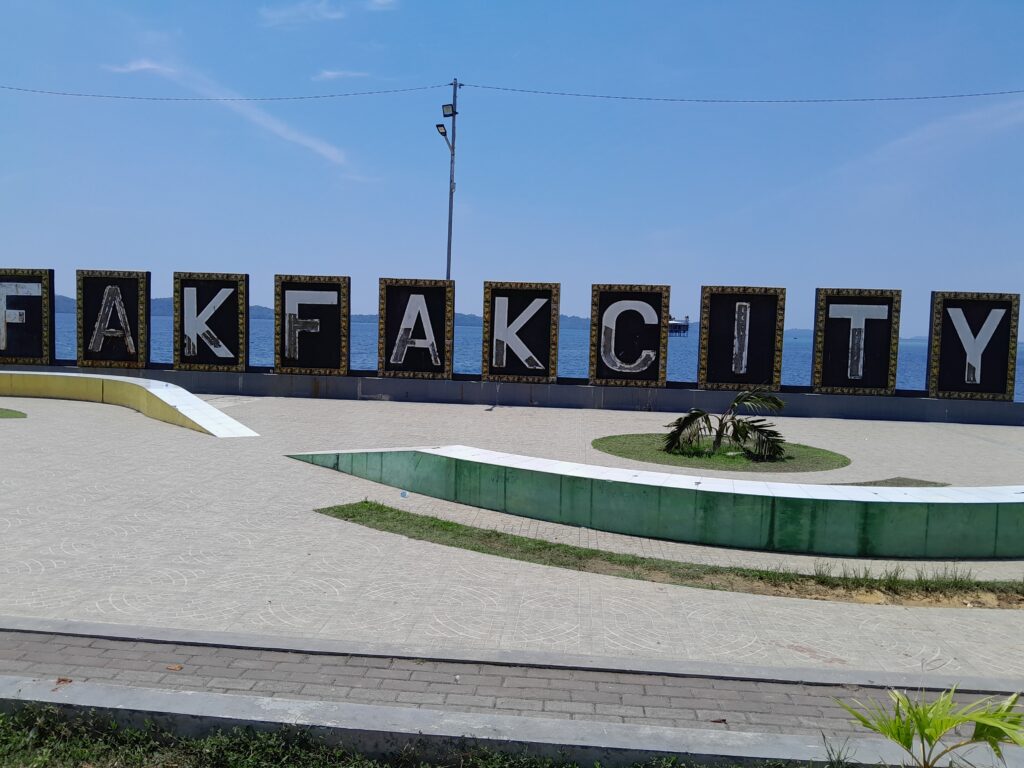
Während meiner Nachtschicht mitten im Nirgendwo, hatte ich plötzlich Internet und zwar soviel, dass ich mit meinem Sohn Michael problemlos telefonieren konnte. Die Seekarten hier sind ungenau und oft falsch und so hat Neill in seiner Schicht Satellitenbilder heruntergeladen, damit wir nicht ganz im Blindflug unterwegs sind. Als der Wind dann aufgehört hat, haben wir mal kurz eine “Internet Pause” eingelegt und für drei Stunden in Pulau Gorong geankert, dann ging’s weiter nach Fakfak. Der Ort hier heißt wirklich so und ist laut Internet bekannt für seinen Muskatnuss Anbau.
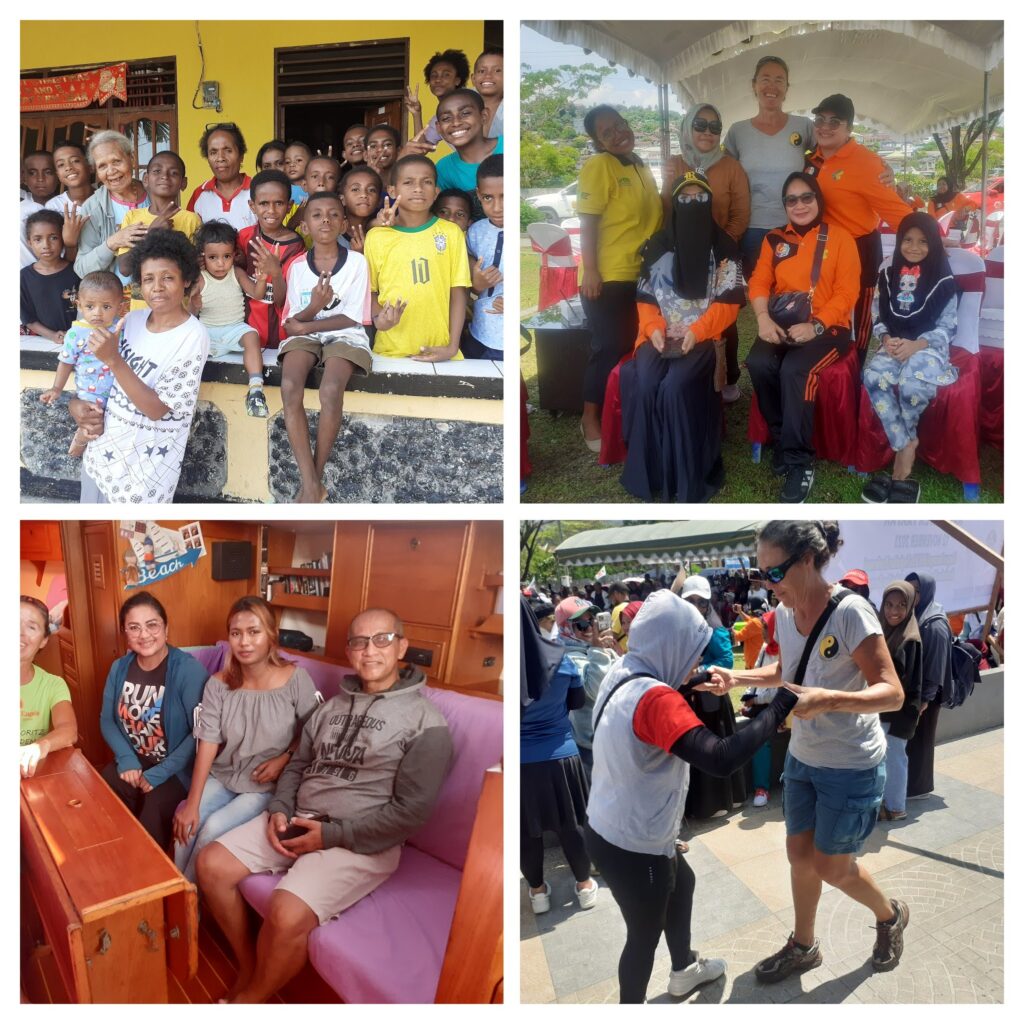
Wir haben erstmal einen Landspaziergang gemacht, wir sind hier wirklich ein außergewöhnliches Ereignis, denn jeder will ein Foto mit uns haben. Im ersten Ort, wurden wir zu einer ehemaligen Lehrerin geführt, denn Imelda konnte Englisch und sie übersetzte den ca. 20 Kindern, das wir mit einem Boot von Schottland hierher gesegelt sind.
Am nächsten Tag stand Fakfak auf dem Plan, wir wollten mit dem Taxi bzw. Kleinbus dahin und als wir in Uni Pokpok mit unserem Dinghy ankamen, liefen die Kinder uns schon im Wasser entgegen. Einer machte das Dinghy an der Boje fest und als wir an Land fragten, ob es in Ordnung wäre grinste uns der Mann an und meinte: OK. Nach wieder gefühlt zwanzig Fotos mit allen Kindern und Omas, zeigten uns die Leute, wo wir den Bus anhalten konnten. Der Busfahrer kam und los ging’s, erst wollte er keine anderen Fahrgäste mitnehmen, doch wir meinten, dass wäre schon ok und so füllte sich der Kleinbus mit 10 weiteren Leuten.
In Fakfak war eine Veranstaltung im Gange und wir wussten nicht genau was da los war, deshalb sind wir näher ran und haben festgestellt, dass es sich um einen Tanzwettbewerb handelte. Die Musik war gut und als dann ein Twist kam, hab ich natürlich auch zu tanzen angefangen und eine andere Frau hat mich bei der Hand genommen und gemeinsam haben wir dann getwistet, so witzig.
Wir haben den Markt durchstöbert und wieder Obst und Gemüse gefunden, die wir nicht kannten. Auf unserem Rückweg haben wir nochmal beim Fest vorbeigeschaut und die Damen haben gemeint, dass wir zu spät dran wären, den die Tänze seien schon vorbei. Wir beruhigten die Mädels und Neill zeigte ein Video von meiner Tanzeinlage und so kamen wir mit den Frauen ins Gespräch. Sie erzählten uns, dass hier der Jahrestag des Gesundheitsministeriums gefeiert wurde. Wir wurden zum Mittagessen eingeladen und als wir gefragt wurden, ob wir auch “Durian” probiert hatten, wussten wir nicht was sie meinten. Durian auch Stachelfrucht genannt, ist eine Spezialität von der Insel Papua und sofort wurde ein junger Mann losgeschickt um die Frucht zu kaufen, damit wir sie probieren konnten. Sie schmeckt ziemlich intensiv, süß und ist ziemlich fett. Interessant, doch zu unserer Lieblings frucht wird sie nicht werden. Später luden wir die Damen für den nächsten Tag auf unser Boot ein.
Fakfak und seine Menschen
Nach einigen WhatsApp Botschaften war dann klar, dass Dewi, so der Name unserer neuen Bekannte, mit ihrem Mann Ben und ihren Kindern kommt. Neill holte die vier ab und wir konnten ihnen unser Boot zeigen und gemeinsam Kaffee und Kuchen genießen. Ihre Tochter Ariel studiert Bauingenieur, sie spricht super Englisch und es war für uns echt erstaunlich, dass wir die Ersten waren, an denen Sie ihre Sprachkenntnisse ausprobieren konnte. Leider war ihr Sohn Ken seekrank und so mussten wir schnell Adieu sagen.
We have been in the country nearly three weeks now. We have sailed five hundred miles, visited three towns and three villages, anchored in seven bays and met hundreds of people many of whom wanted a photo with us.
The country is beautiful. I am writing this anchored off the island of Papua. The forest comes all the way to the ocean and the villages, with their mosques and churches, are buried in the forest behind the white beaches. The sea is mostly see through and every island is fringed with beautiful, healthy coral. Unfortunately plastic rubbish is endemic but you have to look past that.
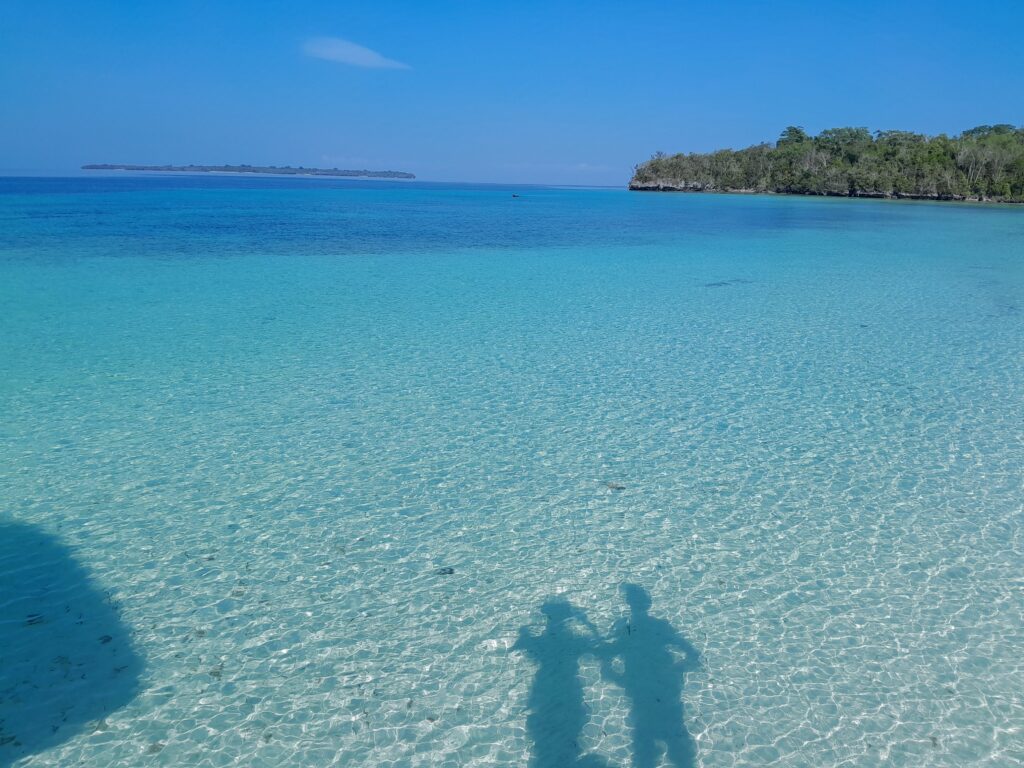
Pulau Gorong. See through water and beautiful corals
The weather is a dream. It is hot all day and warm all evening but, particularly in the evening, a breeze blows that cools everything down wonderfully. If we anchor in a busy bay then we may need clothes as the fisherman pass and at night a single sheet is enough. Occasionally it rains but, until now, they have only been passing squalls that wash the salt off Artemis. The rainy season has not arrived yet.
Buying fruit and trying Durian fruit
The food is tasty and affordable. Because one Euro is worth over 15 000 IDR we tend to be millionaires and spending thousands of rupees in a market can be a bit unnerving but, when we work it back to Euros, we have a problem spending more than five Euros. Fruit and vegetables are available everywhere so we are enjoying a healthy diet. In Tual we ate lunch at a street stall and it was tasty, filling and very affordable. In the village of Pasir Putih we walked once through town and bought everything we needed from the stalls next to the road. In Fakfak we were looking for lunch when some kind ladies who were tidying up after a festival gave us their lunch packets and then bought us Durian fruit as a desert.
And the people are amazingly friendly. Everybody smiles and says hello. Almost everybody wants a photo with the strange foreigners. Most people have no idea what we are talking about but try and help us anyway. We say Selamat Pagi and sometimes we get a shy good morning as an answer and we are all amazed what polyglots we are. We met a family on the beach and said hello. The next minute we were sat down eating their fried bananas with chili sauce and fried coconuts. We introduced ourselves as English speaking in a village and were taken to meet Imelda, the retired English teacher and all her grandchildren. In Fakfak Heidi got carried away by the music and a minute later she was dancing with a partner. We only said hello to Dewi and her colleagues and were invited for lunch. The next day she and her family visited us onboard Artemis.
Imelda and grandchildren. The ladies from the health ministry. Dewi, Ariel & Ben onboard. Heidi dancing the twist.
Als wir an Allerheiligen hier an diesem traumhaft schönen Strand ankamen, wollten wir ja eigentlich nach Tual segeln. Doch der Wind hat nicht mitgespielt und deshalb haben wir einfach hier geankert. Neill schaute in Google Maps und meinte, dass wir auch mit dem Fahrrad dort hin radeln können. Bloß, das eigentlich von hier aus keine Straße geht, doch wir haben sogar eine Teerstraße gefunden. Also gesagt, getan; Eine Route gemacht, die Wettervorhersage studiert und los ging’s. Der Wecker klingelte um 6 Uhr und um 8 Uhr saßen wir bereits auf unseren Rädern und genossen endlich mal wieder Radler zu sein.
Unser Startpunkt
Wir fuhren vorbei an den frisch gerodeten Feldern, wo jetzt Bananen, Papaya und Kokosnüsse angebaut werden. Weiter ging es durch kleine Dörfer, wo uns jeder mit “Selamat pagi” (Guten Morgen) begrüßte, wir haben auch einen anderen Radler getroffen, Jan ist Holländer und arbeitet hier in einem Hotel.
Wir sind jetzt wieder in einem Land angekommen, wo Roller das Familienauto sind, nicht selten sind vier bis fünf Leute auf dem Roller, angefangen beim Baby bis hin zur Oma. Je näher wir der Stadt kamen, um so mehr Roller und Kleinbuse waren unterwegs. Wir fuhren über die Brücke, die Tual mit Langgur verbindet und haben den Hafen angeschaut. Es ist echt witzig, das Europäer hier wirklich etwas besonderes sind, denn jeder möchte ein Foto mit uns haben. Alle rufen schon von weitem: “Mister, Mister Foto Foto!”
Hier beim Mittagessen mit der Verkäuferin
Wir gönnten uns einen Kaffee und anschließend inspizierten wir den Supermarkt, um zu wissen, was es hier so alles gibt. Unser Mittagessen haben wir bei einem Stand an der Straße eingenommen: zwei Getränke, einmal gebratene Nudeln mit einem Spiegelei und das alles für 1,80 €. Nach unserem Einkauf machten wir uns auf den Heimweg; klar haben wir noch Tomaten, Auberginen und Bananen auf dem Rückweg gekauft und Neill war dann schon eher etwas überladen. Nach 45 km waren wir zurück an unserem Strand.
We have now been in Indonesia nearly two weeks so it was definitely time to get on the bikes and go exploring. We are anchored off a beautiful coral fringed beach on the island of Kai Kecil and the main town of Tual is only about twenty kilometers away through the forest and over the hill.
We took the bikes to shore with absolutely no wind. The water was like glass and we could see every detail of all the beautiful coral as we passed over them. What a way to start a bike ride.
All the maps agree that there is no track from our beach through the forest but luckily they are all wrong and a road took us in to the first village from where we meandered past farms and through villages towards Tual.
We greeted everyone we met with Selamat Pagi and received a Pagi in reply. Occasionally we received a Hello Mister or Hello Misses and even one Goedemorgen from Jan who was dutch. Pedestrians or scooter passengers made photos or video clips as we passed to show their friends that they had seen real europeans in the street.
We took a shortcut through the backstreets and ended up lost as the road had disappeared but a young mother gathered up her baby and went ahead to show us the way. She explained the route we should follow in Indonesian so we smiled and thanked her with a Terima Kasih and continued to follow the GPS.
We rode to the bridge that connects the towns of Langgur to Tual where we were extras for the passing schoolgirls selfies. We looked at the rubbish filled water of the bay and decided that we were better on our coral beach. A coffee was followed by amazing street food. Heidi ordered by pointing at stuff and after we had finished the seller came to take pictures with her international clientele.
We visited the biggest supermarket on the island and filled our rucsacs with supplies then, on the way home, bought vegetables from a roadside stall and tied them to the outside in an Aldi bag. Later we found a banana seller so tied those on as well. After 45 kilometers we were glad to be home but had enjoyed a fantastic trip through the backwoods of the island.