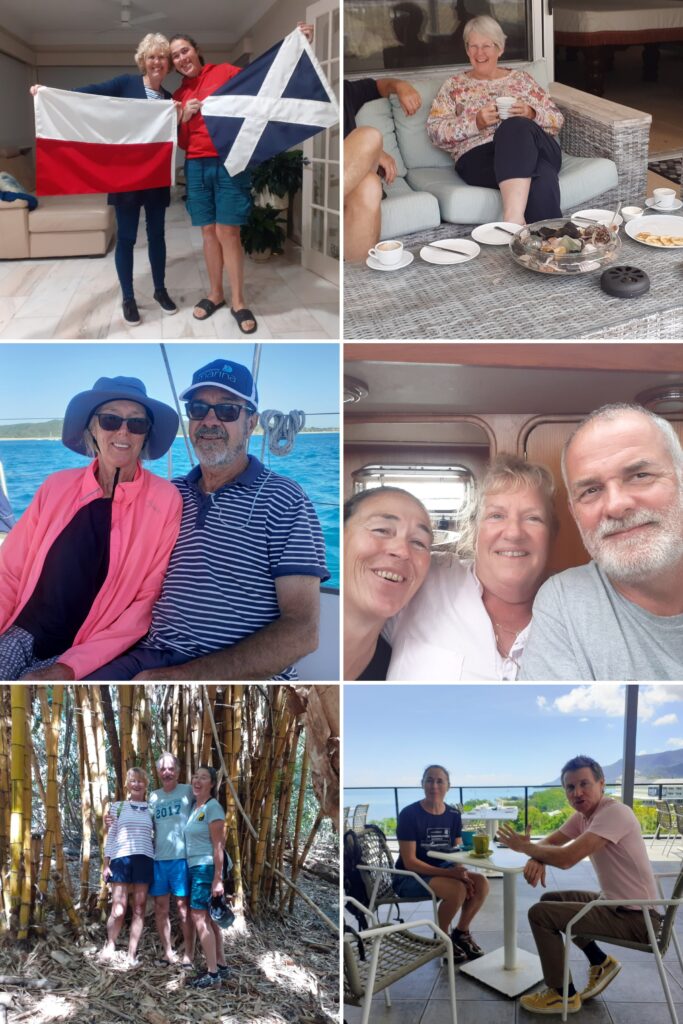
Nach nur 400 Seemeilen haben wir Saumlaki in Indonesien erreicht, wir ankerten von der Stadt und nun begann der Prozess des “Einklarieren”.
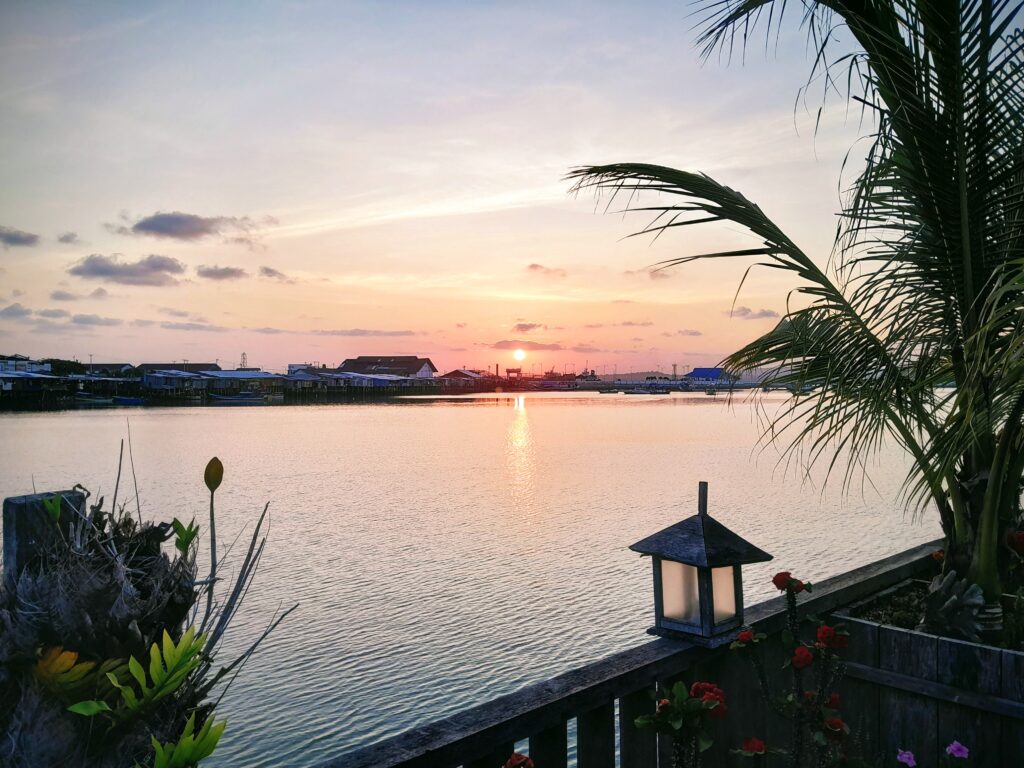
Sonnenuntergang in Saumlaki
Zum Glück hatte uns unser Agent den Kontakt mit Bobby vermittelt, der uns bei den ganzen Behördengängen super unterstützt hat. Uns ist eher übertrieben, da mein Neill dies alles ganz alleine meistern musste, denn die Behörden wollten nur den Kapitän im Büro haben und außerdem wäre die Fahrt auf dem Roller zu dritt auch nicht möglich gewesen. So wartete ich daheim auf unserer Artemis, auf den Besuch sämtlicher “Offizieller”, zuerst die Gesundheitsbehörde, dann Einwanderungsbehörde und zu guter letzt die Zollbehörde. Anschließend musste Neill dann wieder in die Büros und gefühlt tausende von Kopien einreichen, unterschreiben und, was in Indonesien wahnsinnig wichtig ist, stempeln. Vorsorglich hatten wir bereits einen Stempel in Australien anfertigen lassen und waren super präpariert. Nach zwei Tagen waren wir dann ganz offiziell im Land, hatten funktionierende SIM Karten und der Besuch vom Hafenmeister konnte mit ein bisschen “Kleingeld” umgangen werden.
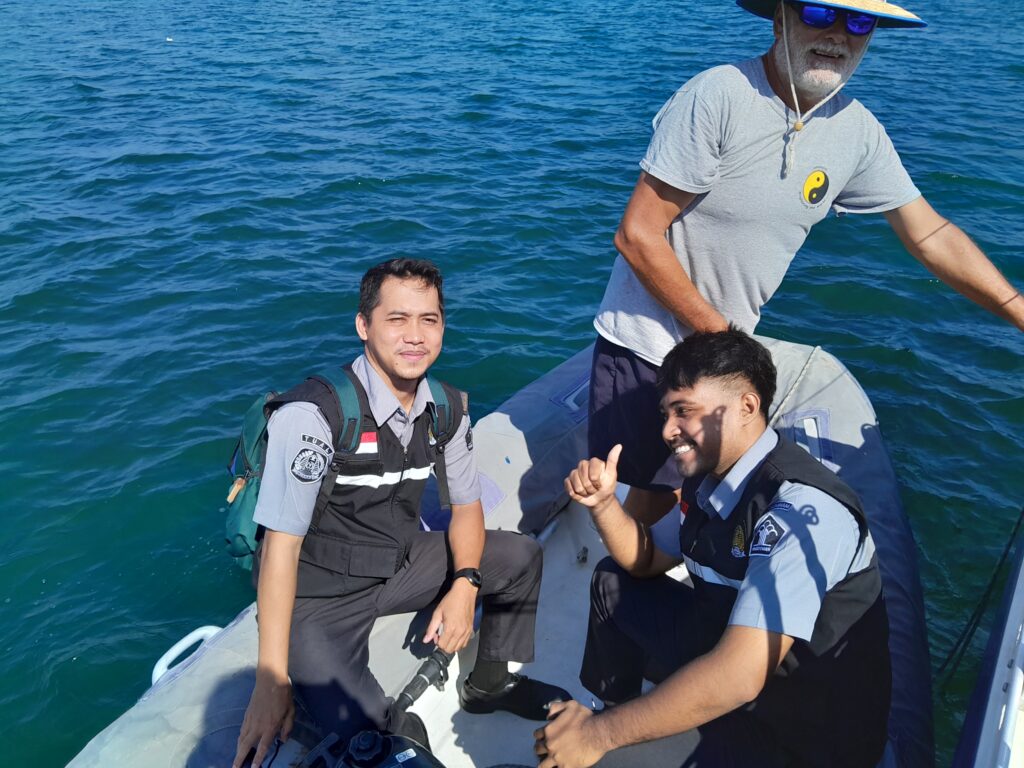
Unser Zollteam
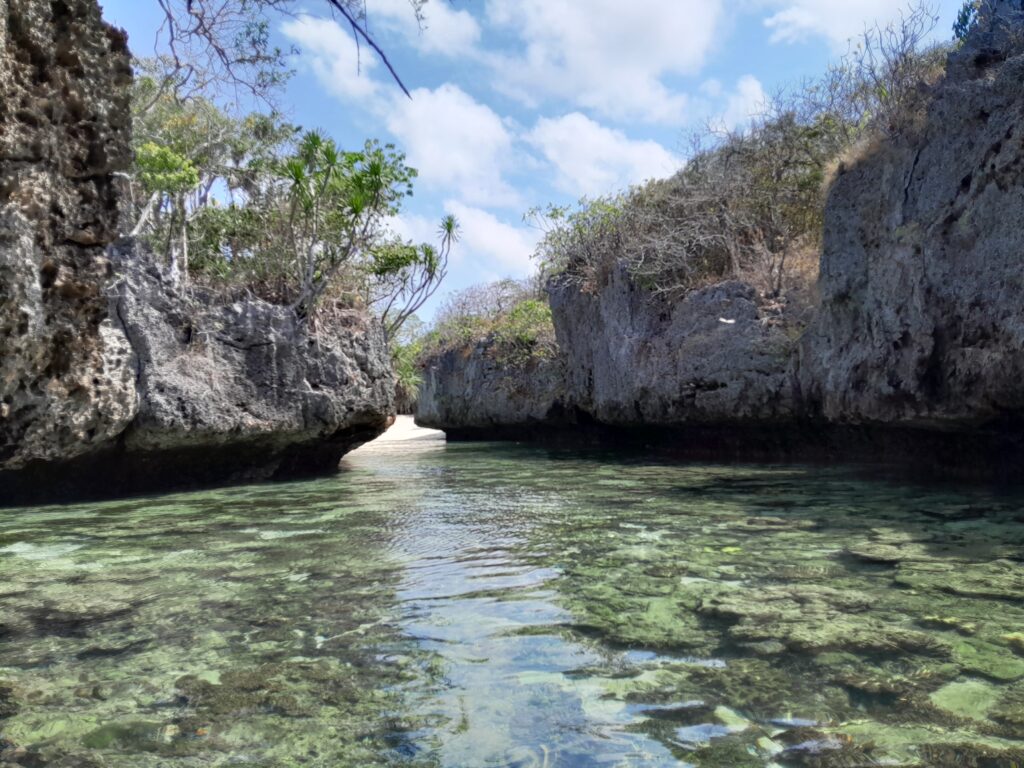
Meine Praesens war zum Glück nicht notwendig, denn ich lag einen Tag flach. Bauchschmerzen plagten mich und die Nähe zu unserer Toilette war einfach unumgänglich, doch Unkraut vergeht nicht und am nächsten Tag war ich wieder fit. Wir verließen die Stadt und ankerten ca. fünf Seemeilen außerhalb in der “Hidden Beach” super super schön, kristallklares Wasser und endlich wieder schwimmen ohne Krokodile und andere gefährliche Dinge.
Eingang zur Hidden Beach
Nach zwei Nächten machten wir uns auf den Weg zum nächsten Ankerplatz. Wir wollen in Richtung Norden und haben uns vorgenommen, jedes Windfenster auszunützen was sich uns bietet. Weshalb unsere Routenpläne auch immer Entfernungen von 5 Seemeilen bis zu 100 Seemeilen einschließen.
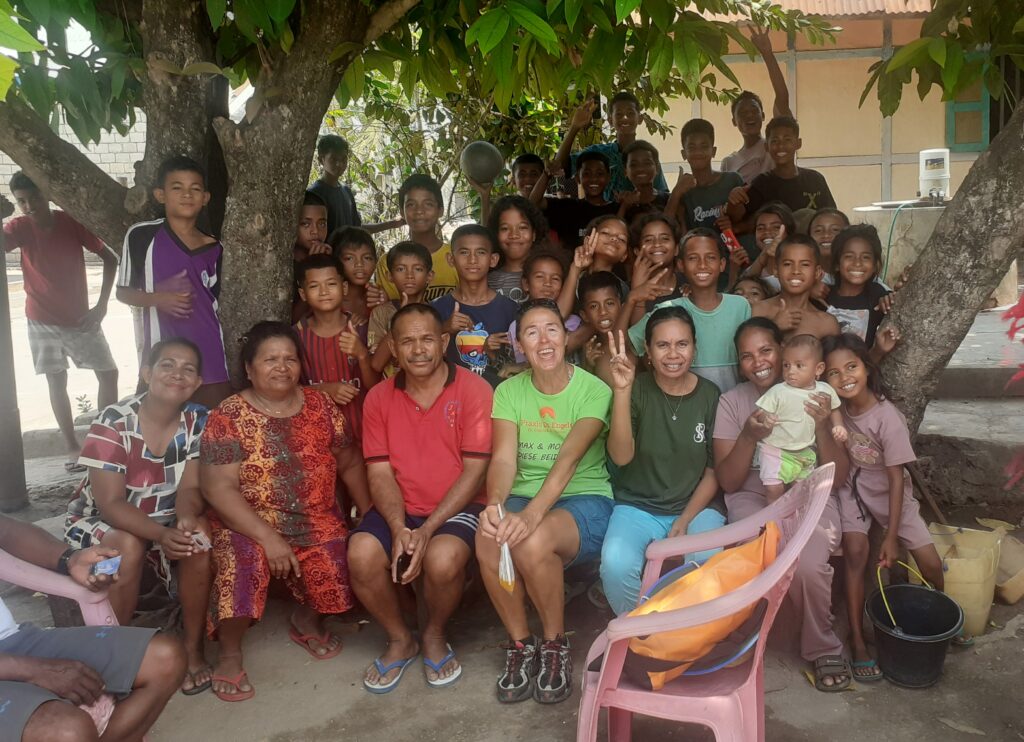
Wir ankerten vor der Insel Pulau Seira und machten einen Spaziergang zum Dorf, wo wir die Attraktion waren. Wir wurden auf ein Getränk und Gebäck eingeladen und die Verständigung war dank Google Translater auch möglich. Zum abschließenden Gruppenfoto war gefühlt das ganze Dorf anwesend.
After almost two years here in Australia, it’s really hard for me to say goodbye.
When we arrived here in Brisbane, Australia, on 11 November 2021, I didn’t know much about this incredibly big, fascinating and beautiful country. I imagined Australia as a red continent with lots of desert, drought and high temperatures, I only wondered when I heard about forest fires in Australia back home. What could be burning in the desert, I thought to myself.
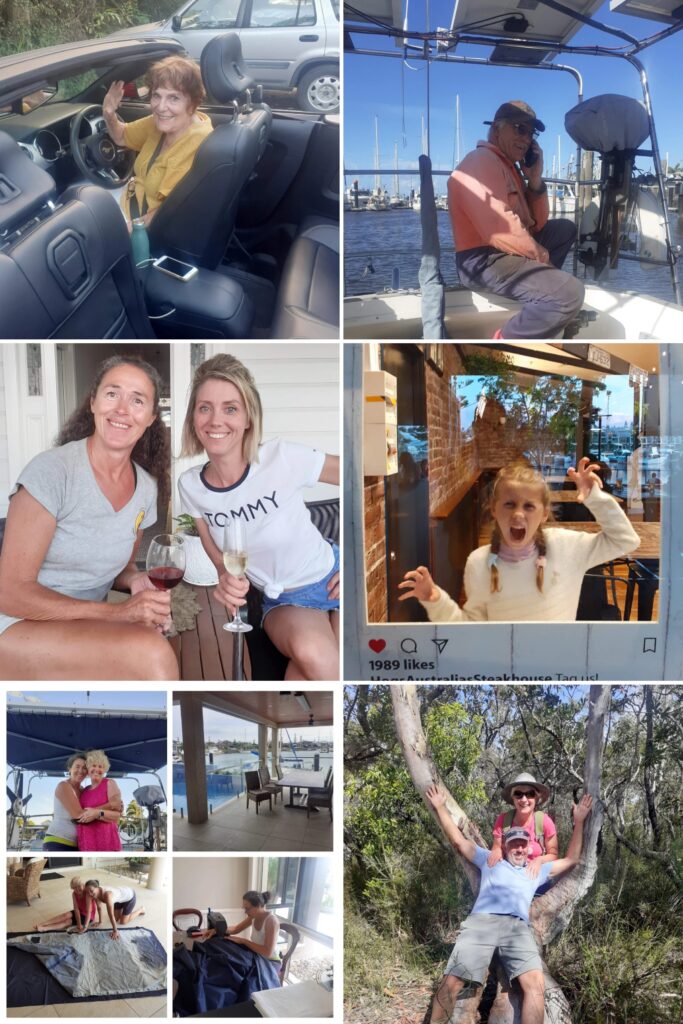
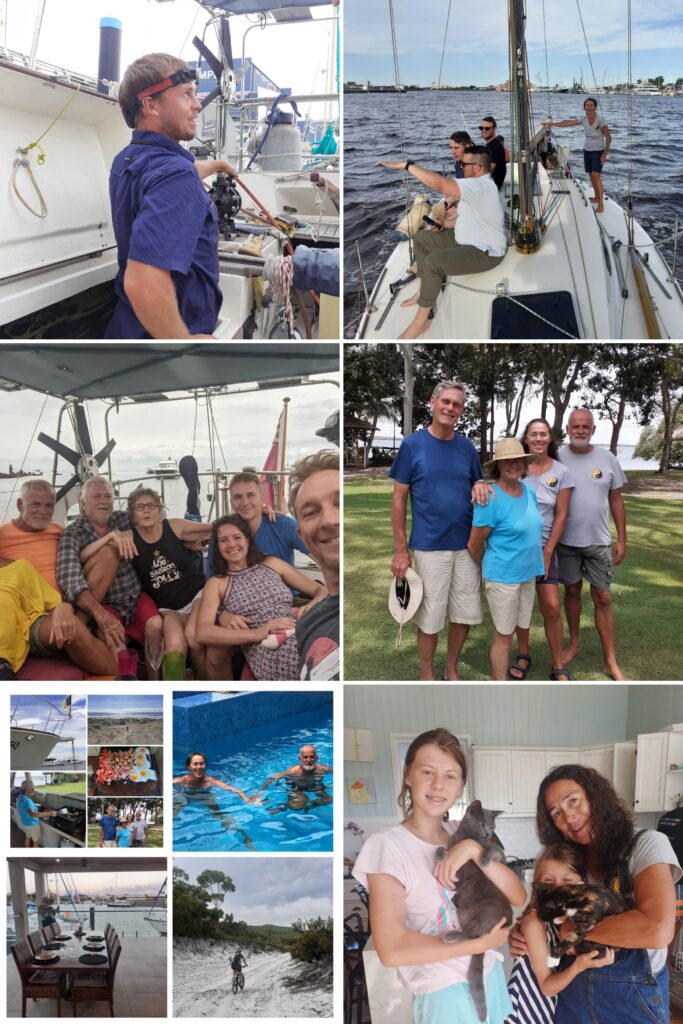
But after the quarantine at the Grand Chancellor in Brisbane, we went up the river, anchored in the middle of the CBD and met our first long-term friends. A couple from Western Australia who were here awaiting the arrival of their first grandchild, David a Brit was in the army in the Falklands at the same time as Neill and Janie, his wife is a nurse like me and so the chemistry was instant.
During our quarantine period my daughter told me she was getting married and we planned a home stay for six months. Before that, we had to find a suitable place for our Artemis that also suited customs. Bundaberg was the best and cheapest option and so we set off.
No ocean sailing this time, no we spent Christmas on Tangalooma, New Year on St. Helena and met our next friends. With Chris and Sue we just talked briefly about our shopping list for three months and Neill sent Chris a link to it. A few days later it was a bit windy. They invited us to come and moor at their boat and use their house, which was just incredible and we were very happy to accept the invitation and I can tell you straight away that we have taken advantage of their hospitality a total of three times. On St. Helena we met Andrew, Olesja and their girls Sofie and Isobel, we gave them one of our business cards and after a few weeks we received an email with an invitation to visit the family. We were picked up and stayed overnight straight away, again the chemistry was right and we used their house as a stopover on our way to Germany to escape the jet lag.
We sailed through Moreton Bay, along the coast, up the Mary River to Maryborough, took a lightning strike off Fraser Island, hiked to Lake Mckenzie on Fraser Island and then reached Bundaberg. There we dry-docked our Artemis and flew to Germany for six months.
When we came back, we had a huge project ahead of us, we renewed our coppercoat, our antifouling. First we sanded everything down, then two coats of undercoat and then three coats of coppercoat! At the same time, Lucy and Paul in Bundaberg were also renewing their antifouling and luckily we met them again and again over the next year and a half.
Unfortunately, their antifouling was not so good, because when we took both boats out of the water in Hobart, we only had slime on it and on ” Damischer Ridda” that is their boat, huge mussels had grown that could not be removed.
In Bundaberg, sailors told us that there is a Wooden Boat Festival in Tasmania and since our Artemis is not a wooden boat, but also beautiful, it would certainly be something for us. So why not, let’s go to Tasmania; we had no idea how far it was to Tasmania. We sailed along the east coast, stopped in Pittwater, visited Paul and Lucie, luckily found the last buoy there to cycle into the Blue Mountains and visit Catherine.
A week before Christmas we were allowed to use her house as a base camp for our cycling for five days, not to mention her spa pool behind the house. We invited Catherine to sail to Sydney and spent a week exploring the harbor, Manley and the surrounding area, we had so much fun! The crowning glory was the fireworks on New Year’s Eve, which we watched together right from the boat next to the Opera House. We continued south and Catherine rejoined us on board in Tasmania.
We took advantage of every wind window we could to make quick progress towards Eden. Our plan was to make a stopover in Flinders Island in Bass Strait, but the wind meant otherwise once again and so our first stop in Tasmania was Beauty Point on the Tamar River.
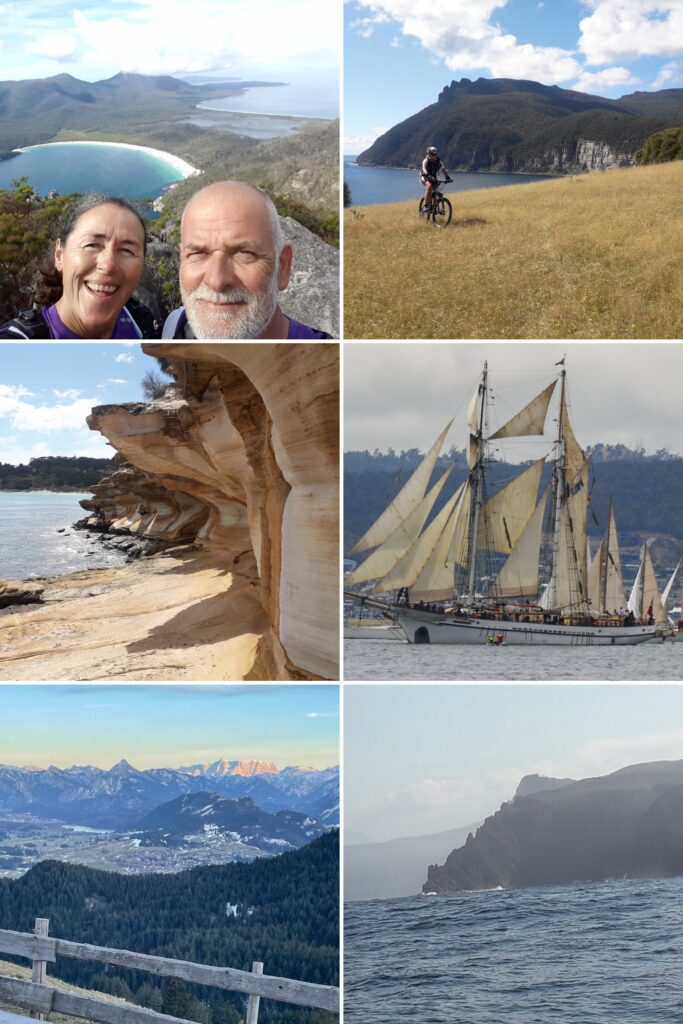
Now we also had our first Bass Strait experience and it was quite windy, a lot of water above us and our Artemis, but at the Port Dalrymple Yacht Club we were able to desalinate crew and boat for free and stay one night for free. At the yacht club we met Stewart, who actually lives in Port Macquarie and is a specialist for solar systems. We sailed at least half the Tamar River to Launceston and found the only anchorage there, as the tides here are over 3.5 metres difference in height. We visited the Cataract Gorge Reserve and could finally get active as cyclists again, actually we wanted to try out the new bike park in Georgetown with another couple, but the wind was too good to miss the weather window to Hobart. We anchored at Eddystone Lighthouse but the swell was too strong and on we went towards Freycinet, we had a wild ride but at Bryans Beach our anchor hit the water. We sailed to Coles Bay, climbed Mount Amos and, like six other Germans, marvelled at the incredibly beautiful view to Wineglass Bay. To save some way and so that we could still discover Maria Island, we took the shortcut through the Dunalley Canal. Luckily, we met Ivan and Ann on
their sailboat Laurabada at anchor near Maria Island. Like us, they were on their way to the Wooden Boat Festival and Ivan offered to organise the transfer through the channel for us. Great, a thousand thanks!!! We didn’t know then that we would spend many more brilliant hours with them.
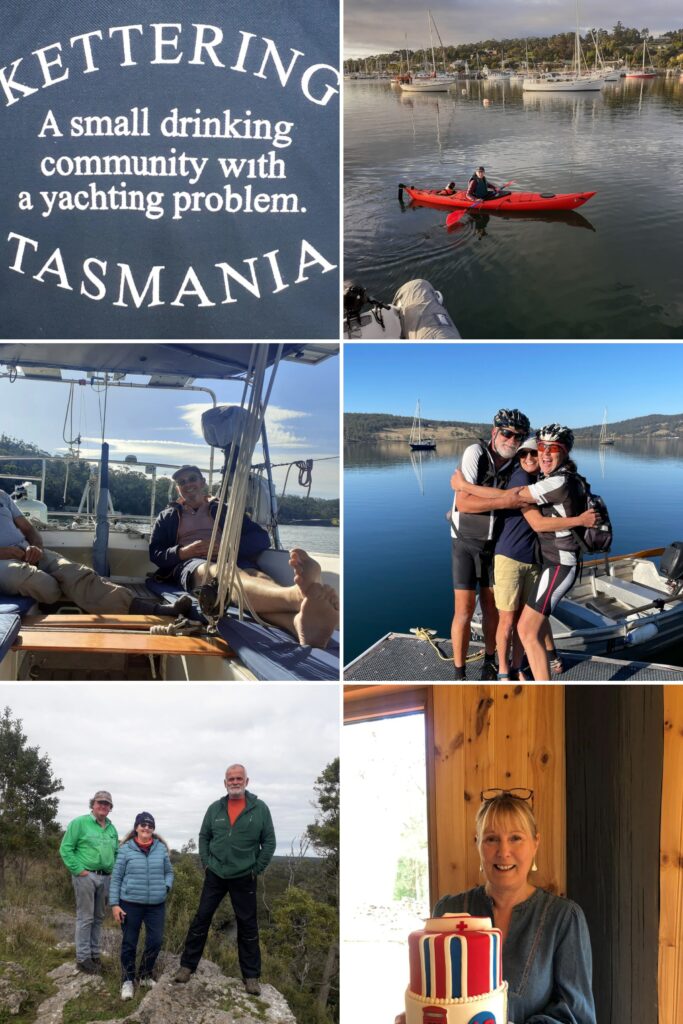
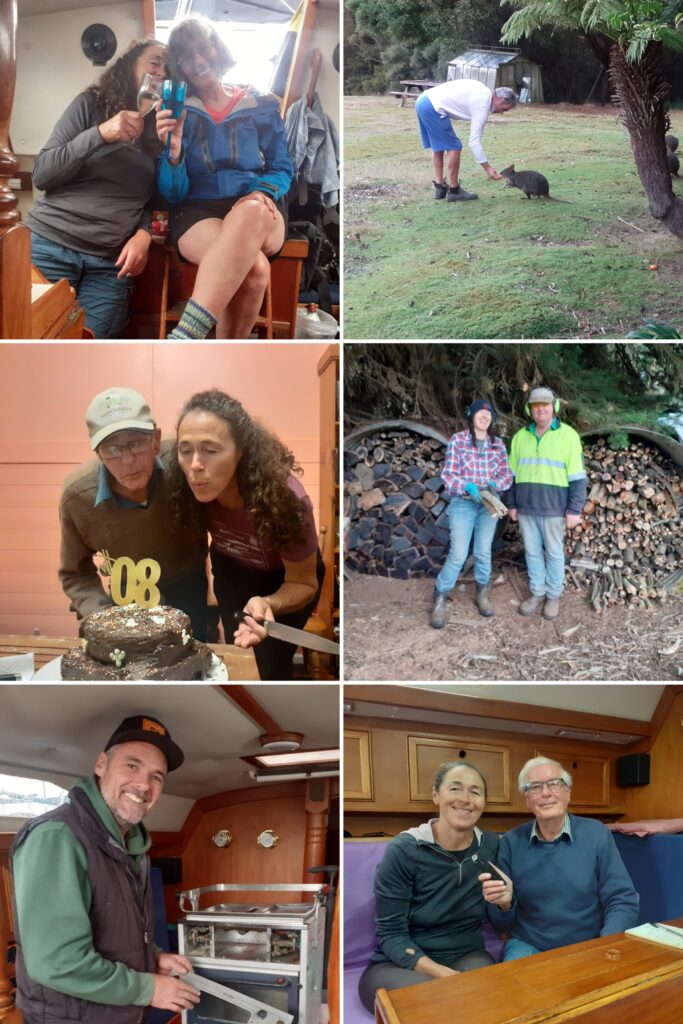
We arrived in Hobart in time for the Wooden Boat Festival and met all our friends again at the parade and afterwards at the festival. Catherine had come and sailed with us once again. Ivan introduced us to John, who himself had sailed around the world with his wife Dee, and we were invited to Kettering. Luckily, because we had a small toilet problem which turned into a drama, but not when you know a Deegan family who can organise and fix anything. After two weeks in Kettering everything was fixed and our Bruny circumnavigation could begin, in Port Arthur we met Claire and Collin. Now the right wind window opened up for Port Davey in the “roaring 40s” and we spent ten days in a fantastically beautiful, unspoilt and secluded area. Unfortunately, our plan to sail further along the west coast to Strahan came to nothing, because the wind just didn’t want to play along. Then back through the D’Entrecasteaux Canal, where Collin spotted us with our Garmin, radioed us and we spent four wonderful days on his farm. We marvelled at Clair’s cottage and had a wonderful, fun evening with great food, lots of laughter and fun. A thousand thanks for that.
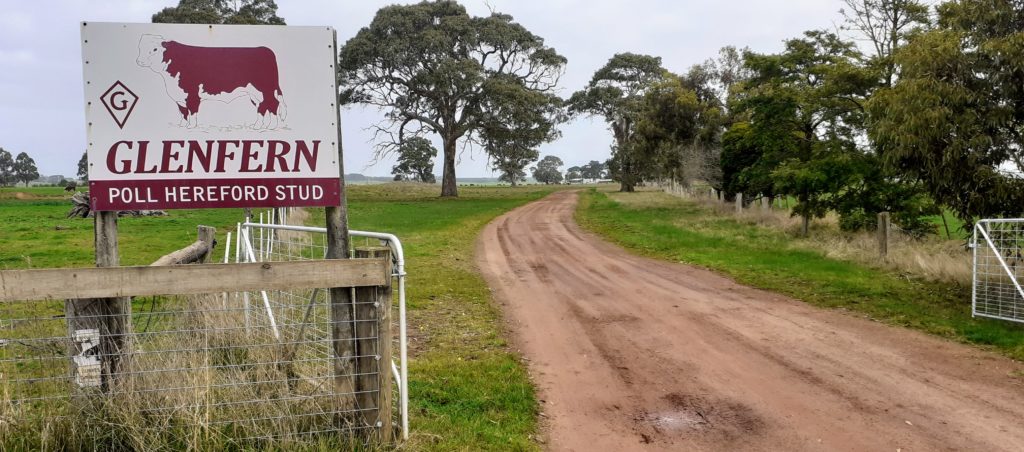
Saying goodbye to Tasmania was insanely hard for us, but the increasingly cool temperatures finally made us take off. In Lakes Entrances we left Artemis alone for a week to work as “WFFies” (Work for Food) with James on the farm. Catherine made a small diversions of 400 km, picked us up and we spent an absolutely fantastic week as farmers. We planted trees, fed cows, mowed and did a thousand different things, so brilliant. We were invited to three different birthday parties and did a night fishing with Frank joining us. Thank you James for this fantastic experience we had on your farm.
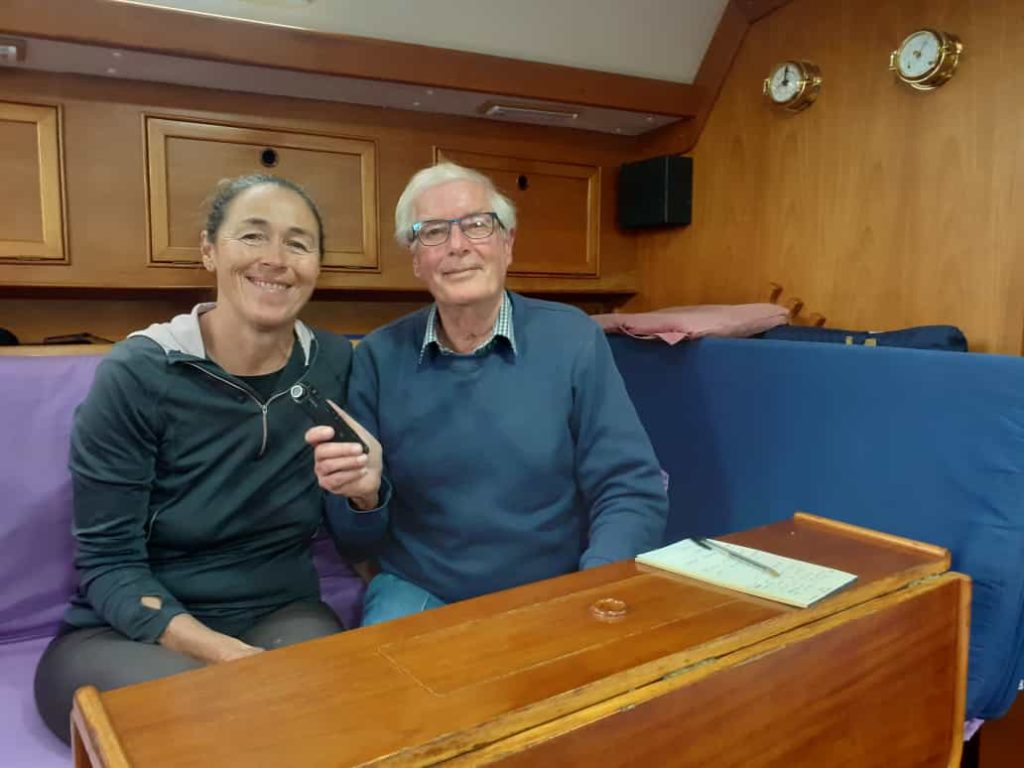
Back in Lakes Entrances we then met a real “Pom”, Andrew had his boat in the marina there and a British flag and so we struck up a conversation. Thanks again to our business card, we received an email and were able to stay in touch and plan our next meeting in Bermagui, where Andrew spontaneously interviewed us for his radio station.
With the whales we moved along the east coast and then reached Moreton Bay again. We were allowed to moor up with Sue and Chris again, for us it was a bit like coming “home”. We met Olesja and the girls for dinner and wanted to meet Andrew in Cairns. The wind shifted, we left and our visit with Anne and Ivan was cut short to an afternoon coffee and dinner. We would have had so much more to tell each other, but in the evening we sailed off, past Fraser Island, Bundaberg, Gladstone. In Pancake Creek we stopped, visited the lighthouse and in Great Keppel Island we finally managed to meet Stuart and his wife Heather, we didn’t have our anchor in the water yet, we already had an invitation for dinner on their boat. We continued through the Whitesunday Islands and on Magnetic Island finally caught up with our “Fraser friends” Sally and Nevil and together we sailed to Palm Island – an Aboriginal settlement – and Orpheus Island. We enjoyed our time together intensively and played extensively again. We then went on to Cairns, where we met Andrew, watched women’s football together and took part in a quiz evening. But since we still didn’t have an answer to our visa extension, it was time to move on, because it was still a long way to Darwin. So we sailed along the Great Barrier Reef around Cape York, on to Thursday Island and then pretty much straight to Darwin. Here we rented a car for the first time in Australia and drove inland, we visited the Litchfield National Park and swam in almost every waterfall and spring we could find. We discovered Darwin and increased our knowledge of crocodiles umpteenfold. We saw these huge lizards up close in and under water at Crocosaurus Cove in Darwin, which was really interesting.
We gave Artemis a tune-up, got a new anchor chain and last but not least cleaned the underwater hull.
We had our appointment with the Border Force to clear out at 8.30 am on 18 October, after which we left Australia.
That was a quick review of our wonderful time in Australia.
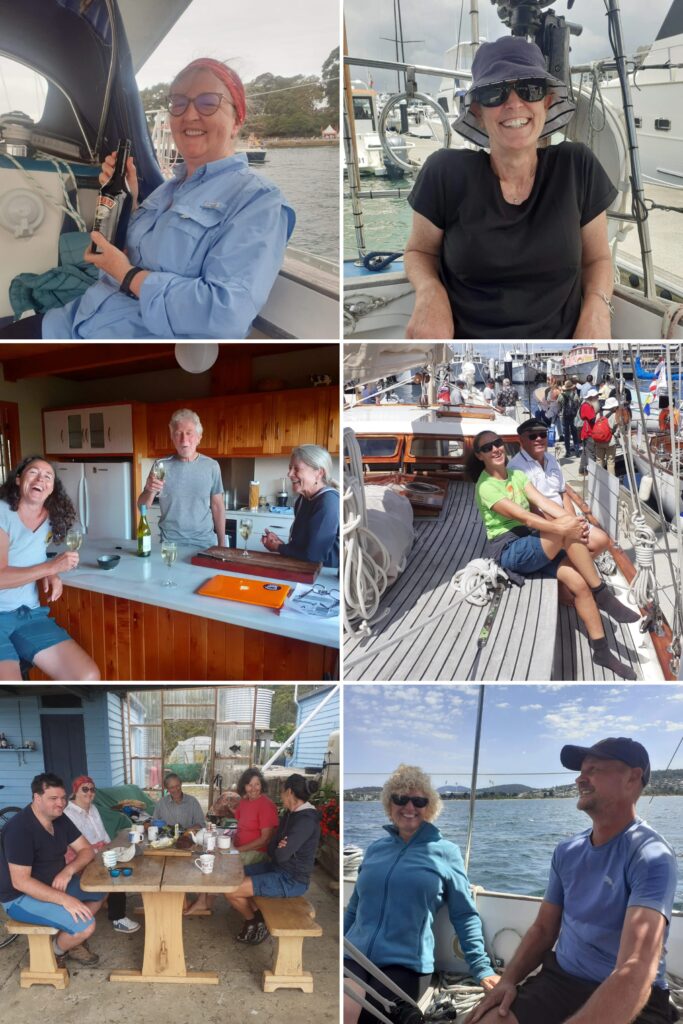
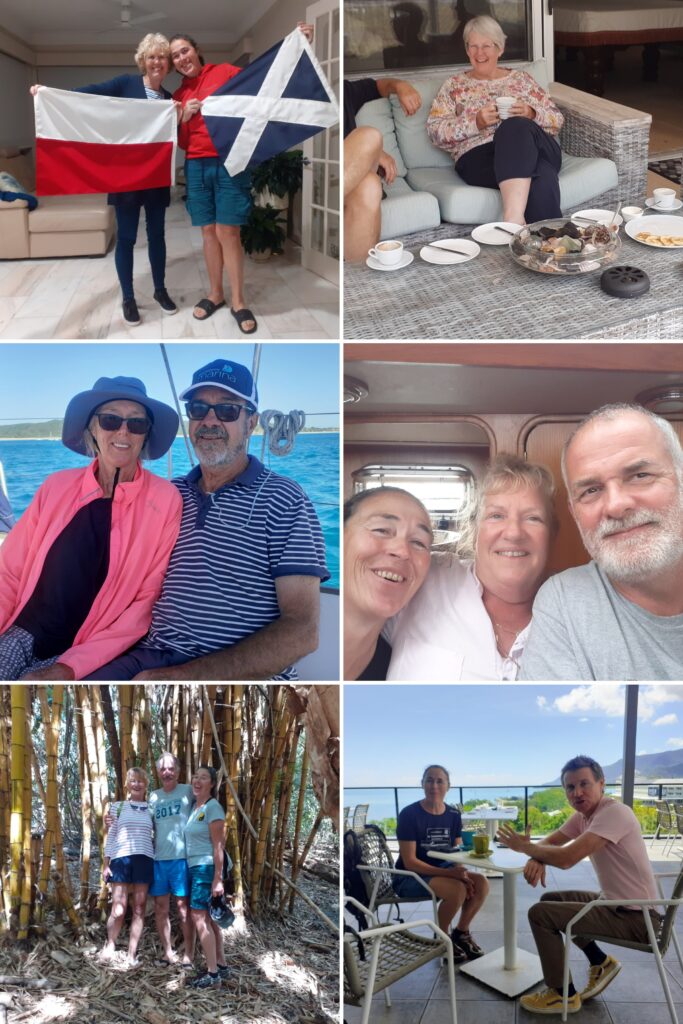
We would like to thank all our friends for a wonderful, intense and unforgettable time.
We will never forget how selflessly you took us in and shared everything with us.
We will stay in touch and Germany is not that far away!!!
THANK YOU FOR EVERYTHING !!! THANK YOU AUSTRALIA !!!
In the early hours of a Tuesday morning we sailed gently into the port of Saumlaki and thus into Indonesia. By sailing two thirds of the way west around the world we had finally reached a far flung outpost of the Far East.
We anchored in the bay and, despite communication difficulties, found our agent on the bow of an old ferry which we used as a dinghy dock. The procedure for entering Indonesia with a boat is a little complicated so this is the shortened version.
Wait for health officials to arrive and ferry them to the boat with the dinghy. Let them do an inspection of the sleeping quarters, food preparation area, food stocks and medical kit. Answer questions, fill out forms and provide copies of random documents after which you return them to land.
Take a ride on a motorcycle pillion to the immigration office stopping on the way to print some documents. At immigration they need copies of everything including documents I only had electronically. Answer questions and fill out forms while the agent goes off to make more copies.
Return to the ferry and wait for immigration to arrive and then take them to the boat. Another inspection, a few selfies for the immigration guys and then receive a visa barcode in the passports.
Take the immigration officers to land and the motorcycle to the customs office. More questions, printing of papers and filling of forms before returning to the ferry to wait for customs to finish the paperwork and arrive. Vitally important for every official is that we not only sign forms but also affix the vessel’s official stamp to every document. Luckily we had one made in Australia.
One of the customs agents wanted to be the dinghy driver which was amusing as he had no idea what he was doing. After a cursory inspection of the boat and a few more photos, we received our customs clearance. The trip to return the officers to land should have taken five minutes but the new ferry was arriving so they had moved our old ferry and pulled up the ramp. Half an hour later they had maneuvered both vessels into position and lowered the ramp again.
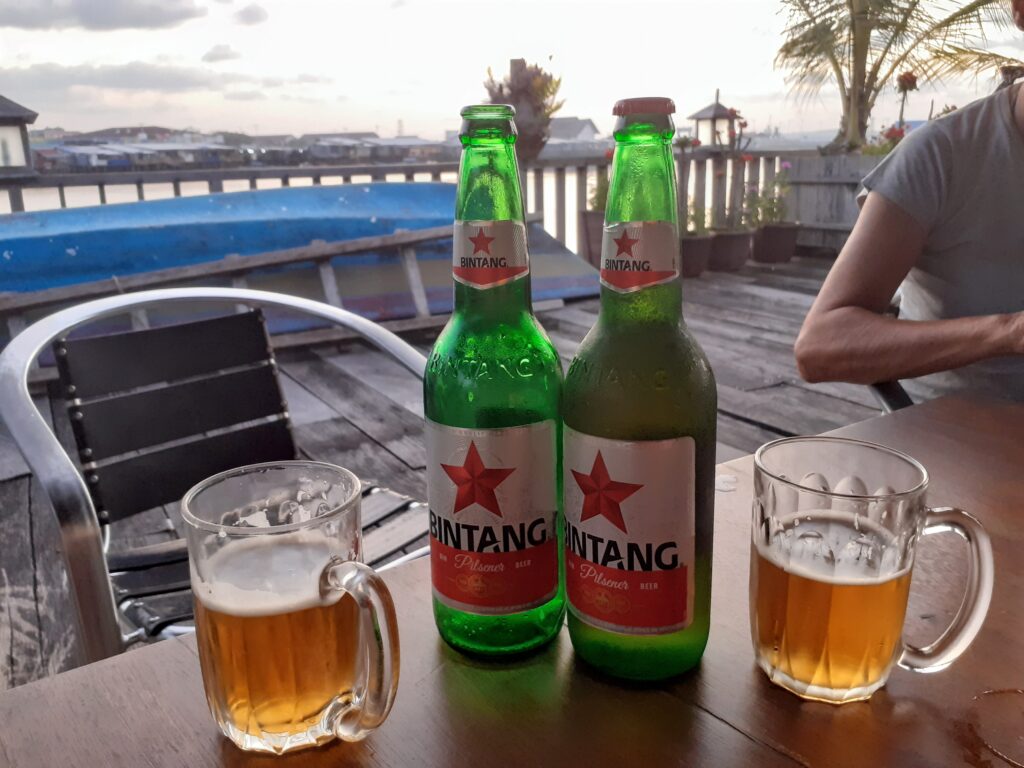
We quit while we were ahead and took the dinghy to land for dinner and local beer as we enjoyed our first sunset in the new country.
The next morning Heidi was ill so I set off on my own in search of the telephone company to buy SIM cards. The cards required a physical identification of the person and a photo of the passport next to the person so Heidi would have to attend herself.
Another motorcycle ride to the health officials to sign more papers and receive a green health book for the boat. This was my fifth bike ride and I still had no idea which side of the road they officially drive on here. At junctions we appeared to decide spontaneously who would go first and which side to pass.
Our last official stop was to let the harbour master create more paperwork and clear us out of the port. He was the eighth official we had dealt with and the first miserable person. He either hates his job or he detests sailors.
Back at the telephone shop my SIM was ready and I was back online. The ladies had decided that I could take a photograph of Heidi and her passport – not exactly legal but good enough. By the evening of day two we were legally cleared in, both online and, unsurprisingly, tired out.
Nach fast zwei Jahren hier in Australien fällt mir der Abschied echt schwer.
Als wir am 11. November 2021 hier in Brisbane in Australien angekommen sind, wusste ich nicht viel über dieses unglaublich große, faszinierende und wunderschöne Land. Ich stellte mir Australien als roten Kontinent mit viel Wüste, Dürre und hohen Temperaturen vor, ich wunderte mich nur immer, wenn ich daheim von Waldbränden in Australien hörte. Was soll denn in der Wüste brennen? dachte ich mir.
Doch nach der Quarantäne im Grand Chancellor in Brisbane sind wir den Fluß hinauf gefahren, haben mitten im CPD geankert und unsere ersten langfristigen Freund getroffen. Ein Paar aus Westaustralien, das hier auf die Ankunft ihres ersten Enkelkindes warteten, David ein Brite war zur selben Zeit wie Neill in den Falklandinseln bei der Armee und Janie, seine Frau ist Krankenschwester wie ich und so stimmte die Chemie sofort.
Während unserer Quarantäne-Zeit erzählte mir meine Tochter, dass sie heiraten werde und wir planten einen Heimataufenthalt für sechs Monate. Vorher mussten wir für unsere Artemis einen geeigneten Platz finden, der auch dem Zoll behagte. Bundaberg war die beste und günstigste Möglichkeit und so machten wir uns auf den Weg.
Diesmal kein Ozean segeln, nein wir verbrachten Weihnachten auf Tangalooma, Neujahr auf St. Helena und lernten unsere nächsten Freunde kennen. Mit Chris und Sue sprachen wir nur kurz über unsere Einkaufsliste für drei Monate und Neill schickte Chris einen Link dazu. Ein paar Tage später war es ein bisschen windig. Da haben uns die beiden eingeladen, bei ihnen an ihrem Boot anzuraften und ihr Haus zu benützen, das war einfach unglaublich und wir haben diese Einladung sehr gerne angenommen und ich kann euch gleich verraten, dass wir insgesamt dreimal die Gastfreundschaft der beiden in anspruch genommen haben. Auf St. Helena haben wir dann Andrew, Olesja und ihre Mädels Sofie und Isobel kennengelernt, wir haben ihnen eine unserer Visitenkarten gegeben und nach ein paar Wochen bekamen wir eine Mail mit der Einladung, die Familie zu besuchen. Wir wurden abgeholt und blieben gleich über Nacht, auch hier stimmte die Chemie und wir haben auf unserem Weg nach Deutschland ihr Haus als Zwischenstopp genutzt, um dem Jatlag zu entgehen.
Wir sind durch die Moreton Bay, entlang der Küste, den Mary River nach Maryborough rauf gesegelt, haben einen Blitzschlag vor Fraser Island abbekommen, sind auf Fraser Island zum Lake Mckenzie gewandert und haben dann Bundaberg erreicht. Dort haben wir unsere Artemis aufs Trockendock gestellt und sind für sechs Monate nach Deutschland geflogen.
Als wir zurückkamen, stand ein Riesenprojekt an, wir erneuerten unseren Coppercoat, unser Antifouling. Erstmal alles abschleifen, dann zwei Lagen Unter Coat und dann drei Lagen Coppercoat! Zur gleichen Zeit haben Lucy und Paul in Bundaberg auch ihr Antifouling erneuert und wir haben die Beiden in den nächsten eineinhalb Jahren zum Glück immer wieder getroffen. Leider war ihr Antifouling nicht so gut, denn als wir in Hobart beide Boote aus dem Wasser nahmen, hatten wir nur Schleim drauf und auf “Damischer Ridda” das ist ihr Boot, waren riesige Muscheln gewachsen, die sich nicht entfernen ließen.
In Bundaberg erzählten uns Segler, dass in Tasmanien ein Wooden Boat Festival stattfindet und da unsere Artemis zwar kein Holzboot ist, doch auch wunderschön, wäre das doch bestimmt etwas für uns. Also warum nicht, auf geht’s nach Tasmanien; wir hatten überhaupt nicht auf dem Schirm, wie weit es nach Tasmanien ist. Wir segelten die Ostküste entlang, machten in Pittwater Halt, besuchten Paul und Lucie, fanden zum Glück die letzte Boje dort, um in die Blue Mountains zu radeln und Catherine zu besuchen. Eine Woche vor Weihnachten durften wir fünf Tage ihr Haus als Basislager für unsere Radtouren nutzen, ganz zu schweigen von ihrem Spa Pool hinterm Haus. Wir haben Catherine zum Segeln nach Sydney eingeladen und eine Woche den Hafen, Manley und die Gegend unsicher gemacht, was hatten wir Spaß !! Krönender Abschluß war dann auch noch das Feuerwerk an Silvester, das wir direkt vom Boot aus neben dem Opernhaus zusammen angeschaut haben. Wir machten uns weiter in Richtung Süden und Catherine ist in Tasmanien wieder bei uns an Board gekommen.
Wir nutzten jedes erdenkliche Windfenster aus, um schnell nach Richtung Eden zu kommen. Unser Plan war, in Flinders Island in der Bass Strait einen Zwischenstopp einzulegen, doch der Wind meinte es mal wieder anders und so war unser erster Halt in Tasmanien Beauty Point am Tamar River.
Jetzt haben auch wir unsere 1. Bass Strait Erfahrung gemacht und es war ziemlich windig, ganz viel Wasser über uns und unserer Artemis, doch im Port Dalrymple Yacht Club konnten wir dann Besatzung und Boot kostenlos entsalzen und eine Nacht umsonst bleiben. Im Yachtclub haben wir dann Stuart kennengelernt, der eigentlich in Port Macquarie wohnt und Spezialist für Solaranlagen ist. Wir segelten zumindest den halben Tamar River nach Launceston und fanden dort den einzigen Ankerplatz, da die Gezeiten hier über 3,5 Meter Höhendifferenz betragen. Wir besichtigten die Cataract Gorge Reserve und konnten endlich wieder mal als Radfahrer aktiv werden, eigentlich wollten wir ja noch mit einem anderen Paar den neuen Bikepark in Georgetown ausprobieren, doch der Wind stand zu gut, um das Wetterfenster nach Hobart zu verpassen. Am Eddystone Lighthouse ankerten wir, doch der Swell war zu stark und weiter ging’s in Richtung Freycinet, wir hatten einen wilden Ritt, doch in Bryans Beach kam unser Anker ins Wasser. Wir segelten zur Coles Bay, bestiegen Mount Amos und bestaunten, wie sechs andere Deutsche, den unglaublich schönen Blick zur Wineglass Bay. Um etwas Weg zu sparen und damit wir noch Maria Island entdecken konnten, nahmen wir die Abkürzung durch den Dunalley Kanal. Glücklicherweise lernten wir vor Anker bei Maria Island Ivan und Ann auf ihrem Segelboot Laurabada kennen, die beiden waren wie wir auf dem Weg zum Wooden Boat Festival und Ivan bot uns an, den Transfair durch den Kanal für uns mit zu organisieren. Super, tausend Dank!! Wir wussten damals noch nicht, dass wir mit den Beiden noch viele geniale Stunden verbringen werden.
Pünktlich zum Wooden Boat Festival trafen wir in Hobart ein und trafen alle unsere Bekannte bei der Parade bzw. anschließend auf dem Festival wieder. Catherine war gekommen und segelte noch einmal mit uns. Ivan machte uns mit John bekannt, der selbst mit seiner Frau Dee schon um die Welt gesegelt war, und wir wurden nach Kettering eingeladen. Zum Glück, denn wir hatten ein kleines Toilettenproblem, das sich zu einem Drama entwickelte, doch nicht wenn man eine Familie Deegan kennt, die alles organisieren und reparieren kann.
Nach zwei Wochen Kettering war alles repariert und unsere Brunny Umrundung konnte beginnen, in Port Arthur haben wir dann Claire und Collin kennengelernt. Jetzt tat sich das richtige Windfenster für Port Davey in den „roaring 40s“ auf und wir verbrachten zehn Tage in einer traumhaft schönen, unberührten und abgeschiedenen Gegend. Aus unserem Vorhaben, weiter an der Westküste entlang nach Strahan zu segeln, ist leider nichts geworden, denn der Wind wollte einfach nicht mitspielen. Dann eben zurück durch den D’Entrecasteaux Canal, dort hat uns Collin mit unserem Garmin entdeckt, angefunkt und wir haben dann vier wundervolle Tage auf seiner Farm verbracht. Wir haben Clair‘s Cottage bestaunt und einen wunderbaren, lustigen Abend mit tollem Essen, viel Lachen und Spaß erlebt. Tausend Dank dafür.
Der Abschied von Tasmanien viel uns wahnsinnig schwer, doch die immer kühler werdenden Temperaturen ließen uns schließlich reis aus nehmen. In Lakes Entrances ließen wir Artemis dann für eine Woche allein, um als „WFFies“ (Work for Food) bei James auf der Farm anzuheuern. Catherine machte eine kleinen Umweg von 400 Km, holte uns ab und wir verbrachten eine absolut fantastische Woche als Farmer. Wir pflanzten Bäume, fütterten Kühe, Mähten und machten tausend verschiedene Sachen, so genial. Wir wurden zu drei verschiedenen Geburtstagsfeiern eingeladen und haben eine Nacht geangelt, wobei Frank auch dabei war. Danke James für diese fantastische Erfahrungen, die wir auf deiner Farm machen durften.
Zurück in Lakes Entrances lernten wir dann einen echten „Pomm“ kennen, Andrew hatte sein Boot in der Marina dort und eine britische Flagge und so kamen wir ins Gespräch. Wieder dank unserer Visitenkarte bekamen wir eine Mail und konnten in Kontakt bleiben und unser nächstes Zusammentreffen in Bermagui planen, wo uns Andrew dann ganz spontan noch für seinen Radiosender interviewt hat.
Mit den Walen zogen wir die Ostküste entlang und erreichten dann wieder Moreton Bay. Bei Sue und Chris durften wir wieder anlegen, für uns war es ein bisschen wie „nach Hause“ kommen. Olesja und die Mädels trafen wir zum Essen und Andrew wollten wir in Cairns treffen. Der Wind drehte, wir brachen auf und unser Besuch bei Anne und Ivan verkürzte sich auf einen Kaffee am Nachmittag und ein Abendessen. Wir hätten uns noch so viel zu erzählen gehabt, doch abends segelten wir los, vorbei an Fraser Island, Bundaberg, Gladstone. In Pancake Creek machten wir Halt, besichtigten den Leuchtturm und in den Great Keppel Island schafften wir auch endlich Stuart und seine Frau Heather zu treffen, wir hatten unseren Anker noch nicht im Wasser, da hatten wir schon eine Einladung zum Abendessen auf ihrem Boot bekommen.
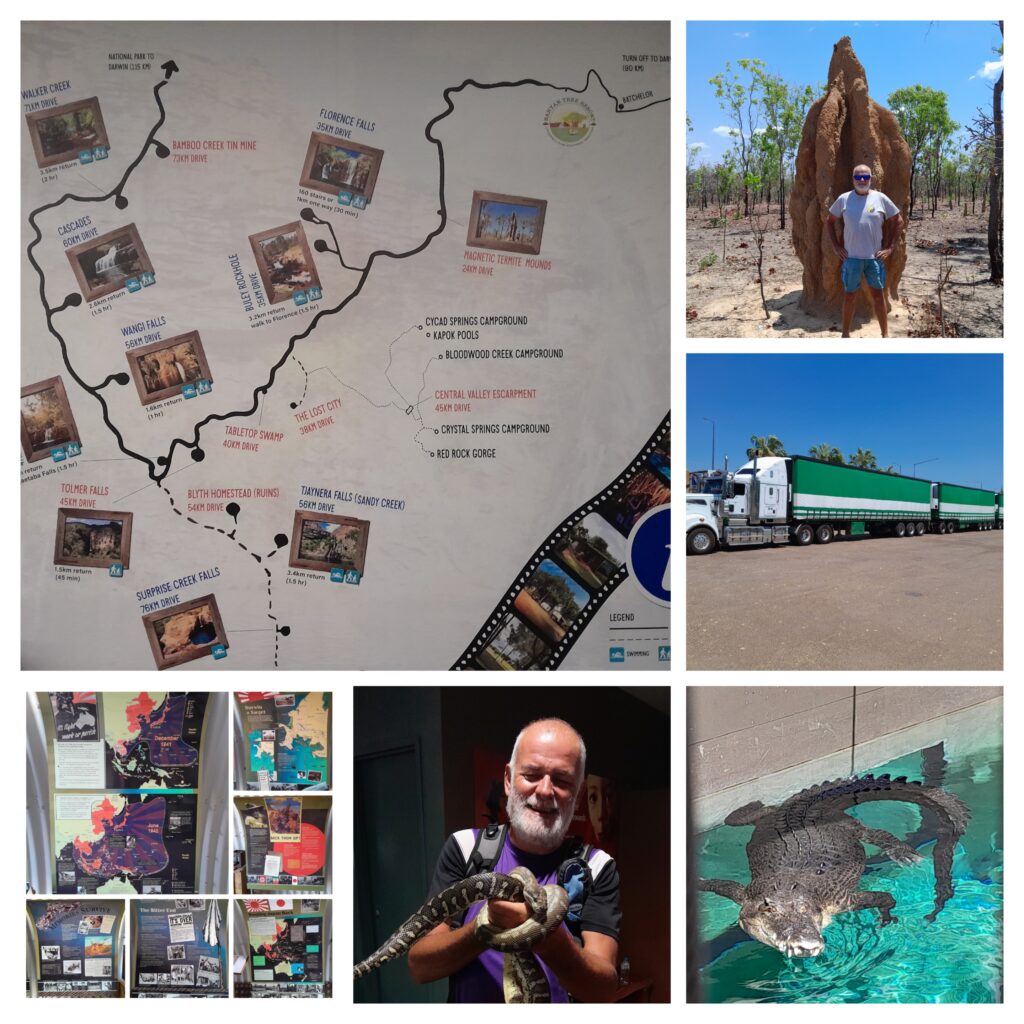
Weiter ging’s im Eiltempo durch die Whitesunday Islands und auf Magnetic Island haben endlich unsere „Fraser Freunde“ Sally und Nevil eingeholt und gemeinsam sind wir nach Palm Island – einer Aborigine Siedlung – und Orpheus Island gesegelt. Wir haben unsere gemeinsame Zeit intensiv genossen und wieder ausgiebig gespielt . Für uns ging’s dann weiter nach Cairns, dort haben wir Andrew getroffen, gemeinsam Frauenfußball geschaut und an einem Quizabend teilgenommen. Doch da wir noch keine Antwort auf unsere Visaverlängerung hatten, hieß es Tempo machen, denn bis Darwin war es noch ein weiter Weg. So segelten wir entlang dem Great Barrier Reef um Cape York, weiter nach Thursday Island und dann ziemlich direkt nach Darwin. Hier haben wir zum ersten Mal in Australien einen Leihwagen gemietet und sind ins Landesinnere gefahren, wir haben den Litchfield Nationalpark besucht und sind in gefühlt allen Wasserfällen und Quellen geschwommen, die wir finden konnten. Wir haben Darwin entdeckt und unser Wissen über Krokodile um ein Zigfaches erweitert. Wir haben diese riesigen Echsen im Crocosaurus Cove in Darwin aus nächster Nähe im und unter Wasser begutachtet, was wirklich wahnsinnig interessant war.
Wir haben Artemis auf Vordermann gebracht, eine neue Ankerkette besorgt und zu guter Letzt noch das Unterwasserschiff sauber gemacht.
Unser Termin mit der Border Force zum Ausklarieren hatten wir für den 18. Oktober um 8.30 Uhr, anschließend verließen wir Australien.
Das war im Eiltempo ein kleiner Rückblick über unsere traumhaft schöne Zeit in Australien.
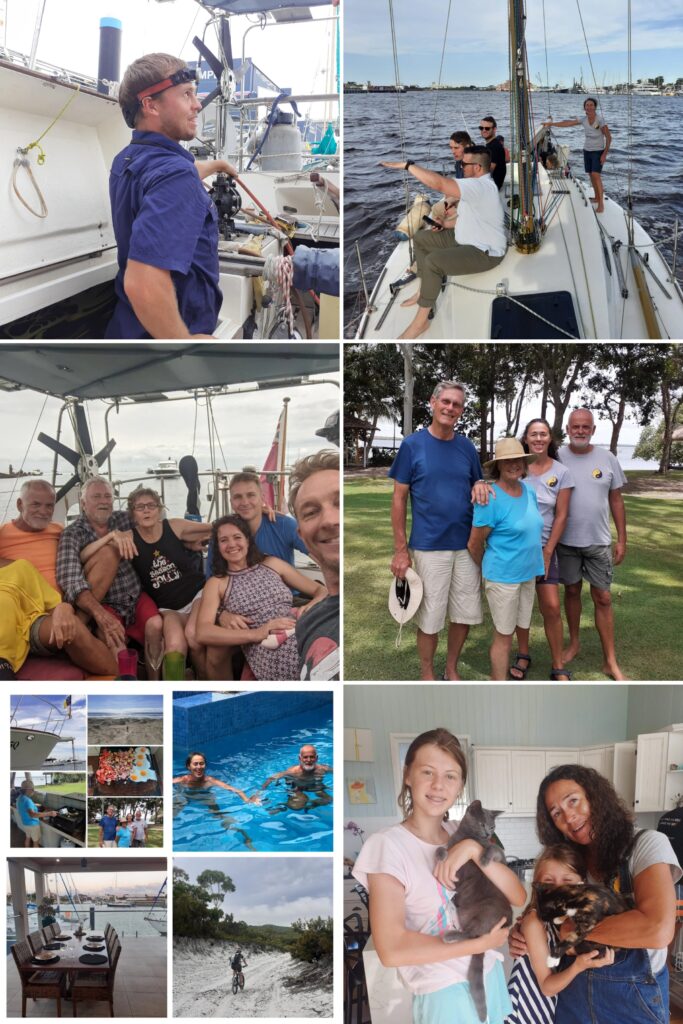
Wir möchten uns bei all unseren Freunden für eine wundervolle, intensive und unvergessene Zeit bedanken.
Wir werden niemals vergessen, wie selbstlos ihr uns bei euch aufgenommen und alles mit uns geteilt habt.
Wir bleiben in Kontakt und Deutschland ist gar nicht so weit weg!!
Until now leaving a country has been an easy experience. You visit some official and tell him you want to leave, he stamps your passport and gives you a clearance paper and then you leave.
In Darwin you have to give the Australian Border Force notice of leaving so that they can fit you in to their busy schedule. They are protecting the borders 24 hours a day, 365 days a year but you can only leave on workdays but not on Monday and only in the morning when it is not too hot. And not before 08:30 to give them time to get warmed up. They insist on coming to the boat but will only do so at one place in the whole of Darwin.
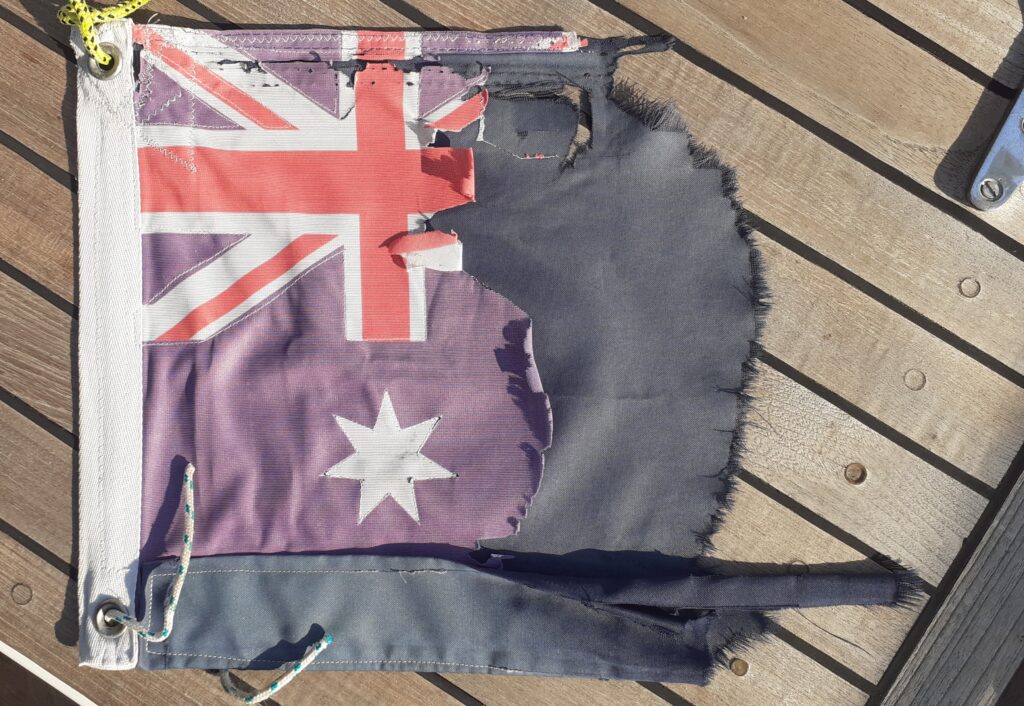
After two years, we finally lowered the remains of our Australian flag
Only a bit late, two border force agents turned up at the appointed dock wearing matching black boots, trousers and shirts – sort of 1940s storm trooper look. One was friendly and polite but either hard of hearing or didn’t listen while the other had a 50% failure rate correctly identifying our two passports. But together we quickly achieved the necessary paperwork, received a plastic pen and floating key ring (both made in China) and were free to leave Australia.
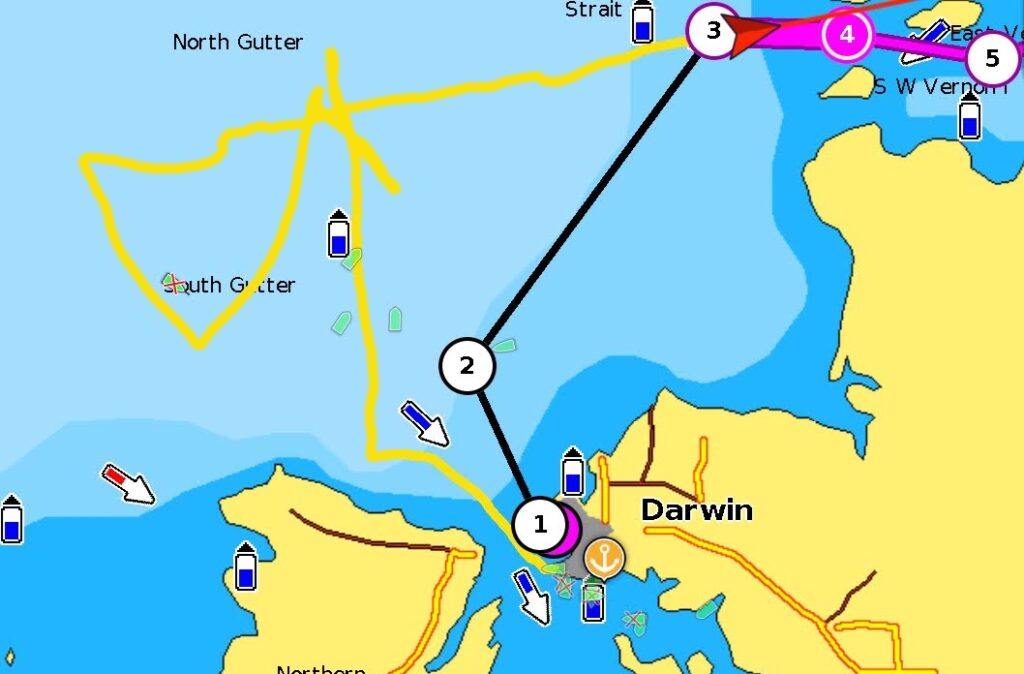
The tide was going out so we left the dock, hoisted a sail and drifted out in to the Beagle Gulf making five knots towards Indonesia. Three hours later the current was slowing but we tacked in to the wind heading west and then, before we hit the sand banks, tacked again to use tide and wind to sail north. The water was flat, the breeze was fresh and we were making five knots. Unfortunately Melville Island was directly in our way so we had to turn again. Now we had the wind and tide against us and spent the rest of the afternoon and night travelling 71 miles to achieve a distance of 23.
The yellow line was our route over two days.
The wind was obviously set on coming from the west so at dawn we turned east to sneak through the narrow Howard Channel. This “shortcut” has to be taken at exactly the right time so that you are not fighting the tide and is definitely not somewhere you want to be in an east wind. The right time was 18:00 which gave us seven hours to make 21 miles. Heidi looked at our average speed of 0.8 knots and laughed out loud on hearing this.
We had south wind. We had north wind. We had currents against us and then with us. We skirted a fish farm and finally we were heading in to an east wind and considered abandoning the attempt but the weather forecast said it would disappear as we got there so we continued. We passed the start marker ten minutes early and felt the current start to suck us. Just after dark everything was wonderful with a wind from the north so Neill lay down in the cockpit and Heidi continued through the night.
After about two hours the sails began to flop as a 15 knot east wind (yes, the east wind you really don’t want) hit us right on the bow. 15 knots of wind against four knots of tide in a shallow channel produced huge waves which threw Artemis around so we took over hand steering through the black night. With Neill on the tiller Heidi had to navigate, run the galley and negotiate with a fishing boat “who was passing who where” on the marine radio. She also had to be the relief helmsman, trying to maintain a course of fifty degrees through fluid chaos. The wind remained strong against us until one in the morning when Heidi collapsed for two hours sleep before taking over to let Neill sleep. By three o’clock we were becalmed in the Van Diemen Gulf and frustratedly looking for wind to take us to the next tidal gate to continue north. Four hours later and still there was not a breath of wind so, with heavy hearts, we put the engine back on to reach the open sea where we finally found a breeze to carry us north with about one knot.
We sailed everything we could but still had the engine running for 24 hours during our 54 hour odyssey. Never before, not even in the Panama Canal or south of Tasmania, have we used so much engine. But as I write this we are sailing north across the Timor Sea and life is good again. Australia was just trying to stop us leaving.
Jetzt ist es soweit, wir haben das Dinghy festgemacht und warten auf die Border Force um auszuklarieren. Alle Formalitäten erledigt, noch die Papiere nach Indonesien mailen und los. Wir nutzen die auslaufende Tide und freuen uns, dass wir sogar Wind haben. Die ersten 30 Seemeilen rocken nur so dahin, dann stoppt die Strömung und wir gehen exakt dahin zurück wo wir hergekommen sind. Wir segeln zum zweiten Mal an einem vor Anker liegenden Gasschiff vorbei und witzeln, was die Besatzung wohl über uns denkt.
Die Strömung dreht, wir drehen uns, alles kein Problem denn nach fünf Wochen in Darwin wissen wir, wenn die Land- bzw. Meeresbrise kommt 🤪 glaubten wir. Doch die Windrichtung änderte sich absolut willkürlich, unplanmäßig und vollkommen sinnlos.
Neill überlegt einen neuen Plan: Wir gehen wieder durch die Gezeiten Schleusen wie bei unserer Ankunft.
Am Gastanker vorbei die 3 😁 😁
Ich überspringe einfach einen Tag und eine weitere Gastanker Umrundung. Schweren Herzens muss der Motor eingeschaltet werden 😔 aber wir kommen ans Schleusentor, werden eingesaugt, Plan läuft! Plötzlich aus dem Nichts Gegenwind mit 15 Knoten 😨😨
“Wind über Tide” nicht gut, bei Vollgas 1 Knoten und 2 Meter Swell.
Nach einer Stunde ist der Spuk vorbei und wir motoren auf das nächste Tidelgate zu.
So sah unser Trak aus
Neill macht ein Nickerchen und ich Motorsegle mit 7 Knoten dahin 👍⛵️.
Übermotiviert glaube ich schon, dass wir jetzt segeln können, als die nächste Windfront uns trifft. Neill muss jetzt von Hand steuern und unsere ganze Kalkulation wird über den Haufen geworfen, wieder Wind über Tide. Jetzt kommt uns noch ein Fischerboot entgegen!!😳 Ich am Funk erklär unser Anliegen, wie wir aneinander vorbei kommen doch der Fischer meint:” Ma’am, I can’t see you 😱😱 not on AIS or visual “. Gefühlt Stunden später hat er uns doch noch gesehen und wir waren aneinander vorbei.
Der Wind ließ nach und unser Autopilot konnte wieder seinen Dienst übernehmen. Was unseren Zeitplan betraf, konnten wir nur hoffen, dass wir nicht zu spät dran waren und wieder mit 4 Knoten zurückgesaugt werden. Gott sei Dank lief jetzt alles gut, keine neuen Katastrophen mehr.
Wir mussten jetzt nur noch einmal durch eine Gezeiten Schleuse und dann Ozean 👌😊 Herrlich!
Nach 24 Stunden, das ist unser absoluter Rekord, schalteten wir unseren Motor aus! RUHE 👌😊👍
Jetzt sind es nur noch 180 Seemeilen und irgendwann werden wir ankommen, Davo unser Wetterrouter sieht nicht viel Wind, aber wir haben es geschafft, AUSTRALIEN zu verlassen.
Warning: this is a long, slightly technical blog that is maybe only interesting if you are considering changing your boats windows.
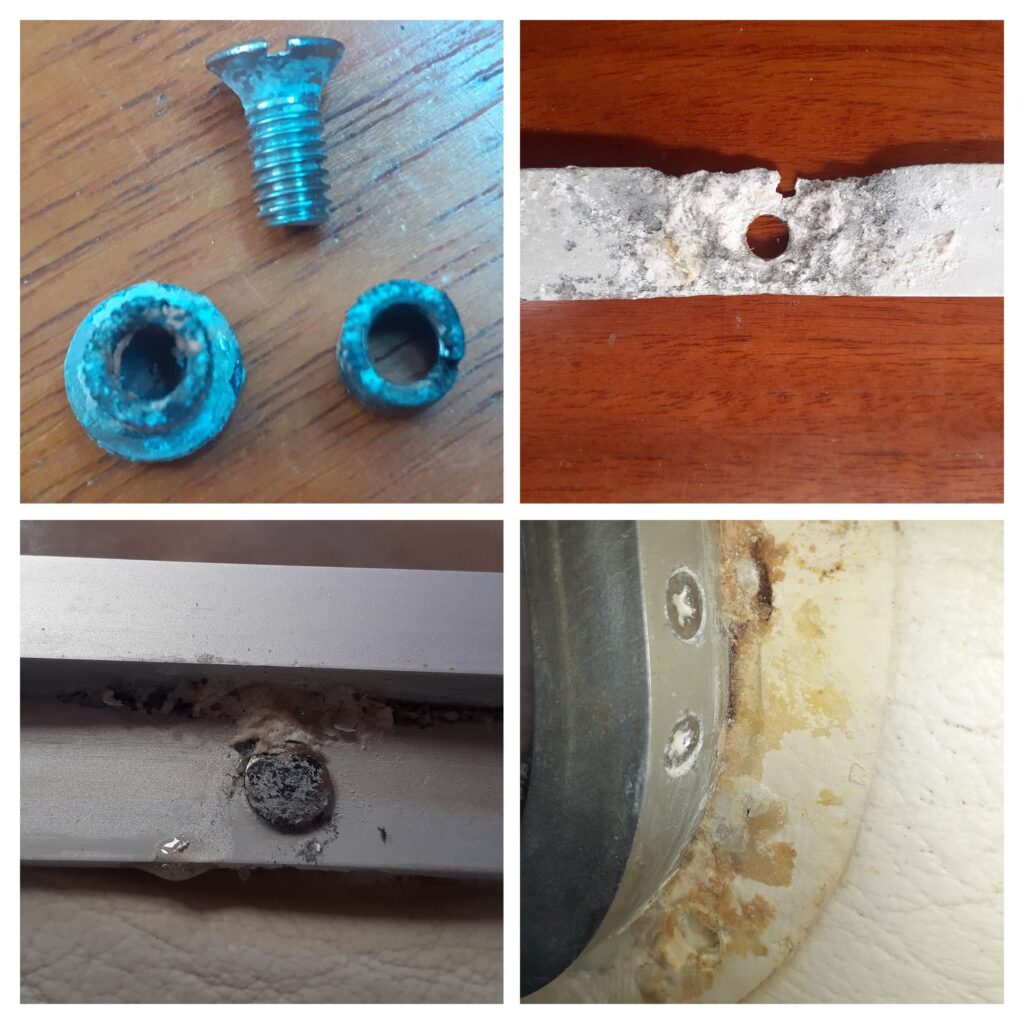
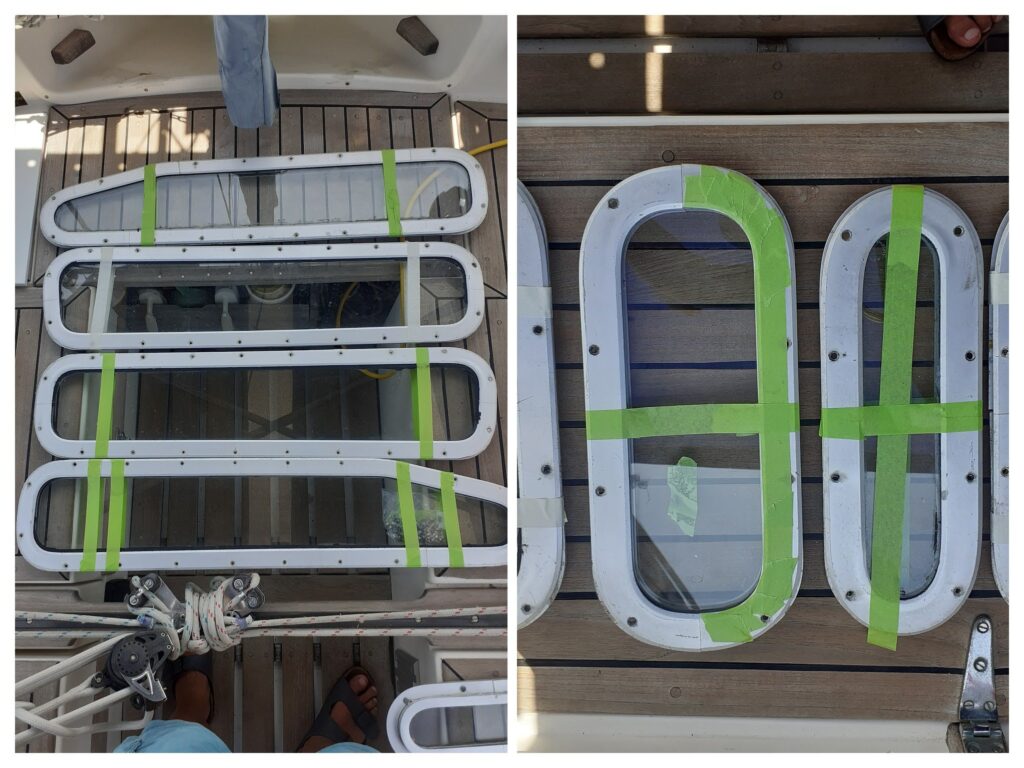
Rustler 36 were built with glass windows in an aluminium frame. The aluminium frame was screwed in to the coach roof with steel screws which threaded in to steel cups on the inside. It appears that the holes for the windows in the coach roof were cut by hand and are a little too large in places and a little too small in others. The overlap of aluminium over roof was insufficient and made worse by holes being drilled right on the outside. The holes for the screws were drilled in the frame and roof by hand. The frames were sealed to the roof with a very thin layer of sealant allowing insufficient expansion. The system is less than perfect and on Artemis we had the following problems:
water leaked between the glass and the aluminium frame.
water leaked between the frame and the roof
water leaked through the screw holes
corrosion between the screws and the frame “ate” the frame so that water could leak round the holes. It also destroyed sections of frame.
Various people have removed the windows and frames and sent them to be refurbished and then reinstalled them but we felt that this would just get us back to a (temporarily) non-leaking but still fundamentally unsound system. We asked for and received lots of good advice from lots of people and decided to replace everything with a single piece of polycarbonate per window. We were lucky to have two shipwrights and an engineering plastics expert on hand when we started which was very comforting when you start to pull your boat apart.
We had been told that, after thirty years, the windows would just fall out. This was not true. We had to unscrew each screw and drive it out with a hammer. We then had to coax sealant out from between the roof and frame with a set of small picks until a part of the window would move very slightly. We then used metal and wood wedges to slowly force the windows out. It took ages.
With the windows out we then cleaned every piece of sealant, corrosion and dirt off the coach roof.
We had supplied the engineering plastics company with the original window drawings and asked them to make the polycarbonate larger than in the drawings so that we would have a 25 mm overlap. We also decided to go with tinted material. It keeps the boat a little cooler and provides more privacy.
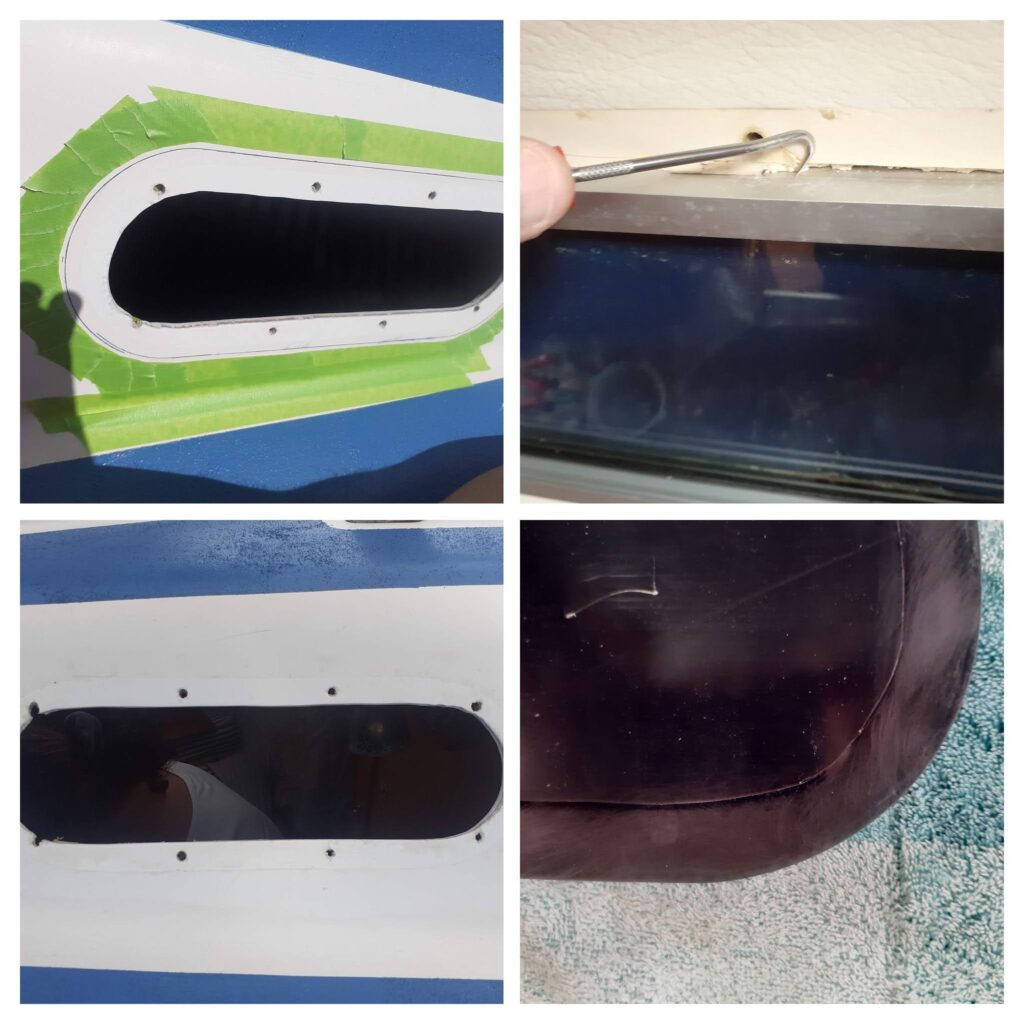
We held the polycarbonate over the hole and drew around it inside and out. Next we masked up around the outside leaving about 5mm around the window. Next we lightly sanded the GRP and then cleaned it again with meths. On the inside of the window we cut the protective film following our line and pulled off the film around the edge. We then lightly sanded and meths cleaned the exposed polycarbonate.
We used double sided tape just outside our line to provide an instant bond. It is vital that this tape is approved for use with polycarbonate. The chemicals in some tapes will craze the polycarbonate and then there will be no bond. Next we applied Fix200 around the edge to provide the final adhesion and seal. We first “painted” a thin layer of Fix200 to the polycarbonate to ensure that no white hull would be seen and then filled the area with more than enough.
Finally we removed the protective tape from the double sided sticky tape and pressed the window to the roof in exactly the correct place. The tape held it immediately in place and we left it under a tarpaulin for three days to cure without direct sunlight.
Both shipwrights assured us that the Fix200 would hold under any conditions. The plastics engineer told us that, if we did everything properly, then it would definitely hold. The maths says that there is about six times more area of Fix200 bond trying to hold the window on than the area that a wave can push against to try and peel it off. The Internet is full of screws or no screws arguments but we decided to avoid screws as they are guaranteed to leak.
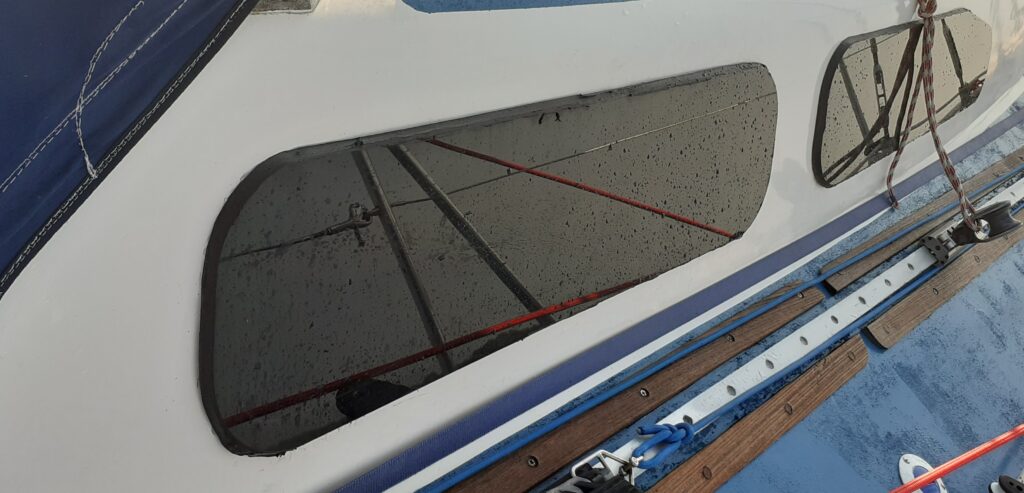
The edges need cleaning up but they are waterproof
With two windows done and cured, we set sail for Tasmania and thoroughly tested the system. Across the Bass Strait we were as much below as above water and the windows worked perfectly. Now we have all eight technically finished. “Technically” because they are sealed and waterproof but we still need a solution to make the inside look nice.
All the old windows
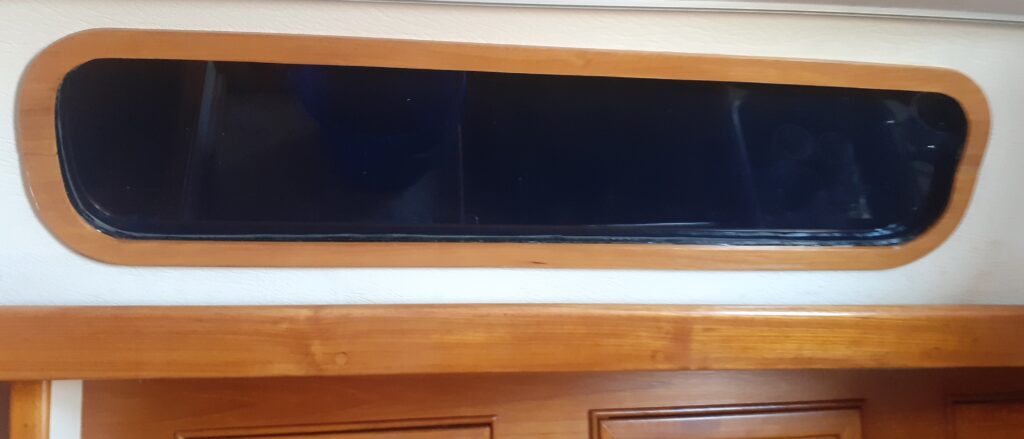
04.06 2024: the insides are also now finished. We had a carpenter in Papua make us wood surrounds which we glued on with a product recommended by a dutch carpenter. The wood fits well to the inside of Artemis.
Wir haben diese Karte vom Park in der Pizzeria gesehen und so konnten wir unseren nächsten Tag ziemlich gut planen.
Karte vom Litchfield National Park
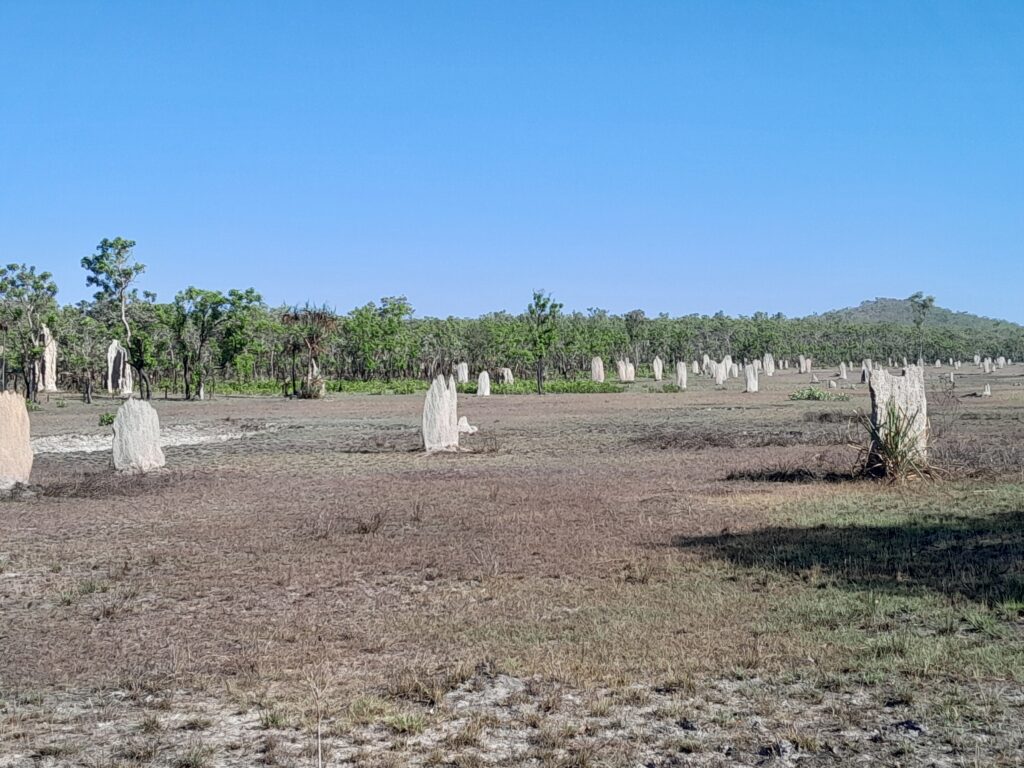
Magnetic Termite Mountains
Wir starteten bei den Magnetic Termite Mountains und waren echt vollkommen vom Hocker, als wir sahen, dass diese Termitenhügel nicht wie überall in Australien große Berge sind, nein diese hier sind nordsüdlich ausgerichtet und haben die Form eines Grabsteines, schräg oder?
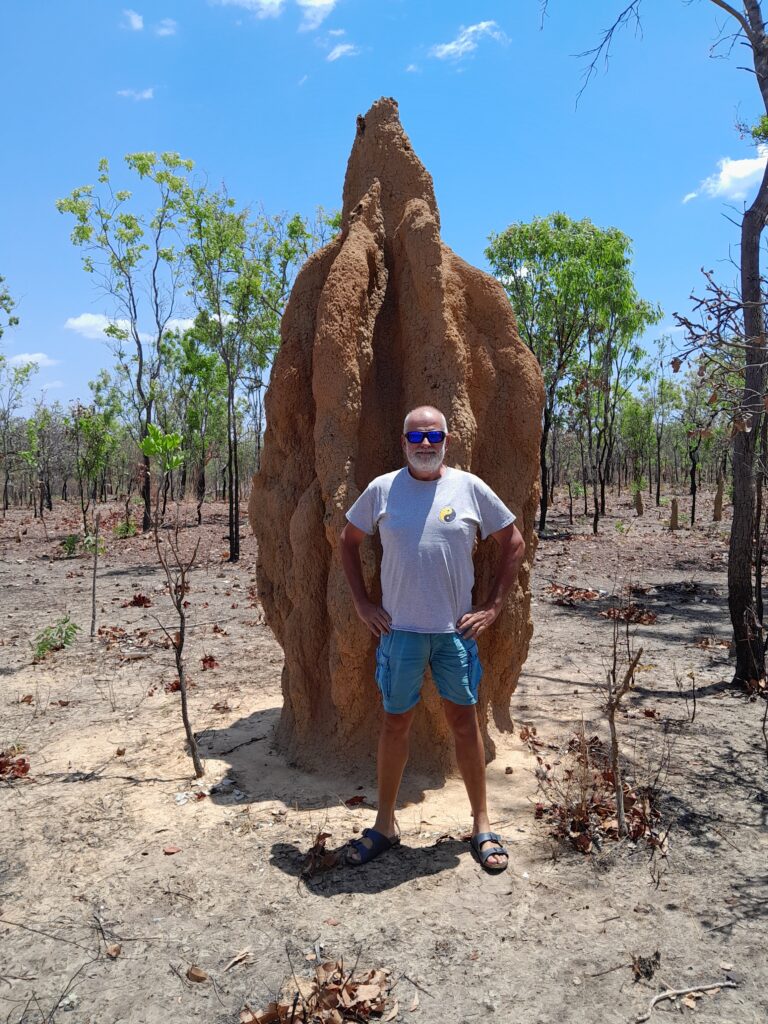
Hier ein ganz normaler Termitenhügel
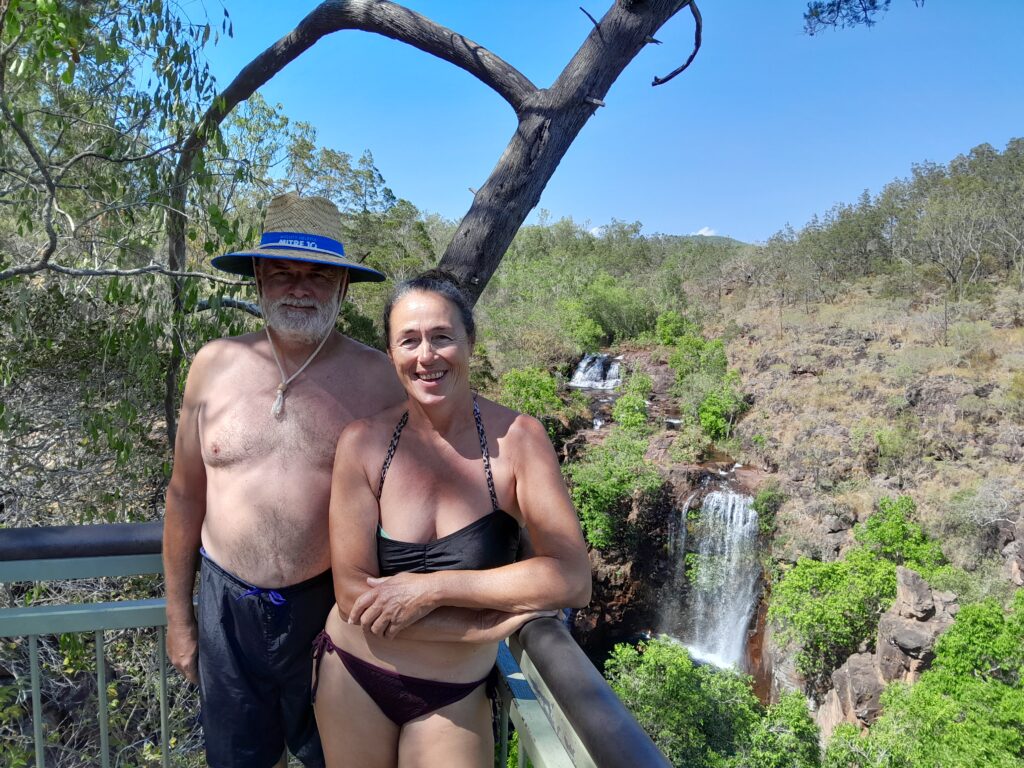
Florence Falls
Nächster Badestop war bei den Florence Falls, zwei Wasserfälle und wieder ein wunderschönes Pool davor. Ich bekomme es immer noch nicht in meinen Kopf: WIR SIND HIER IN DEN NORTHERN TERRITORY, also alles ist dürr, kaum Vegetation, eben wie man es sich vorstellt und in den Nationalparks gibt es einen Wasserfall nach dem anderen.
Die verlorene Stadt hätte uns auch interessiert, doch mit unseren kleinen Auto und ohne Allrad war das leider nicht möglich.
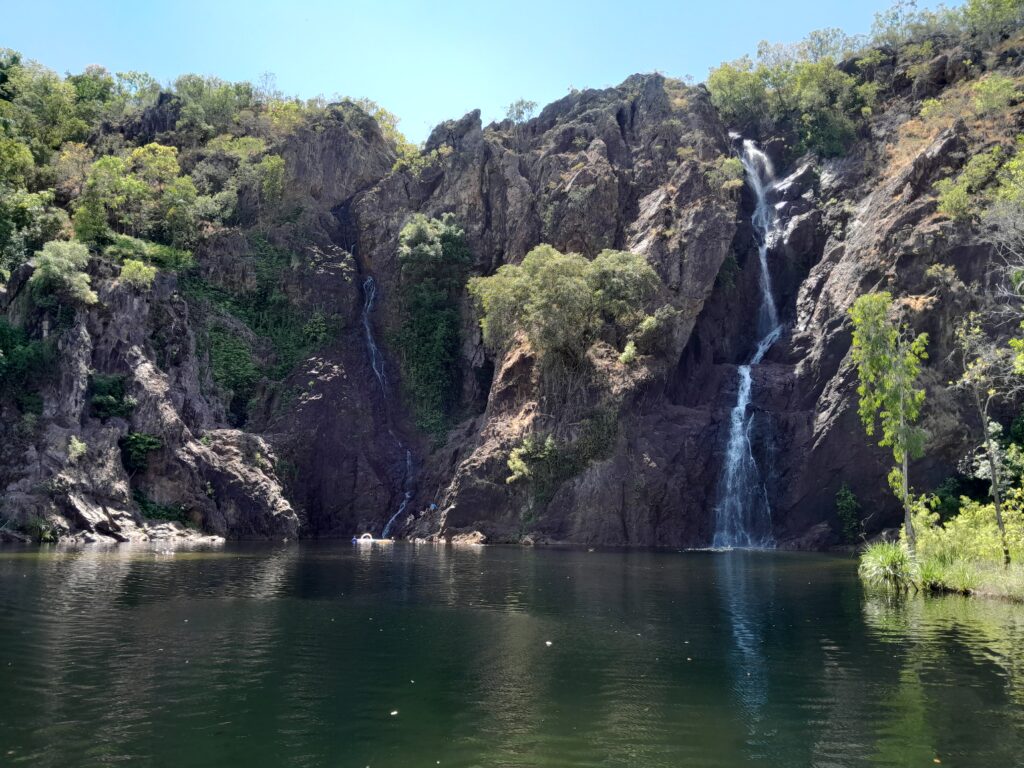
Unser nächstes Ziel waren die Wangi Falls, hier gibt es auch einen kleinen Rundweg mit 4 km, wir umrunden praktisch den gesamten Wasserfall und am Schluss belohnen wir uns mit dem kühlen Nass.
Wangi Falls
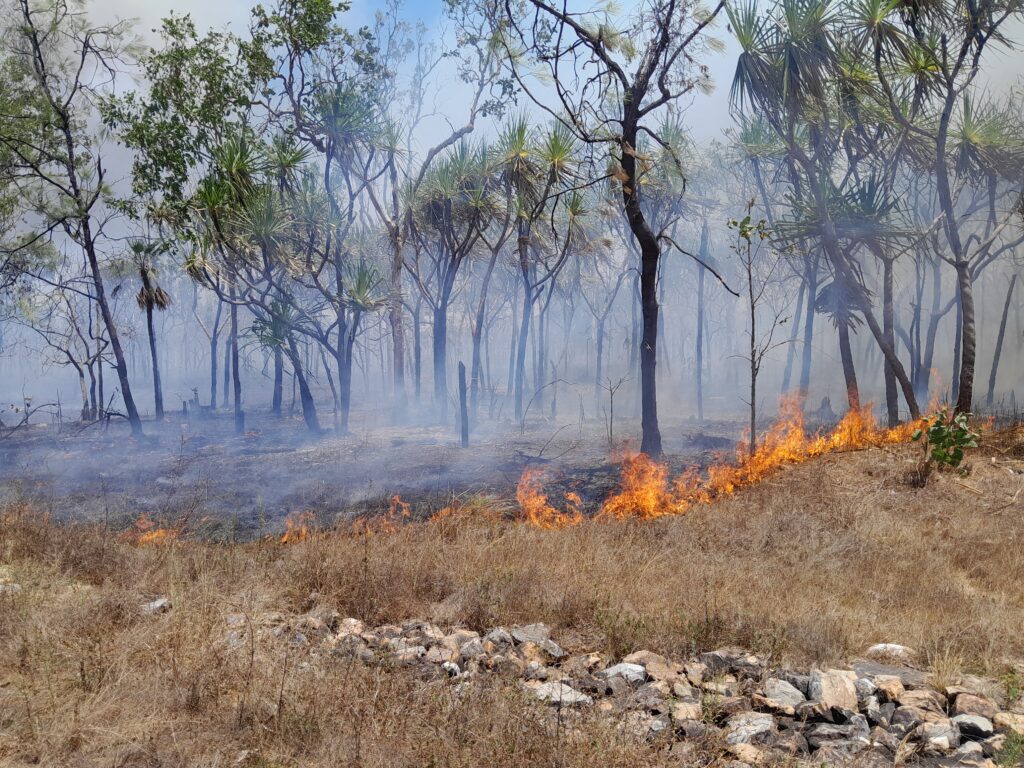
Ich glaube so sauber haben wir uns schon seit ewigen Zeiten nicht mehr gefühlt und geschwommen sind wir jetzt auch genug. Auf dem Weg zurück nach Darwin haben wir dann auch noch unser erstes Buschfeuer gesehen, Gott sei Dank war es ein kontrolliertes Feuer, aber ich möchte es mir nicht vorstellen, ein Richtiges aus der Nähe zu sehen.
Ein Buschfeuer ganz aus der Nähe
Nach zwei einhalb Tagen und 1000 km später kamen wir etwas erschöpft wieder in der Marina an, doch unser Landausflug hat sich super gelohnt.
Wahrscheinlich ist jetzt die letzte Gelegenheit, um etwas vom Landesinnern von Australien zu sehen. Also haben wir nicht lange gefackelt und uns ein Auto gemietet, übrigens zum ersten Mal auf unserer bisherigen Reise, und sind 500 km ins Landesinnere gefahren.
Als Neill unseren Mietwagen abholte, traf er ein Paar aus Queensland und die meinten, wenn wir schon bis nach Katherine zu den warmen Quellen wollen, dann sollen wir doch noch die 100 km weiter zu den Bitter Springs fahren, denn die seien super mega schön.
Kaum hatten wir Darwin verlassen sahen wir einen Radler, wahnsinnig oder bei 38 °C !! Ich sagte zu Neill, so verrückt kann nur ein Deutscher sein und wir fragten ihn und tatsächlich, Martin kommt aus Berlin und ist in Perth gestartet, weiter nach Darwin und jetzt auf dem Weg nach Alice Springs. Wir radeln ja auch gerne, doch könnten wir uns nicht motivieren, durch Australien zu radeln, da bevorzugen wir “Weicheier” schon das klimatisierte Auto. Außerdem gibt es wirklich nicht viel zu sehen, außer Termitenhügel, ein paar Bäume und Sträucher aber sonst nichts und das über tausende von Kilometern. Aber es soll jeder nach seiner Wahl glücklich sein.
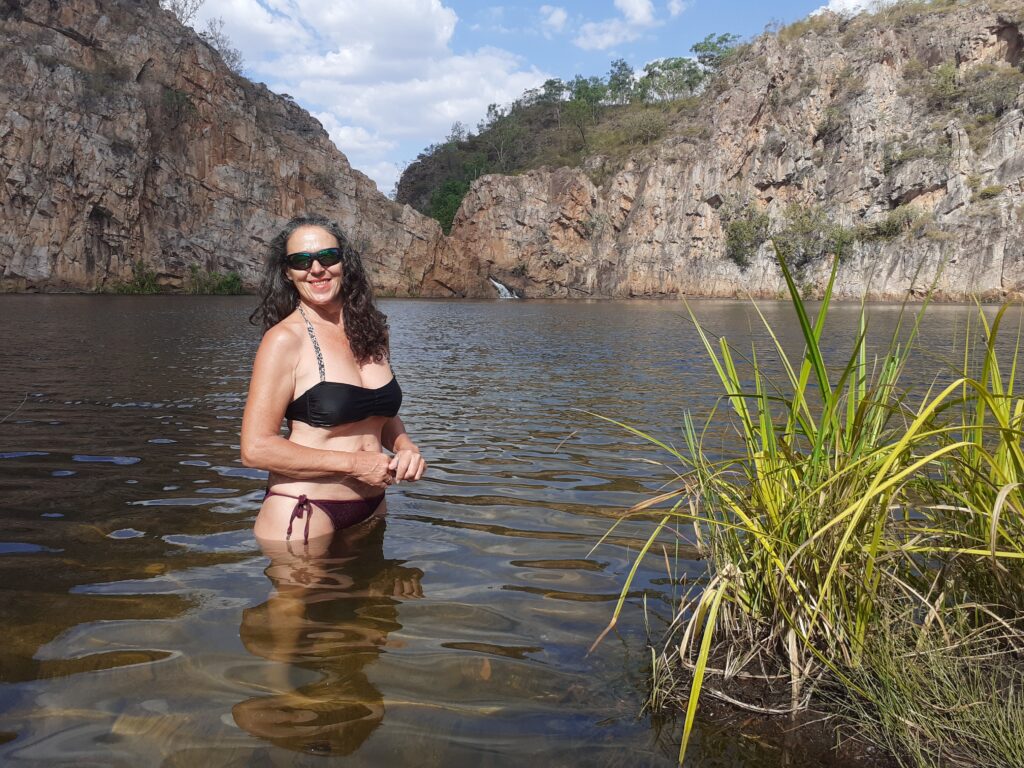
Unseren ersten Stop legten wir in Pine Creek ein und die Bedienung empfahl uns die Edith Springs zu besuchen, das ist nur ein kleiner Umweg von ca. 50 km, wie die Australier sagen würden “nur ums Eck”. Also dann, nächster Halt Edith Springs und es war wunderbar, schwimmen ohne Angst haben zu müssen, dass ein Krokodil oder sonst ein anderes Tier dich fressen will, einfach himmlisch.
Soviel planschen macht natürlich hungrig und wir mussten ja noch nach einem Quartier in Katherine suchen, also nichts wie los. Glücklicherweise haben wir gleich eine Schlafkabine mit externer Dusche und WC gefunden und unser leibliches Wohl haben wir bei einem Spaziergang durch den Ort gestillt. Wir stellten fest, dass hier in allen Läden, wo es Alkohol zu kaufen gibt, ein Polizist steht und die Leute kontrolliert. Neugierig wie wir sind, haben wir den Polizisten gefragt, ob dies etwas an der Situation verändert habe. Er erklärte uns, dass sie alle Personen befragen und individuell entscheiden, ob die Person Alkohol bekommt oder nicht. In den drei Jahren wo er das jetzt macht, ist die häusliche Gewalt um 70 % zurück gegangen und das ist doch ein absolut wahnsinniges Ergebnis !!
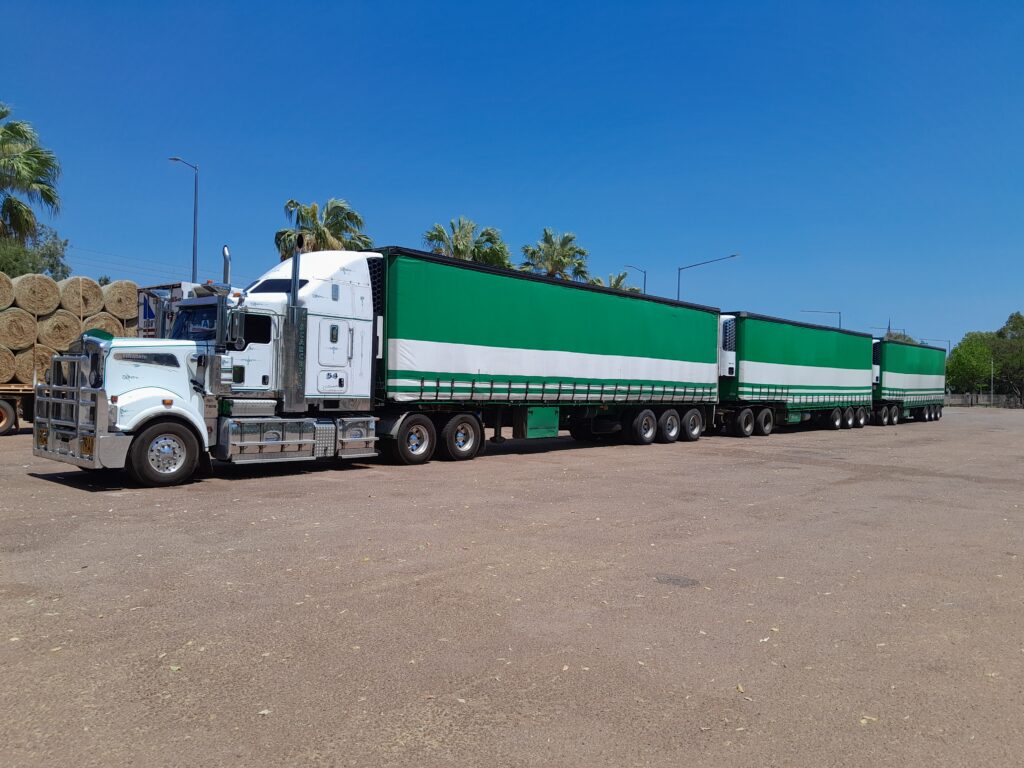
Am nächsten Morgen ging es weiter zu den Bitter Springs und auf dem Weg sahen wir dann unsere ersten Rode Train, bzw. den ersten, den wir fotografieren konnten. Wir erfuhren, dass diese Giganten hier in den Northern Territory bis maximal 56,4 Metern lang werden können.
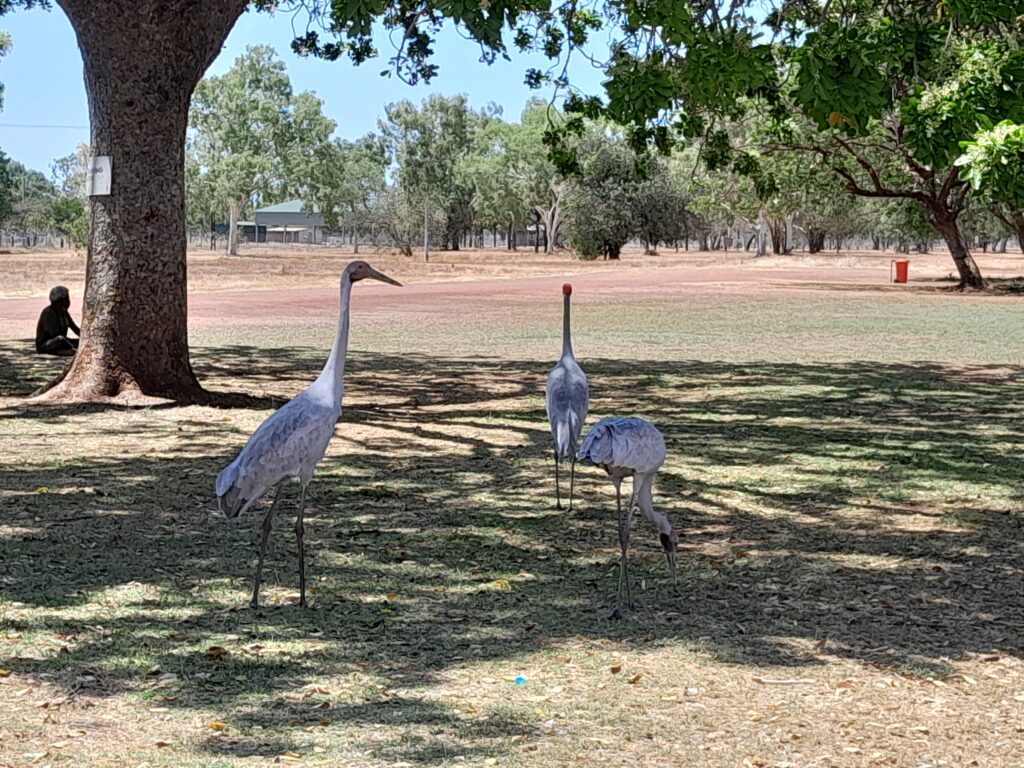
Neben dem Parkplatz haben wir dann auch noch Brolgas gefunden, das sind ziemlich seltene Vögel in Australien , die für ihren Paarungstanz bekannt sind. Wir hatten schon einmal das Glück diese in Viktoria zu sehen.
Road Train
Brolgas
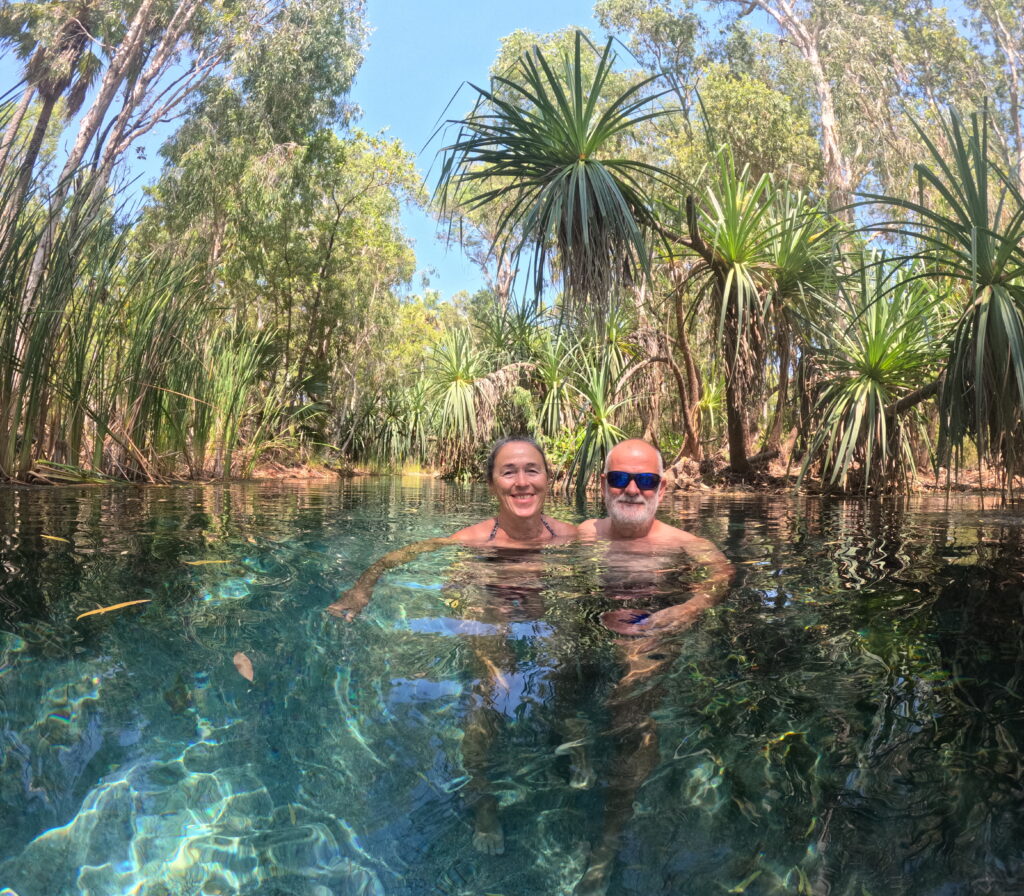
Die Bitter Springs waren einfach himmlisch, kristallklares Wasser mit einer Temperatur von ca. 35 °C das ist wirklich Wellness pur. Chrissi eine Westaustralierin hat uns freundlicherweise mit ihrer super Unterwasserkamera fotografiert, so könnt ihr vielleicht einen Eindruck bekommen.
Planschen in den Bitter Springs
In Mataranka haben wir dann noch die Thermalpools genossen und einen kleinen Spaziergang gemacht, bei 38 °C belohnten wir uns mit einem ausgiebigen Wasseraufenthalt und natürlich haben wir noch mit zwei Mädels aus Viktoria gequatscht. Die waren vielleicht erstaunt, dass wir Ballarat, ihren Wohnort kannten, aber wir sind damals auf dem Weg zu James Farm durch diesen Ort gefahren !!
Entlang der Straße sind auch die Eisenbahnschienen und wir haben schon zum Auftakt unserer Reise die Gleise, die ins Unendliche gehen, bewundert. Doch jetzt fuhr ein ewig langer Zug darauf, da müssen wir ein Bild bekommen oder noch besser ein Video!! Wir haben es geschafft, ein Bild gemacht, 108 Wagons!! gezählt und sogar ein Video, wen es interessiert!
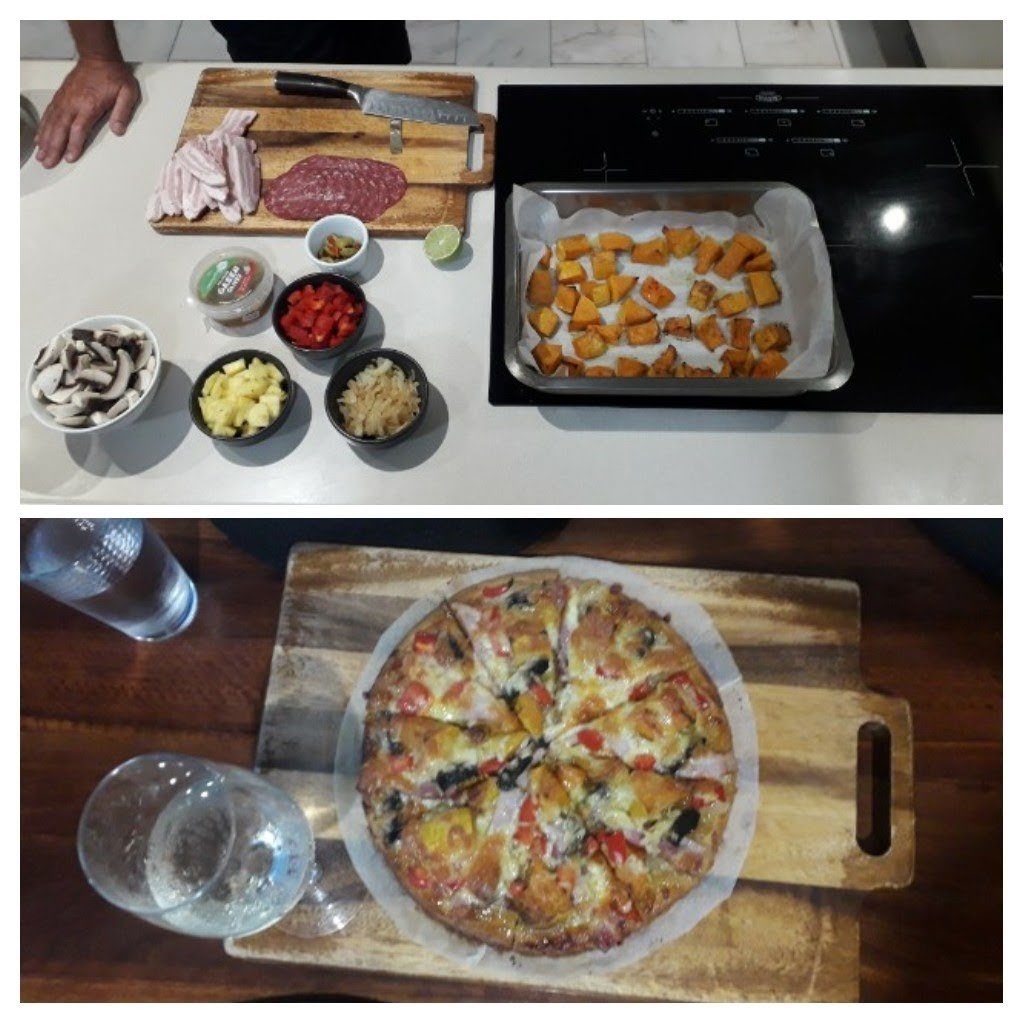
Übernachtet haben wir dann in Bachelor kurz vor dem Lichfield Nationalpark, den wir uns für den nächsten Tag vorgenommen hatten. Zum Abendessen gab es Pizza im nur zwei Kilometer entfernten Bannyan Tree Resort, wo zwei Mädels aus Berlin als Backpacker arbeiteten. Die Chefin hier ist Deutsche und wir glauben, dass sie auch durch “Work and Travel” hier hergekommen ist, sich verliebt hat, geheiratet hat und hängen geblieben ist.
Alle unsere Bilder seit Thursday Island sind hier.