In to the Red Continent

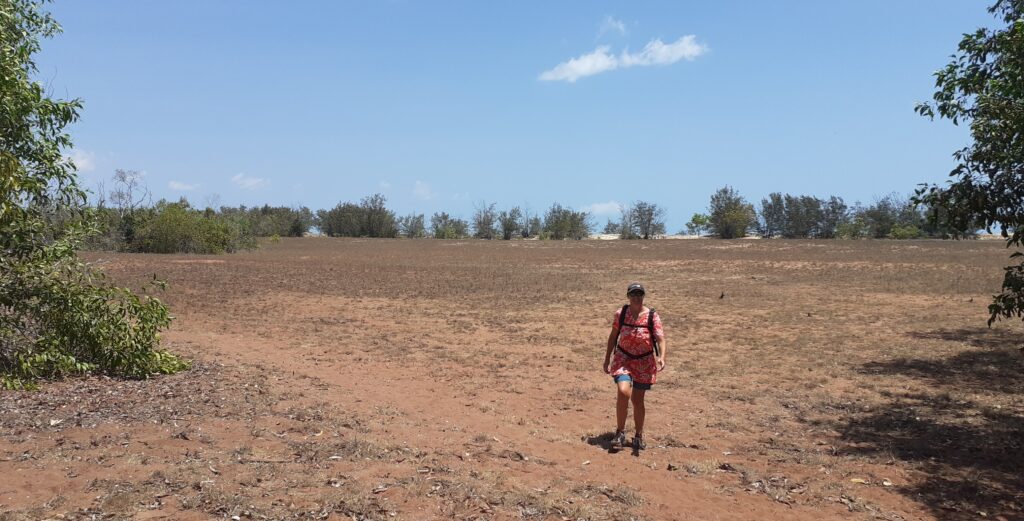
We have sailed the entire East Coast of Australia. We have rounded Tasmania’s southern tip and Cape York in the far North. With our bikes we have explored the area near the coast and spent a week on a farm in Victoria. But we had not yet seen the “inland” of Australia so it was time to change that.

We hired a car to head south from Darwin to Katherine but at the hire office we met people who had just got back from Mataranka and told us “we had to go there”, so – being sailors and very flexible – we changed the plan.

The first day we dropped our outboard engine off for a service which would have been difficult with the bikes. We then took the Highway Number 1 and headed south for over two hundred kilometers. In Pine Creek we stopped at the lazy Lizard, bought a coffee, met a blue tongued lizard and met a Victorian who now lives here after stopping on her way round Australia. She told us that she loves the small town as up in the Northern Territories you have the freedom to do what you want and be who you want.
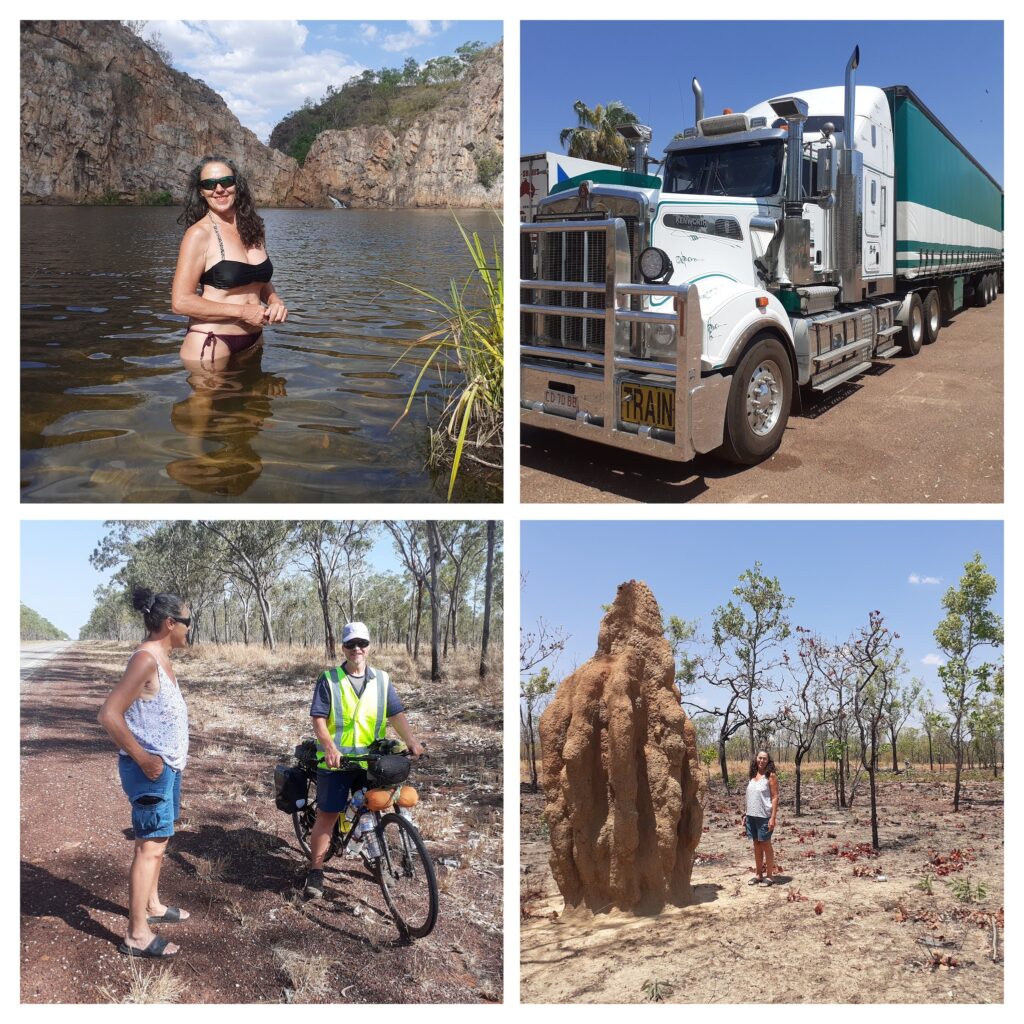
A little further south we took a forty kilometer detour to visit the Edith Falls and have a swim. You are driving through brown, dry bush and then you descend in to a valley, turn a corner and there is a waterfall and a beautiful pool to jump in to. Incredibly there are (mostly) no crocodiles, no sharks, no stingers, no sea snakes. The place is so un-Australian and so inviting.

After over 300 kilometers, millions more trees and thousands more termite mounds, we reached Katherine and booked in to our cabin for the night. We then set off to explore the town which an elderly white lady had warned us was “rough”. Rough is white code for “full of aborigines” which it was. Unfortunately many of the aborigines we saw in town appeared to have social or alcohol related problems which is maybe why they are not welcome back in their villages. We had read a lot about problems with alcohol, the resulting violence and measures to try and reduce both but we had not heard about Katherine’s “Point of sale intervention policy”. Walking past a drive in alcohol shop we noticed a big, bearded, tattooed police officer checking ID and telling some potential customers to leave with no alcohol. At the next alcohol shop we found a less frightening looking policeman doing the same so we asked what was happening. Apparently there is a police officer at every “bottle shop” and every person who wants to buy alcohol has to show their ID and answer any questions the policeman may have. If he decides you can’t buy alcohol then that is final. You are refused if you are on an offenders register, intoxicated or unable to explain why you need so much. He told us that in only three years domestic violence is down by 70%!

The next day we continued south for another hundred kilometers to Mataranka. On the way we passed a lone cyclist so slowed down to ask if he needed water or something and where he came from. He was, of course, German. Only a German would cycle the 5000 km from Perth to Darwin and then turn south for another 3000 km to Uluru at the end of the dry season. His name is Martin and he is actually a bit of a hero.

At a road repair site we spoke with the lollipop lady. She was from Ireland and is in Australia on a “work and travel” visa. She spends all day stood out in the hot dry landscape and we wondered why any one would do this. Later we learned that the job pays fifty dollars an hour so a few weeks of torture finances a lot of holiday.

Bitter Springs

In Mataranka we we found the Bitter Springs which were our destination since leaving five hundred kilometers ago. They are stunning with warm, transparent water flowing slowly out of a spring and through the bush. You drift downstream, walk back to the start and repeat as often as you want. Absolute heaven.

In Mataranka we also visited the thermal springs for some more lazing around in fresh water, photographed a few 56 meter long road trains and saw some Brolga birds. I asked an aborigine what type of birds they were next to him before noticing that he was blind. Luckily his companion came to our rescue. Sometimes I am a bit stupid.

Heading back north we passed a few road trains and realized that you need a lot of empty road to pass 56 meters of truck moving at over 100 kmh. We also passed a railroad train and stopped to video the 108 wagons being pulled past us by two huge locomotives.

We spent the second night in a cabin in Batchelor. The owners wife was away so he sent us “next door” to get a pizza for dinner. The restaurant looked like your stereotype outback restaurant but it was owned by a half German man and his German wife and both waitresses were from Germany. Today was German Day.

On Day Three we “did” the Litchfield National Park. We began by visiting the magnetic termite mounds. These are incredible. Instead of being a big round mound they are built like gravestones and all aligned north south to reduce the warmth received from the sun. I still can not get over that some termite long ago said “Hey! Lets try thin, geographically aligned mounds.” and convinced all the other termites to go along with his plan. He must have been an amazing leader.

Next on the menu was a small walk and swimming at the Florence Waterfall. We just couldn’t get enough swimming so then it was on to the Wangi falls, another walk and another swim. After that we saw a bush fire burning through the undergrowth. It was being monitored by a helicopter and we guess it was set as part of the managed burning program. It was fast and hot and not something you want to have heading your way.

Finally, after leaving the park, we found a tavern for a well deserved lunch and then headed back to Darwin.

Did we honestly do all that in less than sixty hours?

A selection of our photos since arriving at Thursday Island are here.
Darwin – At last

It was a long long way from Tasmania to Darwin but we have finally made it. A week ago – after sailing the distance from Bavaria to India – we finally anchored off Darwin. The plan was to move in to a marina round the corner so we took the dinghy up the river. It was low tide and we grounded which is pretty hard to do in a dinghy with ten centimeters of keel. The tides in Darwin are crazy, low tide is nothing and high tide is six or seven meters. We could not find the entrance to the marina so we asked a fisherman who sent us back and told us where to look. We found the lock gate about four meters above us at the top of a stone wall. The next morning it was high tide and we sailed effortlessly in. Strange.

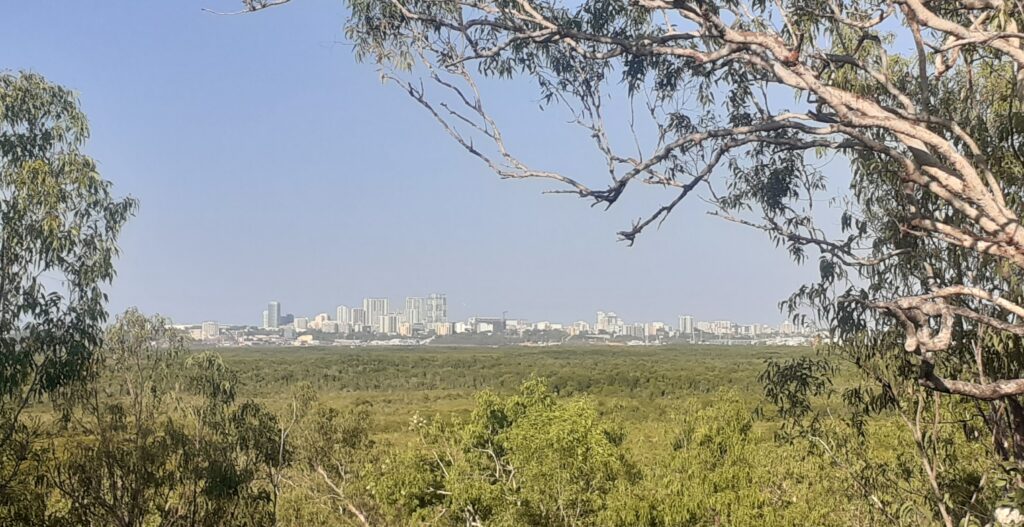
The city, seen from the bush

We wrote to all our Australian friends saying “What should we do in Darwin?” and immediately David from the yacht Dancer wrote “I landed at the airport 15 minutes ago.” He was working but visited us in the marina and we could catch up on what had been happening since we last saw each other in Tasmania. That was a great surprise.

In the evening we were at the chip shop and met Ulrike and Wilhelm who have just driven here from Heidelberg – www.wolfx.de. Amazing! We sailed one way round the world and they drove the other way and we met in a Darwin chip shop.

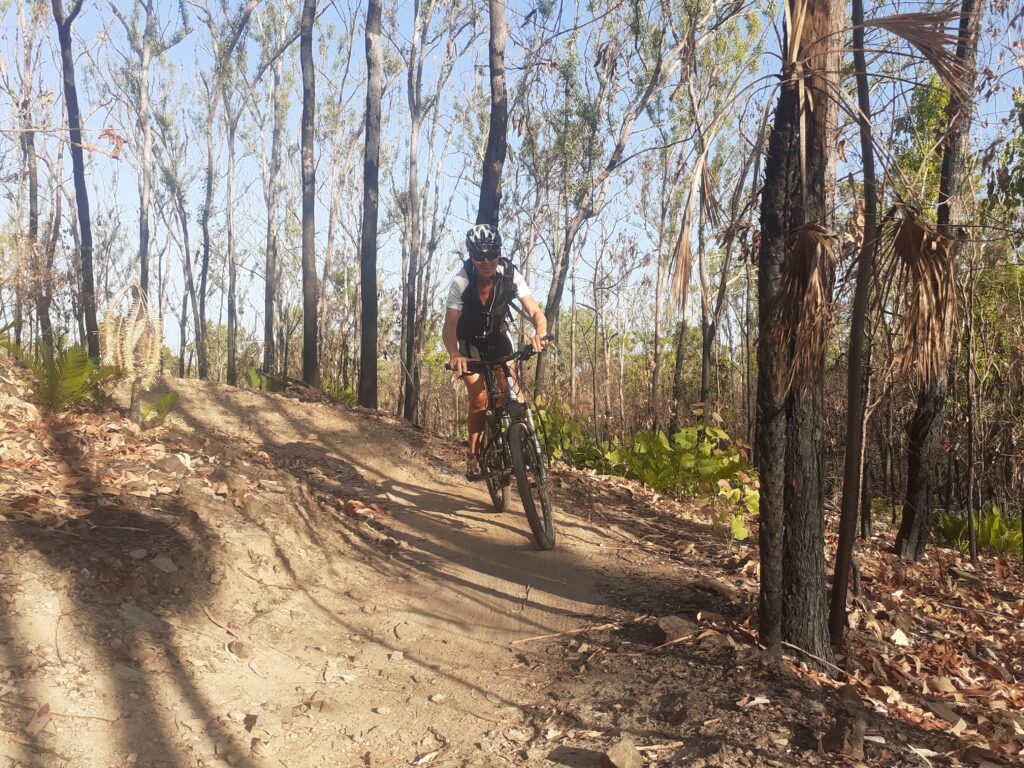
We put the bikes together and cycled to the Charles Darwin National Park. You are only a few kilometers from the city but in the middle of the “bush” and they have great MTB tracks all around the park. After lots of trailing we cycled out of the bush and across the road to the industrial estate to buy parts to repair the boat. What a land of contrasts.

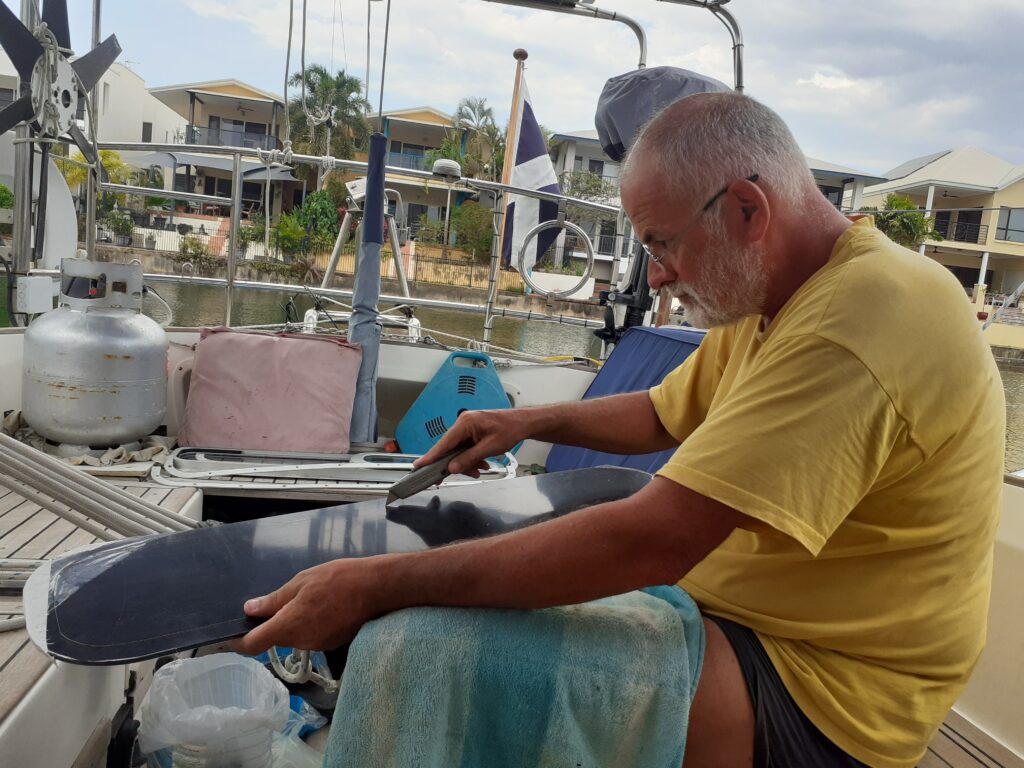
And today we changed the last two leaking windows for our new polycarbonate versions. We now finally have eight waterproof windows. Life is good.

Darwin in den Northern Territory

Wir haben es geschafft und Darwin erreicht, wir sind jetzt in den Northern Territory und hier sieht es so aus, wie ich mir Australien vorgestellt hatte!! Rote Erde, Hitze, dürres Gras, Krokodile und Aborigines doch erstaunlicherweise gibt es immer noch grüne Bäume, obwohl es jetzt das Ende der Trockenzeit ist. Der Vollständigkeit halber muss ich euch noch erzählen, dass wir in der super elitären Hotelanlage “Seven Spirit” nicht an Land gehen durften. Wir haben wirklich alle Register gezogen und erzählt, dass wir um die Welt segeln und dass wir die Reisegruppe kennen, die zur Zeit bei ihnen wohnt, doch nichts hat geholfen. Aber auch egal, dann eben nicht, dann haben wir abgelegt und uns auf den Weg gemacht. Unsere Route führte durch zwei Gezeitenschleusen, die wir zum richtigen Zeitpunkt erwischen mussten, ansonsten müssen wir gegen 6 Knoten ansegeln und das wäre unmöglich. Doch Neill hat alles super berechnet und wir hatten zwischendurch kaum Segel gesetzt um langsamer zu werden, doch später haben wir mit 8 Knoten richtig Fahrt gemacht. Nach 30 Stunden haben wir dann vor Darwin geankert!! Am nächsten morgen haben wir in der Marina angerufen und einen Platz gebucht, denn in Darwin gibt es Gezeiten von 6 METERN !!! und somit gestaltet sich das an Land gehen etwas schwierig.

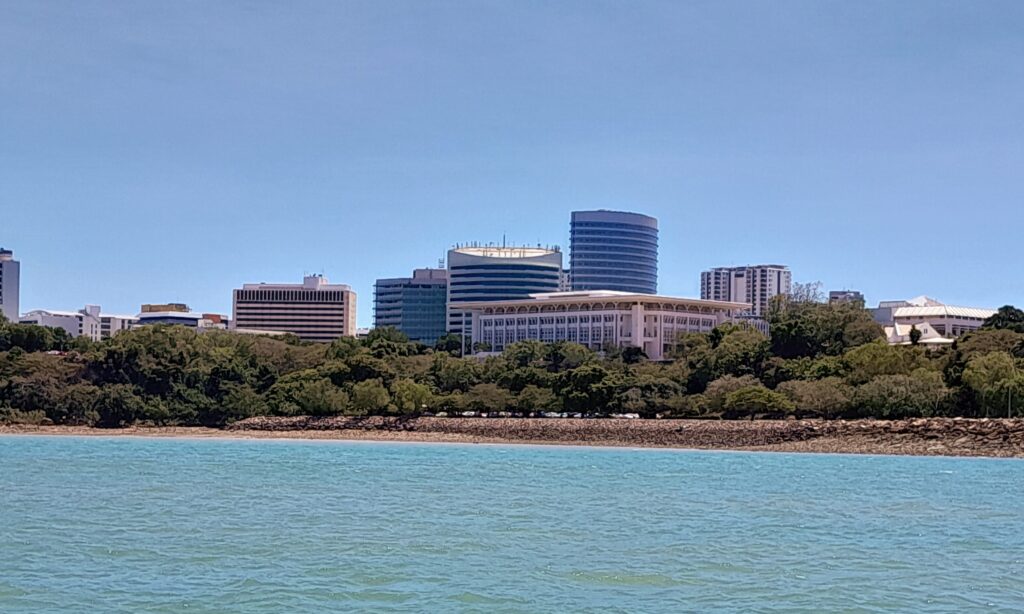
Hochhäuser von Darwin

Wir wollten erstmal mit dem Dinghy schauen, wo wir hin müssen doch wir sind schon mit unserem Dinghy auf Grund gelaufen und das hat nur 10 cm Tiefgang. Am nächsten Morgen hatten wir dann sechs Meter Wasser unterm Kiel, um durch die Schleuse in die Marina zu gehen und somit kein Problem. Jetzt sind wir an einem Pontoon und können ungehindert und jederzeit von Bord gehen. Mittlerweile haben wir unsere neue Ankerkette bekommen und auch unsere letzten zwei Fenster erneuert.

Im Charles Darwin Nationalpark

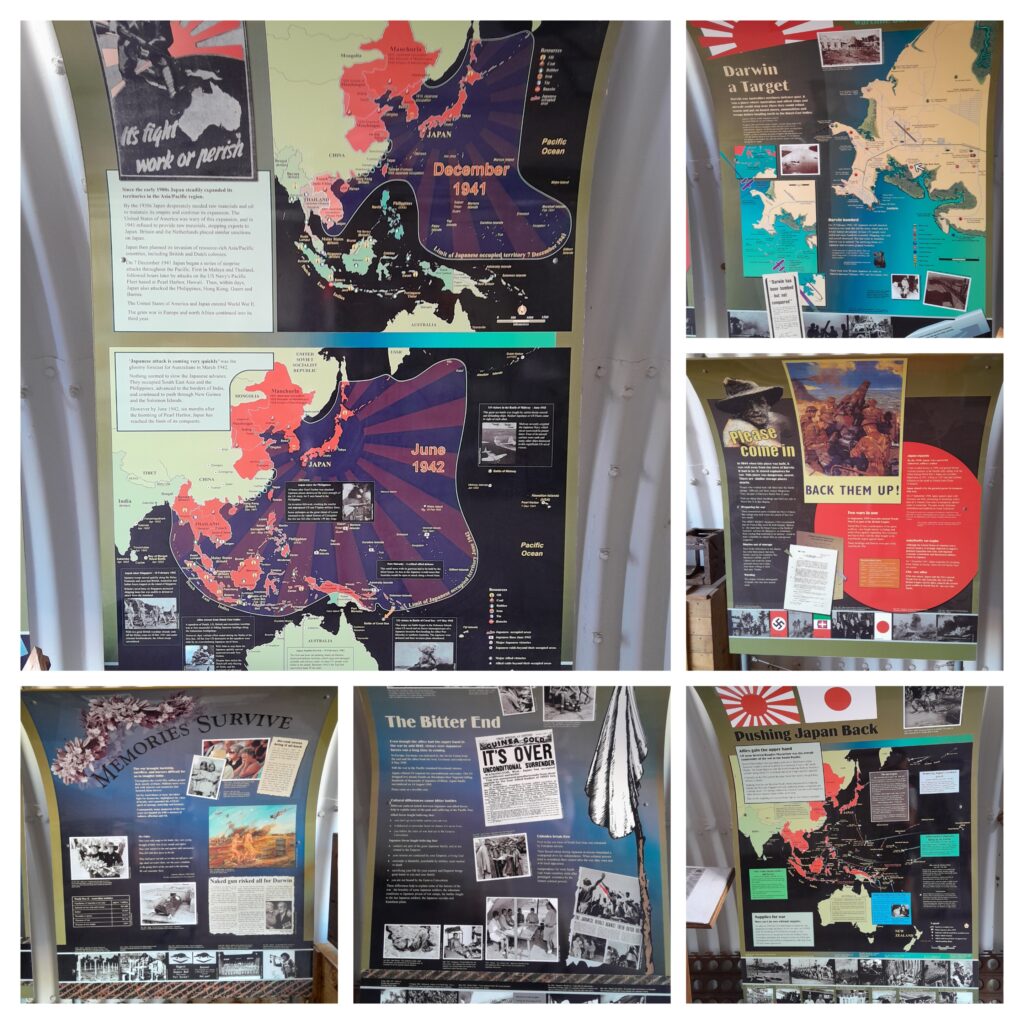
Endlich waren wir auch mal wieder beim radeln, zwar nur 20 km und 420 Höhenmetern doch bei 32 °C und 50% Luftfeuchtigkeit war das absolut ausreichend. Ich kann es immer noch kaum glauben, dass die ganzen Bikeparks kostenlos zu besuchen sind. Wir waren im Charles Darwin Nationalpark, haben dort die ganzen Radwege abgegrast und nebenbei noch die Überbleibsel vom Zweiten Weltkrieg besichtigt. Für nächste Woche wollen wir uns ein Auto mieten und die letzte Gelegenheit nutzen, noch ein bisschen Inland zu entdecken.

Infos im Bunker im Charles Darwin Park

Parasailor Review

Questions from S/Y Aegle

Answers from SY Artemis of Lleyn

– Suitability for a couple (we are of reasonable fitness and experienced offshore cruisers and racers sailors (less so on the ocean / blue water side)

We also sail as a couple. Single handed sailors and couples need to have “standard operating procedures” and plan each set of actions before they start. You need to think every sequence through before you do it and ensure that you have all the required equipment available where it should be. This is as applicable for setting or striking the Parasailor as any other “process”. You will be in the middle of an ocean so clipped in at all times. This limits speed and moveability so be sure you only do everything once.

We are nearer 60 than 50 and not athletes. We learned most of sailing on the journey from Scotland. Despite this, we can comfortably manage the Parasailor in sensible winds.

– Suitability of trade winds sailing vs day / coastal sailing

We have never used the Parasailor in trade winds. They are at least 15 knots and regular as clockwork. At that wind speed we use the white sails.

For passage, the Parasailor is perfect. When you are moving downwind in light winds, it is the piece of equipment that keeps the miles ticking away. Without it we would have spent thousands of Euros on diesel or spent days becalmed.

Often on coastal sails, it is only two hours in one direction before you need to pass round something or change tack. The Parasailor would work but all cruisers get lazy. You have unlimited time so you think “why bother”. The genoa gets you there eventually so you set that and relax. We could use the Parasailor much more often.

– The true wind range and angles in which you use it

30° off true downwind to 90° (across the wind). 

At 30° we take the parasailor down at 7 knots. On our 36 foot Rustler, you can sail it in more but you need to be very concentrated to ensure you do not broach.

Obviously at 90° you need a maximum of a few knots before the sail pulls the boat over. We had no measurable wind and used the Parasailor all the way from Barbuda to Antigua (25 miles) across the wind. It kept us moving and changed what could have been a boring motor into a great sail.

– Ease of rigging (easy enough to not be a chore?!); 

As described above, we have the lines already rigged. We have combination sheets and guys that Stuart made up for us. They can be set to the correct length before being attached. (These can also be used when poling out.)

The Parasailor needs to be manhandled from the cabin to the foredeck which is team building. Once there, you clip it into the three lines (making sure nothing is twisted – the red and green colour coding of everything helps) and hoist the halyard before the second person returns to the cockpit. Then person one lifts the sock and person one tensions the sheet. Normally the person on the foredeck then shouts “we are Parasailors!”

Deciding to parasail, planning, getting set up, getting the white sails away and setting the parasailor takes us half an hour when we are clipped in on ocean swell. But we tend to be slow and methodical and we always prepare everything with the previous sails still working and only strike them when we are ready.

– ease of handling (will it create any undue stress?!) 

A Parasailor is easy to handle but you are more alert when “Parasailing”. You constantly scan the horizon and surrounding waters for the next squall or pocket of high wind. You are more a sailor and less a cruiser (repairing something below or enjoying a long card game in the saloon).

– and in particular getting down (how is that snuffer when bouncing around on the foredeck when stronger winders have surprised you?!)!

We can go from Parasailing to “gone”  in a few minutes. Been there. Done that! 
Person one: harness on, clip in, reach the foredeck,
Person two: release sheet,
Person one; pull snuffer down and stow sail. You can drop it straight through the front hatch if you don’t have a dinghy on the foredeck. Otherwise, we stow it quickly between dinghy and mast and get a line over it until the squall passes.

Stuart sold us a soft roller that clips around the snuffer line so that instead of pulling down you pull up. The harder you pull, the more you stick to the deck. We don’t use it. If person two lets the sheet fully go then the snuffer slides easily down 

– Thoughts on taking the standard recommended spec / size vs value in taking a 3/4 size (for example) to make more manageable / increase the wind range in which we use it?!

We never thought about that. We accepted Stuart’s recommendation. It would be easier with a ¾ but you would no longer have the full “Parasail effect” of cruising at four knots with “no” wind.

– how often you really use the sail – will it be a shiny toy that after preliminary usage does not really see the light of day?!

It took us eighteen days to cross the Atlantic (2162 miles) and we used the Parasailor for 16% of those miles. It has to be noted that we spent 54% of the journey with two foresails poled out as the trades were directly behind us.

It took fifty four days from Ecuador to the Marquesas and we used the Parasailor for 954 of 3909 miles (24%)

– ease of storage, sturdiness of the sail etc

Our Parasailor is stuffed in the quarter berth with two foldable mountain bikes. It has to be manhandled out and back in. It can be compressed nicely with the draw straps on the bag but Stuart recommended against storing it too tightly compressed. 

The sail has one tiny hole that we need to patch – probably from catching it while pushing it through into the forward cabin. The snuffer has suffered from rubbing on surrounding rigging but is still fine.

– any other thoughts that you as owners have that we are not thinking of!

In this screenshot, you can see the speed dropping over six hours. Then we deployed the Parasailor and doubled our speed while also stopping the horrible flogging of sails and rocking of the boat in the swell. Should have done it earlier.

Definitely take the training that Stuart offers. We learned so much. It was a very hard day but a fantastic day. In the Caribbean we met two sailors who had bought a Parasailor but were “much too experienced” to take the free training but admitted that they “never got the Parasail to work.” Of course, they blamed the sail.

Nowadays we don’t pull the halyard as high as we used to. This lets the Parasailor fly with more “belly”. It seems to fly better that way. We are sure that Stuart originally showed us this as can be seen in the following photo but maybe we forgot.

Two really good friends are on their way around the world with their Catamaran “Sybo” and they are also happy Parasailors. The larger boat makes the foredeck work much easier. But we wouldn’t buy a catamaran because of that.

We promised to NEVER use the Parasailor after dark because we could not see approaching squalls. In use we NEVER took it down just because it was dusk. It is too great for that. It just keeps you moving.

Fun with tidal gates

A tidal gate is a point where the tidal currents flow really fast in one direction and then about six hours later just as fast the other way. They are caused by water entering or leaving a basin on the rising and falling tide. If you want to get through a tidal gate, then you need to be in the right place at the right time.

We sailed from Coral Bay on the Coburg Peninsula in the Northern Territories to Darwin and had a chain of three tidal gates that all had to be passed at the correct time. Brain jogging for sailors.

We left Coral Bay in the morning and sailed west along the top of Australia. The wind was as expected and we managed an average of four knots which put us in the Dundas Strait [1] just as the Van Diemen Gulf began to fill late afternoon. The current picked us up and we sailed through between the island and the mainland at seven knots. We kept going long enough to be well inside the gulf before the tide turned and then tried to sail as slowly as possible to lose speed. We were trundling slowly through the night [2] when an Indonesian warship called on the marine radio and asked if we were OK to be overtaken on the port side. No problem with that.

Despite our best efforts too be slow, we were still at the start of the next gate -the Howard Channel – too early so started to work our way slowly in against the tide. With the current against us, we were making about two knots but as the water began to leave the Gulf it picked us up and we sailed out at eight knots [3].

We turned for Darwin and tried to beat the turn of the tide that would work against us. Unfortunately the wind lessened so we went from five knots to four and then three and then two [4]. Finally with a one before the decimal point we put the motor on for the last half hour and one and a half miles.

Darwin to port

Once we reached civilization we read about a gentleman who did the whole route with one or two engines on. OK, he spent the night at anchor and we sailed for 37 hours but, maybe we had more fun.

Entlang dem roten Kontinent

Weiter geht es an der Nordküste Australiens entlang, wir überqueren den Golf von Carpentaria, was uns ein bisschen an das offene Meer erinnert, denn mit ca. 300 Seemeilen sehen wir für eine Weile kein Land mehr. Wir wollen am Cape Wessel eine Nacht ankern und zeitlich sieht es auch sehr gut aus, so dass wir vor Sonnenuntergang vor Anker sind. Wir segeln in Richtung unseres Ankerplatzes, als wir plötzlich nur noch zwei ein halb Knoten Fahrt machen, anstatt der vier Knoten zuvor ?? Eine Strömung !! Wir waren so Nahe, dass wir den Leuchtturm und den Strand schon sehen konnten, doch gegen eine Strömung von drei Knoten hätten wir mit unserem Motor ca. eine Stunde gebraucht. Also dann gehts eben weiter, als wir die Richtung gewechselt hatten, schossen wir mit sieben Knoten dahin, auch nicht schlecht. Als wir so in Wasser schauten, sahen wir eine Seeschlange, die überaus giftig sind an uns vorbei schwimmen.

Unser nächster Ankerplatz war ja nur ca. 250 Seemeilen weiter auf Croker Island am Point David, hier hatten wir keine Probleme unseren Anker zu setzten. Ich sagte zu Neill, es sieht hier aus wie in Polynesien oder in der Karibik, türkisblaues Wasser, weiße Sandstrände und es lädt wirklich zum schwimmen ein. Wir genossen unseren Ankerkaffee, als Neill sagte, das Holzstück auf dem Sandstreifen, war vorher nicht da und ich meinte, dreh dich mal um, ich glaub da schwimmt ein Krokodil hinter uns. Soviel zum schwimmen, NO WAY!!! Aber wir wissen ja auch, dass wir im Krokodil Gebiet sind, also keine Angst! Das Holzstück an Land bewegte sich ziemlich behäbig und entpuppte sich als fünf Meter langes Krokodil, den Neill spontan Karl taufte. Ohne uns von Karl zu verabschieden, verzogen wir uns zur Palm Bay und erreichten dann am Tag darauf die Cobourg Peninsula und ankerten am Black Point vor der Ranger Station. Am Abend schauten wir ins Wasser und trauten kaum unseren Augen, überall im Wasser schwammen Glühwürmchen, so sah es auf jeden Fall aus. Wir erfuhren einen Tag später vom Ranger, dass es sich um eine Alge handelt, die fluoreszierend ist.

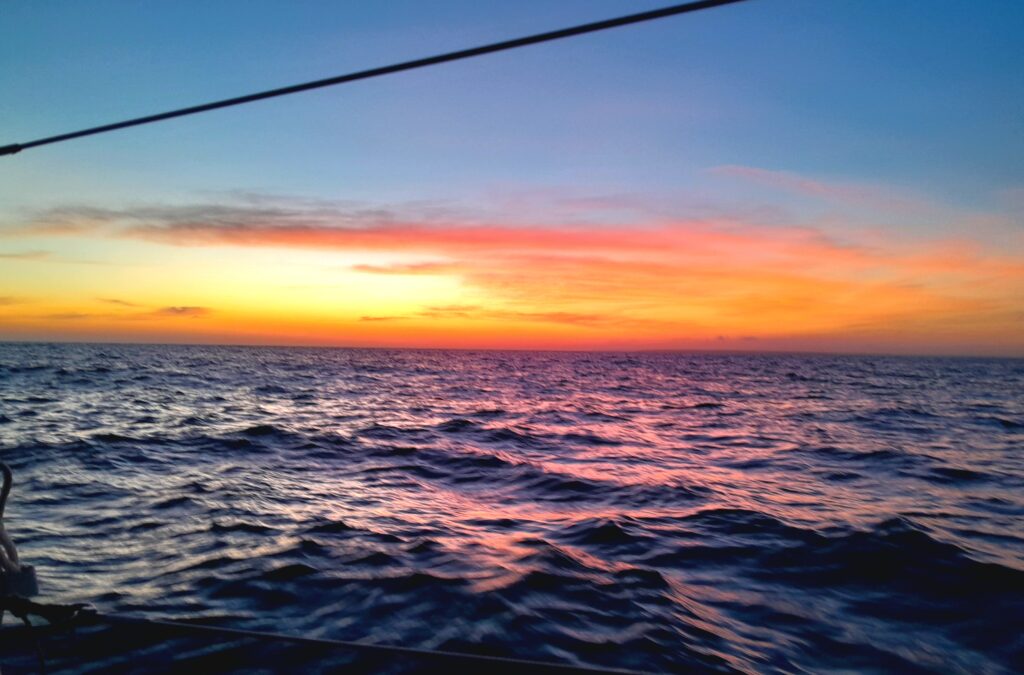
Sonnenuntergang auf dem Meer

Nach zehn Tagen auf unserer Artemis, wollten wir mal wieder einen Landausflug machen und schauen ob unsere Füße noch zu längeren Spaziergängen taugen. An Land angekommen, machten wir uns auf den Weg zur Ranger Station und dem Kulturzentrum dort. Wir ratschten und wanderten so vor uns hin, als plötzlich ein Busch zu sprechen begann. Nein, ihr braucht euch noch keine Gedanken über unseren Geisteszustand zu machen, es war ein Soldat der Australischen Armee, die hier eine Übung machen und den wir in seinem Tarnanzug einfach übersehen haben.

In der Station trafen wir alle drei Ranger und erfuhren viel über ihr Leben und ihre Arbeit im Garig Gunak Barlu National Park. Jetzt wissen wir, dass die Station das ganze Jahr über besetzt ist und dass sie hier mit ihren Frauen und insgesamt sieben Kindern eine kleine Gemeinschaft bilden.

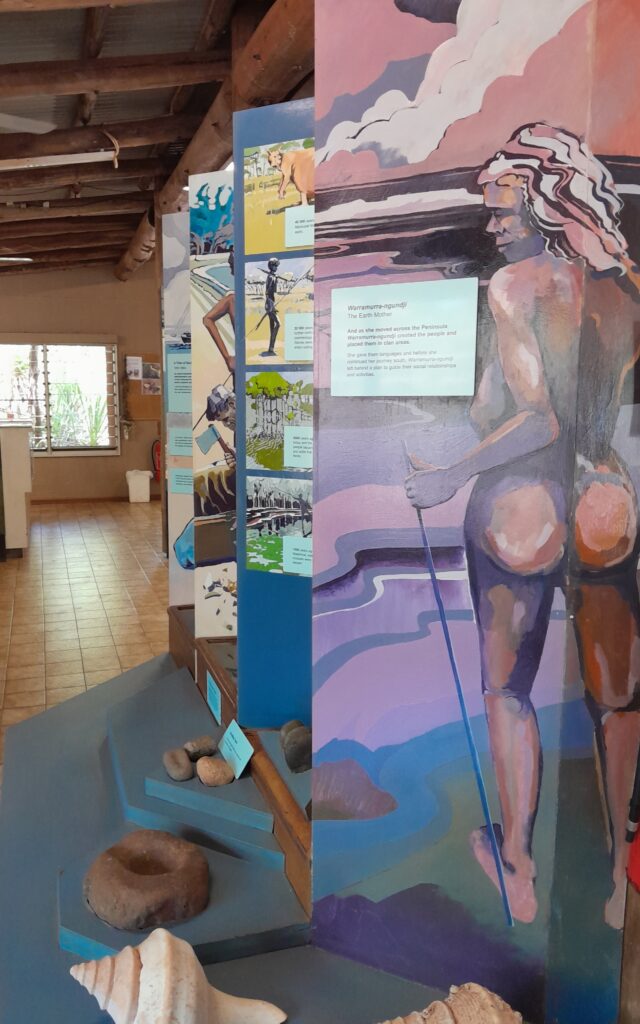
Im Kulturzentrum

Wir lernten über „falsche Killerwale“ die immer hier in der Penisula leben und nicht zum Kinder kriegen woanders hin schwimmen, über wilde Kühe, die von Indonesiern hergebracht wurden und sich seit dem wie verrückt vermehrten, über Flora und Fauna. Wir sahen Bäume, auf denen Früchte wachsen, die Strychnin enthalten und super Giftig sind, doch in den 50ger Jahren wurden Kinder zum Ernten dieser Früchte geschickt, damit man das Gift gegen die Ratten verwenden konnten und die Aboriginal haben das Gift für ihre Speere benutzt.

Nach unserem Spaziergang erkundeten wir noch das super interessante Kulturzentrum, als sich plötzlich die Tür öffnete und ca. 20 Leute herein, bzw. auf die Toilette stürmten, denn die Reisegruppe war seit ca. sieben Stunden im Allradbus unterwegs. Die Truppe schaute sich kurz das Museum an, wobei wir zwei Segler, die von Schottland hergesegelt sind, mit unseren Geschichten viel interessanter waren, als alles andere. Sie wurden von einem Boot zu ihrer Unterkunft abgeholt, das Resort hört auf den Namen, „Seven Spirits“ und ist nur ca. fünf Seemeilen von hier entfernt. Es soll ziemlich elitär sein und da wir mit unserer Artemis direkt davor ankern können, wollen wir es uns einfach mal anschauen. Vielleicht können wir auch in der Hotelbar einen Drink bekommen, lassen wir uns überraschen und ich verspreche, ich werde davon berichten.

Westwards over Australia

We have reached the Coburg Peninsula in the far north of the Northern Territories. We hoped to visit an aboriginal village on Croker Island but when we wrote to the town office asking if we could come they wrote back telling us they had no tourist infrastructure, no transport, lots of crocodiles and that we needed a government permit to land. We took that as a no. We anchored just off the island and they were not lying about the crocodiles. “Karl the five meter crocodile” hauled himself on to the beach just after we arrived and his younger cousin swam slowly past Artemis hoping we were going to take a swim.

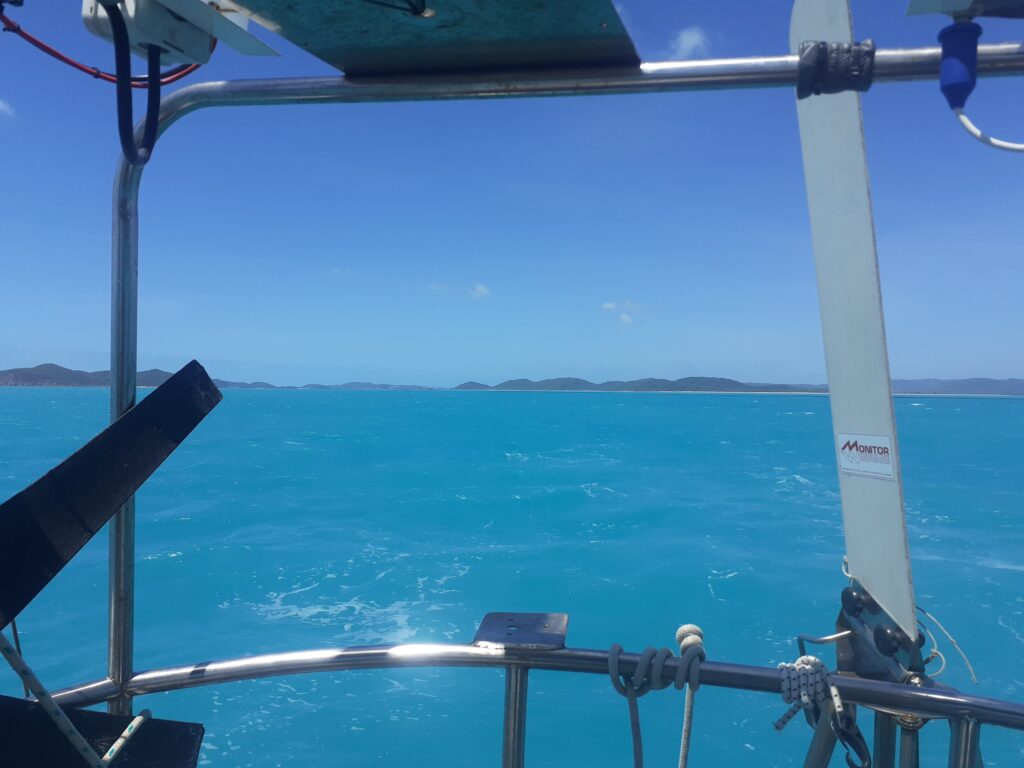
Laeving the Torres Strait to enter the Arafura Sea

The next day we waited for the tide to turn and used the tidal current to push us through the Bowen Strait. It was a great high speed sail that took us to the other end of the island where we anchored and were amazed that we had a tiny bit of Internet. Crazy. Beyond the end of nowhere I could upload files for my colleagues and Heidi could send anniversary congratulations to her daughter.

The next day we sailed once again down wind. A few dolphins came over to play with Artemis, a passing turtle watched us sail by and waved a flipper and an olive sea snake raised its head to watch our progress but decided against chasing us. As sea snakes are each poisonous enough to kill you twenty times over with each bite, we were relieved that he decided against hitching a ride.

We are now anchored off the Black point Ranger Station and took the dinghy to shore. We were heading towards the buildings when a voice out of the bush said “Hello!”. The voice belonged to an army captain in camouflage gear. He left the trees to chat and ask if we had seen any suspicious activity out at sea and if we did to let them know.

outback Australia

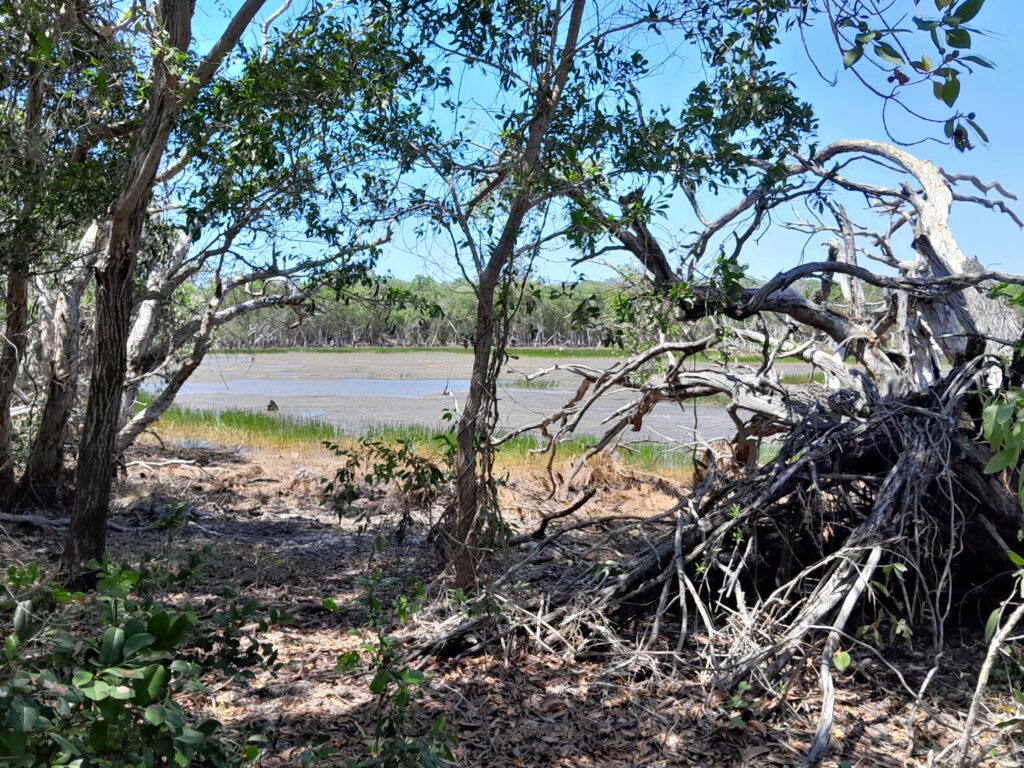
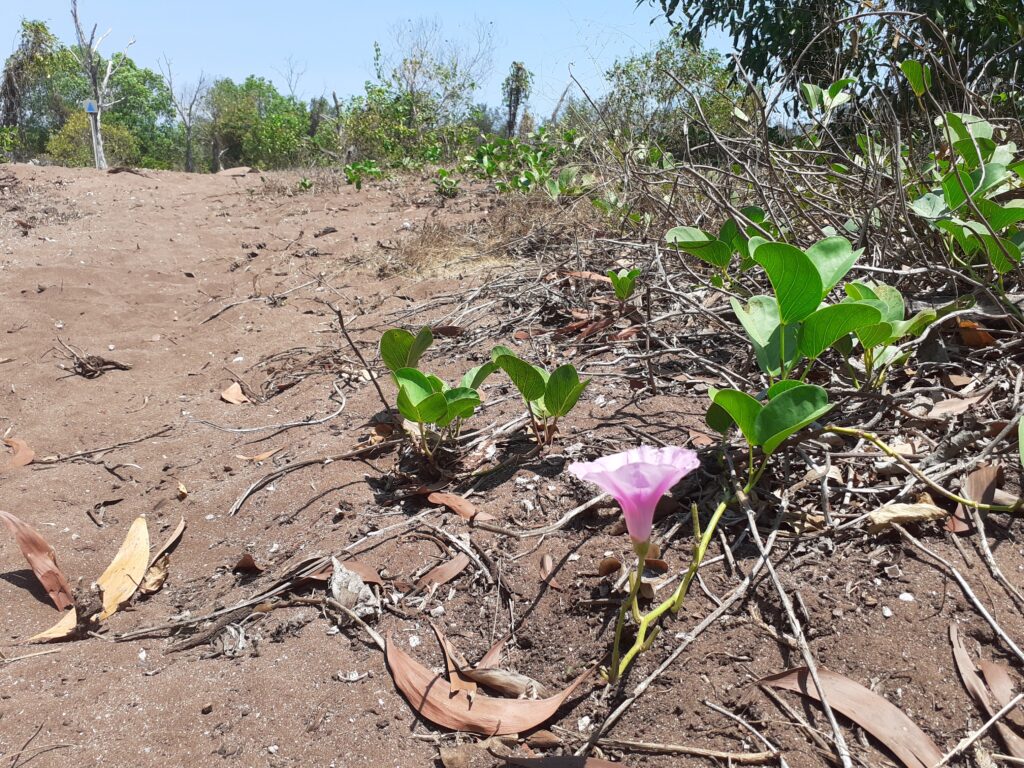
At the station we met the three friendly rangers who live out here all year with their wives and children. We asked them typical cruiser questions about their resupply (the post plane each week), power (diesel generators) and water (a bore hole). Two of the rangers were aboriginals and we heard about their grandfather’s and the wealth of animal and plant local lore that they had – back in the day. One of them listed about ten things that could kill us out here and then sent us off to follow a circular path through the bush. We guessed that it looks bad on their resume if too many tourists die so we were not unduly worried. It is the end of the dry season so everything is very dry and waiting for the rains but we found one flower that added a color other than brown and red. We also found a strychnine tree with bright red berries that are, the name is the clue, very poisonous. The aboriginals used them to make poison for hunting and later the Europeans used them as rat poison.

After our walk we viewed the informative cultural center that explained about the peninsula’s history and included a canoe in which an Indonesian was blown out to sea and spent a month drifting to Australia with a broken motor. A four wheel bus arrived and disgorged an elderly tourist party who had just driven seven hours off road to get here. They were interested in the toilets, our journey and the local history in that order. Fifteen minutes later they were gone to catch a boat to a luxury resort across the bay and peace returned.

At the dinghy we washed red sand off us in the sea. On Artemis we washed more red sand off with salt water and finally we washed red sand off our clothes and us with fresh water. Finally we know why they call it the red continent.

Thursday Island

Wir haben kaum den Anker fest, da fährt schon ein Dinghy vorbei. Wir kommen ins Gespräch und laden die beiden auf einen Kaffee ein. Karen und Warwick warten auf ihre Indonesien Visas, die eigentlich schon seit fünf Tagen da sein sollten🙈. Sie erzählen uns, wo wir unser Dinghy lassen können, wenn wir mit der Fähre nach Thursday Island fahren. 

Am nächsten Morgen setzen wir über und machen diese Insel unsicher.  Wir sind früh dran und können das Green Hill Fort, dass mit vier Kanonen bestückt ist ganz alleine für uns besichtigen. Die Aussicht auf die umliegenden Inseln und Wasserstraßen ist einfach überwältigend. Jetzt können wir uns auch besser vorstellen,  wie unser Weg nach Darwin weiter geht. 

Nachdem Thursday Island nicht besonders groß ist, können wir die ganze Insel zu Fuß entdecken. 😃

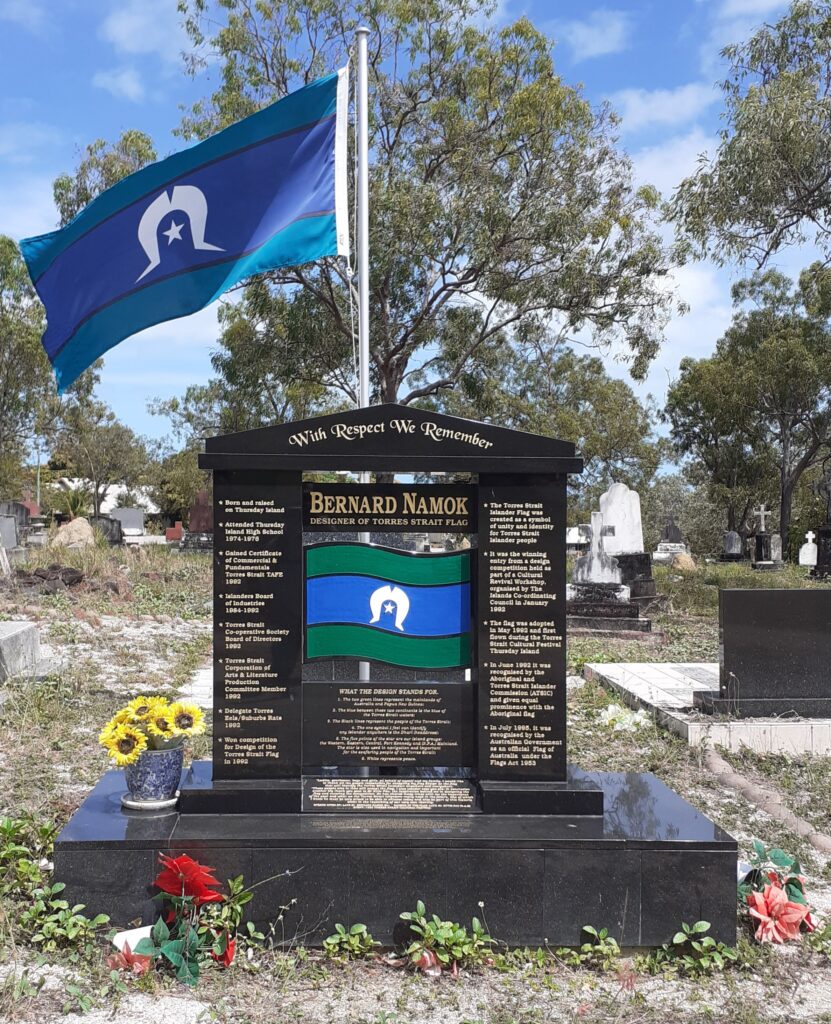
Der riesige Friedhof ist wirklich sehenswert, auf den Grabsteinen ist die ganze Lebensgeschichte aufgeschrieben und auf einem Grab war sogar ein Bild von einem Boot 🤔🤔, komisch? Aber auf der anderen Seite war dann der Name des Kapitäns, sein beruflicher Werdegang und alles andere erzählt.  Außerdem war von den Angehörigen eine Flasche Bier für den Verstorbenen bereit gestellt worden, dass hat uns ein Lachen aufs Gesicht gezaubert 😀. Hier auf dem Friedhof ist auch das Grab des Künstlers, der die Flagge für die Torres Strait designet hat.

Friedhof auf Thursday Island

Hier gibt es auch ein Denkmal für die ca. 700 Japaner, die hier in den Torres Straits als Taucher gestorben sind. 

Nach ca. sechs Kilometern waren wir zurück im Ort und natürlich haben wir die Kunstausstellung besucht und die Bilder begutachtet 👌. Mit der Fähre ging es zurück und auf dem Heimweg zu unserer Artemis hatten wir dann unsere erste Begegnung mit einem Krokodil. 

Wir haben uns mit einem Einheimischen unterhalten als er plötzlich sagte:  schaut mal da, das ist eine große Echse. Ich würde jetzt nicht ins Dinghy steigen sondern es beobachten und erstmal abwarten 🙈. Ich wollte ja schon ein Krokodil sehen aber nicht von Land aus, wo ich dann noch im Dinghy heimfahren muss 😜. Wir haben das etwas fünf Meter lange Tier genau beobachtet und als es weit genug weg war, sind wir schnell heim gefahren.  Ich habe Ausschau gehalten und Neill voll Gas gegeben👍, super Teamwork. 

Jetzt geht es weiter nach Darwin, die 850 Seemeilen wollen wir auf drei Etappen machen und hoffentlich ist der Wind mit uns 🙃. Den ersten Strömungsschub haben wir gleich mitgenommen und sind mit NEUN Knoten aus der Stadt gesegelt!

Blick vom Fort

Give me the coffee …

Give Me Coffee to Change the Things I can 
and Wine to accept those that I Cannot

unknown

We left Thursday Island heading west for Darwin. This being Australia, it doesn’t look far on a map but the reality is 750 nautical miles. For comparison, that is roughly London to Rome. At our normal speed that should take us a bit over a week.

The first 300 miles are across the top of the Gulf of Carpantaria and takes you far from land. We met cargo ships the first few days but after that there was nothing except a few Asian fishing vessels and us.

After the Gulf, the Wessel Islands extend about sixty miles north into the Arafura Sea and offer bays to anchor in on their downwind side. We were heading for Two Islands Bay which was described as untouched white sand and see-through tropical water.

The first day both wind and tide were our friends and we covered almost 120 miles in 24 hours. We were on a roll. The second day the wind dropped and the tide slowed. All the previous day’s gains were lost and we had to accept that we would reach the islands after sunset the following day making an entry to the bay impossible.

On day three the wind strengthened but then dropped again in cycles throughout the day. With every degree further west we traveled the sunset would be four minutes later. At one point it appeared we were going to win the race. But only briefly.

A cup of coffee and a serious look at the chart showed another Bay a tiny bit closer. The entry was not as good nor the protection but we could make it ten minutes before sunset. With the anchorage in view and the sun still in the sky we turned upwind setting course for the island and 

nothing happened!

The current out of the Gulf was so strong that we could not sail against it. We tried the motor and could only make one knot which would have us entering the bay in pitch black which we were definitely not going to try.

We re-set the sails, set up the wind steering and turned back downwind heading for the huge red sun that was balanced on the horizon. Heidi made gin and tonics and we set course for the next island 270 miles away – that is only London to Luxembourg.

The Torres Strait

We were anchored off Horn Island in the Torres Strait. The currents run fast and variable between the islands and the Trade Winds are strong. You need to time your dinghy trips well – and keep an eye on the local wildlife.

Photo by Molly Ebersold of the St. Augustine Alligator Farm

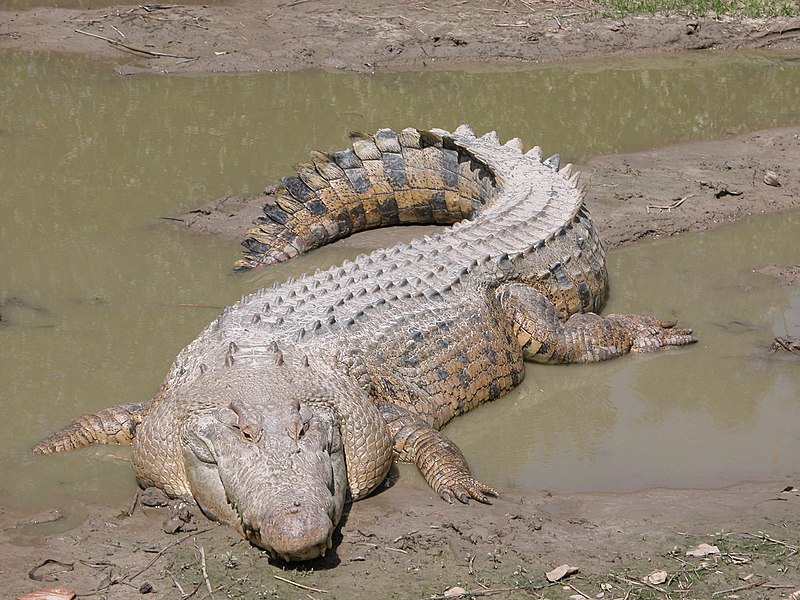
We were about to get in our dinghy at the pontoon when a local suggested we wait for “the lizard” to leave the Anchorage. He pointed out a five meter crocodile swimming between us and Artemis. We were happy to follow his advice and waited until it was beyond Artemis. During the journey we lost sight of the monster and were very relieved when it appeared on a neighboring sandbank. I have backed away from an angry elephant, been in a room with a coral snake and swam with sharks but this was a totally new feeling. This was something that wasn’t going to hurt me because of a misunderstanding. This was something that actually considers me a good meal.

Another day we took the ferry across to Thursday Island. It wasn’t far but our 2.5 horsepower motor is not up to braving seven knot currents against the wind. Once on the island we went to the council office and asked about the interesting tourist stuff. The lady was refreshingly honest and said “not a lot”. We also met a local who came for two weeks and that was thirty four years ago. He agreed there was nothing much to see but told us the islands are very relaxing places.

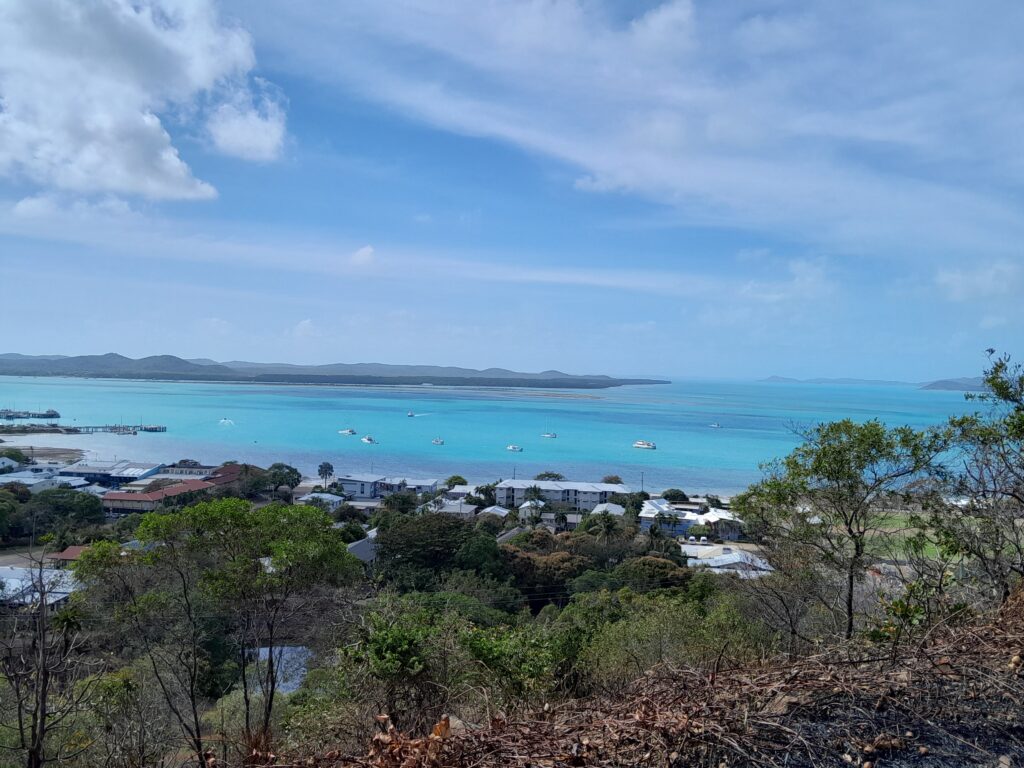
There is a fort on Green Hill with some history and panoramic views so we enjoyed that before the tourist buses arrived. A complete circumnavigation of the island is only five kilometers so we walked but for “normal” tourists there was a bus laid on.

At the back of the island there is a huge graveyard which is interesting as each person’s life story is written on their gravestone. If the stories are to be believed, the island was full of upstanding people who were without blemish. A whole section is for the seven hundred odd Japanese who died here while pearl diving. Mostly they have no stones. A particularly spectacular grave was the last resting place of the designer of the Torres Strait flag.

There is an art gallery with works by local artists. We are obviously too stupid to understand art. As always, most of it was over our head but they had stunningly clean toilets which we enjoyed. On the seafront we treated ourselves to a fruit juice and a chat with vocational teachers about the challenge of getting the local children to attend school. A sad but recurring story that, it seems, no one has an answer to.

We bought fresh bread and caught the ferry home. It was a nice walk but the council lady was correct with her “not much to see”.